
Animal
Christmas tree worm
The Christmas tree worm lives inside coral. It pokes out two bright, swirly crowns that look like tiny Christmas trees.
The Christmas tree worm is a small sea worm that lives in a tube inside living coral on Caribbean reefs. Only its two colorful, spiral crowns show. They catch tiny floating food and help it breathe, and the worm pulls them in with a flash if anything comes too close.
Spirobranchus giganteus is a tube-building polychaete of the family Serpulidae that lives only on living coral. Its two spiral crowns of radioles serve for breathing and filter feeding. The World Register of Marine Species now restricts the name to Caribbean worms; look-alike Christmas tree worms elsewhere in the tropics need to be re-identified, as several other Spirobranchus species.
Photo: Nhobgood Nick Hobgood, CC BY-SA 3.0, via Wikimedia Commons
Meet the Christmas tree worm
The Christmas tree worm is a worm that lives in the sea.
It has two swirly crowns. They look like tiny Christmas trees! They come in many bright colors.
The Christmas tree worm is a sea worm, but you will never see it wriggle across the sand. It lives in a tube inside living coral, and only its two spiral crowns poke out. NOAA says the name comes from how the crowns look, not from where the worm lives or what it eats.
The crowns come in many bright colors, so divers spot them easily even though the worm is small: NOAA gives an average length of about 3.8 centimeters, about as long as your thumb.
Spirobranchus giganteus is a polychaete, one of the marine, burrowing, segmented worms, in the family Serpulidae. It lives in a calcareous (chalky) tube. NOAA describes it as one of the most widely recognized polychaetes: about 3.8 centimeters long on average and found in many colors.
The name needs care. The World Register of Marine Species notes that the "circumtropical" Spirobranchus giganteus of older books has been split into several species complexes, and that the name S. giganteus should be used only for Caribbean worms; records from elsewhere need to be re-identified. This page is about the Caribbean species.
Quick facts
- Group
- Invertebrate
- Length
- 3.8 cm
Where it lives
Christmas tree worms live on coral reefs in warm seas.
This kind lives in the Caribbean Sea and nearby waters. Each worm lives in a tube inside a coral.
This Christmas tree worm lives on coral reefs in the Caribbean Sea and the Gulf of Mexico. NOAA says it can often be found on coral heads throughout the Florida Keys, and that it is abundant at the Flower Garden Banks National Marine Sanctuary.
Its real home is the coral itself. The worm's body sits in a burrow in living coral, so only the crowns are outside. Scientists in Barbados found it on many kinds of coral, but never on some others.
The World Register of Marine Species lists S. giganteus from the Caribbean Sea and the Gulf of Mexico, including Colombia's Caribbean coast, Hispaniola, Aruba, Bonaire and Curaçao, with introduced records from the Mediterranean and Brazil. NOAA documents it in the Florida Keys and at the Flower Garden Banks.
It is an obligate associate of live coral: it is not found living away from coral. A 1986 survey on the west coast of Barbados (Hunte and colleagues, 1990) found Diploria strigosa, Porites astreoides and the fire coral Millepora complanata most heavily colonized, while several corals, including Colpophyllia natans and Meandrina meandrites, had no worms at all.
Continents
Its habitat

Where can you find this animal?
- Lives here naturally · Countries and seas named by a scientific source
- Sightings recorded · Records of wild sightings (GBIF)
Lives here naturally · Countries and seas named by a scientific source
Coral reefs of the Caribbean Sea and the Gulf of Mexico (WoRMS). Shaded: the United States (Florida Keys and Flower Garden Banks, NOAA), Colombia's Caribbean coast and Hispaniola (Haiti and the Dominican Republic) as listed by WoRMS. Aruba, Bonaire, Curaçao and Barbados are also named by the sources but are too small to show. Other Caribbean coasts are not shaded because the sources used here do n
Places: United States, Colombia, Haiti and Dominican Rep..
Source: https://www.marinespecies.org/aphia.php?p=taxdetails&id=209944 · checked October 2026
Sightings recorded · Records of wild sightings (GBIF)
Counts of GBIF records of wild observations (human and machine) and preserved specimens. Records include introduced populations, vagrants, escaped or released animals and misidentifications, so a country with records is not necessarily part of the native range.
Wild sightings have been recorded in Ecuador, Mexico, United States, Honduras, New Caledonia, Egypt, Cuba, Belize and 39 more places.
Source: gbif · checked October 2026
Range maps show where scientists say an animal lives, often country by country. An animal may live in only part of a country shown, and sightings records can include animals that wandered far from home.
What it eats
The worm's crowns catch tiny bits of food from the water.
Its food is very, very small. Most of it is too tiny to see. The worm never has to leave home to eat.
A Christmas tree worm does not hunt. It stays in its tube and lets the water bring food to it. Each crown is made of feathery arms called radioles. NOAA says the radioles catch phytoplankton, tiny plant-like living things that float in the sea.
The same feathery crowns help the worm breathe. So, while it sits still in its coral, the worm uses one set of arms for two important jobs.
Christmas tree worms are suspension feeders. NOAA's descriptions from the Florida Keys and its Ocean Service fact page say the radioles, the hair-like appendages that radiate from a central spine in each crown, catch phytoplankton floating in the water column.
The same radioles are used for respiration, so feeding and breathing happen in one structure; NOAA's Flower Garden Banks team calls the two crowns the worm's gills. The worm is sedentary: once it has found a place it likes, it does not move much, so everything it needs must reach it where it sits.
Did you know?
If you wait very still, a hiding worm comes back out.
A startled worm zips its crowns into its tube, but NOAA says that if you stay still and patient, the crowns slowly unfurl again.
Retraction is rapid and re-extension slow, a pattern NOAA observers at the Flower Garden Banks describe for divers who stay still.
An amazing body
The two crowns are the parts you can see.
They help the worm breathe and catch food. The rest of the worm hides in a hard tube in the coral.
The worm's two spiral crowns are made of radioles, little arms that branch out from a central spine like the needles on a tree. NOAA's Flower Garden Banks team calls the two "trees" the worm's gills, and they also catch its food.
The rest of the body stays hidden in a hard tube in the coral. When something startles the worm, it pulls its crowns back into the tube in a flash. If you wait quietly, they slowly come out again.
Each worm carries two crowns of radioles arranged in spirals around a central spine. They are respiratory and feeding organs at once. The worm lives in a calcareous (chalky) tube, which NOAA's Florida Keys sanctuary page notes is usually hidden in the coral surface.
The worm's defense is speed: startled worms rapidly retract into their burrows, out of reach of predators, and NOAA's Flower Garden Banks team notes that they slowly extend again if an observer stays still and patient. Most of the body stays anchored in its burrow in the coral (NOAA), so the colorful crowns are almost all a diver ever sees.
Growing up
Baby Christmas tree worms are very tiny.
Each one finds a living coral and settles down. It stays in the same coral for the rest of its life.
At the Flower Garden Banks, NOAA has seen Christmas tree worms spawn on the same evening as the reef's mass-spawning corals.
Their young, called larvae, then settle on a living coral. Scientists in Barbados found the worms grouped close together, which suggests that young worms like to settle near others of their own kind. Once settled, a worm stays put for good.
Christmas tree worms begin life as larvae. NOAA's Flower Garden Banks sanctuary has documented the worms spawning on the same evening as the mass-spawning corals there.
Where a larva settles matters for the rest of its life, because adults never move. In the Barbados study, the number of worms per area of coral differed between coral species, which the authors say implies either that larvae choose certain corals or that more young worms die on others. Worms were significantly clustered at all three study sites, suggesting larvae are attracted to their own species when they settle.
A shy worm
Christmas tree worms are shy.
If a fish or a diver comes close, whoosh! The crowns disappear into the coral. Then they slowly come back out.
Christmas tree worms are sedentary, which means that once they find a good place, they stay there. Their whole life happens in one spot on one coral.
They are also very shy. If a diver comes too close, a worm snaps its crowns back into its tube. NOAA says that if you stay still and patient, the crowns slowly come out again. In a study in Barbados, worms were often found in clusters, close to other worms.
Behavior in a sedentary animal is mostly about when to extend and when to hide. Christmas tree worms withdraw into their tubes rapidly when startled and re-extend slowly once the disturbance passes, as NOAA observers at the Flower Garden Banks describe.
Their distribution on the reef is patchy rather than random. Hunte and colleagues found that worm abundance differed between their Barbados study sites, possibly because of differences in how many larvae arrived there, and that worms were clustered at all sites. How heavily a coral was colonized was not related to its total surface area, its mean colony size or its rank in the corals' aggression hierarchy.
Did you know?
Christmas tree worms come in many bright colors, so divers spot them easily.
Christmas tree worms come in many bright colors, so one coral head can look like it is covered in tiny decorations.
Crown color varies widely between individuals; NOAA notes the worms are abundant at the Flower Garden Banks "in many shades of color".
Helping Christmas tree worms
Christmas tree worms need living coral.
When people keep coral reefs healthy, the worms have a home. Divers can help by looking and never touching.
The Christmas tree worm has not been assessed by the IUCN Red List, so there is no official status for it. NOAA says it is abundant at the Flower Garden Banks and often found throughout the Florida Keys, and both places are national marine sanctuaries.
Because this worm lives only on living coral, it depends on healthy reefs. Divers and snorkelers can help by keeping their hands and fins off the coral and simply watching the crowns.
No IUCN Red List assessment exists for Spirobranchus giganteus. NOAA describes the worms as abundant at the Flower Garden Banks and found on coral heads throughout the Florida Keys, two areas managed as U.S. national marine sanctuaries.
Because it is an obligate associate of live coral and colonizes some coral species far more than others, the worm's future is tied to the corals it lives in. Knowing exactly which worms belong to S. giganteus is also a conservation question: until non-Caribbean records are re-identified, as the World Register of Marine Species advises, the true range of each Christmas tree worm species is uncertain.
Did you know?
The crowns are the worm's gills, and they catch its food too.
The feathery crowns do two jobs at once: they help the worm breathe and they catch tiny floating food.
The radiolar crowns are both respiratory and feeding organs, trapping phytoplankton as water flows over them.
Amazing facts
-
Christmas tree worms come in many bright colors, so divers spot them easily.
Christmas tree worms come in many bright colors, so one coral head can look like it is covered in tiny decorations.
Crown color varies widely between individuals; NOAA notes the worms are abundant at the Flower Garden Banks "in many shades of color".
-
The crowns are the worm's gills, and they catch its food too.
The feathery crowns do two jobs at once: they help the worm breathe and they catch tiny floating food.
The radiolar crowns are both respiratory and feeding organs, trapping phytoplankton as water flows over them.
-
If you wait very still, a hiding worm comes back out.
A startled worm zips its crowns into its tube, but NOAA says that if you stay still and patient, the crowns slowly unfurl again.
Retraction is rapid and re-extension slow, a pattern NOAA observers at the Flower Garden Banks describe for divers who stay still.
-
These worms are picky about which coral they live in.
In Barbados, scientists found lots of worms on some corals and none at all on others.
Hunte and colleagues found Diploria strigosa, Porites astreoides and Millepora complanata most heavily colonized in Barbados, while corals such as Colpophyllia natans and Meandrina meandrites had none.
Words to know
- polychaete
- a kind of segmented worm that lives mostly in the sea
- radioles
- the feathery arms on a tube worm's crown that catch food and help it breathe
- phytoplankton
- tiny plant-like living things that float in the water
- sedentary
- staying in one place and not moving around
- larva
- a young animal that looks very different from the adult
- coral
- a sea animal that lives in colonies and builds a hard skeleton, forming reefs
Discovery challenge
-
Where does a Christmas tree worm live?
Where does a Christmas tree worm make its home?
Which habitat is Spirobranchus giganteus found in?
- In a fir tree
- In a tube inside living coral
- In the sand on a beach
Show the answer
In a tube inside living coral
It lives in a tube inside coral. Only its crowns poke out.
Its body sits in a burrow in living coral; only the two crowns stick out.
It is an obligate associate of live coral, living in a calcareous tube in the coral.
-
What do the worm's crowns help it do?
What jobs do the Christmas tree worm's crowns do?
What do the radiolar crowns of a Christmas tree worm do?
- Breathe and catch food
- Walk and swim
- Dig and climb
Show the answer
Breathe and catch food
The crowns help the worm breathe and catch tiny food.
The radioles work as gills and catch floating phytoplankton.
The radioles serve for respiration and suspension feeding on phytoplankton.
-
What does the worm do when a fish comes close?
What does a Christmas tree worm do when it is startled?
How does a Christmas tree worm defend itself from predators?
- It swims away fast
- It pulls its crowns into its tube
- It changes into a fish
Show the answer
It pulls its crowns into its tube
Whoosh! It pulls its crowns inside and hides.
It rapidly pulls its crowns back into its tube, then slowly comes out again later.
It retracts rapidly into its tube, out of reach, and re-extends slowly when the disturbance passes.
-
Where does this kind of Christmas tree worm live?
In which sea does Spirobranchus giganteus live?
Where do taxonomists say the name Spirobranchus giganteus should be used?
- The Caribbean Sea
- The Arctic Ocean
- A freshwater lake
Show the answer
The Caribbean Sea
This kind lives in the warm Caribbean Sea.
It lives on Caribbean reefs and in the Gulf of Mexico; look-alikes elsewhere are other species.
WoRMS advises restricting the name to Caribbean specimens and re-identifying records from elsewhere.
Places where you might see it
-
 Watch
 Country
Haiti
Haiti covers the western third of the island of Hispaniola in the Caribbean. Its name comes from an old word meaning mountainous land. In 1804, after enslaved people freed themselves, Haiti became independent, and its people created their own language, art and music. About 11.9 million people lived there in 2024.
-
 Watch
 Country
Colombia
Colombia is in the northwest of South America, with coasts on both the Caribbean Sea and the Pacific Ocean. Three ranges of the Andes run through it, and most people live in the cool mountains, where the capital, Bogotá, sits on a high plateau. About 53.4 million people lived there in 2026, according to DANE, the national statistics office.
Explore next
-
 Watch
Animal
Grooved brain coral
The grooved brain coral is a reef-building coral of the Caribbean, the Bahamas, southern Florida and Bermuda. Its tiny polyps live in long, winding valleys, which give the dome-shaped colony the look of a brain. A coral disease that spread from Florida since 2014 has hit it hard, and it is now critically endangered.
-
 Watch
Animal
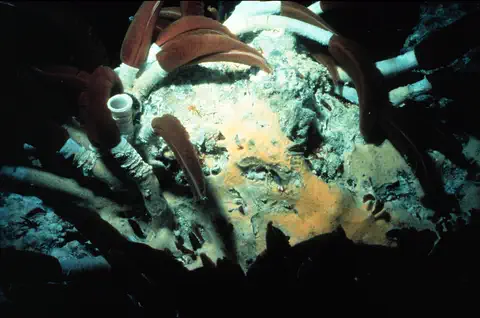
Giant tube worm
The giant tube worm lives more than a mile deep in the Pacific Ocean, beside hot springs in the seafloor called hydrothermal vents. It has no mouth and no stomach. Instead, billions of bacteria living inside its body make its food from chemicals in the vent water.
-
Watch
Country
Haiti
Haiti covers the western third of the island of Hispaniola in the Caribbean. Its name comes from an old word meaning mountainous land. In 1804, after enslaved people freed themselves, Haiti became independent, and its people created their own language, art and music. About 11.9 million people lived there in 2024.
-
Watch
Country
Colombia
Colombia is in the northwest of South America, with coasts on both the Caribbean Sea and the Pacific Ocean. Three ranges of the Andes run through it, and most people live in the cool mountains, where the capital, Bogotá, sits on a high plateau. About 53.4 million people lived there in 2026, according to DANE, the national statistics office.
-
 Watch
Animal
American lobster
The American lobster is a big crustacean that lives on the rocky sea floor of the northwest Atlantic Ocean. It has two very different claws, one for crushing and one for tearing, and it must climb out of its hard shell again and again to grow.
-
 Watch
3D
Animal
Antarctic krill
Antarctic krill are small, shrimp-like crustaceans about 6 centimeters long that live in the icy Southern Ocean around Antarctica. They gather in enormous swarms, and almost all the bigger animals of the Antarctic, from penguins to blue whales, depend on them for food.
-
 Watch
Animal
Army ant
Army ants hunt together in giant swarms and never build a permanent nest. This page is about the best-studied kind, Eciton burchellii, of Central and South American forests. Each night of its traveling phase the colony moves, and the workers link their legs to build a living camp around their queen and young.
-
 Watch
3D
Animal
Atlantic blue crab
The Atlantic blue crab is a swimming crab with bright blue claws and back legs shaped like paddles. It lives along the Atlantic coast of the Americas, especially in bays where rivers meet the sea, like the Chesapeake Bay. A mother crab carries up to two million eggs in a spongy orange mass under her body.
For parents & teachers
What children will learn
- Describe how the Christmas tree worm's crowns are used for both breathing and feeding.
- Explain that the worm lives in a tube inside living coral and depends on healthy reefs.
- Understand that one common name can cover several species, and that scientists check which is which.
Recommended ages: 3 to 17 · About 12 minutes
Talk about it
- Why might an animal that never moves need a very fast way to hide?
- Why do you think a young worm might settle near other worms of its kind?
- Why is it helpful for scientists to give every species its own name?
Try at home or in class
- Make a Christmas tree worm: roll two pipe cleaners into spirals and push them into a ball of play dough "coral". Pull them in and out to show how the worm hides.
- Measure 3.8 centimeters on a ruler and find something at home that is about as long as an average Christmas tree worm.
Key vocabulary: polychaete, radioles, phytoplankton, sedentary, larva, coral
Where these facts come from
- GBIF Backbone Taxonomy and GBIF Occurrence Search , Global Biodiversity Information Facility (CC0 1.0 (backbone); occurrence counts are facts derived from records under CC0, CC BY and CC BY-NC)
- Wikimedia Commons , Wikimedia Foundation (Per file: Public domain, CC0, CC BY or CC BY-SA only (credited on each page))
- What is a Christmas tree worm? , NOAA National Ocean Service
- Christmas Tree Worm (Spirobranchus giganteus) , NOAA Florida Keys National Marine Sanctuary
- Christmas Tree Worms (Spirobranchus giganteus) , NOAA Flower Garden Banks National Marine Sanctuary
- Spirobranchus giganteus (Pallas, 1766) , World Register of Marine Species (World Polychaeta Database)
- Habitat selection in the tropical polychaete Spirobranchus giganteus (Hunte, Conlin and Marsden, Marine Biology 104, 1990) , Springer Nature
- Wikidata , Wikimedia Foundation (CC0 1.0)
Checked, not yet human-reviewed. Last updated October 28, 2026. Spotted a mistake? Tell us.