
Animal
Ocellaris clownfish
The clownfish is a small orange fish with white stripes. It lives safely among the stinging arms of a sea anemone.
The ocellaris clownfish is a small orange-and-white reef fish from the Indian and Pacific Oceans. It shelters among the stinging tentacles of a sea anemone, protected by a slimy coat, and every clownfish starts life as a male.
Amphiprion ocellaris, the clown anemonefish, is a damselfish that lives in partnership with three species of large sea anemone on Indo-West Pacific reefs. Its groups are ruled by size, it changes sex from male to female, and it is one of the most popular fish in the marine aquarium trade.
Photo: Nick Hobgood, CC BY-SA 3.0, via Wikimedia Commons
Meet the clownfish
The clownfish is a little orange fish.
It has three white stripes with thin black edges. It lives in a sea anemone. An anemone looks like a soft flower, but its arms can sting.
The ocellaris clownfish is a small, bright fish that lives on coral reefs. It is orange with three white bands, and each band has a thin black edge. Most are about 8 centimeters long, shorter than your hand.
Its best-known habit is where it lives: among the waving tentacles of a sea anemone. Those tentacles sting most fish, but the clownfish is protected. People also call it the clown anemonefish or false clownfish.
Amphiprion ocellaris belongs to the anemonefishes, a group within the damselfish family Pomacentridae. Adults are orange to reddish-brown with three white bands outlined in black, and reach about 11 centimeters in total length (8 centimeters on average). It closely resembles Amphiprion percula; one way to tell them apart is that A. ocellaris usually has 11 dorsal-fin spines.
National Geographic notes that the clownfish of the film Finding Nemo are this species, the false anemonefish, rather than A. percula. It lives in a close partnership with large sea anemones, which shelter both the fish and the nest where it lays its eggs.
Quick facts
- Group
- Fish
- Length
- up to 11 cm
- Lifespan in the wild
- 6 to 10 years
Where it lives
Clownfish live in warm, shallow seas.
They live on coral reefs near Asia and Australia. Each one stays close to its own anemone home.
Clownfish live in warm, shallow water on coral reefs and in calm lagoons, usually between 1 and 15 meters deep. Their part of the world stretches from the eastern Indian Ocean, around Thailand, Malaysia and northwestern Australia, to Indonesia, the Philippines and north to Taiwan and southern Japan.
A clownfish does not wander the open sea. It stays in or near one anemone, and it is a poor swimmer away from that shelter.
FishBase describes the range as the Indo-West Pacific: the eastern Indian Ocean including the Andaman and Nicobar Islands, Thailand, Malaysia and northwestern Australia, east to Singapore, Indonesia and the Philippines, and north to Taiwan and Japan's Ryukyu Islands. The IUCN's 2021 global assessment lists eleven range countries, including Palau and Singapore.
The fish is reef-associated and non-migratory, recorded from about 1 to 15 meters deep in shallow, sheltered lagoons and reefs. Its true habitat is narrower still: it lives almost only with three host anemones, Heteractis magnifica, Stichodactyla gigantea and Stichodactyla mertensii, and it depends on them for shelter.

Where can you find this animal?
- Lives here naturally · Countries and seas named by a scientific source
- Sightings recorded · Records of wild sightings (GBIF)
Lives here naturally · Countries and seas named by a scientific source
Shallow coral reefs and lagoons of the eastern Indian Ocean and western Pacific, from northwestern Australia and the Andaman Sea to Indonesia, the Philippines, Taiwan and southern Japan. It lives only on reefs with its host anemones, so only small coastal parts of each country shown. Palau and Singapore are also in its range but are too small to show on this map.
Places: Australia, Brunei, India, Indonesia, Japan, Malaysia, Philippines, Taiwan and 1 more places.
Source: iucn-red-list · checked October 2026
Sightings recorded · Records of wild sightings (GBIF)
Counts of GBIF records of wild observations (human and machine) and preserved specimens. Records include introduced populations, vagrants, escaped or released animals and misidentifications, so a country with records is not necessarily part of the native range.
Wild sightings have been recorded in Indonesia, Philippines, Malaysia, Thailand, Japan, Myanmar, Australia, India and 18 more places.
Source: gbif · checked October 2026
Range maps show where scientists say an animal lives, often country by country. An animal may live in only part of a country shown, and sightings records can include animals that wandered far from home.
What it eats
Clownfish eat tiny food that floats in the water.
They eat tiny animals and little bits of algae. They also nibble tiny pests off their anemone.
Clownfish are omnivores, which means they eat both plants and animals. Their main food is plankton: tiny drifting creatures such as copepods, which are tiny crustaceans. They also eat algae; one study found they eat about as much algae as animal food.
They have also been seen eating parasites off their host anemone, a little like cleaning their own house. In a group, the bigger fish may feed a few meters from the anemone, while the small ones stay close to it.
The diet is planktonic: zooplankton such as copepods, plus algae. One study cited by Animal Diversity Web found that the species eats roughly equal amounts of algae and animal food, so it is classed as a generalized omnivore. Clownfish are also reported to eat parasites from their host anemones.
Feeding is shaped by the group's hierarchy, in which larger fish dominate smaller ones. National Geographic adds that clownfish gain food scraps as well as safety from their anemone, part of the exchange that keeps the partnership going. FishBase describes the species as non-migratory, and Animal Diversity Web says it depends on its host anemone for shelter.
Did you know?
Baby clownfish find their home by smell.
Young clownfish find the right kind of anemone by smell, remembering scents from when they were still eggs in the nest.
Juveniles locate one of their three host anemone species using olfactory cues imprinted while they were developing in the nest.
A slimy superpower
A clownfish has a slimy coat on its skin.
The slime stops the anemone from stinging it. A new clownfish gently touches the anemone's arms first, to get used to it.
A layer of mucus, or slime, covers a clownfish's skin. This coat protects it from the anemone's stinging tentacles, which would hurt or catch most other small fish.
The protection is not instant. A clownfish first gets used to a new anemone by swimming around it and gently touching the tentacles with its belly and fins. Clownfish have rounded tail fins, and females grow larger than males.
Anemonefishes are protected from their hosts' stinging cells by their mucus coat. Protection takes a period of acclimatization: the fish swims around the anemone, rubbing its belly and ventral fins on the tentacle tips, before it can shelter among them safely. National Geographic describes this as an elaborate dance.
Other features help identify the species: three white bands edged in black, a rounded caudal fin, 11 dorsal spines and 17 pectoral-fin rays. Females are larger than males. Not every population is orange: Animal Diversity Web reports black-and-white A. ocellaris off Australia's Northern Territory.
Growing up
Clownfish lay orange eggs on a rock next to their anemone.
The dad fans the eggs and keeps them clean. After about a week, tiny babies hatch and drift away. Later they swim back down to find an anemone.
Before laying eggs, the male clears a patch of bare rock close to the anemone, where the tentacles hang over to protect it. The female lays between 100 and 1,000 orange eggs, each stuck to the rock by a fine thread. The male fertilizes them and does most of the caring, fanning them with his fins.
The eggs hatch after about 6 to 8 days. The tiny larvae drift near the surface for 8 to 12 days, then sink to the reef to find an anemone of their own.
Spawning can happen nearly year-round in the tropics and is concentrated around the full moon, usually in the morning. The male prepares a nest on bare rock beneath the anemone's tentacles; the female lays 100 to 1,000 orange eggs over one to two hours, and the male fertilizes them. FishBase notes that the eggs stick to the substrate and that males guard and aerate them; males also remove eggs that are infertile or damaged by fungus.
Incubation takes about 6 to 8 days, longer in cooler water. Larvae then spend 8 to 12 days in the plankton, where they are easily eaten, before settling. Juveniles locate one of the three host anemone species by smell, imprinted while they were still in the nest.
Life in an anemone family
A clownfish group lives together in one anemone.
The biggest fish is the mother. The next biggest is the father. Every clownfish starts out as a male.
A clownfish group in one anemone has a strict order. The largest fish is the breeding female, the second largest is the breeding male, and smaller young fish wait their turn.
All clownfish start life as males. If the female is lost, the biggest male changes into a female, and the largest young fish becomes the new breeding male. The change cannot be reversed. The clownfish and the anemone help each other: the anemone gives shelter, and the clownfish cleans it and chases away intruders.
Anemonefishes are protandrous hermaphrodites: every individual matures first as a male, and some later become female. A group usually holds a monogamous breeding pair and several non-breeding juveniles in a size-based hierarchy. The female suppresses the development of other females through aggression, and the breeding male dominates the juveniles. If the female dies, the male changes sex and the largest juvenile matures as the new male; FishBase gives a length at sex change of about 4.4 centimeters.
The partnership benefits both sides. The anemone shelters the fish and its nest; the anemone may gain from the removal of parasites and from water circulated by the fish's fanning.
Did you know?
Clownfish often lay eggs near the full moon.
Clownfish spawning is concentrated around the full moon, and usually happens in the morning.
Spawning clusters around the full moon and usually takes place in the morning; suggested reasons include stronger currents for spreading larvae and more food when invertebrates spawn too.
Keeping clownfish safe
There are still many clownfish in the sea.
Some are taken from reefs to live in fish tanks. Some tank clownfish are raised by people instead.
The ocellaris clownfish is listed as Least Concern, which means it is not at high risk of disappearing. Even so, scientists do not know whether its numbers are going up or down.
It is one of the most popular fish for home aquariums, and some are collected from wild reefs. Clownfish are also bred in captivity for aquariums, so not every aquarium clownfish has to come from a reef. Changes to its reef home linked to climate change are another threat.
The IUCN assessed A. ocellaris as Least Concern in February 2021, with an unknown population trend. The threats it records are fishing and harvesting, chiefly for the international pet and display trade, and habitat shifting linked to climate change. The species occurs in at least one protected area.
FishBase calls it one of the most popular marine aquarium fishes and notes that it is bred artificially in Florida for the trade. Captive breeding can supply aquariums without collection from reefs. Because the fish depends on just three host anemone species, the health of those anemones is part of its own future.
IUCN Red List
How is the ocellaris clownfish doing in the wild?
- Least Concern (this animal)
- Near Threatened
- Vulnerable
- Endangered
- Critically Endangered
- Extinct in the Wild
- Extinct
Least Concern
Not at risk of disappearing from the wild right now.
See the IUCN Red List assessment · The IUCN Red List of Threatened Species 2022.2
Amazing facts
-
Some clownfish are black and white instead of orange.
Off northern Australia, some ocellaris clownfish are black and white instead of orange.
Animal Diversity Web reports a black-and-white color form of A. ocellaris, with black replacing orange, off Australia's Northern Territory.
-
Baby clownfish find their home by smell.
Young clownfish find the right kind of anemone by smell, remembering scents from when they were still eggs in the nest.
Juveniles locate one of their three host anemone species using olfactory cues imprinted while they were developing in the nest.
-
Clownfish often lay eggs near the full moon.
Clownfish spawning is concentrated around the full moon, and usually happens in the morning.
Spawning clusters around the full moon and usually takes place in the morning; suggested reasons include stronger currents for spreading larvae and more food when invertebrates spawn too.
-
Each clownfish egg is tied to the rock with a tiny thread.
Clownfish eggs are attached to the rock by a fine thread, so they stay in the nest while the father fans them.
The demersal eggs, about 3 to 4 millimeters long, are attached to the substrate by a fine thread and tended mainly by the male.
Words to know
- sea anemone
- a soft sea animal with stinging tentacles that stays in one place
- tentacle
- a long, bendy arm used for touching or catching food
- mucus
- a slimy layer that covers and protects the skin
- plankton
- tiny living things that drift in the water
- larva
- a very young animal that looks different from its parents
- omnivore
- an animal that eats both plants and animals
Discovery challenge
-
Where does a clownfish live?
Where does an ocellaris clownfish make its home?
Which shelter does Amphiprion ocellaris depend on?
- Among a sea anemone's tentacles
- In a burrow on the beach
- Inside a floating log
Show the answer
Among a sea anemone's tentacles
Clownfish live in sea anemones, among their soft, stinging arms.
A clownfish lives in or near one sea anemone, sheltering among its stinging tentacles.
It lives almost only with three host anemone species, which shelter both the fish and its nest.
-
What keeps a clownfish safe from the anemone's sting?
What protects a clownfish from its anemone's stinging tentacles?
What protects an anemonefish from its host's stinging cells?
- Its bright orange color
- A slimy coat of mucus
- Hard armor plates
Show the answer
A slimy coat of mucus
A slimy coat on its skin keeps the anemone from stinging it.
A layer of mucus protects the clownfish, after it gets used to the anemone by gently touching its tentacles.
Its mucus coat protects it, after acclimatization in which the fish rubs its belly and fins on the tentacle tips.
-
Who looks after clownfish eggs the most?
Which parent does most of the work caring for clownfish eggs?
In A. ocellaris, which parent mainly guards and aerates the eggs?
- The mother
- The father
- No one
Show the answer
The father
The dad clownfish fans the eggs and keeps them clean.
The male guards the eggs and fans them with his fins until they hatch, about 6 to 8 days later.
Males guard and aerate the eggs and remove infertile or fungus-damaged ones; females help only now and then.
-
If a group's mother clownfish is gone, what does the biggest male become?
If the female in a clownfish group dies, what happens to the largest male?
In a protandrous anemonefish group, what does the breeding male become if the female dies?
- The new female
- A baby again
- A sea anemone
Show the answer
The new female
All clownfish start as males. The biggest male can become the new mother.
Every clownfish starts life as a male. The largest male changes into the female, and the biggest young fish becomes the new male.
Being protandrous hermaphrodites, the breeding male changes sex to female and the largest juvenile matures into the breeding male.
Places where you might see it
-
 Watch
 Country
Indonesia
Indonesia is a country of about 17,500 islands in Southeast Asia, spread across the Equator between the Indian and Pacific oceans. It has more than 100 active volcanoes, rainforests full of wildlife, and about 286 million people (2025).
-
 Watch
 Country
Philippines
The Philippines is an island country in Southeast Asia, in the western Pacific Ocean. It has more than 7,000 islands, about 50 volcanoes and rich coral reefs, and about 112.7 million people were counted there in 2024.
-
 Watch
 Country
Australia
Australia is a country and the smallest continent, surrounded by ocean in the Southern Hemisphere. Much of its middle is dry and flat, most people live near the coast, and its animals include kangaroos, koalas and the platypus, a mammal that lays eggs.
-
 Watch
Natural wonder
Great Barrier Reef
The Great Barrier Reef stretches about 2,300 kilometers along the coast of Queensland, Australia. It is made of about 2,500 separate reefs and more than 900 islands, built by tiny coral animals, and it is home to more than 1,500 kinds of fish.
Experiments to try
Explore next
-
 Watch
Animal
Orange clownfish
The orange clownfish is a small, bright orange reef fish with three white bands edged in black. It lives in the warm western Pacific, from northern Australia to New Guinea and the Solomon Islands, always beside a sea anemone. A coat of slimy mucus keeps the anemone's stings from hurting it, and the fish and anemone help each other.
-
 Watch
Animal
Magnificent sea anemone
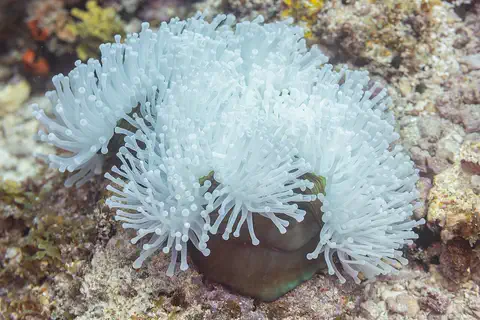
The magnificent sea anemone is a large sea anemone of warm Indian and Pacific Ocean reefs. Its body is a soft column topped with hundreds of finger-shaped tentacles, and it often perches on top of rocks in plain view. Many kinds of clownfish live safely among its stinging tentacles.
-
Watch
Country
Indonesia
Indonesia is a country of about 17,500 islands in Southeast Asia, spread across the Equator between the Indian and Pacific oceans. It has more than 100 active volcanoes, rainforests full of wildlife, and about 286 million people (2025).
-
Watch
Country
Philippines
The Philippines is an island country in Southeast Asia, in the western Pacific Ocean. It has more than 7,000 islands, about 50 volcanoes and rich coral reefs, and about 112.7 million people were counted there in 2024.
-
Watch
Country
Australia
Australia is a country and the smallest continent, surrounded by ocean in the Southern Hemisphere. Much of its middle is dry and flat, most people live near the coast, and its animals include kangaroos, koalas and the platypus, a mammal that lays eggs.
-
 Watch
3D
Animal
Blue tang
The blue tang is a royal-blue reef fish with black markings and a bright yellow tail. It lives on coral reefs across the Indian and Pacific Oceans, starts life yellow, and carries sharp blades at the base of its tail.
-
 Watch
3D
Animal
Leafy seadragon
The leafy seadragon is a relative of the seahorse covered in leaf-shaped flaps of skin. It drifts among seaweed so well that it almost disappears. It sucks up tiny shrimp through its long snout, and the father carries the eggs on his tail.
- Watch What If? Lab What if coral reefs could be regrown? Scientists grow broken pieces of coral in underwater nurseries, then plant them back on damaged reefs. Follow how coral gardens work, how scientists search for corals that cope with heat, and what happens when fish come back to a restored reef.
For parents & teachers
What children will learn
- Describe the partnership between clownfish and sea anemones and how each benefits.
- Explain how a mucus coat protects the clownfish from stinging tentacles.
- Describe the clownfish life cycle, including male egg care and the drifting larval stage.
- Understand that clownfish start life as males and how a group's size order works.
Recommended ages: 3 to 17 · About 15 minutes
Talk about it
- What does the clownfish give the anemone, and what does the anemone give the clownfish?
- Why might it be better for aquarium fish to be raised by people than taken from reefs?
- Can you think of other animals that help each other in a partnership?
Try at home or in class
- Measure 8 centimeters on a ruler and draw a clownfish that long, with three white bands edged in black.
- Rub a little dish soap or lotion on one finger, then touch a dry and a slippery surface: talk about how a slimy coat can protect skin.
Key vocabulary: sea anemone, tentacle, mucus, plankton, larva, omnivore
Where these facts come from
- The IUCN Red List of Threatened Species , International Union for Conservation of Nature (IUCN terms of use (no redistribution of Red List data or range maps))
- GBIF Backbone Taxonomy and GBIF Occurrence Search , Global Biodiversity Information Facility (CC0 1.0 (backbone); occurrence counts are facts derived from records under CC0, CC BY and CC BY-NC)
- Amphiprion ocellaris (Clown Anemonefish), 2021 global assessment , IUCN Red List of Threatened Species
- Amphiprion ocellaris (clown anemonefish) , Animal Diversity Web, University of Michigan Museum of Zoology
- Amphiprion ocellaris, Clown anemonefish , FishBase
- Clownfish , National Geographic
- Wikidata , Wikimedia Foundation (CC0 1.0)
- Wikimedia Commons , Wikimedia Foundation (Per file: Public domain, CC0, CC BY or CC BY-SA only (credited on each page))
Checked, not yet human-reviewed. Last updated October 28, 2026. Spotted a mistake? Tell us.