
Animal
Common green darner
The common green darner is a big dragonfly with a green middle. It starts life under the water and then flies far away when it grows up.
The common green darner is one of North America's larger and best-known dragonflies, up to about 8 centimeters long. It begins life as an underwater nymph, then becomes a fast flier that catches insects in the air. Many green darners migrate, in a relay that takes at least three generations each year.
Anax junius is a large hawker dragonfly (Aeshnidae) of ponds and lakes across North America. Its development is incomplete (hemimetabolous): an aquatic nymph molts through about a dozen instars before emerging as a flying adult. Stable-isotope work shows a migratory annual cycle of at least three generations, governed largely by temperature. It is listed as Least Concern by the IUCN.
Photo: Bruce Marlin, CC BY 3.0, via Wikimedia Commons
Meet the green darner
The green darner is a big dragonfly.
It has a green middle, huge eyes and four see-through wings. It zooms over ponds to catch little flying bugs. Its long body looks like a sewing needle.
The common green darner is one of the larger dragonflies in North America, up to about 7 or 8 centimeters long. Both males and females have a bright green thorax, the middle part where the wings and legs attach. Males have a bright blue band on the abdomen; most females are brown or rusty there.
Its long, thin abdomen reminded people of a darning needle, which is how darners got their name. Look for a dark spot like a little bullseye on top of its head, just in front of its enormous eyes. It is common across much of North America, even in towns.
Anax junius belongs to the Aeshnidae, the darners. The Animal Diversity Web describes adults up to about 7 or 8 centimeters, with large eyes, a short robust thorax and a long slender abdomen. Both sexes have a green thorax; males have blue segments behind it, while most females are brown above and gray-green on the sides, and a minority of females are colored like males.
The Missouri Department of Conservation calls it abundant and well known, and it is recognized by a bullseye-like mark on the head in front of the compound eyes. Its four wings work independently, letting it fly fast, hover and fly backward (Minnesota Department of Natural Resources).
Quick facts
- Group
- Invertebrate
- Length
- up to 8 cm
- Top speed
- up to 145 km per day
Where it lives
Green darners live in North America.
They like ponds, lakes and slow streams. The babies live under the water. The grown-ups fly everywhere, even over fields and towns.
Green darners live across the whole United States, north into southern Canada and south into Mexico. In winter, some that flew south from the north reach parts of Central America. There are also green darners in Hawaii and on islands of the Caribbean.
They need water. The young live in lakes, ponds and slow streams, usually close to shore in water less than half a meter deep. Adults fly over meadows, forests, beaches and even deserts, but they stay near water to mate and lay eggs.
The Animal Diversity Web describes a range across most of the Nearctic: all of the United States, north into southern Canada and south into parts of Mexico, with northern migrants wintering in Central America (the Yucatán, Belize and Veracruz). It also reports populations in Hawaii, Tahiti, the West Indies, China and the Kamchatka peninsula; wind-blown strays reach Bermuda, the United Kingdom, France, Alaska and northeastern Asia without forming populations.
Nymphs live in lakes, ponds and slow streams, near shore in water less than 0.5 meters deep. Adults use many habitats, perching in plants at night, and migrants follow coastlines, so dunes and beaches are good places to see them. The map shades only the three mainland countries; the islands and Asian populations are not shaded.
Continent
Its habitat

Where can you find this animal?
- Lives here naturally · Countries and seas named by a scientific source
- Sightings recorded · Records of wild sightings (GBIF)
Lives here naturally · Countries and seas named by a scientific source
Ponds, lakes, slow streams and the land around them across the United States (including Hawaii), southern Canada and parts of Mexico. Northern migrants winter as far south as Central America (Yucatán, Belize, Veracruz). Populations in the West Indies, Tahiti, China and Kamchatka are reported but not shaded.
Places: United States, Canada and Mexico.
Source: https://animaldiversity.org/accounts/Anax_junius/ · checked October 2026
Sightings recorded · Records of wild sightings (GBIF)
Counts of GBIF records of wild observations (human and machine) and preserved specimens. Records include introduced populations, vagrants, escaped or released animals and misidentifications, so a country with records is not necessarily part of the native range.
Wild sightings have been recorded in United States, Canada, Mexico, UK, Cuba, Dominican Rep., Puerto Rico, France and 9 more places.
Source: gbif · checked October 2026
Range maps show where scientists say an animal lives, often country by country. An animal may live in only part of a country shown, and sightings records can include animals that wandered far from home.
Hunters of the air and water
Green darners eat other bugs.
The grown-ups catch mosquitoes and moths while they fly. The babies under the water catch water bugs and even tadpoles.
Green darners are hunters at every age. Adults zip through the air catching mosquitoes, moths and other flying insects.
The young, called nymphs, hunt under water. A nymph has a special lower lip that can shoot out to grab prey. It eats underwater insects, tadpoles and sometimes small fish. Nymphs even eat each other now and then! In turn, green darners are food for birds, spiders and other dragonflies.
Adults are aerial predators of insects such as mosquitoes and moths (Minnesota Department of Natural Resources). Nymphs are ambush predators with an extensible labium: in darners it is flat, with pointed palps used to spear prey (Animal Diversity Web). They take aquatic insects, tadpoles and sometimes fish, and are occasionally cannibalistic.
Green darners are prey for birds, spiders and other green darners, and the Minnesota Department of Natural Resources notes that American kestrels rely on them as food during fall migration.
Did you know?
Long ago, people in the Ozarks called big dragonflies "snake feeders."
Old-time Ozarkers called green darners and other big dragonflies "katynippers" and "snake feeders." They can pinch, but they cannot hurt people.
Missouri folk names for large dragonflies include "katynippers" and "snake feeders"; they can give a pinching bite when handled but cannot harm people.
Built for flying
A green darner has two huge eyes that cover most of its head.
It has four wings that can each move by itself. It can fly forward, backward and even stay still in the air!
A dragonfly's body is made for flying and hunting. Its huge compound eyes wrap around its head. Its four long wings can each move on their own, so a darner can zoom forward, stop and hover, and even fly backward.
On cold mornings, a green darner can shiver its wings very fast to warm up its flight muscles. Its six legs are used for perching and grabbing prey, not for walking far. If you pick one up, it may give a little pinch with its jaws, but it cannot harm people.
Large compound eyes dominate the head; the thorax houses the flight muscles for four independently operated wings, allowing rapid flight, hovering and backward flight. In cold conditions darners vibrate their wings rapidly to generate heat (Minnesota Department of Natural Resources).
Color changes with age: newly emerged (teneral) adults of both sexes have red-purple tips to the abdomen and clear or orange-tinted wings, and wings become amber with age, especially in females (Animal Diversity Web). The Missouri Department of Conservation notes that large dragonflies can give a pinching bite when handled but cannot harm people.
From pond nymph to flier
A green darner starts as a tiny egg on a pond plant.
A nymph hatches and lives under the water. It grows and sheds its skin many times. Then it climbs up a stem, its skin splits, and out comes a dragonfly!
Green darners change in three stages: egg, nymph and adult. There is no pupa. Pairs fly low over the water together and lay eggs on floating stems and leaves. After about a week, a nymph hatches.
The nymph eats, grows and sheds its skin about a dozen times. When it is ready, it climbs out of the water and up a plant stem. Its skin splits down the back, and the adult crawls out and pumps up its wings. Nymphs that stay in the north take about a year to grow up, but the young of migrating darners grow up in just 3 to 5 months.
Development is hemimetabolous. Pairs stay in tandem and oviposit on floating stems and leaves, living or dead, and on woody branches; eggs hatch after at least 6 or 7 days, a hatch triggered by low oxygen (Animal Diversity Web). Nymphs pass through 9 to 13 instars, reaching 3.5 to 5 centimeters with prominent wing pads, then climb a vertical surface, sometimes far from water, and eclose. Teneral adults have little fat and immature flight muscles and feed heavily as their cuticle hardens.
Timing differs between resident and migratory populations. Northern residents lay in late July to August; their nymphs overwinter and emerge the next June or July, 11 to 12 months of development. Offspring of spring migrants develop in only 3 to 5 months without overwintering, emerging in late August and September.
A relay race across a continent
Many green darners take a long trip every year.
In spring, darners fly north and lay eggs. Their babies grow up and fly south. Their babies stay in the south, and the next spring their young fly north again!
Green darners make one of the most amazing insect migrations. Scientists at the Smithsonian studied the chemistry of darner wings collected over 140 years and found that the trip takes at least three generations, like a relay race.
In spring, the first generation flies north more than 650 kilometers, lays eggs and dies. Their young grow up over the summer and fly more than 680 kilometers south, where they lay eggs and die. A third generation grows up in the south and stays there, and its young start the trip north the next spring. Some darners in the north do not migrate at all.
Hallworth and colleagues (2018), at the Smithsonian Migratory Bird Center, combined stable-hydrogen isotope analysis of 852 wing samples from eight countries spanning 140 years with 21 years of citizen-science records. They showed an annual cycle of at least three generations, governed largely by temperature: a spring generation moves north more than 650 kilometers, breeds and dies; a second generation flies south more than 680 kilometers, breeds and dies; a third resident generation breeds locally and produces the next spring's northbound migrants.
In Minnesota, migrants head for the Gulf Coast from July to October, flying up to about 90 miles (145 km) a day. Males are aggressive toward each other, and single males often attack pairs flying in tandem (Animal Diversity Web).
Did you know?
Green darners can shiver their wings to warm up.
On cold days, green darners vibrate their wings very fast to warm up their bodies.
Like other dragonflies, green darners generate heat by rapid wing vibration in cold conditions.
Ponds, weather and the future
There are lots of green darners.
They need clean ponds for their babies. Keeping ponds and wetlands healthy helps dragonflies.
The common green darner is common and widespread, and the IUCN lists it as Least Concern, which means it is not in danger right now.
Scientists are watching how a warming climate might affect it. The timing of its migration and how fast its nymphs grow both depend on temperature, so changes in the weather could change its yearly journey. Healthy ponds and wetlands give darners a place to grow up.
Anax junius is assessed globally as Least Concern on the IUCN Red List (Paulson, 2018 assessment). It is abundant across its range.
Because migration timing and nymph development depend strongly on temperature, Hallworth and colleagues (2018) warn that continued climate change could lead to fundamental changes in the biology of this and similar migratory insects. Nymphs depend on shallow, vegetated shorelines of ponds, lakes and slow streams.
IUCN Red List
How is the common green darner doing in the wild?
- Least Concern (this animal)
- Near Threatened
- Vulnerable
- Endangered
- Critically Endangered
- Extinct in the Wild
- Extinct
Least Concern
Not at risk of disappearing from the wild right now.
Amazing facts
-
A green darner can fly backward!
A green darner's four wings work on their own, so it can hover and even fly backward.
Independently operated wings allow rapid flight, hovering and backward flight.
-
Green darners can shiver their wings to warm up.
On cold days, green darners vibrate their wings very fast to warm up their bodies.
Like other dragonflies, green darners generate heat by rapid wing vibration in cold conditions.
-
Long ago, people in the Ozarks called big dragonflies "snake feeders."
Old-time Ozarkers called green darners and other big dragonflies "katynippers" and "snake feeders." They can pinch, but they cannot hurt people.
Missouri folk names for large dragonflies include "katynippers" and "snake feeders"; they can give a pinching bite when handled but cannot harm people.
-
Scientists learned about the darners' trip by studying old wings.
Scientists studied the chemistry of 852 dragonfly wings, some collected 140 years ago, to work out where green darners grew up.
Stable-hydrogen isotope analysis of 852 wing samples from eight countries, spanning 140 years, combined with 21 years of citizen-science data, revealed the migratory annual cycle (Hallworth and colleagues 2018).
Words to know
- nymph
- the young stage of a dragonfly, which lives and hunts under water
- molt
- to shed an old outer skin so the body can grow
- thorax
- the middle part of an insect's body, where the legs and wings attach
- migration
- a regular journey animals make from one place to another and back
- generation
- parents, then their children, then their grandchildren: each is one generation
- compound eye
- an eye made of many tiny parts, each seeing a small piece of the view
Discovery challenge
-
Where does a baby green darner live?
Where does a green darner nymph live?
In which habitat do Anax junius nymphs develop?
- In the sky
- Under the water in ponds
- Inside tree bark
Show the answer
Under the water in ponds
The babies live under the water in ponds and lakes.
Nymphs live in lakes, ponds and slow streams, close to shore.
Nymphs are aquatic, in lakes, ponds and slow streams, usually near shore in water under 0.5 meters deep.
-
How many families in a row make the darners' big trip?
How many generations does it take to complete one year of the green darner migration?
According to Hallworth and colleagues (2018), how many generations make up the annual migratory cycle?
- Just one
- At least three
- One hundred
Show the answer
At least three
At least three: one flies north, one flies south, and one stays in the south.
At least three generations: north in spring, south in fall, and a resident southern generation.
At least three: a northbound spring generation, a southbound generation and a resident southern generation.
-
Which of these can a green darner do?
Which of these can a green darner do in the air?
Which flight ability do the darner's independently operated wings give it?
- Fly backward
- Swim like a fish
- Spin a web
Show the answer
Fly backward
It can fly backward and stay still in the air!
Its four wings move on their own, so it can hover and fly backward.
Independently operated wings allow hovering and backward flight as well as fast forward flight.
-
Does a green darner have a pupa stage?
Which stage is missing from a green darner's life cycle?
Which stage is absent in the hemimetabolous development of Anax junius?
- The egg
- The nymph
- The pupa
Show the answer
The pupa
No pupa! The nymph climbs out of the water and turns into a dragonfly.
Dragonflies go from egg to nymph to adult, with no pupa in between.
Hemimetabolous insects have no pupa: the final-instar nymph molts directly into the adult.
Places where you might see it
-
 Watch
 Country
United States
The United States is a large country in North America made of 50 states, from icy Alaska to the warm islands of Hawaii. It has the Grand Canyon, the Mississippi River and Yellowstone, and about 342 million people live there.
-
 Watch
 Country
Canada
Canada is the second-largest country in the world, stretching across the north of North America from the Atlantic to the Pacific and up into the Arctic. It has the Rocky Mountains, thousands of islands and about 42 million people, who speak English, French and many other languages.
-
 Watch
 Country
Mexico
Mexico is a large country in southern North America, between the Pacific Ocean and the Gulf of Mexico. It has smoking volcanoes, ancient cities built by the Maya and other peoples, and about 132 million people, many of them in and around Mexico City.
Explore next
-
 Watch
3D
Animal
Monarch butterfly
The monarch butterfly is famous for its bright orange wings and its amazing journey. Each fall, monarchs from eastern North America fly up to 3,000 miles to mountain forests in Mexico, where they spend the winter clustered together on fir trees. Their caterpillars eat only milkweed, which makes them taste bad to predators.
-
 Watch
Animal
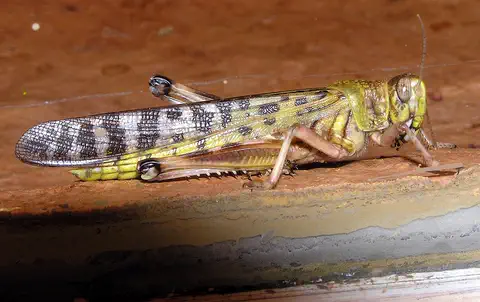
Desert locust
The desert locust is a large grasshopper of the deserts of Africa, the Middle East and Southwest Asia. Most of the time it lives alone. But after good rains, when locusts become crowded, they change their color and behavior and can gather into enormous swarms that fly long distances and eat farmers' crops.
-
Watch
Country
United States
The United States is a large country in North America made of 50 states, from icy Alaska to the warm islands of Hawaii. It has the Grand Canyon, the Mississippi River and Yellowstone, and about 342 million people live there.
-
Watch
Country
Canada
Canada is the second-largest country in the world, stretching across the north of North America from the Atlantic to the Pacific and up into the Arctic. It has the Rocky Mountains, thousands of islands and about 42 million people, who speak English, French and many other languages.
-
Watch
Country
Mexico
Mexico is a large country in southern North America, between the Pacific Ocean and the Gulf of Mexico. It has smoking volcanoes, ancient cities built by the Maya and other peoples, and about 132 million people, many of them in and around Mexico City.
-
 Watch
Animal
American lobster
The American lobster is a big crustacean that lives on the rocky sea floor of the northwest Atlantic Ocean. It has two very different claws, one for crushing and one for tearing, and it must climb out of its hard shell again and again to grow.
-
 Watch
3D
Animal
Antarctic krill
Antarctic krill are small, shrimp-like crustaceans about 6 centimeters long that live in the icy Southern Ocean around Antarctica. They gather in enormous swarms, and almost all the bigger animals of the Antarctic, from penguins to blue whales, depend on them for food.
-
 Watch
Animal
Army ant
Army ants hunt together in giant swarms and never build a permanent nest. This page is about the best-studied kind, Eciton burchellii, of Central and South American forests. Each night of its traveling phase the colony moves, and the workers link their legs to build a living camp around their queen and young.
For parents & teachers
What children will learn
- Compare incomplete metamorphosis (egg, nymph, adult) with complete metamorphosis.
- Describe how dragonflies hunt as nymphs and as adults.
- Explain how the green darner's migration takes several generations.
- Explain how scientists used chemistry in old wings to study migration.
Recommended ages: 3 to 17 · About 15 minutes
Talk about it
- Why might a migration that takes three generations be harder to study than one bird's round trip?
- How might warmer weather change when darners migrate or how fast nymphs grow?
- What could your community do to keep ponds healthy for dragonflies?
Try at home or in class
- With an adult, visit a pond in summer and count how many dragonflies you see in five minutes; look on plant stems for empty nymph skins.
- Draw the three stages (egg, nymph, adult) and the three migrating generations on a map of North America.
Key vocabulary: nymph, molt, thorax, migration, generation, compound eye
Where these facts come from
- GBIF Backbone Taxonomy and GBIF Occurrence Search , Global Biodiversity Information Facility (CC0 1.0 (backbone); occurrence counts are facts derived from records under CC0, CC BY and CC BY-NC)
- Wikidata , Wikimedia Foundation (CC0 1.0)
- The IUCN Red List of Threatened Species , International Union for Conservation of Nature (IUCN terms of use (no redistribution of Red List data or range maps))
- Anax junius (Miner) , Animal Diversity Web, University of Michigan Museum of Zoology
- Common Green Darner , Missouri Department of Conservation Field Guide
- Minnesota Profile: Common Green Darner (Mary Hoff, Minnesota Conservation Volunteer, July–August 2026) , Minnesota Department of Natural Resources
- Tracking dragons: stable isotopes reveal the annual cycle of a long-distance migratory insect (Hallworth and colleagues, 2018) , Biology Letters (PubMed abstract)
- Anax junius in the IUCN Red List checklist (global category Least Concern) , GBIF (IUCN Red List of Threatened Species checklist dataset)
- Wikimedia Commons , Wikimedia Foundation (Per file: Public domain, CC0, CC BY or CC BY-SA only (credited on each page))
Checked, not yet human-reviewed. Last updated October 27, 2026. Spotted a mistake? Tell us.