
Animal
Common snapping turtle
The common snapping turtle lives in ponds, lakes and rivers in North America. It has a big head, a hooked beak and a long, bumpy tail.
The common snapping turtle is a big freshwater turtle of eastern North America. It hides in the mud of ponds and rivers with just its nose poking up, eats almost anything it finds, and can live for many decades. Each summer, mother turtles walk over land to dig nests in sand and gravel.
Chelydra serpentina is a large, long-lived freshwater turtle of eastern North America and a habitat and diet generalist. Very high adult survival and slow, late maturity make its populations vulnerable to extra deaths from roads and harvest; the IUCN lists it as Least Concern but decreasing (2025), and it is now in CITES Appendix II.
Photo: George Chernilevsky, CC BY 4.0, via Wikimedia Commons
Meet the snapping turtle
The common snapping turtle is a big turtle that lives in fresh water.
It has a big head and a hooked beak. Its tail is long and bumpy, like a little dinosaur's. It likes to hide in the mud.
The common snapping turtle is the largest freshwater turtle in Canada and in New England. Its shell is brown, olive or almost black, and it is often green with algae. It has a big head with a hooked beak, strong legs with long claws, and a tail as long as its shell with a row of saw-tooth bumps along the top.
Unlike most turtles, the males grow bigger than the females. The turtle in the photo lives in a private zoo collection in Ukraine; wild snapping turtles live in North America.
Chelydra serpentina is a large freshwater turtle, a reptile (class Reptilia) of the family Chelydridae. The IUCN gives average straight carapace lengths of about 28 to 32 centimeters for females and 35 centimeters for males, with recorded maximums of 39.0 and 50.3 centimeters; in Ontario, median males are 1.2 times longer and 1.8 times heavier than females. Ontario's government gives an average adult weight of 4.5 to 16 kilograms.
Its carapace is serrated at the rear and often coated with algae, the plastron (bottom shell) is much smaller than the carapace, and the long tail carries saw-toothed keels (Massachusetts Division of Fisheries and Wildlife). Two former subspecies are now treated as separate species (IUCN). The photographed animal is a captive in a private collection, shown at an exhibition in Vinnytsia, Ukraine.
Quick facts
- Group
- Reptile
- Length
- 0.2 to 0.36 m
- Weight
- 4.5 to 16 kg
- Lifespan in the wild
- from 70 years
Ponds, marshes and rivers
Snapping turtles live in North America.
They live in ponds, lakes, rivers and marshes. They like water with a soft, muddy bottom and lots of plants.
Wild snapping turtles live in the eastern half of North America, from southern Canada through much of the United States. They can live in almost any wetland: ponds, lakes, slow rivers, marshes, swamps and even salty water where rivers meet the sea.
Their favorite places are still or slow water with a soft muddy or sandy bottom and lots of water plants. In cold places they spend the winter resting in the soft mud at the bottom of the water.
The IUCN lists the native range across southern Canada from Saskatchewan to Nova Scotia and through most of the eastern and central United States; Mexico is listed only as 'possibly extant'. Introduced populations, seeded by the food and pet trade, are recorded in British Columbia, Europe (Belgium, France, Germany, Italy) and East Asia (China, Japan, South Korea, Taiwan).
It is a habitat generalist, preferring still or slow water with a soft mud or sand bottom and abundant vegetation, but also using bogs, fens, creeks, temporary ponds, stormwater ponds and brackish coastal water. In the north it overwinters dormant under water, among submerged debris or in soft bottom sediment, and some turtles travel more than 10 kilometers round trip to reach nest sites.
Continent
Its habitat

Where can you find this animal?
- Brought here by people · Countries and seas named by a scientific source
- Lives here naturally · Countries and seas named by a scientific source
- Sightings recorded · Records of wild sightings (GBIF)
Brought here by people · Countries and seas named by a scientific source
Populations started by released or escaped turtles from the food and pet trade, as listed by the IUCN (also British Columbia in Canada and Hong Kong).
Places: Belgium, France, Germany, Italy, China, Japan, South Korea and Taiwan.
Source: iucn-red-list · checked October 2026
Lives here naturally · Countries and seas named by a scientific source
Ponds, lakes, rivers and marshes of eastern and central North America, from southern Canada (Saskatchewan to Nova Scotia) through most of the eastern and central United States. Mexico is listed by the IUCN only as possibly present and is not shaded.
Places: Canada and United States.
Source: iucn-red-list · checked October 2026
Sightings recorded · Records of wild sightings (GBIF)
Counts of GBIF records of wild observations (human and machine) and preserved specimens. Records include introduced populations, vagrants, escaped or released animals and misidentifications, so a country with records is not necessarily part of the native range.
Wild sightings have been recorded in United States, Canada, France, Mexico, Japan, Colombia, Costa Rica, Germany and 26 more places.
Source: gbif · checked October 2026
Range maps show where scientists say an animal lives, often country by country. An animal may live in only part of a country shown, and sightings records can include animals that wandered far from home.
It eats almost anything
Snapping turtles eat plants and animals.
They eat water plants, fish, frogs, crayfish and snails. They also clean up dead animals in the water.
Snapping turtles are omnivores, which means they eat both plants and animals. Water plants can be a big part of their food.
They also catch fish, frogs, crayfish, snails and water insects, and they eat dead animals they find. Once in a while they catch a bird or a small mammal. They can live in lots of different kinds of water, too.
The IUCN describes Chelydra serpentina as a generalist omnivore. Plant matter can make up a major share of the diet, and animal prey includes amphibians, fishes, crayfish, molluscs, aquatic insects and carrion, with birds and mammals taken infrequently; the Massachusetts Division of Fisheries and Wildlife adds waterfowl.
The IUCN describes the species as both a dietary and a habitat generalist, tolerant of a range of climates and human disturbance, and still widespread and relatively abundant. Although it is rarely the most numerous turtle at a site (usually 2 to 30 percent of turtles), it often makes up a large share of the total turtle biomass in wetlands, according to the IUCN.
Did you know?
Snapping turtles can live longer than most people.
Snapping turtles are confirmed to live at least 70 years, and scientists think some may live more than 100.
Females with breeding histories spanning at least 40 years are known from long-term study in Ontario; confirmed lifespans reach at least 70 years (IUCN).
Beak, claws and a dinosaur tail
The snapping turtle has a hooked beak instead of teeth.
Its legs have long claws. Its neck and legs are bumpy. Its tail has pointy bumps along the top.
Turtles have no teeth. Instead, the snapping turtle has a sharp, hooked beak and strong jaws. Its head and legs are big, its claws are long, and its skin is covered in bumps.
Its bottom shell is small compared with the top shell. On land, a snapping turtle defends itself by biting, so people should watch from a distance. In the water it is usually calm. Algae often grow on its shell, which helps it blend in with the pond.
The head is large with a hooked upper jaw; the limbs are robust with long claws, and the skin of the neck and legs is studded with tubercles, as the photo shows. The plastron is much reduced relative to the carapace, and the tail, as long as the shell, bears saw-toothed keels.
The Massachusetts Division of Fisheries and Wildlife describes snapping turtles as formidable biters when on land or taken out of water but typically docile when submerged, and normally not a danger to swimmers. Ontario's government notes that algae grow on the shells of these largely submerged turtles, helping them blend in.
Eggs in the sand
In early summer, mother snapping turtles walk out of the water.
Each one digs a hole in sand or soft dirt and lays round eggs. The babies hatch after about three months. They are as small as a big coin.
In late May and June, female snapping turtles leave the water and walk over land to find a sunny, sandy or gravelly spot. Each one digs a nest and lays a clutch of round eggs, often 20 to 40, then goes back to the water.
The eggs take about 90 days to hatch. The warmth of the nest decides whether the babies will be boys or girls. Some hatchlings stay in the nest all winter and come out the next spring. In Ontario, a snapping turtle may not have babies of its own until it is 15 to 20 years old.
Females nest in open, sunny places such as clearings, meadows, shorelines, beaches, fields and road shoulders. The IUCN reports mean clutches of about 35 to 51 eggs in northern and western parts of the range (up to about 100 in exceptional cases) and about 20 in the south; incubation at constant 22 to 30 °C takes 55 to 95 days, and often exceeds 90 days in the north, where cold can kill whole nests before they finish developing.
Sex is set by temperature: in Ontario's account, eggs at 23 to 28 °C hatch as males and those at other temperatures as females. Maturity depends on size and varies with latitude, from 6 to 8 years in Florida to about 15 to 20 years in south-central Ontario. Adult survival is very high, usually above 90 percent a year; the species is confirmed to live at least 70 years, and over 100 is considered plausible (IUCN).
A hide-and-wait life
Snapping turtles spend most of their time under water.
They hide in mud and leaves with just their nose sticking up to breathe. They hardly ever sunbathe on logs.
Snapping turtles spend almost their whole lives in water. They like to lie in shallow water, buried in soft mud and dead leaves, with only their nostrils at the surface to breathe. Unlike many turtles, they rarely climb out to sunbathe.
People usually meet them in early summer, when females cross land and roads to find a place to nest. Big males sometimes have contests with each other, always in the water.
The species is highly aquatic and rarely basks above water; Ontario's government describes turtles lying in shallow water under mud and leaf litter with only the nostrils exposed. Mate searching and mating peak in spring but continue through the active season, clutches often have more than one father, and males can be combative, sometimes injuring each other in contests over mates (IUCN).
Where both species live, common snapping turtles shift away from the habitat preferred by the larger alligator snapping turtle. Overland nesting journeys are when most people encounter them, and when road crossings put adult females at risk.
Did you know?
The warmth of the nest decides if baby turtles are boys or girls.
In Ontario's account, snapping turtle eggs kept at 23 to 28 °C hatch as males, and eggs at other temperatures hatch as females.
Sex determination is temperature-dependent: intermediate incubation temperatures (about 23 to 28 °C) produce males and warmer or cooler ones produce females, per Ontario's government.
Keeping a common turtle common
Snapping turtles can live a very long time.
Cars on roads are a danger when turtles cross. People help by watching for turtles on roads and keeping wetlands safe.
There are still many snapping turtles, so the IUCN lists them as Least Concern, but their numbers are going down. Because a snapping turtle takes so long to grow up, losing even a few adults can make a population shrink for a long time.
Cars hit turtles crossing roads, people catch huge numbers for food and the pet trade, and raccoons and skunks dig up nests near towns and farms. Drivers can watch for turtles in early summer, and protecting wetlands helps them all.
The IUCN's 2025 assessment (assessed July 2023) keeps the species at Least Concern but records a decreasing trend and urges keeping 'this common species common'. Its long, slow life history means that small increases in adult mortality, especially of nesting females, cause sustained declines that are hard to detect; some northern populations have not recovered decades after threats eased.
Threats include commercial harvest and export for food and pets (from the United States, from tens of thousands to more than a million animals a year), road mortality, predators that thrive near people, such as raccoons and skunks, and swallowed fishhooks. The species was listed in CITES Appendix III in 2016 and moved to Appendix II in 2023, and Ontario lists it as a species of Special Concern.
IUCN Red List
How is the common snapping turtle doing in the wild?
- Least Concern (this animal)
- Near Threatened
- Vulnerable
- Endangered
- Critically Endangered
- Extinct in the Wild
- Extinct
Least Concern
Not at risk of disappearing from the wild right now.
See the IUCN Red List assessment · The IUCN Red List of Threatened Species 2022.2
Amazing facts
-
A snapping turtle's tail can be as long as its shell.
A snapping turtle's tail is about as long as its shell, with a row of saw-tooth bumps along the top.
The tail is roughly as long as the carapace and bears saw-toothed keels, an easy identification mark (Massachusetts Division of Fisheries and Wildlife).
-
The warmth of the nest decides if baby turtles are boys or girls.
In Ontario's account, snapping turtle eggs kept at 23 to 28 °C hatch as males, and eggs at other temperatures hatch as females.
Sex determination is temperature-dependent: intermediate incubation temperatures (about 23 to 28 °C) produce males and warmer or cooler ones produce females, per Ontario's government.
-
Snapping turtles can live longer than most people.
Snapping turtles are confirmed to live at least 70 years, and scientists think some may live more than 100.
Females with breeding histories spanning at least 40 years are known from long-term study in Ontario; confirmed lifespans reach at least 70 years (IUCN).
-
Algae can grow on a snapping turtle's shell.
Snapping turtles spend so long underwater that algae grow on their shells, helping them blend in.
Largely submerged and rarely basking, snapping turtles often carry algae on the carapace, which aids camouflage on the bottom.
Words to know
- omnivore
- an animal that eats both plants and animals
- carapace
- the top part of a turtle's shell
- plastron
- the bottom part of a turtle's shell
- carrion
- the body of an animal that has already died
- clutch
- a group of eggs laid at one time
- wetland
- land covered with shallow water, such as a marsh, swamp or pond edge
Discovery challenge
-
Where do wild snapping turtles live?
On which continent do common snapping turtles live in the wild?
Where is the common snapping turtle's native range?
- North America
- Africa
- Antarctica
Show the answer
North America
Wild snapping turtles live in North America.
They live in the eastern half of North America, in Canada and the United States.
Southern Canada and the eastern and central United States; populations elsewhere were introduced by people.
-
What does a snapping turtle have instead of teeth?
What does a snapping turtle use to grab its food?
Which structure does a snapping turtle use to seize food, since turtles lack teeth?
- A hooked beak
- A long trunk
- Sticky toes
Show the answer
A hooked beak
It has a sharp, hooked beak.
It grabs food with its sharp, hooked beak and strong jaws.
A hooked upper jaw with a keratin beak on a large head.
-
Where do snapping turtles lay their eggs?
Where does a female snapping turtle lay her eggs?
Which nest sites do females choose?
- Under the water
- In a sunny spot on land
- In a tree
Show the answer
In a sunny spot on land
She digs a nest in sand or soft dirt on land.
She walks over land to a sunny, sandy or gravelly place and digs a nest there.
Open, sun-exposed ground such as clearings, shorelines, beaches, fields and road shoulders.
-
What do snapping turtles eat?
Which word describes the snapping turtle's diet?
How does the IUCN describe the snapping turtle's diet?
- Only leaves from trees
- Plants and animals
- Only honey
Show the answer
Plants and animals
They eat water plants and small animals like fish and crayfish.
They are omnivores: they eat water plants, fish, frogs, crayfish, insects and dead animals.
A generalist omnivore: plant matter can dominate, with amphibians, fish, crayfish, molluscs, aquatic insects and carrion.
Places where you might see it
-
 Watch
 Country
United States
The United States is a large country in North America made of 50 states, from icy Alaska to the warm islands of Hawaii. It has the Grand Canyon, the Mississippi River and Yellowstone, and about 342 million people live there.
-
 Watch
 Country
Canada
Canada is the second-largest country in the world, stretching across the north of North America from the Atlantic to the Pacific and up into the Arctic. It has the Rocky Mountains, thousands of islands and about 42 million people, who speak English, French and many other languages.
Explore next
-
 Watch
Animal
Alligator snapping turtle
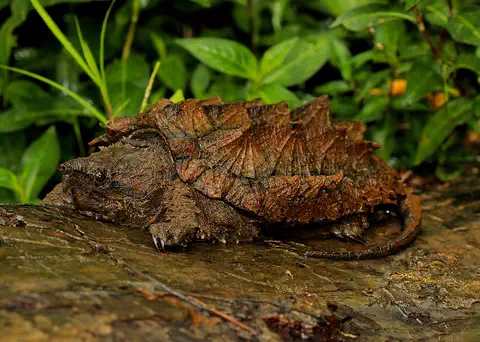
The alligator snapping turtle is the largest freshwater turtle in the United States. It lies still on the bottom of rivers and lakes with its mouth open, wiggling a worm-like lure on its tongue to trick fish into swimming close. Its numbers have fallen, and it is now endangered.
-
 Watch
Animal
Painted turtle
The painted turtle is one of the most common turtles in North America. Its dark shell and skin are decorated with bright red and yellow markings, and on sunny days dozens may pile onto one log to bask. It lives in ponds, marshes and slow streams from Canada to northern Mexico.
-
 Watch
3D
Animal
Eastern box turtle
The eastern box turtle is a small land turtle of eastern North America with a high, domed shell splashed with yellow and orange. A hinge on the bottom shell lets it close up almost completely, like a box with a lid. It eats mushrooms, berries, worms and slugs and can live for decades.
-
Watch
Country
United States
The United States is a large country in North America made of 50 states, from icy Alaska to the warm islands of Hawaii. It has the Grand Canyon, the Mississippi River and Yellowstone, and about 342 million people live there.
-
Watch
Country
Canada
Canada is the second-largest country in the world, stretching across the north of North America from the Atlantic to the Pacific and up into the Arctic. It has the Rocky Mountains, thousands of islands and about 42 million people, who speak English, French and many other languages.
-
 Watch
3D
Animal
American bullfrog
The American bullfrog is the largest true frog in North America. It lives in warm, still ponds and lakes, sits and waits for food to come close, and the males' deep 'jug-o-rum' call carries more than a kilometer. Its tadpoles can take years to turn into frogs.
-
 Watch
Animal
Common raccoon
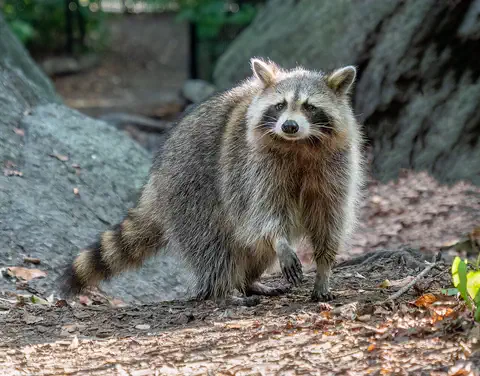
The common raccoon is a clever night-time animal from North and Central America, famous for its black mask, ringed tail and nimble, hand-like front paws. It eats almost anything and lives in forests, wetlands, farms and even big cities. People have also brought raccoons to Europe and Japan, where they now live wild.
-
 Watch
Animal
Aldabra giant tortoise
The Aldabra giant tortoise is one of the largest land tortoises on Earth. Wild ones live on Aldabra Atoll, a ring of coral islands in the Indian Ocean, where more than 100,000 of them graze, browse and shape the land like elephants do in Africa. They can live for more than 100 years.
For parents & teachers
What children will learn
- Describe the snapping turtle's body features (hooked beak, small plastron, long keeled tail) and how it lives in wetlands.
- Explain what an omnivore is, using the snapping turtle's diet.
- Retell the life cycle, including temperature-dependent sex and slow growth.
- Explain why long-lived, slow-growing animals are harmed by road deaths and harvest.
Recommended ages: 3 to 17 · About 12 minutes
Talk about it
- Why might a turtle that takes 15 years to grow up be hurt more by losing a few adults than a fast-growing animal?
- Why do you think snapping turtles rarely sunbathe on logs, unlike many other turtles?
- What can drivers and families do in early summer to help turtles cross roads safely?
Try at home or in class
- Draw a snapping turtle from the side and label the beak, the claws and the saw-tooth tail.
- Fill two cups with water, one warm and one cool, and feel the difference: a few degrees in a nest decides whether turtle eggs hatch as boys or girls.
Key vocabulary: omnivore, carapace, plastron, carrion, clutch, wetland
Where these facts come from
- The IUCN Red List of Threatened Species , International Union for Conservation of Nature (IUCN terms of use (no redistribution of Red List data or range maps))
- GBIF Backbone Taxonomy and GBIF Occurrence Search , Global Biodiversity Information Facility (CC0 1.0 (backbone); occurrence counts are facts derived from records under CC0, CC BY and CC BY-NC)
- Chelydra serpentina (Snapping Turtle), 2025 global assessment , IUCN Red List of Threatened Species
- Snapping turtle , Government of Ontario
- Learn about snapping turtles , Massachusetts Division of Fisheries and Wildlife
- Wikidata , Wikimedia Foundation (CC0 1.0)
- Wikimedia Commons , Wikimedia Foundation (Per file: Public domain, CC0, CC BY or CC BY-SA only (credited on each page))
Checked, not yet human-reviewed. Last updated October 27, 2026. Spotted a mistake? Tell us.