
Animal
Painted turtle
The painted turtle is a small pond turtle with red and yellow stripes, as if someone painted it. It loves to sit on logs in the sun.
The painted turtle is one of the most common turtles in North America. Its dark shell and skin are decorated with bright red and yellow markings, and on sunny days dozens may pile onto one log to bask. It lives in ponds, marshes and slow streams from Canada to northern Mexico.
Chrysemys picta is among the most widespread and abundant turtles of the United States and Canada, often the commonest turtle in shallow, vegetated wetlands. It has four traditional subspecies, temperature-dependent sex determination and hatchlings that usually overwinter in the nest. It is listed as Least Concern.
Photo: André Karwath aka Aka, CC BY-SA 2.5, via Wikimedia Commons
Meet the painted turtle
The painted turtle is a small turtle that lives in ponds.
Its shell is dark, with red and yellow marks. Its head and legs have bright yellow and red stripes. It looks like someone painted it!
The painted turtle gets its name from its bright markings. Its fairly flat, smooth shell is black or greenish brown with red and yellow marks, and yellow and red stripes run along its head, neck and legs.
It is one of the most common turtles in North America. In ponds and marshes with lots of plants, painted turtles are often the most common turtle of all. Most grown-ups have shells about 9 to 25 centimeters long, and females grow bigger than males.
Chrysemys picta is a small to medium-sized freshwater turtle (family Emydidae) with a relatively flat, smooth carapace, black or olive-brown with red and yellow markings (Animal Diversity Web). Males reach about 15.3 centimeters in shell length and females up to 25.4 centimeters, with wide variation by subspecies and place (IUCN).
Four subspecies are traditionally recognized: eastern (C. p. picta), western (bellii), southern (dorsalis) and midland (marginata). Some researchers argue that the southern painted turtle is distinct enough to be its own species; the IUCN's assessment keeps all four as subspecies while noting the question is not settled.
Quick facts
- Group
- Reptile
- Length
- 0.09 to 0.25 m
- Lifespan in the wild
- up to 61 years
Where it lives
Painted turtles live in North America.
They live in ponds, marshes, lakes and slow streams. They like shallow water with lots of plants.
Painted turtles live across much of North America: in southern Canada from British Columbia to Nova Scotia, through most of the United States, and in a small part of northern Mexico.
They can live in rivers, marshes, ponds, ditches and even slightly salty water, but their favorite places are shallow, still or slow waters full of plants. There they can be very common, with 100 or more turtles living in one hectare of wetland.
The IUCN's 2011 assessment gives a range from British Columbia to Nova Scotia and south to southern Georgia and the upper Colorado River system of Utah and Arizona, with western painted turtles also in the Rio Grande and basins of northern Chihuahua, Mexico. The southern subspecies is restricted to the lower Mississippi basin, from southern Illinois to Louisiana and east Texas.
The species uses permanent and temporary waters from rivers to marshes and brackish sites, but its optimal habitat is shallow, densely vegetated water with little or no flow. In such wetlands it may make up 62 to 76 percent of all turtles, at densities of 100 to 590 per hectare. Released pets have established populations elsewhere, including California, Germany, Spain and the Philippines.
Continent
Its habitat

Where can you find this animal?
- Brought here by people · Countries and seas named by a scientific source
- Lives here naturally · Countries and seas named by a scientific source
- Sightings recorded · Records of wild sightings (GBIF)
Brought here by people · Countries and seas named by a scientific source
Germany, Spain and the Philippines, where the IUCN lists introduced populations (released pets). California, in the United States, also has introduced populations.
Places: Germany, Spain and Philippines.
Source: iucn-red-list · checked October 2026
Lives here naturally · Countries and seas named by a scientific source
Ponds, marshes, lakes and slow streams from southern Canada (British Columbia to Nova Scotia) through most of the United States to northern Chihuahua, Mexico.
Places: Canada, United States and Mexico.
Source: iucn-red-list · checked October 2026
Sightings recorded · Records of wild sightings (GBIF)
Counts of GBIF records of wild observations (human and machine) and preserved specimens. Records include introduced populations, vagrants, escaped or released animals and misidentifications, so a country with records is not necessarily part of the native range.
Wild sightings have been recorded in United States, Canada, Mexico, Germany, Netherlands, Switzerland, Spain, Belgium and 10 more places.
Source: gbif · checked October 2026
Range maps show where scientists say an animal lives, often country by country. An animal may live in only part of a country shown, and sightings records can include animals that wandered far from home.
What it eats
Painted turtles eat plants and small animals.
They eat water plants, insects and little fish. They always eat in the water.
Painted turtles are omnivores: they eat almost any plant or animal food they can find. Their meals include water plants, insects, small crustaceans, small fish and sometimes dead animals. Young turtles eat mostly meat, and they eat more plants as they grow.
Painted turtles have no teeth. Instead, their jaws have tough, hard edges for gripping food. They must eat in the water, because their tongues can't move freely enough to handle food on land.
The IUCN describes Chrysemys picta as an omnivorous generalist that eats almost any available animal or plant matter. Juveniles are mainly carnivorous and take more plants with age (Animal Diversity Web).
Like all turtles, painted turtles lack teeth; horny plates on the jaws grip food. Their tongue is not freely mobile, so they cannot manipulate food well on land and must feed in water. As predators of small fish, crustaceans and other invertebrates, they are important in the food webs of their wetlands.
Did you know?
Painted turtles can live for a very long time.
Painted turtles can live for decades; the IUCN gives a record of up to 61 years.
Recorded longevity reaches 61 years (IUCN, from Ernst and Lovich 2009), with generation time estimated at about 20 years.
A painted shell
The turtle's shell keeps it safe.
It has bright yellow stripes on its head and neck, and red marks on the edge of its shell. Its feet have sharp claws.
A painted turtle's shell is smooth and fairly flat. The edge of the top shell often has red marks, and the bright stripes on the head, neck and legs are yellow and red.
Because its ribs are joined to its shell, a turtle cannot breathe by moving its chest like you do. Instead, it squeezes muscles near its legs to push air in and out of its lungs.
The carapace is smooth and relatively flat, black to olive with red and yellow markings, and the head, neck and limbs carry yellow and red stripes. Patterns vary among the four subspecies.
Because the ribs are fused to the shell, the chest cannot expand: painted turtles ventilate their lungs by alternately contracting flank and shoulder muscles (Animal Diversity Web). Females mature at a larger size than males, at about 100 to 130 millimeters of plastron length, compared with about 70 to 95 millimeters for males.
Growing up
The mother turtle digs a nest on land and lays soft eggs.
The babies hatch and dig their way out by themselves. Warm nests make more girl turtles, and cooler nests make more boy turtles!
In early summer, a female digs a nest on land and lays about 4 to 15 soft-shelled eggs, then covers them and leaves. The eggs take about 70 days to hatch. The babies are only about 2.7 centimeters long, and they take care of themselves from the start.
Amazingly, the temperature of the nest decides whether a baby turtle is a boy or a girl: cooler nests make males and warmer nests make females. Many babies stay inside the nest through their first winter.
Females usually produce two clutches a year (range 1 to 5) of about 5 to 11 eggs (range 1 to 23); incubation takes about 70 days (62 to 80), and hatchlings measure about 27 millimeters (IUCN, from Ernst and Lovich 2009). Sex is set by incubation temperature: low temperatures produce males, high temperatures females (Animal Diversity Web).
Hatchlings usually spend their first winter inside the shallow nest, where they can meet ice and cold. Freeze tolerance has been proposed as the key to their survival, but a 1998 study by Attaway, Packard and colleagues found that hatchlings survive only brief freezing of their body fluids, with none expected to last frozen beyond about 54 hours. Males mature at 2 to 4 years (at latest 6), females at 6 to 10, and longevity can reach 61 years.
Sun on a log
Painted turtles love to sit in the sun.
Sometimes lots of turtles pile up on one log. If something scary comes, they slide into the water. Splash!
On sunny days, painted turtles climb onto logs, fallen trees and rocks to bask, sometimes as many as 50 on one log, even stacked on top of each other! Basking warms them up and helps them get rid of leeches.
They are active during the day and rest on the bottom of the pond at night. At the first sign of danger, they dive into the water. In cold places, they spend the winter buried in the mud at the bottom of the pond.
Painted turtles are diurnal: they bask in groups on logs, fallen trees and other objects, sometimes up to 50 on a single log and stacked on one another, and rest on the bottom or on submerged objects at night (Animal Diversity Web). Basking helps rid them of parasitic leeches.
They are wary, diving at the first hint of danger. In many areas they hibernate through winter by burrowing into the mud, where their body temperature falls very low. Turtles hear poorly but have a good sense of smell and color vision, and use touch to communicate, especially during mating.
Did you know?
Painted turtles must eat in the water.
A painted turtle's tongue can't move freely, so it has to eat in the water.
With a tongue that is not freely mobile, painted turtles cannot manipulate food well on land and feed in water.
Common, but not careless
There are lots of painted turtles.
But cars on roads can hurt them. Drivers can help by watching out for turtles.
Painted turtles are common, and the IUCN lists them as Least Concern. They live in many protected areas.
They still face problems in some places: losing wetlands, being hit by cars on roads, pollution, and raccoons and other predators that grow very common near towns. People also collect them as pets. Painted turtles released as pets have even started living wild in other countries.
The IUCN's assessment, dating from 2010, published in 2011 and flagged by the IUCN as needing updating, lists Chrysemys picta as Least Concern with a stable trend, describing it as one of the most widespread and abundant turtles in the United States and Canada; all four subspecies appear secure.
Local threats include habitat loss, road mortality, predation by subsidized predators (unnaturally large predator populations supported by human food sources), pollution and collection. The species is widely traded as pets and laboratory animals; the IUCN notes that it was among the species mass-produced for export after the European Union banned imports of red-eared sliders, and released pets have established populations outside the native range.
IUCN Red List
How is the painted turtle doing in the wild?
- Least Concern (this animal)
- Near Threatened
- Vulnerable
- Endangered
- Critically Endangered
- Extinct in the Wild
- Extinct
Least Concern
Not at risk of disappearing from the wild right now.
See the IUCN Red List assessment · The IUCN Red List of Threatened Species 2022.2
Amazing facts
-
Up to 50 painted turtles can sit on one log!
As many as 50 painted turtles may bask on a single log, sometimes stacked on top of each other.
Animal Diversity Web reports basking groups of up to 50 on one log, with turtles stacked on one another.
-
Warm nests make girl painted turtles.
The temperature of the nest decides if a baby painted turtle will be a boy or a girl: cool for boys, warm for girls.
Sex is determined by incubation temperature during a critical phase of development; painted turtles lack sex chromosomes.
-
Painted turtles must eat in the water.
A painted turtle's tongue can't move freely, so it has to eat in the water.
With a tongue that is not freely mobile, painted turtles cannot manipulate food well on land and feed in water.
-
Painted turtles can live for a very long time.
Painted turtles can live for decades; the IUCN gives a record of up to 61 years.
Recorded longevity reaches 61 years (IUCN, from Ernst and Lovich 2009), with generation time estimated at about 20 years.
Words to know
- bask
- to lie in the sun to warm up
- omnivore
- an animal that eats both plants and animals
- carapace
- the top part of a turtle's shell
- hibernate
- to rest through the winter with the body slowed down
- subspecies
- a group within a species that looks a bit different and lives in its own area
- wetland
- land covered by shallow water, like a marsh or swamp
Discovery challenge
-
What do painted turtles love to do on sunny days?
What do painted turtles do on logs on sunny days?
Which behavior helps painted turtles warm up and get rid of leeches?
- Bask in the sun
- Build nests in trees
- Fly south
Show the answer
Bask in the sun
They sit in the sun to warm up.
They bask on logs, sometimes up to 50 on one log, to warm up.
Basking on logs and other objects, which also helps rid them of parasitic leeches.
-
What decides if a baby turtle is a boy or a girl?
What decides whether a painted turtle hatchling is male or female?
What determines sex in painted turtles?
- How warm the nest is
- The color of the egg
- The day of the week
Show the answer
How warm the nest is
Warm nests make girls. Cool nests make boys.
The nest temperature decides: cooler nests make males and warmer nests make females.
Incubation temperature during a critical developmental window; painted turtles lack sex chromosomes.
-
Where do painted turtles eat?
Where must painted turtles eat their food?
Why must painted turtles feed in water?
- In the water
- Up in trees
- Only on dry land
Show the answer
In the water
They eat in the water.
Their tongues can't move freely, so they need water to handle food.
The tongue is not freely mobile, so food cannot be manipulated well on land.
-
Where do painted turtles live?
On which continent do painted turtles live in the wild?
Which region is the painted turtle's native range?
- Africa
- North America
- Antarctica
Show the answer
North America
They live in North America.
They live in Canada, the United States and northern Mexico.
Southern Canada, most of the contiguous United States and northern Chihuahua, Mexico.
Places where you might see it
-
 Watch
 Country
Canada
Canada is the second-largest country in the world, stretching across the north of North America from the Atlantic to the Pacific and up into the Arctic. It has the Rocky Mountains, thousands of islands and about 42 million people, who speak English, French and many other languages.
-
 Watch
 Country
United States
The United States is a large country in North America made of 50 states, from icy Alaska to the warm islands of Hawaii. It has the Grand Canyon, the Mississippi River and Yellowstone, and about 342 million people live there.
Explore next
-
 Watch
3D
Animal
Red-eared slider
The red-eared slider is a freshwater turtle from the central United States and northeastern Mexico, named for the red stripe behind each eye. It basks on logs, swims with webbed feet and eats both plants and small animals. Because so many were sold as pets and later let go, sliders now live wild in many other countries too, where they can harm native turtles.
-
 Watch
Animal
Alligator snapping turtle
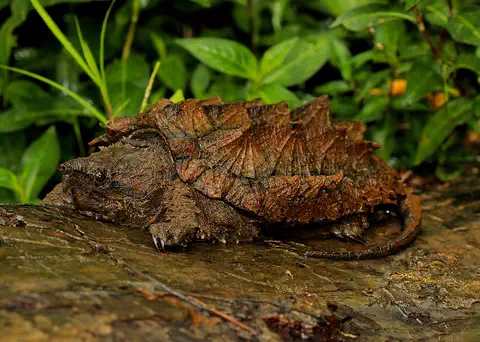
The alligator snapping turtle is the largest freshwater turtle in the United States. It lies still on the bottom of rivers and lakes with its mouth open, wiggling a worm-like lure on its tongue to trick fish into swimming close. Its numbers have fallen, and it is now endangered.
-
 Watch
3D
Animal
American alligator
The American alligator is a large, armored reptile of the swamps, marshes and lakes of the southeastern United States. Alligator mothers guard their nests and carry their babies to the water, and the holes alligators dig help many other animals survive dry seasons.
-
Watch
Country
Canada
Canada is the second-largest country in the world, stretching across the north of North America from the Atlantic to the Pacific and up into the Arctic. It has the Rocky Mountains, thousands of islands and about 42 million people, who speak English, French and many other languages.
-
Watch
Country
United States
The United States is a large country in North America made of 50 states, from icy Alaska to the warm islands of Hawaii. It has the Grand Canyon, the Mississippi River and Yellowstone, and about 342 million people live there.
-
 Watch
3D
Animal
Eastern box turtle
The eastern box turtle is a small land turtle of eastern North America with a high, domed shell splashed with yellow and orange. A hinge on the bottom shell lets it close up almost completely, like a box with a lid. It eats mushrooms, berries, worms and slugs and can live for decades.
-
 Watch
3D
Animal
Common snapping turtle
The common snapping turtle is a big freshwater turtle of eastern North America. It hides in the mud of ponds and rivers with just its nose poking up, eats almost anything it finds, and can live for many decades. Each summer, mother turtles walk over land to dig nests in sand and gravel.
-
 Watch
Animal
Aldabra giant tortoise
The Aldabra giant tortoise is one of the largest land tortoises on Earth. Wild ones live on Aldabra Atoll, a ring of coral islands in the Indian Ocean, where more than 100,000 of them graze, browse and shape the land like elephants do in Africa. They can live for more than 100 years.
For parents & teachers
What children will learn
- Describe the painted turtle's markings and where it lives.
- Explain basking and why turtles do it.
- Explain temperature-dependent sex determination in simple terms.
- Understand why pet turtles should never be released into the wild.
Recommended ages: 3 to 17 · About 12 minutes
Talk about it
- Why might turtles pile onto the same log?
- What could happen if a warmer climate made more nests warm?
- Why can releasing a pet turtle be a problem for wild animals?
Try at home or in class
- Put two dark stones in the sun and two in the shade for 20 minutes, then feel the difference, like a basking turtle.
- Draw a painted turtle and color its stripes and shell markings.
Key vocabulary: bask, omnivore, carapace, hibernate, subspecies, wetland
Where these facts come from
- The IUCN Red List of Threatened Species , International Union for Conservation of Nature (IUCN terms of use (no redistribution of Red List data or range maps))
- GBIF Backbone Taxonomy and GBIF Occurrence Search , Global Biodiversity Information Facility (CC0 1.0 (backbone); occurrence counts are facts derived from records under CC0, CC BY and CC BY-NC)
- Chrysemys picta (Painted Turtle), global Red List assessment 2011 , IUCN Red List of Threatened Species
- Chrysemys picta (painted turtle) , Animal Diversity Web, University of Michigan Museum of Zoology
- Hatchling painted turtles (Chrysemys picta) survive only brief freezing of their bodily fluids (Attaway, Packard and others, 1998) , East Tennessee State University, Digital Commons
- Wikidata , Wikimedia Foundation (CC0 1.0)
- Wikimedia Commons , Wikimedia Foundation (Per file: Public domain, CC0, CC BY or CC BY-SA only (credited on each page))
Checked, not yet human-reviewed. Last updated October 27, 2026. Spotted a mistake? Tell us.