
Animal
Common wasp
The common wasp is a black and yellow insect. Wasps live together in a big paper nest, with one queen in charge of laying eggs.
The common wasp is a black and yellow striped insect that lives in a big family called a colony. Thousands of wasps share a round nest made of paper that they make by chewing wood. They catch insects such as caterpillars and flies to feed their young, which makes them useful garden helpers.
Vespula vulgaris is a eusocial wasp of the family Vespidae, native to the Palearctic region. Each annual colony is founded by a single overwintered queen and can grow to 5,000 to 10,000 wasps in a paper nest. A predator of many insects, it has become invasive in New Zealand, Australia and South America.
Photo: Frank Vassen from Brussels, Belgium, CC BY 2.0, via Wikimedia Commons
Meet the common wasp
The common wasp is a black and yellow insect.
Wasps live together in a big family. One wasp, the queen, lays all the eggs. The other wasps help her.
The common wasp is the commonest wasp in the UK, and most people know its bold black and yellow stripes. Its body has six segments in its abdomen, each with one black and yellow stripe.
Common wasps are social insects. They live in a colony with one queen, who lays the eggs, and thousands of workers, who are all females. The workers build the nest, find food and care for the young. In the English Midlands people call them jaspers.
Vespula vulgaris is a social wasp of the family Vespidae (order Hymenoptera, class Insecta). Buglife notes that of the many wasp species in the UK, only nine are social wasps that form large nests, and that most wasps are solitary. Workers, always females, measure 12 to 17 millimeters and queens about 20.
It closely resembles the German wasp (Vespula germanica). Buglife gives the key difference: common wasps lack the three black dots on the head and the separate black dots on the abdomen, because the dots merge with the stripes. Each colony has only one queen.
Quick facts
- Group
- Invertebrate
- Length
- 12 to 20 mm
- Lifespan in the wild
- up to 1 years
Where it lives
Common wasps first lived in Europe and Asia.
They live in woods, fields, parks and gardens. People carried them by accident to faraway places too.
The common wasp comes from Europe, northern Africa and Asia. In Britain it lives almost everywhere: in woods, fields, towns and gardens.
Over the last sixty years, common wasps have traveled by accident to new places, including New Zealand, Australia, Iceland, Argentina and Chile. New Zealand now has some of the highest numbers of these wasps in the world.
Rendoll Cárcamo and colleagues (2016) describe V. vulgaris as native to the Palearctic region (Eurasia and northern Africa). Over the past 60 years it has colonized new regions including Australia, New Zealand and Iceland, and in South America it was first detected in 2010 in Bariloche, Argentina, then in Chile in 2011, reaching Navarino Island near Cape Horn. It does not live wild in North America: Kimsey and Carpenter (2012) explain that the yellowjackets there that were long called V. vulgaris belong to a separate species, the Alaska yellowjacket (Vespula alascensis), so North America is left off the map.
New Zealand's Department of Conservation states that the common wasp arrived there in the late 1970s and is now widespread, and that New Zealand has some of the highest densities of German and common wasps in the world. In the UK, Buglife reports it in almost all habitats, including woodland and urban areas.
Continents
Its habitats


Where can you find this animal?
- Brought here by people · Countries and seas named by a scientific source
- Lives here naturally · Countries and seas named by a scientific source
- Sightings recorded · Records of wild sightings (GBIF)
Brought here by people · Countries and seas named by a scientific source
Introduced to New Zealand (late 1970s), Australia (including Tasmania), Iceland, Argentina (first found in 2010) and Chile (2011).
Places: New Zealand, Australia, Argentina, Chile and Iceland.
Source: https://revistas.udec.cl/index.php/gayana/article/download/291/652/659 · checked October 2026
Lives here naturally · Countries and seas named by a scientific source
Native to the Palearctic region: Europe, temperate Asia and northern Africa. The map shades Europe and Asia as whole continents; northern Africa is not shaded. North American yellowjackets once called common wasps are a separate species, Vespula alascensis (Kimsey and Carpenter 2012), so North America is not shaded.
Places: Europe and Asia.
Source: https://revistas.udec.cl/index.php/gayana/article/download/291/652/659 · checked October 2026
Sightings recorded · Records of wild sightings (GBIF)
Counts of GBIF records of wild observations (human and machine) and preserved specimens. Records include introduced populations, vagrants, escaped or released animals and misidentifications, so a country with records is not necessarily part of the native range.
Wild sightings have been recorded in UK, Germany, Sweden, Netherlands, Belgium, Switzerland, Norway, New Zealand and 53 more places.
Source: gbif · checked October 2026
Range maps show where scientists say an animal lives, often country by country. An animal may live in only part of a country shown, and sightings records can include animals that wandered far from home.
What it eats
Grown-up wasps like sweet food, like flower nectar.
They catch small insects to feed to the baby wasps.
Adult wasps mostly drink nectar and look for other sugary food, such as honeydew, a sweet liquid made by tiny insects. That sweet tooth is why wasps sometimes visit picnics with jam or fizzy drinks in late summer.
The young wasps, called larvae, need protein to grow. So the workers hunt aphids, caterpillars, flies and spiders and bring them back to the nest. This makes wasps important insect-controlling predators.
Buglife reports that adults feed predominantly on nectar and other sugars, such as honeydew and human foods, while larvae are fed protein from prey including aphids, caterpillars, flies and spiders. Workers gather protein for the larvae and sugar for themselves, which explains their late-summer interest in sweet foods.
Where it is invasive, this diet has large effects. New Zealand's Department of Conservation reports that in some beech forests wasps consume massive amounts of honeydew produced by a native scale insect, a food also important to native birds, bats, insects and lizards, and that they eat huge numbers of native insects.
Did you know?
Worker wasps are all girls.
All worker wasps are females. Males only appear late in the season.
Workers are always female; males (drones) emerge with the new queens late in the colony cycle.
A wasp up close
A wasp has two long feelers and big eyes.
It has four thin wings and six legs. Its striped tummy has a stinger at the end.
Like all insects, a wasp has three body parts: head, thorax and abdomen. On its head are two long antennae and big compound eyes. Its four see-through wings and six yellow legs join the thorax.
The abdomen has black and yellow stripes, and at its tip is a stinger. Wasps use it to catch their prey and to defend the nest.
The photograph shows the long, black antennae, the large compound eyes, the black thorax with yellow markings, the brownish, translucent wings, the yellow legs and the abdomen with six black-and-yellow segments.
Buglife explains that wasps have a sting to capture and immobilize prey such as aphids, caterpillars, flies and spiders, and that they may also sting to defend their nest.
A one-year colony
In spring, a queen wasp wakes up and starts a nest.
She lays eggs. The babies grow into worker wasps. In autumn, new queens hatch and find a safe place to sleep all winter.
A wasp colony lasts only one year. In spring, a queen who slept through the winter starts a small nest by herself and lays eggs. When the eggs hatch, she feeds the larvae and keeps building.
The larvae spin a cover over their cells and change into adult workers. Then the workers take over the building and food-finding, and the queen just lays eggs. By late September the nest is full. New queens and males come out, the new queens mate, and they hide for the winter. The rest of the colony dies.
The cycle is annual. Buglife describes a queen beginning the nest with a stalk called a petiole, coated with a chemical she produces that repels ants, then dividing her time between feeding larvae and building. Fully grown larvae spin a cover over their cells and develop into workers, after which the queen is fed by workers and concentrates on reproduction.
A nest may hold 5,000 to 10,000 individuals and reaches maximum size toward the end of September, with many adults and few larvae. New queens and male drones emerge; after mating in late autumn the new queens overwinter in holes or other sheltered places, and the rest of the colony dies. Most wasps live a few weeks, but a mated queen may live up to a year.
Paper builders
Wasps make paper!
They chew wood and mix it with spit. Then they build a round nest with lots of little rooms.
Common wasps are amazing builders. A worker scrapes tiny bits of wood, chews them and mixes them with saliva to make a kind of paper. With this paper, the wasps build six-sided cells for the young and wrap them in a round outer shell.
They build nests in sheltered places such as old animal burrows, cracks in walls and holes in trees. A wasp may sting if it is defending its nest, so it is best to leave nests alone and let an adult deal with any problem.
Buglife describes nests built from chewed-up wood and saliva, forming a paper-like material shaped into hexagonal cells within a spherical nest, sited in deserted mammal holes, cracks in walls or holes in trees. New Zealand's Department of Conservation notes that common wasp nests are brown, while German wasp nests are gray.
Workers forage for prey and sugars and defend the nest; Buglife notes that wasps may sting in defense of the nest. Large late-summer colonies with many adults and few larvae explain why wasps are most noticeable in September.
Did you know?
A queen wasp keeps ants away from her nest.
When a queen starts a nest, she coats its first stalk with a chemical that keeps ants away.
The founding queen covers the nest's petiole with a self-produced chemical that repels ants (Buglife).
Helpful at home, a problem abroad
In Europe, wasps help gardens by eating pest insects.
In New Zealand, wasps are not from there. They take food that other animals need.
In its home range, the common wasp is doing fine: Buglife says its population in the UK is stable. Wasps help gardens by eating insects such as aphids and caterpillars.
Far from home, it is a different story. In New Zealand, introduced wasps eat many native insects and take sweet honeydew that native birds, bats and lizards need. Conservation workers there use a special bait to control them.
There is no IUCN Red List assessment of the species' conservation status. Buglife lists the UK population trend as stable, with habitat loss and loss of food for larvae as threats, and stresses the wasp's value as a predator of other insects.
As an invasive species it is serious: Rendoll Cárcamo and colleagues note that it is on the IUCN list of 100 of the world's worst invasive alien species (Lowe et al. 2004). New Zealand's Department of Conservation reports harm to native birds and insects and disruption of beech-forest food chains, and uses Vespex, a protein bait that workers carry back to the nest, to control wasps over large areas.
Did you know?
Only the new queens live through the winter.
A wasp colony lasts just one year. Only the new queens survive the winter, hidden in holes, to start new nests in spring.
Colonies are annual: after mating in late autumn, new queens overwinter in sheltered places, and the rest of the colony dies.
Amazing facts
-
Wasps make paper by chewing wood.
Wasps build their nests from paper they make themselves by chewing wood and mixing it with saliva.
Nests are built from wood fibers chewed and mixed with saliva into a paper-like material, shaped into hexagonal cells.
-
Only the new queens live through the winter.
A wasp colony lasts just one year. Only the new queens survive the winter, hidden in holes, to start new nests in spring.
Colonies are annual: after mating in late autumn, new queens overwinter in sheltered places, and the rest of the colony dies.
-
A queen wasp keeps ants away from her nest.
When a queen starts a nest, she coats its first stalk with a chemical that keeps ants away.
The founding queen covers the nest's petiole with a self-produced chemical that repels ants (Buglife).
-
Worker wasps are all girls.
All worker wasps are females. Males only appear late in the season.
Workers are always female; males (drones) emerge with the new queens late in the colony cycle.
Words to know
- colony
- a big group of insects that live and work together
- queen
- the wasp that lays all the eggs in a colony
- worker
- a female wasp that builds, finds food and cares for the young
- larva
- the young, grub-like stage of an insect
- predator
- an animal that hunts other animals for food
- invasive
- a living thing brought to a new place where it causes harm
Discovery challenge
-
What do wasps make their nests from?
What material do common wasps build their nests from?
What is the common wasp's nest made of?
- Paper made from chewed wood
- Mud and stones
- Leaves and feathers
Show the answer
Paper made from chewed wood
They chew wood to make paper for their nest.
They chew wood and mix it with saliva to make paper.
Chewed wood mixed with saliva forms a paper-like material shaped into hexagonal cells.
-
Which wasps live through the winter?
Which common wasps survive the winter?
Which members of a common wasp colony overwinter?
- All the workers
- Only the new queens
- The whole nest
Show the answer
Only the new queens
Only new queens sleep through the winter.
Only mated new queens survive, hiding in sheltered places until spring.
Mated new queens overwinter; the founding queen, workers and males die with the colony.
-
What do worker wasps feed the baby wasps?
What do worker wasps bring back to feed the larvae?
What do common wasp larvae mainly need from the workers?
- Insects such as caterpillars and flies
- Only grass
- Seeds
Show the answer
Insects such as caterpillars and flies
They feed the babies small insects.
Workers hunt aphids, caterpillars, flies and spiders to feed the larvae.
Protein from prey such as aphids, caterpillars, flies and spiders.
-
Why does a wasp have a stinger?
What do common wasps use their sting for?
According to Buglife, what is the main purpose of the common wasp's sting?
- To dig holes
- To make honey
- To catch prey and defend the nest
Show the answer
To catch prey and defend the nest
It uses its stinger to catch food and to protect its nest.
The sting helps a wasp catch prey, and wasps may sting to defend their nest.
To capture and immobilize prey; wasps may also sting in defense of the nest.
Places where you might see it
Explore next
-
 Watch
3D
Animal
Western honey bee
The western honey bee lives in big families called colonies, with one queen and many workers. Workers collect nectar and pollen from flowers, turn nectar into honey, and tell each other where food is by dancing. As they travel, they pollinate many plants, including crops people eat.
-
 Watch
3D
Animal
Northern giant hornet
The northern giant hornet, once called the Asian giant hornet, is the world's largest hornet. It lives in forests of eastern Asia, where each colony is started by one queen in an underground nest. Its workers hunt other insects, including honey bees, to feed the young hornets.
-
 Watch
3D
Animal
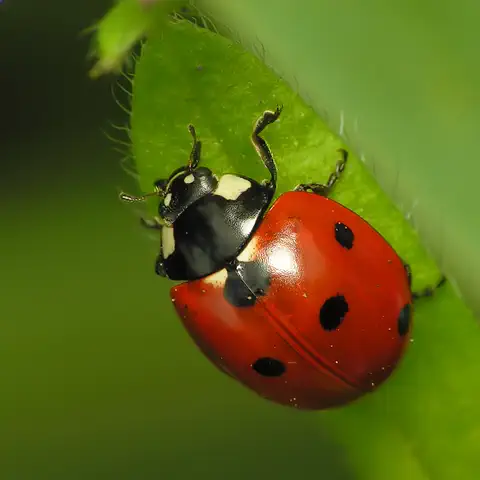
Seven-spot ladybird
The seven-spot ladybird, or ladybug, is a domed red beetle with seven black spots. Both the young and the adults hunt aphids, small insects that suck plant juices, so gardeners and farmers are glad to see them. Its bright colors warn predators that it tastes horrible.
-
 Watch
3D
Animal
Housefly
The housefly is a small gray fly with two big red eyes and one pair of see-through wings. It cannot chew, so it soaks up liquid food with a mouth like a sponge. Houseflies started out in central Asia and now live almost everywhere that people live. Their eggs hatch in less than a day, and the young grow up fast.
-
 Watch
 Country
New Zealand
New Zealand, also called Aotearoa, is an island country in the South Pacific. Its two main islands have snowy mountains, glaciers, volcanoes and deep fiords, and about 5.36 million people lived there in 2026.
-
 Watch
Animal
Buff-tailed bumblebee
The buff-tailed bumblebee is one of the most common bumblebees in Europe. It is large and furry, with golden-yellow bands, and the queen has a buff, or light brown, tail. It lives in nests of up to a few hundred bees, and people raise it to pollinate crops such as greenhouse tomatoes.
-
 Watch
Animal
American lobster
The American lobster is a big crustacean that lives on the rocky sea floor of the northwest Atlantic Ocean. It has two very different claws, one for crushing and one for tearing, and it must climb out of its hard shell again and again to grow.
-
 Watch
3D
Animal
Antarctic krill
Antarctic krill are small, shrimp-like crustaceans about 6 centimeters long that live in the icy Southern Ocean around Antarctica. They gather in enormous swarms, and almost all the bigger animals of the Antarctic, from penguins to blue whales, depend on them for food.
For parents & teachers
What children will learn
- Describe how a common wasp colony works, with one queen and many female workers.
- Explain the colony's one-year life cycle.
- Describe how wasps make paper nests and why they hunt insects.
- Understand why a species can be helpful in one place and invasive in another.
Recommended ages: 3 to 17 · About 15 minutes
Talk about it
- Why do you think wasps visit picnics more in late summer?
- How can an animal be useful in one country and a problem in another?
- Why might only the queens survive the winter?
Try at home or in class
- Tear a piece of paper and a piece of egg carton and look at the torn edges with a magnifying glass: wasp paper is also made of wood fibers.
- Draw a honeycomb pattern of six-sided cells and count how many touch each cell.
Key vocabulary: colony, queen, worker, larva, predator, invasive
Where these facts come from
- GBIF Backbone Taxonomy and GBIF Occurrence Search , Global Biodiversity Information Facility (CC0 1.0 (backbone); occurrence counts are facts derived from records under CC0, CC BY and CC BY-NC)
- Common Wasp (Bug Directory) , Buglife
- Wasps , New Zealand Department of Conservation
- First record of Vespula vulgaris (Linnaeus 1758) (Hymenoptera: Vespidae) on Navarino Island, Chile (Rendoll Cárcamo et al. 2016, Gayana 80(1): 133-136) , Gayana, Universidad de Concepción
- The Vespinae of North America (Vespidae, Hymenoptera) (Kimsey and Carpenter 2012, Journal of Hymenoptera Research 28: 37-65) , Journal of Hymenoptera Research (Pensoft)
- Wikidata , Wikimedia Foundation (CC0 1.0)
- Wikimedia Commons , Wikimedia Foundation (Per file: Public domain, CC0, CC BY or CC BY-SA only (credited on each page))
Checked, not yet human-reviewed. Last updated October 27, 2026. Spotted a mistake? Tell us.