
Animal
Coyote
The coyote is a wild dog of North and Central America. It yips and howls to its family. It can live in deserts, forests and even big cities.
The coyote is a clever, adaptable wild dog that lives from Alaska and Canada to Panama. It is smaller than a wolf and bigger than a fox. Coyotes eat mostly mice, voles and rabbits, howl and yip to keep in touch, and live everywhere from deserts and forests to city parks.
Canis latrans is one of North America's most adaptable carnivores. It survived early-1900s campaigns to wipe it out, is listed as Least Concern with an increasing population, and now ranges from Alaska to Panama in wilderness, farmland and cities. In Yellowstone, its numbers and social life shifted after wolves returned in 1995.
Photo: ayden, CC BY 4.0, via Wikimedia Commons
Meet the coyote
The coyote is a wild dog.
It has big pointy ears, a long thin nose and a bushy tail. It is smaller than a wolf and bigger than a fox.
The coyote is a wild member of the dog family. It weighs about 7 to 21 kilograms and is about 75 to 100 centimeters long, plus a bushy, black-tipped tail. People often mistake it for a wolf, but a coyote is only about a third of a wolf's size and much slimmer.
Its fur is grayish brown or yellowish gray, with a whitish throat and belly and reddish brown legs and muzzle. Coyotes are so noisy that people call them 'song dogs'.
Canis latrans weighs about 7 to 21 kilograms, with a head-and-body length of 75 to 100 centimeters; the bottle-shaped, black-tipped tail is about half the body length. The National Park Service describes it as about one-third a wolf's size, with a slighter build; it is much larger than a fox.
The upper coat is grayish brown to yellowish gray, with black-tipped guard hairs forming a dark stripe down the back and a cross over the shoulders. It differs from domestic dogs in its pointed, upright ears and in carrying its tail low when it runs. Coyotes can hybridize with domestic dogs and occasionally with gray wolves.
Quick facts
- Group
- Mammal
- Length
- 75 to 100 cm
- Weight
- 7 to 21 kg
- Top speed
- up to 65 km/h
- Lifespan in the wild
- up to 10 years
Where it lives
Coyotes live in North America and Central America.
They live in deserts, grasslands, forests and swamps. Some even live in cities, close to people.
Coyotes live from Alaska and most of Canada, across the United States and Mexico, south through Central America to Panama. They live in forests, grasslands, deserts and swamps, and also on farms, in suburbs and in big cities.
Coyotes can live in so many places because they are clever and will eat almost anything. In Yellowstone National Park, they often travel through open meadows and valleys and hunt small animals along roadsides.
The IUCN Red List (2018 assessment) lists the coyote as extant in ten countries: Canada, the United States, Mexico, Belize, Guatemala, El Salvador, Honduras, Nicaragua, Costa Rica and Panama. Its habitats include forest, shrubland, grassland, desert and artificial landscapes.
Its tolerance of people lets it thrive in suburban, agricultural and urban settings as well as remote wilderness. Animal Diversity Web notes that coyotes are typically excluded from areas with wolves. Shading is by country; coyotes are absent from the far north of Canada.
Continent
Its habitats


Where can you find this animal?
- Lives here naturally · Countries and seas named by a scientific source
- Sightings recorded · Records of wild sightings (GBIF)
Lives here naturally · Countries and seas named by a scientific source
Forests, grasslands, deserts, swamps, farmland, suburbs and cities from Alaska and most of Canada to Panama. Coyotes are absent from the far north of Canada.
Places: Canada, United States, Mexico, Belize, Guatemala, El Salvador, Honduras, Nicaragua and 2 more places.
Source: iucn-red-list · checked October 2026
Sightings recorded · Records of wild sightings (GBIF)
Counts of GBIF records of wild observations (human and machine) and preserved specimens. Records include introduced populations, vagrants, escaped or released animals and misidentifications, so a country with records is not necessarily part of the native range.
Wild sightings have been recorded in United States, Canada, Mexico, Costa Rica, Guatemala, Panama, Honduras, El Salvador and 8 more places.
Source: gbif · checked October 2026
Range maps show where scientists say an animal lives, often country by country. An animal may live in only part of a country shown, and sightings records can include animals that wandered far from home.
What it eats
Coyotes mostly eat small animals like mice and rabbits.
They also eat fruit, insects and leftovers. To catch a mouse, a coyote jumps up and pounces.
Coyotes are mostly meat-eaters: about nine-tenths of their diet is mammals, especially mice, voles, rabbits and ground squirrels. They also eat birds, snakes, big insects and animals that are already dead, and in fall and winter they eat lots of fruit.
To catch a mouse, a coyote creeps through the grass, sniffs it out, then leaps and pounces with its legs held stiffly together. For bigger animals, family members may work as a team. In suburbs, coyotes may even eat trash or small pets.
About 90 percent of the diet is mammalian, mainly small mammals such as cottontail rabbits, ground squirrels and mice; birds, snakes, large insects, carrion and seasonal fruit add variety. In Yellowstone, the National Park Service lists voles, mice, rabbits, other small animals and carrion, with only very young elk calves taken in spring.
Hunting is flexible. When mousing, a coyote stalks, locates prey by smell and pounces stiff-legged. Deer may be hunted in relays or driven toward a hidden pack member. Coyotes sometimes hunt alongside American badgers: the badger digs rodents out of burrows while the coyote catches those that run. A night's hunting covers about 4 kilometers.
Did you know?
Coyotes and badgers sometimes hunt together.
Coyotes sometimes team up with American badgers: the badger digs into burrows, and the coyote catches the animals that run out.
In coyote and badger 'hunting partnerships', the badger digs rodents out of burrows while the coyote chases those above ground, leaving prey little chance to escape.
Built to run and listen
Coyotes can run very fast.
Their big ears hear tiny sounds. Their noses smell food hiding in the grass.
Coyotes can run at up to 65 kilometers an hour and jump up to 4 meters. They run on their toes, not on flat feet.
Their big, upright ears and keen nose help them find mice hidden in grass. A coyote's eyes have yellow irises. Its muzzle is long and slim, with long, thin canine teeth. Coyotes shed their coat once a year, between May and July.
Coyotes are digitigrade, running on their toes, and reach about 65 kilometers per hour with leaps of up to 4 meters. The ears are large for the head and the muzzle long and slender, with relatively long, slim canines and molars built for crushing; the dental formula is 3/3, 1/1, 4/4, 2/3.
Hearing and smell dominate hunting; Animal Diversity Web describes sight as less developed and used mainly to detect movement. The eyes have yellow irises and round pupils. A scent gland sits at the base of the tail, and the coat is molted once a year, from May to July.
Growing up
Baby coyotes are called pups.
They are born in a den underground. Mom and dad both bring them food. The pups come out to play when they are about a month old.
Coyotes mate in late winter. About two months later, the mother gives birth to around six pups in a den, often a woodchuck or badger burrow that the coyotes have made bigger. Newborn pups weigh only about 250 grams and are born blind.
Their eyes open after about 10 days, and they come out of the den at three to four weeks. Both parents feed them. Young males usually leave home at six to nine months, while young females often stay with their parents. Coyotes are grown up at about a year.
Females come into heat once a year for 2 to 5 days between late January and late March, and pairs may stay together for several years. Gestation is 60 to 63 days. Litters average six pups but range from 1 to 19; newborns weigh about 250 grams and are blind, limp-eared and pug-nosed.
The eyes open at about 10 days, pups emerge from the den at 21 to 28 days and are weaned by 35 days, after which both parents feed them regurgitated food. Dens, often enlarged woodchuck or badger burrows with several entrances, are reused year after year. Males usually disperse at 6 to 9 months, females often stay, and coyotes reach adult size at 9 to 12 months and maturity by a year.

The song dog
Coyotes howl, yip and bark.
They sing most at dawn and dusk. Their calls tell their family where they are.
Coyotes are among the noisiest wild animals in North America. They howl, yip, squeak and bark, alone or in groups, especially around dawn and dusk. A howl can tell other coyotes where a family's territory is, or help family members find each other.
Coyotes are mostly active at night, and near people they are secretive, coming out mainly early and late in the day. They live as pairs with pups, and sometimes in larger family groups. They also leave scent marks to show where they live.
Animal Diversity Web calls coyotes the most vocal of North American wild mammals, with calls including squeaks, distress calls and howls built from rapid yelps and a falsetto howl. Howling announces territories, accompanies reunions of group members and tells them each other's locations; scent marks of urine and feces signal location, breeding status and boundaries.
Social structure varies. Coyotes are less likely to form packs than wolves and hunt alone, in pairs or as families. In Yellowstone before wolves returned, coyotes lived in packs of up to seven, typical where they are not hunted by people; since wolf restoration, pairs with pups have again become the usual unit.
Did you know?
Coyote dens can have lots of doors.
A coyote den often has several entrances, and coyotes may use the same den year after year.
Dens, frequently enlarged woodchuck or badger burrows with several entrances, are reused across years.
A survivor
Long ago, many people tried to get rid of coyotes.
But coyotes are clever, and there are lots of them today. Never feed a wild coyote. Wild animals should find their own food.
In the early 1900s, people tried to wipe out coyotes in the American West because they sometimes killed farm animals. Wolves and cougars were wiped out in places such as Yellowstone National Park, but coyotes survived because they are so adaptable. Today the IUCN lists them as Least Concern, and their numbers are increasing.
Coyotes that learn to get food by roads can grow bold around people and are more likely to be hit by cars. In Yellowstone, park staff scare coyotes away from busy visitor areas. The best way to help is to watch from far away and never feed them.
The IUCN lists Canis latrans as Least Concern with an increasing population trend (2018). Early-1900s extermination campaigns in the West, including Yellowstone, eradicated wolves and cougars there, but coyotes compensated for the losses.
When wolves were restored to Yellowstone in 1995, competition, attacks and lost territory cut coyote numbers on the northern range by as much as 50 percent, although more recent counts in the Lamar Valley show increases. Coyotes that learn to take food along roads become bolder and more likely to be hit; park staff haze them away from visitor areas, and the rare animals that remain a danger are removed.
IUCN Red List
How is the coyote doing in the wild?
- Least Concern (this animal)
- Near Threatened
- Vulnerable
- Endangered
- Critically Endangered
- Extinct in the Wild
- Extinct
Least Concern
Not at risk of disappearing from the wild right now.
See the IUCN Red List assessment · The IUCN Red List of Threatened Species 2022.2
Amazing facts
-
Coyotes and badgers sometimes hunt together.
Coyotes sometimes team up with American badgers: the badger digs into burrows, and the coyote catches the animals that run out.
In coyote and badger 'hunting partnerships', the badger digs rodents out of burrows while the coyote chases those above ground, leaving prey little chance to escape.
-
Coyotes are called song dogs because they sing so much.
Coyotes are among the most vocal wild animals in North America, with howls, yips, squeaks and barks.
Animal Diversity Web calls the coyote the most vocal of North American wild mammals; its howl is a rapid series of yelps followed by a falsetto howl.
-
A coyote can jump very far.
A coyote can leap up to 4 meters and run at 65 kilometers an hour.
Leaps of up to 4 meters and speeds near 65 kilometers per hour suit an animal that hunts by pouncing and chasing.
-
Coyote dens can have lots of doors.
A coyote den often has several entrances, and coyotes may use the same den year after year.
Dens, frequently enlarged woodchuck or badger burrows with several entrances, are reused across years.
Words to know
- adaptable
- able to change and live in many kinds of places
- den
- a hidden home, often underground, where pups are born
- carrion
- the body of an animal that is already dead
- territory
- an area an animal or family lives in and defends
- habituated
- used to people and no longer afraid of them
- pounce
- to jump suddenly onto something
Discovery challenge
-
What do coyotes eat most?
Which foods make up most of a coyote's diet?
Which food group makes up about 90 percent of the coyote's diet?
- Grass
- Small mammals like mice and rabbits
- Fish
Show the answer
Small mammals like mice and rabbits
Coyotes mostly eat mice, voles and rabbits.
About nine-tenths of their diet is mammals, mostly small ones.
Mammals, chiefly small species such as rabbits, ground squirrels and mice.
-
Why are coyotes called song dogs?
Why are coyotes nicknamed 'song dogs'?
What behavior earned coyotes the nickname 'song dogs'?
- They howl and yip a lot
- They sing like birds in trees
- They follow music
Show the answer
They howl and yip a lot
Coyotes howl and yip to their family.
They howl, yip and bark, especially at dawn and dusk.
Their frequent long-range vocalizations: howls, yips, squeaks and barks.
-
How big is a coyote next to a wolf?
How does a coyote's size compare with a gray wolf's?
Roughly how large is a coyote compared with a gray wolf?
- Much bigger
- About the same
- About a third the size
Show the answer
About a third the size
A coyote is smaller than a wolf.
A coyote is only about a third of a wolf's size, with a slimmer build.
About one-third the wolf's size, according to the National Park Service.
-
What should you do if you see a wild coyote?
What is the best way to behave around a wild coyote?
Which practice best prevents coyotes from becoming habituated to people?
- Give it food
- Watch from far away and never feed it
- Try to pet it
Show the answer
Watch from far away and never feed it
Watch from far away. Never feed a wild coyote.
Coyotes that get food from people grow bold and can be hit by cars, so keep your distance.
Never feeding them; coyotes that learn roadside feeding become bolder and more likely to be struck by vehicles.
Places where you might see it
-
 Watch
 Country
United States
The United States is a large country in North America made of 50 states, from icy Alaska to the warm islands of Hawaii. It has the Grand Canyon, the Mississippi River and Yellowstone, and about 342 million people live there.
-
 Watch
 Country
Canada
Canada is the second-largest country in the world, stretching across the north of North America from the Atlantic to the Pacific and up into the Arctic. It has the Rocky Mountains, thousands of islands and about 42 million people, who speak English, French and many other languages.
Explore next
-
 Watch
3D
Animal
Gray wolf
The gray wolf is the largest member of the dog family and the wild ancestor of pet dogs. Wolves live in family packs that hunt big animals like elk and moose together, and their howls can carry about 10 kilometers. After being wiped out in many places, wolves are coming back in parts of North America and Europe.
-
 Watch
Animal
Red fox
The red fox is a small, clever member of the dog family with an orange coat, black legs and a bushy, white-tipped tail. It lives across North America, Europe, Asia and North Africa, more of the world than any other wild land carnivore, and has even moved into big cities.
-
 Watch
3D
Animal
Domestic dog
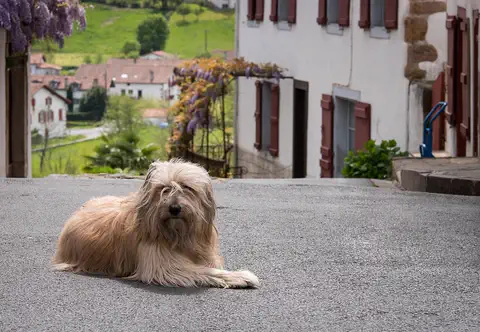
The domestic dog has lived with people for more than 12,000 years. Dogs came from gray wolves, and today there are more than 400 breeds, from tiny Chihuahuas to giant Irish wolfhounds. They live with people all over the world as pets, helpers and friends.
-
Watch
Country
United States
The United States is a large country in North America made of 50 states, from icy Alaska to the warm islands of Hawaii. It has the Grand Canyon, the Mississippi River and Yellowstone, and about 342 million people live there.
-
Watch
Country
Canada
Canada is the second-largest country in the world, stretching across the north of North America from the Atlantic to the Pacific and up into the Arctic. It has the Rocky Mountains, thousands of islands and about 42 million people, who speak English, French and many other languages.
-
 Watch
Animal
Western diamondback rattlesnake
The western diamondback rattlesnake is a heavy-bodied snake of the deserts and dry grasslands of the southwestern United States and Mexico. It has diamond patterns, a black-and-white striped tail and a rattle that buzzes as a warning. It is venomous, so it is a snake to admire from far away, but it would much rather hide or slip away than meet a person.
-
 Watch
Animal
Dingo
The dingo is Australia's wild dog and the country's largest meat-eating mammal. People brought its ancestors to Australia about 4,000 years ago. It hunts rabbits, kangaroos and wallabies, howls rather than barks, and scientists still argue about whether it is its own species or a very old kind of dog.
-
 Watch
Animal
Desert tortoise
The desert tortoise, also called the Mojave desert tortoise, lives in the deserts of the south-western United States. It spends most of its life in underground burrows, stores water in its body, and can live for 50 years or more. Sadly, it is now critically endangered.
For parents & teachers
What children will learn
- Describe how a coyote's senses and body help it hunt small animals.
- Explain why coyotes can live in so many habitats, including cities.
- Describe coyote family life and communication.
- Know how to behave safely and kindly around wild coyotes.
Recommended ages: 3 to 17 · About 15 minutes
Talk about it
- Why do you think coyotes survived when people tried to get rid of them, while wolves did not?
- How might coyotes and badgers both benefit from hunting together?
- What can people in cities do so that coyotes stay wild?
Try at home or in class
- Close your eyes while a partner rustles paper in different places, and point to the sound: talk about how coyotes find mice by listening.
- Measure 4 meters on the ground and see how many of your jumps it takes to match one coyote leap.
Key vocabulary: adaptable, den, carrion, territory, habituated, pounce
Where these facts come from
- The IUCN Red List of Threatened Species , International Union for Conservation of Nature (IUCN terms of use (no redistribution of Red List data or range maps))
- GBIF Backbone Taxonomy and GBIF Occurrence Search , Global Biodiversity Information Facility (CC0 1.0 (backbone); occurrence counts are facts derived from records under CC0, CC BY and CC BY-NC)
- Canis latrans (Coyote), 2018 assessment (errata version 2020) , IUCN Red List of Threatened Species
- Canis latrans , Animal Diversity Web, University of Michigan Museum of Zoology
- Coyote , National Park Service, Yellowstone National Park
- Wikidata , Wikimedia Foundation (CC0 1.0)
- Wikimedia Commons , Wikimedia Foundation (Per file: Public domain, CC0, CC BY or CC BY-SA only (credited on each page))
Checked, not yet human-reviewed. Last updated October 24, 2026. Spotted a mistake? Tell us.