
Animal
Giant isopod
The giant isopod is a big cousin of garden roly-polies. It lives deep in the sea. It is dark and cold there. It can grow as long as a cat.
The giant isopod is a deep-sea relative of the pill bugs and sowbugs you find under garden stones, but it can grow to about 50 centimeters long. It crawls over the dark sea floor of the western Atlantic, cleaning up dead fish, squid and other food that sinks from above.
Bathynomus giganteus is one of the supergiant deep-sea isopods, a lineage that can reach 500 millimeters. It lives on the continental slope of the western Atlantic, from off Georgia through the Gulf of Mexico and the Caribbean Sea to Brazil, mostly hundreds of meters deep. Known for more than a century, it remains poorly understood: much of what we know comes from animals caught in baited traps.
Photo: NOAA, public domain, via Wikimedia Commons
Meet the giant isopod
The giant isopod looks like a huge roly-poly bug.
It has a hard, pale shell made of plates. It has many legs and two long feelers. It lives at the bottom of the deep sea.
Have you ever found a pill bug or a sowbug under a rock? The giant isopod is a close relative, but it lives in the deep sea and is much, much bigger. NOAA, the US ocean agency, says it can grow to about a foot and a half long, and the largest one ever measured was 50 centimeters.
Its body is covered in overlapping hard plates, like a suit of armor. It has two long antennae and many jointed legs. Even though scientists have known about giant isopods for more than 100 years, there is still a lot we do not know about them.
Bathynomus giganteus (family Cirolanidae) was described by A. Milne-Edwards in 1879, the first species of its genus. In a 2006 revision of the genus, Lowry and Dempsey of the Australian Museum separated two lineages: giant species that mature at about 150 millimeters and supergiant species that can grow to 500 millimeters. B. giganteus is a supergiant, and the largest specimen known, from off Brazil, was 500 millimeters long.
Like other isopods, it has a flattened body without a distinct carapace: the first thoracic segment is fused to the head, and the short abdomen ends in a fan formed by the uropods and telson. NOAA Ocean Exploration notes that, although known for more than a century, its biology and behavior are still poorly understood.
Quick facts
- Group
- Invertebrate
- Length
- 21 to 50 cm
Where it lives
Giant isopods live deep, deep down in the ocean.
It is dark and cold there. They crawl on the muddy, sandy sea floor near North and South America.
Giant isopods live on the deep sea floor of the western Atlantic Ocean. They have been found from off the coast of Georgia in the United States, through the Gulf of Mexico and the Caribbean Sea, all the way south to Brazil.
They live in deep water, usually hundreds of meters down. In the Gulf of Mexico, they have been found from about 200 meters down to about 1,800 meters.
The species is a western Atlantic slope dweller. Lowry and Dempsey report it from the Gulf of Mexico at 200 to 1,800 meters, north to off Georgia (31° N) at 775 meters, the first east coast US record, and south off Brazil to about 21° S, where it seems confined to depths below 800 meters. SeaLifeBase gives a depth range of 310 to 2,300 meters, usually 365 to 730 meters.
NOAA's 2019 Southeastern U.S. Deep-sea Exploration filmed two giant isopods about 65 kilometers southeast of Key West, Florida. A study off Mexico's Yucatán Peninsula collected them between 350 and 730 meters, and a 2025 study collected 308 at eight sites in the Colombian Caribbean, 500 to 2,300 meters deep, most adults between 700 and 900 meters. The map shades countries off whose coasts it has been recorded.
Its habitat

Where can you find this animal?
- Lives here naturally · Countries and seas named by a scientific source
- Sightings recorded · Records of wild sightings (GBIF)
Lives here naturally · Countries and seas named by a scientific source
Deep continental slope of the western Atlantic: off Georgia and Florida (USA), in the Gulf of Mexico (including off Mexico's Yucatán Peninsula), in the Colombian Caribbean, and off Brazil to about 21 degrees south, mostly hundreds of meters deep (Lowry and Dempsey 2006; Briones-Fourzán and Lozano; Chaves-Aguilar and others 2025). The map shades countries off whose coasts it lives; it is not found
Places: United States, Mexico, Colombia and Brazil.
Source: https://isopods.nhm.org/pdfs/38866/38866.pdf · checked October 2026
Sightings recorded · Records of wild sightings (GBIF)
Counts of GBIF records of wild observations (human and machine) and preserved specimens. Records include introduced populations, vagrants, escaped or released animals and misidentifications, so a country with records is not necessarily part of the native range.
Wild sightings have been recorded in United States, Mexico, Colombia, Brazil, Bahamas, Cuba, Nicaragua, Venezuela and 20 more places.
Source: gbif · checked October 2026
Range maps show where scientists say an animal lives, often country by country. An animal may live in only part of a country shown, and sightings records can include animals that wandered far from home.
Cleaning up the sea floor
Giant isopods eat food that sinks to the sea floor.
They find dead fish and squid and munch them up. They are the clean-up crew of the deep sea!
Giant isopods are scavengers. They eat dead animals, such as fish and squid, that sink down to the sea floor. NOAA explorers once filmed a giant isopod snacking on a fish head.
They also eat some living things that stay in one place on the bottom, such as sponges. Their mouthparts can cut off big pieces of food, and their stomach can stretch to hold a large meal.
Giant isopods are believed to be scavengers partly because they are so often caught in baited traps, for example in the northern Gulf of Mexico golden crab fishery. SeaLifeBase notes mouthparts highly adapted to cut and swallow large pieces of food, a large, distensible gut, and the capacity to store large amounts of lipids in the hepatopancreas.
Gut contents of isopods trapped off the Yucatán Peninsula included fish, cephalopods, decapods, other isopods, sponges, echinoderms, nematodes and tunicates. Briones-Fourzán and Lozano concluded that, besides scavenging, the species also feeds on some sessile organisms on the bottom.
Did you know?
Tiny passengers ride on giant isopods.
Small barnacles often ride on giant isopods' shells, and tiny snails were once found hiding in a mother's brood pouch.
Off Yucatán, the barnacle Octolasmis was common on the isopods, and the gastropod Mitrella was found in large numbers inside females' oostegites.
Armor plates and many legs
A giant isopod is covered in hard plates.
The plates overlap like the shingles on a roof. Underneath are lots of legs with little hooks at the ends.
A giant isopod's body is flat and wide, covered by a row of hard, overlapping plates. The head is joined to the first body segment, and it has two long antennae for feeling its way in the dark.
Underneath are many pairs of walking legs, many ending in sharp hooks for gripping. At the back, special flat legs called pleopods work as gills, and the body ends in a fan-shaped tail.
The body is dorsoventrally flattened, without a distinct carapace; the first thoracic segment is fused with the head, and the eyes are sessile, not on stalks. The first pair of thoracic appendages is specialized as maxillipeds for feeding, while the remaining thoracic legs are used for walking.
The short abdomen bears biramous pleopods whose flat branches serve as gills, and the uropods and telson form a fan-like tail fin. SeaLifeBase describes the legs as natatory, adapted for swimming. The plates and appendages often carry passengers: off Yucatán, small barnacles of the genus Octolasmis were common on the isopods.
Babies in a pouch
A mother giant isopod carries her eggs under her body.
When the babies come out, they look like tiny giant isopods. They grow by getting new shells.
A grown-up female giant isopod gets ready to have young by molting into a new shell with special brood plates, called oostegites, under her body. She carries her eggs there.
The young that come out are called mancas. Scientists have trapped hundreds of them in the deep sea. Like all crustaceans, isopods grow by molting. Giant isopods are ready to breed when they are about 20 centimeters long.
Before laying eggs, a female undergoes a parturial molt that gives her functional oostegites, the plates that form a brood pouch beneath the body; she can grow 1 to 3 centimeters in that first parturial molt (SeaLifeBase). Young isopods are called mancas.
Off the Yucatán Peninsula, Briones-Fourzán and Lozano trapped 554 mancas in February 1990, and only mancas and juveniles at the deepest station. Ovarian stages suggested that females prepare to reproduce in August and that most reproduction has occurred by February. The smallest mature male and female each measured 21 centimeters; SeaLifeBase gives a length at maturity of 18 centimeters.
Mysteries of the deep
Giant isopods live in the dark, so they are hard to watch.
Scientists use underwater robots with cameras to see them. Every new video helps us learn more!
Because giant isopods live so deep, people rarely see them alive. Most of what we know comes from isopods caught in baited traps, and from underwater robots called remotely operated vehicles, or ROVs, which carry cameras into the deep sea.
Even big animals have enemies. Scientists once found a large female giant isopod inside the stomach of a tiger shark.
Direct observation is rare, so much of the species' biology has been inferred from trap catches. NOAA's 2019 remotely operated vehicle dives off Florida filmed a feeding isopod, and NOAA Ocean Exploration describes every such observation as important because so little is known about the animal's behavior.
Trapping off Yucatán also hinted at a differential distribution of life stages on the slope, with only mancas and juveniles at the deepest station. Predators include large sharks: a large female was found in the stomach of a tiger shark. Epizoans were more abundant on females than males, which the authors suggested means females molt less often.
Did you know?
The giant isopod is a cousin of the roly-poly bugs in your garden.
Giant isopods are close relatives of pill bugs, roly-polies and sowbugs, the little gray animals found under garden stones.
NOAA describes Bathynomus giganteus as a close relative of terrestrial pill bugs and sowbugs, though vastly larger.
Protecting the deep
We still have a lot to learn about giant isopods.
Scientists explore the deep sea to find out how they live, so we can keep their home safe.
Scientists do not know how many giant isopods there are, and the species has not been assessed by the IUCN Red List. They are often caught by accident in traps set for deep-sea crabs.
Learning about animals like the giant isopod is one reason ocean explorers send robots into the deep sea. Every observation adds to what we know about this hidden world.
Bathynomus giganteus has no IUCN assessment, and its population size is unknown. It is regularly taken as bycatch in baited trap fisheries, such as the golden crab fishery in the northern Gulf of Mexico.
Because the deep slope is so hard to study, exploration and long-term sampling remain the main tools for understanding it. NOAA Ocean Exploration's dives, together with trap studies like the one off Yucatán, add to the basic knowledge of its distribution, diet and reproduction.
Did you know?
Scientists have known about giant isopods for over 100 years.
Giant isopods were first described in 1879, but there is still a lot we do not know about how they live.
Described by A. Milne-Edwards in 1879, B. giganteus remains poorly known; NOAA calls every observation important.
Amazing facts
-
The giant isopod is a cousin of the roly-poly bugs in your garden.
Giant isopods are close relatives of pill bugs, roly-polies and sowbugs, the little gray animals found under garden stones.
NOAA describes Bathynomus giganteus as a close relative of terrestrial pill bugs and sowbugs, though vastly larger.
-
A shark once ate a giant isopod.
Scientists found a large female giant isopod inside the stomach of a tiger shark.
A large female B. giganteus was recovered from the stomach of a tiger shark, Galeocerdo cuvier, in the Yucatán study.
-
Tiny passengers ride on giant isopods.
Small barnacles often ride on giant isopods' shells, and tiny snails were once found hiding in a mother's brood pouch.
Off Yucatán, the barnacle Octolasmis was common on the isopods, and the gastropod Mitrella was found in large numbers inside females' oostegites.
-
Scientists have known about giant isopods for over 100 years.
Giant isopods were first described in 1879, but there is still a lot we do not know about how they live.
Described by A. Milne-Edwards in 1879, B. giganteus remains poorly known; NOAA calls every observation important.
Words to know
- isopod
- a crustacean with a flat body and many similar legs, like a pill bug
- scavenger
- an animal that eats dead animals and plants it finds
- manca
- a young isopod that has just left its mother's pouch
- molt
- to shed an old outer shell so the body can grow
- ROV
- a remotely operated vehicle: an underwater robot with cameras, steered from a ship
- bycatch
- animals caught by accident when people are fishing for something else
Discovery challenge
-
Which small animal is a cousin of the giant isopod?
Which garden animal is a close relative of the giant isopod?
Which familiar terrestrial crustaceans are close relatives of Bathynomus?
- Pill bugs (roly-polies)
- Ladybugs
- Earthworms
Show the answer
Pill bugs (roly-polies)
Pill bugs, also called roly-polies, are its little cousins.
Pill bugs, roly-polies and sowbugs are isopods too, just much smaller.
Pill bugs and sowbugs, terrestrial isopods; ladybugs are insects and earthworms are annelids.
-
What does a giant isopod eat?
How does a giant isopod get most of its food?
Why are giant isopods believed to be scavengers?
- Dead animals that sink down
- Fruit from trees
- Bugs in the air
Show the answer
Dead animals that sink down
It eats dead fish and squid that sink to the sea floor.
It scavenges dead animals that sink to the bottom, and eats some animals that stay in one place, like sponges.
They are frequent bycatch in baited traps and have mouthparts and a distensible gut suited to large meals.
-
Where do giant isopods live?
Where do giant isopods live?
Which describes the range of Bathynomus giganteus?
- On the deep sea floor
- In garden soil
- In mountain lakes
Show the answer
On the deep sea floor
Deep down on the sea floor, where it is dark and cold.
On the deep sea floor of the western Atlantic, hundreds of meters down.
The western Atlantic continental slope, from off Georgia through the Gulf of Mexico and the Caribbean to Brazil.
-
Where does a mother isopod keep her eggs?
Where does a female giant isopod carry her eggs?
Which structures form the giant isopod's brood pouch?
- In a pouch under her body
- In a nest of sand
- Floating in the water
Show the answer
In a pouch under her body
In a pouch under her body.
Under her body, held by brood plates called oostegites.
Oostegites, gained in a parturial molt before egg-laying.
Places where you might see it
-
 Watch
 Country
Mexico
Mexico is a large country in southern North America, between the Pacific Ocean and the Gulf of Mexico. It has smoking volcanoes, ancient cities built by the Maya and other peoples, and about 132 million people, many of them in and around Mexico City.
-
 Watch
 Country
Brazil
Brazil covers about half of South America and is the fifth-largest country in the world. It holds most of the Amazon River basin and much of the world's largest rainforest, and about 214 million people lived there in 2026, most of them near the Atlantic coast.
-
 Watch
 Country
United States
The United States is a large country in North America made of 50 states, from icy Alaska to the warm islands of Hawaii. It has the Grand Canyon, the Mississippi River and Yellowstone, and about 342 million people live there.
-
 Watch
 Country
Colombia
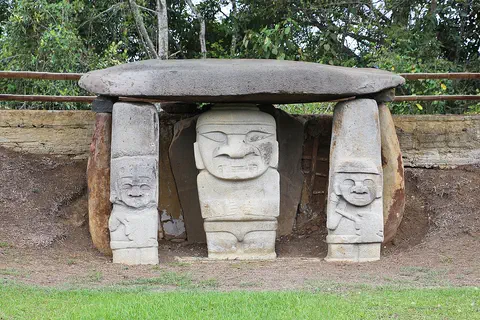
Colombia is in the northwest of South America, with coasts on both the Caribbean Sea and the Pacific Ocean. Three ranges of the Andes run through it, and most people live in the cool mountains, where the capital, Bogotá, sits on a high plateau. About 53.4 million people lived there in 2026, according to DANE, the national statistics office.
- Watch Natural wonder Mariana Trench The Mariana Trench is a long, curving valley in the floor of the western Pacific Ocean, near the island of Guam. Its deepest spot, the Challenger Deep, is the deepest place known in the whole ocean, close to 11,000 meters down. If Mount Everest stood on the bottom, its peak would still be about 2 kilometers under water.
Explore next
-
 Watch
3D
Animal
Japanese spider crab
The Japanese spider crab is a gentle giant of the sea floor off Japan. Its body is only about the size of a large pizza, but its legs can stretch almost 4 meters from claw tip to claw tip, more than any other crab. It crawls slowly along the bottom, eating dead animals and plants.
-
 Watch
3D
Animal
Atlantic horseshoe crab
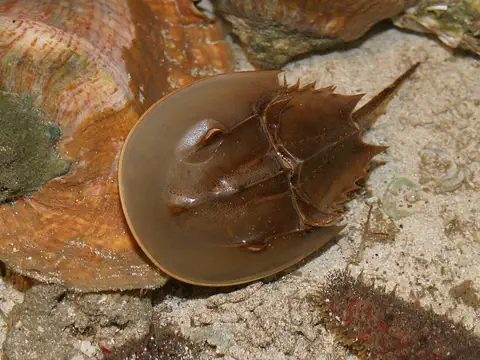
The Atlantic horseshoe crab is a living fossil: its relatives have looked much the same for hundreds of millions of years. Despite its name, it is more closely related to spiders and scorpions than to crabs. Each spring, thousands crawl onto beaches to lay eggs, feeding hungry shorebirds, and its blue blood helps keep medicines safe.
-
 Watch
3D
Animal
Tiger shark
The tiger shark is one of the biggest sharks in the sea. Young tiger sharks have dark spots and stripes like a tiger, which fade as they grow. It eats an amazing range of food, and it travels long distances between warm and cooler seas.
-
Watch
Country
Mexico
Mexico is a large country in southern North America, between the Pacific Ocean and the Gulf of Mexico. It has smoking volcanoes, ancient cities built by the Maya and other peoples, and about 132 million people, many of them in and around Mexico City.
-
Watch
Country
Brazil
Brazil covers about half of South America and is the fifth-largest country in the world. It holds most of the Amazon River basin and much of the world's largest rainforest, and about 214 million people lived there in 2026, most of them near the Atlantic coast.
-
Watch
Country
United States
The United States is a large country in North America made of 50 states, from icy Alaska to the warm islands of Hawaii. It has the Grand Canyon, the Mississippi River and Yellowstone, and about 342 million people live there.
-
Watch
Country
Colombia
Colombia is in the northwest of South America, with coasts on both the Caribbean Sea and the Pacific Ocean. Three ranges of the Andes run through it, and most people live in the cool mountains, where the capital, Bogotá, sits on a high plateau. About 53.4 million people lived there in 2026, according to DANE, the national statistics office.
-
 Watch
Animal
Giant tube worm
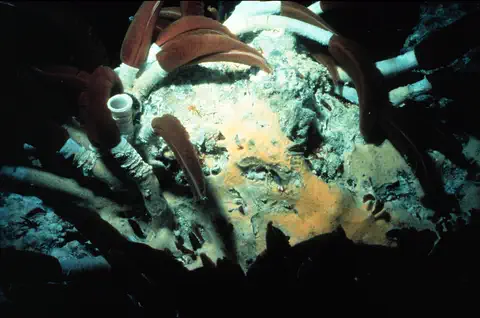
The giant tube worm lives more than a mile deep in the Pacific Ocean, beside hot springs in the seafloor called hydrothermal vents. It has no mouth and no stomach. Instead, billions of bacteria living inside its body make its food from chemicals in the vent water.
For parents & teachers
What children will learn
- Explain how the giant isopod is related to garden pill bugs.
- Describe how scavengers help recycle food in the deep sea.
- Describe how scientists study animals that live hundreds of meters deep.
- Explain why so much about this animal is still unknown.
Recommended ages: 3 to 17 · About 15 minutes
Talk about it
- Why might an animal that lives where food is scarce have a stomach that stretches?
- What can scientists learn from traps, and what can they only learn by watching animals in their home?
- If you could send a robot into the deep sea, what would you want to find out?
Try at home or in class
- With a grown-up, gently look for pill bugs under a stone, count their legs, then put the stone back. Compare them with the giant isopod.
- Measure 50 centimeters with a ruler or tape to see how long the biggest giant isopod was.
Key vocabulary: isopod, scavenger, manca, molt, ROV, bycatch
Where these facts come from
- GBIF Backbone Taxonomy and GBIF Occurrence Search , Global Biodiversity Information Facility (CC0 1.0 (backbone); occurrence counts are facts derived from records under CC0, CC BY and CC BY-NC)
- Wikidata , Wikimedia Foundation (CC0 1.0)
- Giant isopod (Bathynomus giganteus) daily image , NOAA Ocean Exploration
- The giant deep-sea scavenger genus Bathynomus in the Indo-West Pacific (Lowry and Dempsey 2006) , Australian Museum, in Tropical Deep-Sea Benthos (via isopods.nhm.org)
- Some biological aspects of the giant isopod, Bathynomus giganteus, off the Yucatan Peninsula (Briones-Fourzán and Lozano) , Memoirs of the Queensland Museum (via BioStor, Internet Archive)
- Bathynomus giganteus, Giant isopod , SeaLifeBase
- Caracterización biológica del isópodo gigante (Bathynomus giganteus) en aguas profundas del Caribe colombiano (Chaves-Aguilar et al. 2025) , Revista de la Academia Colombiana de Ciencias Exactas, Físicas y Naturales
- Wikimedia Commons , Wikimedia Foundation (Per file: Public domain, CC0, CC BY or CC BY-SA only (credited on each page))
Checked, not yet human-reviewed. Last updated October 27, 2026. Spotted a mistake? Tell us.