
Animal
Laughing kookaburra
The laughing kookaburra is a big kingfisher from Australia. Its loud call sounds like someone laughing.
The laughing kookaburra is one of the larger members of the kingfisher family. It lives in the woodlands of eastern Australia, pounces on insects, worms and small animals, and lives in family groups. Its famous 'laugh' is really a territorial call that warns other birds to stay away.
Dacelo novaeguineae is a large, tree-dwelling kingfisher native to eastern Australia and introduced to Tasmania, southwestern Western Australia and New Zealand. It hunts by pouncing from a perch, breeds cooperatively with older offspring acting as helpers, and uses its chorus of cackling calls to proclaim its territory.
Photo: JJ Harrison (https://www.jjharrison.com.au/), CC BY-SA 3.0, via Wikimedia Commons
Meet the laughing kookaburra
The kookaburra is a big, chunky bird.
It has a large head and a long, strong beak. Its back is brown and its tummy is off-white. A dark stripe runs through its eye.
The laughing kookaburra is a kingfisher, but a very big one: about 42 centimeters long, longer than a 30-centimeter school ruler. It has a big, square head, a long, dagger-like bill and a stocky body.
It is off-white underneath, faintly barred with dark brown, with brown wings and back and a reddish-brown tail striped with black. A dark brown stripe runs through each eye. And then there is the voice, a loud, laughing chorus you can hear across the Australian bush.
Dacelo novaeguineae belongs to the kingfisher family Alcedinidae, in which it is one of the larger members: BirdLife Australia gives an average length of 42 centimeters, and adult weights in a 2007 study of bird body sizes average about 307 grams for males and 352 grams for females.
The Australian Museum describes the plumage as off-white below, faintly barred with dark brown, with brown back and wings, a more rufous tail broadly barred with black and a conspicuous dark brown eye-stripe. Old names include 'laughing jackass' and 'great brown kingfisher'.
Quick facts
- Group
- Bird
- Length
- 0.42 m
- Weight
- 0.31 to 0.35 kg
Where it lives
Kookaburras live in Australia.
They live almost anywhere there are trees, like forests and woodlands. People also took them to New Zealand.
Laughing kookaburras are native to eastern Australia, from the tip of Cape York in the north to Wilsons Promontory in the south. They live almost anywhere with suitable trees, including forests and woodlands, and they often become quite tame around people.
People also took kookaburras to places where they never lived before: Tasmania, the far southwest of Western Australia and New Zealand. In northern Australia a close relative, the blue-winged kookaburra, takes their place.
The IUCN lists Australia as the native range and New Zealand as introduced. Within Australia the species is native to the east, from Cape York to Wilsons Promontory, and was introduced to Tasmania and the extreme southwest of Western Australia (Australian Museum). The blue-winged kookaburra replaces it in central-northern and northwestern Australia, with some overlap in Queensland.
It occupies most habitats with suitable trees. Animal Diversity Web notes that kookaburras are not migratory and that family groups keep the same territory all year.
Continent
Its habitat

Where can you find this animal?
- Brought here by people · Countries and seas named by a scientific source
- Lives here naturally · Countries and seas named by a scientific source
- Sightings recorded · Records of wild sightings (GBIF)
Brought here by people · Countries and seas named by a scientific source
Introduced to New Zealand by people.
Places: New Zealand.
Source: iucn-red-list · checked October 2026
Lives here naturally · Countries and seas named by a scientific source
Forests, woodlands and most other places with suitable trees across eastern Australia, from Cape York to Wilsons Promontory. Birds in Tasmania and the far southwest of Western Australia were introduced by people.
Places: Australia.
Source: iucn-red-list · checked October 2026
Sightings recorded · Records of wild sightings (GBIF)
Counts of GBIF records of wild observations (human and machine) and preserved specimens. Records include introduced populations, vagrants, escaped or released animals and misidentifications, so a country with records is not necessarily part of the native range.
Wild sightings have been recorded in Australia, New Zealand, Belgium, United States, Netherlands, UK, Germany, Spain and 10 more places.
Source: gbif · checked October 2026
Range maps show where scientists say an animal lives, often country by country. An animal may live in only part of a country shown, and sightings records can include animals that wandered far from home.
Pounce and bash
Kookaburras sit still on a branch and watch.
Then they drop down and grab their food. They eat bugs, worms and sometimes small snakes or frogs.
Kookaburras mostly eat insects, worms and crustaceans such as freshwater crayfish, and sometimes small snakes, frogs, mammals and birds.
They hunt by waiting very still on a perch, then pouncing on prey below. Small prey is swallowed whole. Bigger prey is beaten against a branch or the ground first. Kookaburras that live near people can get quite tame and may take scraps of meat, but even then they whack the food on a perch before swallowing it.
The diet is mainly insects, worms and crustaceans, with small snakes, mammals, frogs and birds also taken (Australian Museum). Hunting is by perch-and-pounce: the bird watches from a branch and drops onto prey on the ground.
Small items are swallowed whole; larger prey is killed by bashing it against the ground or a branch. Animal Diversity Web links this to a prominent bony ridge at the back of the skull and strong neck muscles. Tame birds offered meat scraps still beat the 'pre-processed' food against a perch before swallowing.
Did you know?
Big brothers and sisters help with the babies.
Young kookaburras from the last year or two stay home and help their parents raise new chicks.
Helpers, usually offspring from the previous one to two years, share all parenting duties.
A kingfisher built for land
The kookaburra has a big, strong beak.
Its beak can grab and hold its food. A dark stripe runs past each eye, and its tail has stripes.
A kookaburra's long, dagger-like bill seizes prey. It has a big, square head, and a bony ridge at the back of its skull and strong neck muscles help it kill prey by bashing it against a branch.
Its brown back and wings, off-white front, dark eye-stripe and black-barred reddish tail make it easy to recognize. Young kookaburras have black bills that turn pale over their first three months.
The long, dagger-like bill grasps and holds prey. Animal Diversity Web describes a stocky bird with a large, square head, and notes a prominent bony ridge at the back of the skull and strong neck muscles used in killing prey.
The plumage pattern, with off-white underparts, brown wings and back, a dark eye-stripe and a rufous, black-barred tail, makes the species instantly recognizable, according to the Australian Museum. Young birds' bills are black at first and turn bone-colored over about three months.
Family helpers
Kookaburra parents are thought to stay together for life.
They lay eggs in a hole in a tree. Big brothers and sisters help feed the new chicks.
Kookaburra pairs are believed to stay together for life. They nest in a hollow in a tree or dig a burrow into a termite nest built high in a tree. The female lays two or three white eggs, and both parents take turns keeping them warm for about 25 days.
The chicks hatch naked and blind. Then something special happens: older brothers and sisters from the last one or two years help feed and protect them. Every bird in the family shares the parenting jobs.
Pairs are thought to bond for life. Nests are bare chambers in natural tree hollows or in burrows excavated in arboreal termite mounds. BirdLife Australia gives a clutch of two to three eggs, an incubation period of about 25 days and a breeding season from August to January; both sexes incubate.
Breeding is cooperative: offspring from the previous one to two years stay on as helpers and share all parenting duties, from incubation to feeding the young. Animal Diversity Web reports that helpers are mostly male, that hatchlings are naked and blind, and that young birds reach adulthood at about one year.

The laughing chorus
Kookaburras laugh together, very loudly.
The laugh tells other birds: this place is ours! You often hear it early in the morning.
The famous call, a loud 'koo-koo-koo-koo-koo-kaa-kaa-kaa', is not really laughter. It is a territorial call that warns other birds to stay away. Family members often call together in a chorus, and in eastern Australia the cackling is a well-known part of the dawn chorus.
A family keeps the same territory all year. Inside the family, kookaburras sometimes 'spar' by grabbing each other's bills and twisting, a contest that sorts out who is in charge.
The loud, chuckling 'koo-koo-koo-koo-koo-kaa-kaa-kaa' that gives the species its name is a territorial advertisement, often given in chorus by the group; a shorter 'koooaa' is used when family members are together. BirdLife Australia calls the cackle an essential feature of the eastern Australian dawn chorus.
Groups of a breeding pair and one or more helpers hold a well-defined territory year-round. Animal Diversity Web describes ritual sparring, in which two birds grasp bills and twist until one is pushed off the perch or flies away, as a way the group forms a dominance hierarchy.
Did you know?
Kookaburras can nest inside a termite nest in a tree.
Some kookaburras dig their nest burrow into a termite nest built high in a tree.
Nests are in natural tree hollows or in burrows excavated in arboreal termite mounds.
Doing well, sometimes too well
There are lots of kookaburras.
They are not in danger. But in places where people brought them, they can cause trouble for other animals.
The laughing kookaburra is not in danger: the IUCN Red List rates it Least Concern. In eastern Australia its cackle is a familiar part of the dawn chorus.
Where people introduced it, though, it can cause problems. In Tasmania and Western Australia kookaburras nest in tree hollows that parrots and owls would otherwise use, and they eat small reptiles, mammals and baby birds, putting extra pressure on local wildlife.
The global assessment (IUCN, 2024) lists Dacelo novaeguineae as Least Concern. In its native range its call is a common and familiar sound, and birds often become quite tame around people.
Outside that range it is a conservation concern in its own right. BirdLife Australia notes that introduced kookaburras in Tasmania and Western Australia breed in tree hollows that would usually be used by parrots and owls and prey on small reptiles, mammals and nestlings, putting undue pressure on those species.
IUCN Red List
How is the laughing kookaburra doing in the wild?
- Least Concern (this animal)
- Near Threatened
- Vulnerable
- Endangered
- Critically Endangered
- Extinct in the Wild
- Extinct
Least Concern
Not at risk of disappearing from the wild right now.
See the IUCN Red List assessment · The IUCN Red List of Threatened Species 2021.3
Amazing facts
-
The kookaburra's laugh means 'keep out!'
The kookaburra is not really laughing. Its cackle is a call that warns other birds to stay away.
The 'laugh' is a territorial call, often given in chorus by the whole group.
-
Kookaburras can nest inside a termite nest in a tree.
Some kookaburras dig their nest burrow into a termite nest built high in a tree.
Nests are in natural tree hollows or in burrows excavated in arboreal termite mounds.
-
Big brothers and sisters help with the babies.
Young kookaburras from the last year or two stay home and help their parents raise new chicks.
Helpers, usually offspring from the previous one to two years, share all parenting duties.
-
Kookaburras bang their food on a branch.
Even meat scraps from people get whacked against a branch before a kookaburra swallows them.
The Australian Museum notes that tame birds still beat 'pre-processed' meat scraps against a perch before swallowing.
Words to know
- kingfisher
- a family of birds with big heads and long, strong bills
- territory
- an area an animal lives in and defends from others
- helper
- a young bird that stays with its parents and helps raise new chicks
- introduced
- brought by people to a place where it did not live before
- pounce
- to jump or drop suddenly onto something to catch it
- bush
- the wild, natural countryside of Australia
Discovery challenge
-
What does a kookaburra's laugh mean?
What is the kookaburra's 'laugh' really for?
What is the main function of the kookaburra's cackling chorus?
- Keep out of our home!
- I heard a joke!
- I am hungry!
Show the answer
Keep out of our home!
The laugh tells other birds to stay away.
It is a territorial call that warns other birds away.
It is a territorial call, often sung in chorus by the breeding pair and helpers.
-
Who helps kookaburra parents with their babies?
Who helps a kookaburra pair raise its chicks?
Which birds act as helpers in a kookaburra group?
- Older brothers and sisters
- Owls
- Nobody
Show the answer
Older brothers and sisters
Big brothers and sisters help feed the babies.
Offspring from the last one or two years help with all the parenting jobs.
Usually offspring of the previous one to two years, mostly males, according to Animal Diversity Web.
-
What does a kookaburra do with big food?
How does a kookaburra deal with large prey?
What does a kookaburra do to prey too large to swallow whole?
- Bashes it on a branch
- Buries it
- Washes it in a river
Show the answer
Bashes it on a branch
It bangs big food on a branch.
It beats larger prey against a branch or the ground before swallowing.
Larger prey is killed by bashing it against the ground or a branch.
-
Where do kookaburras come from?
Where are laughing kookaburras native?
In which region is the laughing kookaburra native?
- Eastern Australia
- South America
- Antarctica
Show the answer
Eastern Australia
They come from eastern Australia.
They are native to eastern Australia; people took them to Tasmania, Western Australia and New Zealand.
Eastern Australia, from Cape York to Wilsons Promontory; elsewhere they were introduced.
Places where you might see it
Explore next
-
 Watch
3D
Animal
Common kingfisher
The common kingfisher is a small, dazzling blue and orange bird of rivers, canals and lakes across Europe, Asia and North Africa. It watches from a perch, then dives headfirst into the water to catch small fish with its dagger-shaped bill.
-
 Watch
Animal
Koala
The koala is a tree-living marsupial from eastern Australia. It eats almost nothing but eucalyptus leaves, sleeps up to 20 hours a day to save energy, and carries its jellybean-sized baby in a pouch that opens toward its back legs.
-
 Watch
Animal
Budgerigar
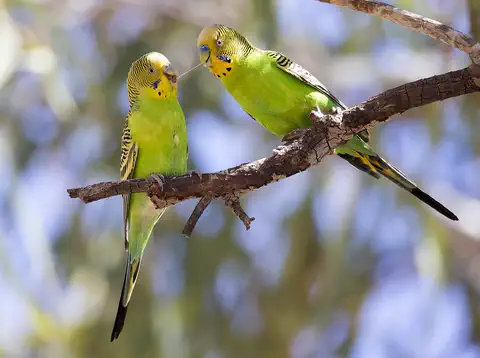
The budgerigar, or budgie, is a little parrot from the dry heart of Australia. Wild budgies are green and yellow with wavy black stripes. They are nomads that travel in flocks, they must find water every day, and they breed after good rain. Budgies are also popular pets all over the world.
-
 Watch
 Country
Australia
Australia is a country and the smallest continent, surrounded by ocean in the Southern Hemisphere. Much of its middle is dry and flat, most people live near the coast, and its animals include kangaroos, koalas and the platypus, a mammal that lays eggs.
-
 Watch
Animal
Superb lyrebird
The superb lyrebird is a large, ground-living songbird of Australia's moist forests. It is a famous copycat: most of its song is made of sounds borrowed from other birds and even machines. The male has a spectacular tail that he throws over his head as he dances and sings.
-
 Watch
Animal
Superb fairywren
The superb fairywren is a tiny Australian songbird that lives in family groups. In the breeding season the male is bright sky blue and black; the female is brown with an orange-red face. Older family members help feed the chicks, and mothers even call to their eggs before the chicks hatch.
-
 Watch
Animal
Sulphur-crested cockatoo
The sulphur-crested cockatoo is a large white parrot with a bright yellow crest. It lives in forests and towns in northern and eastern Australia and New Guinea. Cockatoos live in noisy flocks, take turns keeping watch while others feed, and in Sydney some have learned to open garbage bins by watching each other.
-
 Watch
Animal
Rainbow lorikeet
The rainbow lorikeet is a colorful parrot of northern and eastern Australia. It feeds mostly on nectar and pollen, which it collects with a brush-tipped tongue. Noisy, fast-flying flocks are a common sight in forests, parks and gardens.
For parents & teachers
What children will learn
- Describe how the laughing kookaburra hunts and handles its prey.
- Explain that the 'laugh' is a territorial call.
- Describe cooperative breeding, with older offspring helping to raise chicks.
- Explain how an animal can be common at home but a problem where people introduce it.
Recommended ages: 3 to 17 · About 15 minutes
Talk about it
- Why might young kookaburras stay home and help instead of starting their own families?
- What could happen to parrots and owls if another bird takes their nest holes?
- Can you think of other sounds animals make to say 'this is my place'?
Try at home or in class
- Listen to birds outside at dawn and at midday: when is it noisiest?
- Sit very still for two minutes and watch the ground, like a kookaburra on a perch. What moves?
Key vocabulary: kingfisher, territory, helper, introduced, pounce, bush
Where these facts come from
- The IUCN Red List of Threatened Species , International Union for Conservation of Nature (IUCN terms of use (no redistribution of Red List data or range maps))
- GBIF Backbone Taxonomy and GBIF Occurrence Search , Global Biodiversity Information Facility (CC0 1.0 (backbone); occurrence counts are facts derived from records under CC0, CC BY and CC BY-NC)
- Wikidata , Wikimedia Foundation (CC0 1.0)
- Dacelo novaeguineae (Laughing Kookaburra), Red List assessment 2024 , IUCN Red List of Threatened Species
- Laughing Kookaburra , Australian Museum
- Laughing Kookaburra , BirdLife Australia
- Dacelo novaeguineae (laughing kookaburra) , Animal Diversity Web, University of Michigan Museum of Zoology
- Wikimedia Commons , Wikimedia Foundation (Per file: Public domain, CC0, CC BY or CC BY-SA only (credited on each page))
Checked, not yet human-reviewed. Last updated October 24, 2026. Spotted a mistake? Tell us.