
Animal
Pied avocet
The pied avocet is a black and white bird with long blue-gray legs. Its thin beak curves up. It sweeps its beak through shallow water to find food.
The pied avocet is a black-and-white wading bird with long blue-gray legs and a long, thin beak that curves upward. It lives on salty and brackish wetlands, lagoons, saltpans and mudflats in Europe, Africa and Asia. It sweeps its beak from side to side in shallow water to sift tiny animals from the mud.
Recurvirostra avosetta, a wader of the avocet and stilt family (Recurvirostridae), breeds in colonies on shallow saline or brackish wetlands from western Europe to Mongolia and China and in parts of Africa; northern populations migrate south for the winter. BirdLife International assessed it as Least Concern for the IUCN Red List (assessed 4 September 2020, published 2021), with an unknown trend and about 280,000 to 470,000 birds (Wetlands International 2015).
Photo: El Golli Mohamed, CC BY-SA 4.0, via Wikimedia Commons
Meet the pied avocet
The pied avocet is a black and white bird. It has long blue-gray legs.
Its long, thin black beak curves up.
The pied avocet is a wading bird: a bird with long legs that walks in shallow water to find its food. Its feathers are white with black markings, a pattern called pied. Its long, thin black beak curves upward.
An avocet is about 42 to 45 centimeters long, and its wings measure about 77 to 80 centimeters from tip to tip. It weighs only about 260 to 290 grams.
Recurvirostra avosetta belongs to the Recurvirostridae, the avocets and stilts, in the order Charadriiformes (IUCN taxonomy; the RSPB groups it with the avocets and stilts). The BTO describes a long-legged wader with striking pied plumage and a long, thin, upturned bill; the RSPB calls it a distinctively patterned black-and-white wader with a long up-curved beak, and lists a black bill and blue legs.
The RSPB gives a length of 42 to 45 centimeters, a wingspan of 77 to 80 centimeters and a weight of 260 to 290 grams; the BTO gives a typical weight of 275 grams.
Quick facts
- Group
- Bird
- Length
- 0.42 to 0.45 m
- Wingspan
- 0.77 to 0.8 m
- Weight
- 0.26 to 0.29 kg
- Lifespan in the wild
- 6 years
Salty shallows
Avocets live by shallow, salty water.
They live in Europe, Africa and Asia.
Pied avocets live in Europe, Africa and Asia. They nest on flat, open ground beside shallow water that is salty or brackish (a mix of salt water and fresh water), such as coastal lagoons, saltpans, estuaries and lakes. They choose islands, spits and edges of bare sand or mud where only short, sparse plants grow.
Outside the nesting season they feed on mudflats, lagoons, estuaries, sandy beaches and river deltas. They rarely visit freshwater lakes and rivers.
The IUCN maps the pied avocet from western Europe and North Africa east to Mongolia and China, and south to South Africa, from sea level up to 3,000 meters. It breeds in flat, open areas on shallow saline or brackish wetlands with islands, ridges, spits or bare margins of sand, clay or mud and sparse, short vegetation, including inland lakes, pools, coastal lagoons, estuaries, saltpans, saltmarshes, irrigated land and floodplains in arid areas (del Hoyo et al. 1996; Snow and Perrins 1998). The most important features of a breeding site appear to be water levels that fall gradually over the summer, exposing more feeding areas, and high salt levels that stop shoreline plants from growing too thickly (Johnsgard et al. 1981).
Outside the breeding season it uses coastal and inland saline lakes, mudflats, lagoons, pools, saltpans, estuaries, sandy beaches, river deltas and floodplains; it rarely occurs on inland freshwater lakes and rivers but may forage on farmland (IUCN).
Continents
Its habitat

Where can you find this animal?
- Used to live here · Countries and seas named by a scientific source
- Lives here naturally · Countries and seas named by a scientific source
- Sightings recorded · Records of wild sightings (GBIF)
- Visits for part of the year · Countries and seas named by a scientific source
Used to live here · Countries and seas named by a scientific source
Turkmenistan, where the IUCN lists the pied avocet as extinct.
Places: Turkmenistan.
Source: iucn-red-list · checked October 2026
Lives here naturally · Countries and seas named by a scientific source
Salty and brackish wetlands, lagoons, saltpans and estuaries where pied avocets live all year or come to breed, from western Europe and North Africa to Mongolia and China, and in eastern and southern Africa. Bahrain is also in the range but has no separate map shape. The IUCN also lists Eswatini, Kyrgyzstan, Lebanon and Palestine as places avocets pass through on migration; they are not shaded her
Places: Afghanistan, Albania, Algeria, Angola, Azerbaijan, Austria, Armenia, Belgium and 63 more places.
Source: iucn-red-list · checked October 2026
Sightings recorded · Records of wild sightings (GBIF)
Counts of GBIF records of wild observations (human and machine) and preserved specimens. Records include introduced populations, vagrants, escaped or released animals and misidentifications, so a country with records is not necessarily part of the native range.
Wild sightings have been recorded in Netherlands, Sweden, Denmark, UK, France, Spain, Taiwan, South Africa and 113 more places.
Source: gbif · checked October 2026
Visits for part of the year · Countries and seas named by a scientific source
Countries where the IUCN lists pied avocets only outside the breeding season, from West Africa and the Sahel to India, Sri Lanka and Myanmar, plus Switzerland. The IUCN also lists Sierra Leone; it is not shaded here.
Places: Bangladesh, Bhutan, Myanmar, Cameroon, Sri Lanka, Chad, Gambia, Guinea and 13 more places.
Source: iucn-red-list · checked October 2026
Range maps show where scientists say an animal lives, often country by country. An animal may live in only part of a country shown, and sightings records can include animals that wandered far from home.
Sweeping for food
Avocets eat tiny animals that live in water.
They swing their beak from side to side to catch them.
Avocets eat mostly small animals that live in water: insects and their larvae (young), crustaceans (animals such as crabs and shrimp), worms and molluscs. Sometimes they eat small fish, and some plant matter such as seeds and small roots.
To feed, an avocet walks through shallow water and sweeps its beak from side to side. This sifts tiny animals out of the mud.
The diet is mainly aquatic invertebrates: aquatic insects such as small beetles, midges and brine flies, crustaceans such as Corophium, oligochaete and polychaete worms, and molluscs, plus small fish such as sole and plant matter such as seeds and small roots (IUCN, citing del Hoyo et al. 1996, Johnsgard et al. 1981 and Urban et al. 1986). The RSPB sums the diet up as aquatic insects and their larvae, crustaceans and worms.
The BTO describes avocets sweeping the bill from side to side in shallow water to sift tiny invertebrates from the mud. Outside the breeding season they forage in groups of 5 to 30 birds (Urban et al. 1986, via IUCN).
Did you know?
One avocet with a ring on its leg lived for more than 24 years.
The oldest avocet in the BTO's ringing records lived to more than 24 years old.
The BTO's longevity record for a ringed avocet is 24 years, 8 months and 21 days (set in 2015), far beyond the typical 6 years.
A beak that curves up
The avocet's beak is long and thin. It curves up.
Its long legs are blue-gray.
The avocet's long, thin beak curves upward. The bird sweeps it from side to side through shallow water to sift tiny animals out of the mud.
Long blue-gray legs let the avocet walk through shallow water. Its feathers are black and white, a pattern called pied.
Field marks are the black-and-white (pied) plumage, the long, thin, upturned black bill and the long bluish-gray legs (BTO; RSPB). The BTO links the legs and bill to the way it feeds: the bird walks purposefully through shallow water, sweeping the bill from side to side to sift invertebrates from the mud.
The RSPB gives a length of 42 to 45 centimeters and a wingspan of 77 to 80 centimeters, so the wings spread wider than the bird is long. The BTO's typical weight is 275 grams, and the RSPB's range is 260 to 290 grams.
Nests on bare ground
Avocets nest in big groups.
The nest is a small dip in the ground. The fluffy chicks can walk very soon after they hatch.
Pied avocets nest together in colonies, usually of 10 to 70 pairs. Each nest is a scrape: a shallow dip in bare sand, dried mud or short grass. Neighboring nests are usually about 1 meter apart.
A clutch is usually 3 or 4 eggs, and both the male and the female keep them warm for 23 to 25 days. The chicks hatch covered in soft down and take their first shaky steps almost at once. They can fly at about 35 to 42 days old.
The IUCN text describes breeding from April to August in large colonies, usually of 10 to 70 pairs (Johnsgard et al. 1981). The nest is a scrape on bare sand, dried mud, short grass or dead vegetation, or on built-up mounds of debris; neighboring nests are usually 1 meter apart and occasionally only 20 to 30 centimeters (Hayman et al. 1986; Urban et al. 1986). In Britain, the RSPB says, avocets start arriving on their breeding grounds in February, and the eggs begin to hatch in May.
The BTO gives one brood a year, a typical clutch of 3 to 4 eggs (2 to 5 observed), incubation by both male and female for 23 to 25 days, and precocial, downy chicks that fledge at 35 to 42 days. Breeding typically starts at 2 years old; a bird that reaches breeding age typically lives about 6 years, and the oldest ringed bird in the BTO's records reached 24 years, 8 months and 21 days (a record set in 2015).
Flocks on the move
Many avocets travel south for the winter.
They like to stay together in flocks.
Avocets that nest in the north travel south between August and October and come back between March and May. On the way they stop at certain places in large numbers. In much of Africa and in parts of western Europe, avocets can be found all year.
Avocets are sociable. They travel in loose flocks, feed in groups of about 5 to 30, and gather in flocks of several thousand birds to rest.
The IUCN codes the pied avocet as a full migrant and congregatory. Northern populations leave between August and October and return between March and May, staging on the way in large numbers at certain sites, while the species is present all year in much of its African range and in parts of western Europe (Hayman et al. 1986; del Hoyo et al. 1996). It stays gregarious on passage and in winter, migrating in loose flocks, foraging in groups of 5 to 30 and roosting in flocks of several thousand (Hayman et al. 1986; Urban et al. 1986).
The BTO notes that birds from Europe join the UK's winter population, which grew by 174% from 1998 to 2023. The RSPB adds that avocets seem undeterred by watching eyes and will nest close to nature reserve hides.
Did you know?
The avocet is the bird in the logo of a bird charity in Britain.
The pied avocet is the emblem of the RSPB, and you can see it in the charity's logo.
The avocet is the RSPB's emblem; the RSPB says it symbolizes the UK's bird protection movement more than any other species.
Listen to an avocet
Listen to the sound at the start of this page.
It is a real avocet calling in England.
At the start of this page you can play a real recording of a pied avocet's call. Lawrence Shove recorded it on Havergate Island in Suffolk, England, in the 1960s, and the recording is kept by the British Library.
Avocets make more than one kind of call. The British Trust for Ornithology lists two main ones on its avocet page: an ordinary call and an alarm call.
The recording on this page was made by Lawrence Shove on Havergate Island, Suffolk, England, in the 1960s (British Library, shelfmark W1CDR0001419, shared on Wikimedia Commons). The archive describes it as the call of an avocet. The BTO lists two main vocalizations for the species, a call and an alarm call, with example recordings on its BirdFacts page.
Did you know?
Avocets rest together in huge flocks.
In winter, avocets can gather in resting flocks of several thousand birds.
Outside the breeding season pied avocets roost in large flocks of several thousand individuals (Hayman et al. 1986, via IUCN).
A bird that came back
For a time, no avocets nested in Britain.
In 1947 they came back. People protected them, and now many more nest there.
Avocets had died out as a nesting bird in the United Kingdom. In 1947 they began nesting again on the coast of Suffolk, in eastern England. With intensive protection and help, they spread north and west, and about 1,950 pairs nested in the UK in 2013 to 2017.
The avocet is the emblem of the RSPB, a bird conservation charity, and you can see it in the RSPB's logo.
The RSPB says the avocet had been extinct as a UK breeding bird before it recolonized Suffolk in 1947, and that its return and increase since the 1940s is one of the most successful conservation and protection projects; the bird is the RSPB's emblem. With intensive protection it has spread north and west: the BTO gives about 1,950 UK breeding pairs (2013 to 2017), an RBBP five-year mean of 2,138 pairs for 2015 to 2019, and first breeding in Scotland in 2018.
The RSPB says the avocet's success depends on managed wetlands, with more than half of the UK breeding population on RSPB reserves alone, and that nesting sites are increasingly threatened by coastal flooding.
Did you know?
Avocet chicks can walk almost as soon as they hatch.
Avocet chicks hatch covered in soft down and take shaky steps almost at once.
The chicks are precocial and downy and begin to walk almost immediately after hatching (RSPB; BTO).
Wetlands worth keeping
There are lots of pied avocets.
Dirty water and building on wetlands can harm the places where they live.
The pied avocet is listed as least concern. There may be about 280,000 to 470,000 avocets in the world, and scientists do not know whether their numbers are going up or down.
In Europe, polluted wetlands are a threat. Some important places where avocets spend the winter are threatened by building, land reclamation (turning wet places into dry land), pollution, disturbance by people and rivers carrying less water.
BirdLife International assessed Recurvirostra avosetta as Least Concern for the IUCN Red List (assessed 4 September 2020, published 2021): an extremely large range and a very large population whose trend is unknown but not thought to be falling fast enough to approach the thresholds. The global population is about 280,000 to 470,000 individuals (Wetlands International 2015); Europe holds about 58,400 to 74,300 pairs (BirdLife International 2015). Generation length is 6.7 years.
The IUCN names pollution of European wetlands with PCBs, insecticides, selenium, lead and mercury, and, at important wintering sites such as Portugal and the Yellow Sea, infrastructure development, land reclamation, pollution, human disturbance and reduced river flows. Outbreaks of avian botulism or bird flu may be a threat in future. Artificial nesting sites such as shingle beaches, islands and rafts attract breeding pairs, and breeding numbers have risen where cattle graze coastal grasslands, possibly because shorter plants help the birds spot predators (Olsen and Schmidt 2004).
IUCN Red List
How is the pied avocet doing in the wild?
- Least Concern (this animal)
- Near Threatened
- Vulnerable
- Endangered
- Critically Endangered
- Extinct in the Wild
- Extinct
Least Concern
Not at risk of disappearing from the wild right now.
Amazing facts
-
The avocet is the bird in the logo of a bird charity in Britain.
The pied avocet is the emblem of the RSPB, and you can see it in the charity's logo.
The avocet is the RSPB's emblem; the RSPB says it symbolizes the UK's bird protection movement more than any other species.
-
Avocets rest together in huge flocks.
In winter, avocets can gather in resting flocks of several thousand birds.
Outside the breeding season pied avocets roost in large flocks of several thousand individuals (Hayman et al. 1986, via IUCN).
-
One avocet with a ring on its leg lived for more than 24 years.
The oldest avocet in the BTO's ringing records lived to more than 24 years old.
The BTO's longevity record for a ringed avocet is 24 years, 8 months and 21 days (set in 2015), far beyond the typical 6 years.
-
Avocet chicks can walk almost as soon as they hatch.
Avocet chicks hatch covered in soft down and take shaky steps almost at once.
The chicks are precocial and downy and begin to walk almost immediately after hatching (RSPB; BTO).
Words to know
- wader
- a bird with long legs that walks in shallow water to find food
- pied
- patterned in black and white
- brackish
- a little salty: a mix of salt water and fresh water
- colony
- a group of animals of the same kind that live or nest close together
- scrape
- a shallow dip in the ground that a bird uses as a nest
- precocial
- able to walk and move about soon after hatching
Discovery challenge
-
How does an avocet find food in the water?
How does a pied avocet feed in shallow water?
Which feeding method does the BTO describe for the pied avocet in shallow water?
- It sweeps its beak from side to side
- It dives deep under the waves
- It pecks holes in tree bark
Show the answer
It sweeps its beak from side to side
It swings its beak from side to side in the water.
It walks through shallow water, sweeping its beak from side to side to sift tiny animals from the mud.
A side-to-side sweep of the upturned bill through shallow water sifts invertebrates from the mud (BTO).
-
What does an avocet's beak look like?
What shape is a pied avocet's beak?
Which description fits the bill of Recurvirostra avosetta?
- Long and thin, curving upward
- Short and hooked
- Wide and flat like a spoon
Show the answer
Long and thin, curving upward
It is long and thin, and it curves up.
It is long and thin, and it curves upward.
Long, thin and upturned (BTO); the RSPB calls it up-curved.
-
What is an avocet's nest?
What kind of nest does a pied avocet make?
Which nest type does the IUCN text describe for the pied avocet?
- A shallow scrape on the ground
- A hole high in a tree
- A cup of mud stuck to a cliff
Show the answer
A shallow scrape on the ground
A small dip on bare ground.
A scrape: a shallow dip in bare sand, dried mud or short grass, in a colony with other avocets.
A scrape on bare sand, dried mud, short grass, dead vegetation or mounds of debris, in colonies with nests usually 1 meter apart (IUCN).
-
In which year did avocets come back to nest in Britain?
In which year did avocets begin nesting in the UK again?
In which year did the pied avocet recolonize the UK as a breeding bird?
- 1947
- 1847
- 1997
Show the answer
1947
In 1947, on the coast of Suffolk in England.
In 1947, on the Suffolk coast. With protection they spread north and west.
1947, on the Suffolk coast (BTO; RSPB), after being extinct as a UK breeding bird.
Places where you might see it
-
 Watch
 Country
Tunisia
Tunisia is a small country in North Africa, with the Mediterranean Sea to the north and east. Its green, rainy north turns into dry steppes and then Sahara desert in the south, and about 12 million people lived there in 2024, many of them in the capital, Tunis.
-
 Watch
 Country
Netherlands
The Netherlands is a small, flat country in northwestern Europe on the North Sea. Its name means low-lying country: more than a quarter of it lies below sea level, protected by dunes and dikes. About 18.2 million people lived there in 2026, and its capital is Amsterdam, a city of canals.
-
 Watch
 Country
United Kingdom
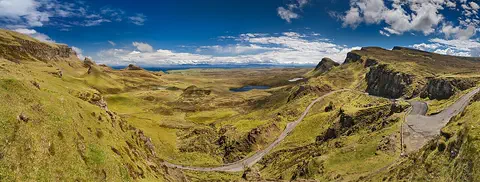
The United Kingdom, or UK, lies on islands off the northwest coast of Europe. It is made up of four parts, England, Scotland, Wales and Northern Ireland, and about 69.5 million people live there. Its capital is London.
Explore next
-
 Watch
Animal
Northern lapwing
The northern lapwing is a wading bird of fields and wet meadows with dark green back feathers that often look black, a white belly and a long, wispy crest. It breeds across Europe and Asia and spends the winter as far south as North Africa, India and Japan. Its numbers are falling, mostly because too few chicks survive.
-
 Watch
Animal
Bar-tailed godwit
The bar-tailed godwit is a long-billed shorebird that breeds on Arctic tundra and spends the rest of the year on mudflats far to the south. Godwits from Alaska fly non-stop across the Pacific Ocean to New Zealand and Australia, and one young bird tracked in 2022 flew at least 13,560 kilometers without landing.
-
 Watch
Animal
Greater flamingo
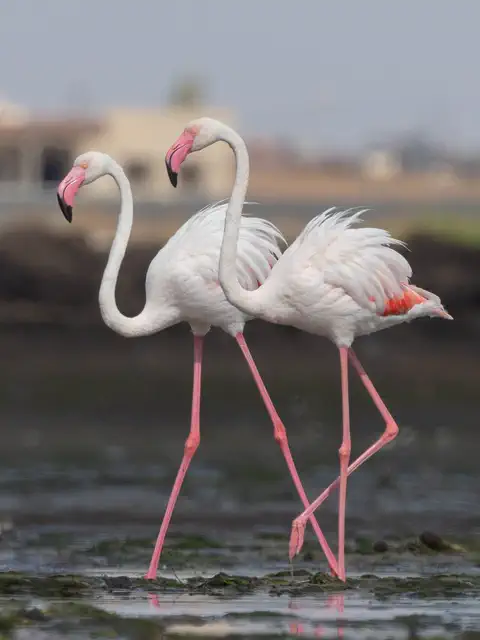
The greater flamingo is the tallest and heaviest flamingo, standing up to about 1.45 meters tall. It lives in salty lagoons and lakes across Africa, southern Europe, the Middle East and South Asia. It feeds by holding its bent bill upside down in the water and filtering out tiny animals, and it gets its pink color from what it eats.
-
Watch
Country
Tunisia
Tunisia is a small country in North Africa, with the Mediterranean Sea to the north and east. Its green, rainy north turns into dry steppes and then Sahara desert in the south, and about 12 million people lived there in 2024, many of them in the capital, Tunis.
-
Watch
Country
Netherlands
The Netherlands is a small, flat country in northwestern Europe on the North Sea. Its name means low-lying country: more than a quarter of it lies below sea level, protected by dunes and dikes. About 18.2 million people lived there in 2026, and its capital is Amsterdam, a city of canals.
-
Watch
Country
United Kingdom
The United Kingdom, or UK, lies on islands off the northwest coast of Europe. It is made up of four parts, England, Scotland, Wales and Northern Ireland, and about 69.5 million people live there. Its capital is London.
-
 Watch
Animal
Great crested grebe
The great crested grebe lives on lakes and ponds in Europe, Asia, Africa, Australia and New Zealand. It has a black crest and orange-and-black head plumes, and pairs perform an elaborate courtship dance on the water. It dives to catch fish, and its very young chicks often ride on their parents' backs.
-
 Watch
Animal
Red knot
The red knot is a stocky shorebird that nests on Arctic tundra and spends the rest of the year on coasts around the world, as far south as southern South America and Australia. In spring its face and chest turn rusty red. Some red knots fly more than 9,300 miles (about 15,000 kilometers) north each spring, stopping on the way to eat and build up fat.
For parents & teachers
What children will learn
- Locate the regions of Europe, Asia and Africa where pied avocets nest, and where many of them spend the winter.
- Describe how an avocet uses its upturned beak to find food in shallow water.
- Describe an avocet colony, its scrape nests and its downy chicks.
- Tell the story of the avocet's return as a nesting bird in the UK and the part played by protected, managed wetlands.
Recommended ages: 3 to 17 · About 15 minutes
Talk about it
- Why might it help a bird to nest close to many others of its kind?
- Avocet breeding sites work best when the water slowly gets lower through the summer. What does the falling water uncover for them?
- How could building on mudflats affect birds that spend the winter there?
Try at home or in class
- Fill a shallow tray with water and a little sand, sprinkle in some rice grains, and try sweeping a spoon from side to side to sift them out, like an avocet.
- Use a tape measure to mark 77 to 80 centimeters, the width of an avocet's wings, and compare it with your own arm span.
Key vocabulary: wader, pied, brackish, colony, scrape, precocial
Where these facts come from
- GBIF Backbone Taxonomy and GBIF Occurrence Search , Global Biodiversity Information Facility (CC0 1.0 (backbone); occurrence counts are facts derived from records under CC0, CC BY and CC BY-NC)
- Wikidata , Wikimedia Foundation (CC0 1.0)
- The IUCN Red List of Threatened Species , International Union for Conservation of Nature (IUCN terms of use (no redistribution of Red List data or range maps))
- Recurvirostra avosetta (BirdLife International, assessed 4 September 2020, published 2021) , IUCN Red List of Threatened Species
- Recurvirostra avosetta: range, population, ecology and threats text , IUCN Red List of Threatened Species
- Recurvirostra avosetta: IUCN Red List global assessment record (BirdLife International 2021), IUCN checklist on GBIF , GBIF
- Avocet (BirdFacts) , British Trust for Ornithology
- Avocet bird facts , RSPB
- File:Avocette élégante Thyna019.jpg (Thyna, Sfax, Tunisia, 31 May 2021, El Golli Mohamed) , Wikimedia Commons
- File:Avocet (Recurvirostra avosetta) (W1CDR0001419 BD20).ogg (Lawrence Shove, Havergate Island, 1960s, British Library) , Wikimedia Commons
- Wikimedia Commons , Wikimedia Foundation (Per file: Public domain, CC0, CC BY or CC BY-SA only (credited on each page))
Checked, not yet human-reviewed. Last updated November 1, 2026. Spotted a mistake? Tell us.