
Animal
Red knot
The red knot is a stocky shorebird. In spring its face and chest turn rusty red. It flies very far between the Arctic and beaches far away.
The red knot is a stocky shorebird that nests on Arctic tundra and spends the rest of the year on coasts around the world, as far south as southern South America and Australia. In spring its face and chest turn rusty red. Some red knots fly more than 9,300 miles (about 15,000 kilometers) north each spring, stopping on the way to eat and build up fat.
Calidris canutus, a shorebird of the sandpiper family with six subspecies, breeds in the high Arctic from Alaska and Canada to Greenland and northern Russia and winters on coasts of the Americas, north-western Europe, the west coast of Africa, southern Asia and Australasia. BirdLife International assessed it as Near Threatened for the IUCN Red List (criteria A2bcd+4bcd; assessed 10 July 2024, published 2024), with a decreasing trend and about 2 to 3 million mature birds.
Photo: © Hans Hillewaert, CC BY-SA 4.0, via Wikimedia Commons
Meet the red knot
The red knot is a shorebird. It is about 25 centimeters long.
In spring its face and chest are rusty red. In winter it is gray.
The red knot is a stocky shorebird, a bird that feeds along beaches and mudflats. It is about 23 to 27 centimeters long and has a short neck, short legs and a straight black beak.
In spring and summer its face and chest turn rusty red, and its back is mottled dark brown, white and rusty. In winter it is pale gray above and whitish below. It weighs about 100 to 190 grams, and its weight changes a lot through the year.
Calidris canutus is a sandpiper (family Scolopacidae) with six subspecies (IUCN). Audubon describes a chunky shorebird with a stout, straight black bill, short neck and short legs, 23 to 27 centimeters long, with a wingspan of 47 to 53 centimeters and a weight of 100 to 190 grams; the sexes look similar. The US Fish and Wildlife Service (USFWS) adds that females of the rufa subspecies are usually less intensely rufous than males.
In breeding plumage the face, the stripe above the eye, the breast and the upper belly are rufous-red, and the upperparts are dark brown with white and rufous feather edges (USFWS). Winter birds are pale ash-gray above and whitish below (USFWS; BTO).
Quick facts
- Group
- Bird
- Length
- 0.23 to 0.27 m
- Wingspan
- 0.47 to 0.53 m
- Weight
- 0.1 to 0.19 kg
- Lifespan in the wild
- 8 years
From the tundra to the tideline
Red knots lay their eggs in the far north, on the cold Arctic tundra.
The rest of the year they live on beaches and mudflats.
Red knots nest in the high Arctic, in Alaska, northern Canada, Greenland and northern Russia. They choose dry, open tundra, often on stony ridges or slopes, near ponds or streams.
For the rest of the year red knots live on coasts: muddy and sandy tidal flats, sheltered beaches, bays, lagoons and harbors. They winter on the coasts of North and South America, north-western Europe, the west coast of Africa, southern Asia, Australia and New Zealand.
The IUCN describes breeding from Alaska across the Arctic to Greenland and northern Russia, and wintering on the Atlantic and Pacific coasts of the Americas, north-western Europe, the west coast of Africa from Tunisia and Morocco to South Africa, southern Asia and Australasia (Van Gils and Wiersma 1996). The six subspecies use different routes: islandica breeds in the Canadian high Arctic and north Greenland and winters in western Europe, while rufa breeds in the Canadian low Arctic and winters on the coasts of south Florida, Texas, northern Brazil and southern South America.
Breeding habitat is high-Arctic upland tundra: dry ridges, slopes with Dryas and willows, and glacial gravel near streams or ponds. Outside the breeding season the species is strictly coastal, on tidal mud and sand flats, sheltered sandy beaches, rocky shelves, bays, lagoons and harbors (del Hoyo et al. 1996, via IUCN).
Continents


Where can you find this animal?
- Lives here naturally · Countries and seas named by a scientific source
- Sightings recorded · Records of wild sightings (GBIF)
- Visits for part of the year · Countries and seas named by a scientific source
Lives here naturally · Countries and seas named by a scientific source
Arctic tundra where red knots breed, in Alaska, northern Canada, Greenland and northern Russia, and the coasts where they spend the rest of the year in the Americas, Europe, Africa, Asia, Australia and New Zealand; away from the Arctic they live mainly along coasts. Many small islands and territories are also in the range but have no separate map shape, including Caribbean islands, Hong Kong, Sing
Places: Albania, Algeria, Angola, Argentina, Australia, Bahamas, Bangladesh, Belgium and 74 more places.
Source: iucn-red-list · checked October 2026
Sightings recorded · Records of wild sightings (GBIF)
Counts of GBIF records of wild observations (human and machine) and preserved specimens. Records include introduced populations, vagrants, escaped or released animals and misidentifications, so a country with records is not necessarily part of the native range.
Wild sightings have been recorded in United States, Sweden, Denmark, UK, Norway, Canada, Australia, Netherlands and 119 more places.
Source: gbif · checked October 2026
Visits for part of the year · Countries and seas named by a scientific source
Suriname, where the IUCN lists red knots only outside the breeding season.
Places: Suriname.
Source: iucn-red-list · checked October 2026
Range maps show where scientists say an animal lives, often country by country. An animal may live in only part of a country shown, and sightings records can include animals that wandered far from home.
Shellfish swallowed whole
Red knots eat small clams, snails, worms and crabs.
In the Arctic they eat insects.
On the coast, red knots eat small animals that live in the mud and sand: mostly small clams, mussels and snails, plus worms and crustaceans (animals such as crabs and shrimp). They swallow the shells whole and crush them in the gizzard, a strong muscly part of the stomach.
On tidal flats a knot probes the mud with its beak and finds food by touch. In the Arctic it picks insects, especially flies, from the ground. When it first arrives there, before insects are about, it eats shoots, buds and seeds.
The USFWS calls red knots of all six subspecies specialized molluscivores: hard-shelled molluscs are swallowed whole and crushed in the gizzard, which is the largest relative to body size of any shorebird species measured. They prefer thin-shelled prey, rarely wade in water deeper than 2 to 3 centimeters, and can reach only prey buried in the top 2 to 3 centimeters of sediment. Audubon notes probing by touch on tidal flats and feeding by sight on dry sand and tundra.
On the breeding grounds the diet is mainly insects (especially flies, butterflies and moths, caddisflies, beetles and bees), with spiders, snails and worms; on arrival, before insects are active, knots depend on plant food such as sedge and horsetail seeds and grass shoots (IUCN). Outside the breeding season they take bivalve and gastropod molluscs, crustaceans, horseshoe crab eggs, worms and insects (IUCN).
Did you know?
One red knot lived more than 27 years.
The British Trust for Ornithology's ringing records include a red knot that lived to more than 27 years old.
The BTO's maximum age for a ringed knot is 27 years, 3 months and 29 days (set in 2006), far beyond the typical 8 years.
Built for long flights
Before a long trip, a red knot eats and eats. It gets fat to have energy for flying.
Then its stomach gets smaller and its flying muscles get bigger.
Before a long flight, a red knot's body changes. It stores lots of fat to use as fuel. Its leg muscles, gizzard, stomach and liver shrink, while its heart and flight muscles grow.
After a long flight, a knot cannot feed at full speed at once. It may take several days for its digestive system to grow back.
Before long migratory flights red knots store large amounts of fat and change their metabolic rates; the leg muscles, gizzard, stomach, intestines and liver shrink while the pectoral (flight) muscles and heart enlarge (USFWS). Birds arriving after long flights cannot feed at full capacity until the digestive organs regrow, which may take several days.
Body mass swings with the seasons: for rufa knots the USFWS gives about 125 grams in early winter and about 205 grams in spring and 172 grams in fall, just before long flights. The bill tapers from a stout base to a fine tip and is not much longer than the head; the eyes are small, with a binocular field around the bill and a substantial blind area behind the head (USFWS, from studies of other subspecies).
A short Arctic summer
In the Arctic, a red knot lays about four eggs in a dip on the ground.
The chicks find their own food. They can fly before they are three weeks old.
Male red knots reach the Arctic before the females. The nest is a shallow scrape on the ground, lined with leaves, lichen and moss, and the female usually lays 4 eggs. Both parents keep the eggs warm for 21 to 22 days.
The chicks leave the nest soon after hatching and find their own food. They can fly at about 18 to 20 days old. Among rufa red knots, the adults leave the Arctic first, so the young birds make their first migration on their own.
Knots are monogamous and raise one brood a year (USFWS). Males reach the breeding grounds first; in courtship the male flies in high circles, hovering on quivering wings and then gliding while giving mellow whistled calls (Audubon). The nest is an open, shallow depression on hummocks, gravel or open tundra (IUCN), lined with leaves, lichen and moss (Audubon). Clutches are 3 to 4 eggs (Audubon), typically 4 (BTO; USFWS), incubated by both sexes for 21 to 22 days.
Chicks are precocial and leave the nest within 24 hours of hatching (USFWS); they fly at 18 to 20 days (Audubon; BTO). In rufa, females are thought to leave soon after hatching in mid-July, males about 25 days later, and the juveniles then migrate on their own. Young rufa knots spend their first summer on coasts from South America to southern Canada, and most make their first full trip to the Arctic in their second spring (USFWS); the BTO gives breeding typically at 2 years and a typical life of 8 years for a bird that reaches breeding age.
One of the longest journeys
Some red knots fly from the bottom of South America to the Arctic every spring.
They stop on beaches to rest and eat.
Some red knots of the rufa subspecies fly more than 9,300 miles (about 15,000 kilometers) north every spring, from the tip of South America to the Canadian Arctic, and fly back again in autumn. The US Fish and Wildlife Service calls them some of the longest-distance migrants in the animal kingdom.
On the way, knots stop at a few places where food is plentiful. In Delaware Bay, in the eastern United States, they feast on horseshoe crab eggs in spring and can nearly double their weight in about two weeks.
The IUCN describes a full long-distance migrant that uses few stopover sites. The USFWS says some rufa knots fly more than 9,300 miles (about 15,000 km) from south to north each spring and up to 19,000 miles (about 30,600 km) a year, among the longest migrations known; they travel in single-species flocks, departing flocks tend to be large (more than 50 birds), and they are thought to fly by both night and day.
Delaware Bay is rufa's main spring staging area: 50 to 80% of the population makes its final Atlantic stop there, and knots can nearly double their weight in two weeks on horseshoe crab eggs (USFWS). In Britain, the BTO says most wintering knots come from Iceland, Greenland and the Canadian Arctic, and mid-winter peak counts on The Wash have risen to about 200,000 birds. Where they are common, knots may roost shoulder to shoulder in packed flocks (Audubon).
Did you know?
Some young red knots fly south without their parents.
Adult rufa red knots leave the Arctic first, so the young make their first long migration on their own.
In rufa, females leave soon after hatching and males about 25 days later; the fledged juveniles follow on their own (USFWS).
Losing the mudflats
There are fewer red knots than before.
They need muddy beaches where they can stop, rest and eat.
The red knot is listed as near threatened, and its numbers are going down. There are about 2 to 3 million adult red knots.
Knots need rich feeding places along their routes. Along the Yellow Sea, in East Asia, more of the coast has now been turned into dry land than is left as mudflat, and an invasive cordgrass appears to be spreading over the mud. In other places, collecting too much shellfish leaves less food, and tourists, people walking on beaches and aircraft flying over can disturb feeding birds.
BirdLife International assessed Calidris canutus as Near Threatened for the IUCN Red List (A2bcd+4bcd; assessed 10 July 2024, published 2024): global declines of 10 to 29% are suspected, largely from habitat loss and degradation, hunting and disturbance, and perhaps also as-yet-unidentified threats linked to climate change. The population is put at 2 to 3 million mature birds; generation length is 6.4 years.
On the Yellow Sea, reclaimed land now exceeds the remaining intertidal mudflat, and invasive Spartina alterniflora cordgrass is degrading what is left. Other named threats are over-harvesting of shellfish, disturbance from tourism, beach foot traffic, recreation and aircraft, and hunting, a probable threat in parts of the range. In the past, heavier harvesting of horseshoe crabs in Delaware Bay reduced the knots' food there (IUCN). China and South Korea have halted new projects that depend on land reclamation (IUCN 2023, via the assessment).
IUCN Red List
How is the red knot doing in the wild?
- Least Concern
- Near Threatened (this animal)
- Vulnerable
- Endangered
- Critically Endangered
- Extinct in the Wild
- Extinct
Near Threatened
Not at risk yet, but it could be soon.
Amazing facts
-
Red knots eat lots of horseshoe crab eggs in spring.
In Delaware Bay, red knots eat so many horseshoe crab eggs that they can nearly double their weight in about two weeks.
The USFWS says weight gains recorded on Delaware Bay are the fastest of any known red knot stopover population and among the highest in the animal kingdom.
-
A red knot swallows little shells whole.
Red knots swallow small clams and snails whole and crush the shells inside their gizzard.
Relative to body size, the red knot's gizzard is the largest of any shorebird species measured (USFWS).
-
Some young red knots fly south without their parents.
Adult rufa red knots leave the Arctic first, so the young make their first long migration on their own.
In rufa, females leave soon after hatching and males about 25 days later; the fledged juveniles follow on their own (USFWS).
-
One red knot lived more than 27 years.
The British Trust for Ornithology's ringing records include a red knot that lived to more than 27 years old.
The BTO's maximum age for a ringed knot is 27 years, 3 months and 29 days (set in 2006), far beyond the typical 8 years.
Words to know
- shorebird
- a bird that feeds along beaches, mudflats and the edges of water
- migration
- a regular journey that animals make between places, often with the seasons
- stopover
- a place where migrating birds stop to rest and eat during a long journey
- tundra
- cold, treeless land in the far north where the ground under the surface stays frozen
- gizzard
- a strong, muscly part of a bird's stomach that grinds up food
- mudflat
- flat, muddy land by the sea that is covered at high tide and uncovered at low tide
Discovery challenge
-
Where do red knots lay their eggs?
Where do red knots nest?
In which region do red knots breed?
- On Arctic tundra
- In tropical rainforest
- In desert sand dunes
Show the answer
On Arctic tundra
In the far north, on the cold Arctic tundra.
On dry, open Arctic tundra in Alaska, northern Canada, Greenland and northern Russia.
High-Arctic upland tundra from Alaska to Greenland and northern Russia (IUCN).
-
What do red knots eat on the coast?
What is the main food of red knots on the coast?
Which prey dominates the red knot's diet outside the breeding season?
- Small clams, mussels and snails
- Fruit and nectar
- Mice and lizards
Show the answer
Small clams, mussels and snails
Little shellfish, which they swallow whole.
Mostly small shellfish such as clams, mussels and snails, swallowed whole and crushed in the gizzard.
Hard-shelled molluscs, swallowed whole and crushed in the gizzard (USFWS); also crustaceans, worms and horseshoe crab eggs (IUCN).
-
What eggs do red knots eat in Delaware Bay?
Which eggs do red knots feast on at Delaware Bay in spring?
Which food supply makes Delaware Bay the rufa red knot's main spring staging area?
- Horseshoe crab eggs
- Sea turtle eggs
- Penguin eggs
Show the answer
Horseshoe crab eggs
Horseshoe crab eggs!
Horseshoe crab eggs. Knots can nearly double their weight on them in about two weeks.
The abundance of horseshoe crab eggs (USFWS); 50 to 80% of rufa knots make their final Atlantic stop there.
-
What does a red knot store in its body before a long flight?
What does a red knot build up in its body to fuel a long flight?
What does a red knot accumulate to fuel a long migratory flight?
- Lots of fat
- Extra feathers
- Water in its beak
Show the answer
Lots of fat
Fat! It gives the knot energy to fly.
Lots of fat, which it uses as fuel. Its heart and flight muscles also grow, while its stomach and gizzard shrink.
Large fat stores, with enlarged pectoral muscles and heart and shrunken digestive organs (USFWS).
Places where you might see it
-
 Watch
 Country
Canada
Canada is the second-largest country in the world, stretching across the north of North America from the Atlantic to the Pacific and up into the Arctic. It has the Rocky Mountains, thousands of islands and about 42 million people, who speak English, French and many other languages.
-
 Watch
 Country
Argentina
Argentina covers most of the southern part of South America. The Andes mountains run down its western side, grassy plains called the Pampas spread across the middle, and windy Patagonia stretches to the far south. INDEC, the national statistics office, estimates that about 46.5 million people lived there in 2026, many of them in and around Buenos Aires.
Explore next
-
 Watch
3D
Animal
Atlantic horseshoe crab
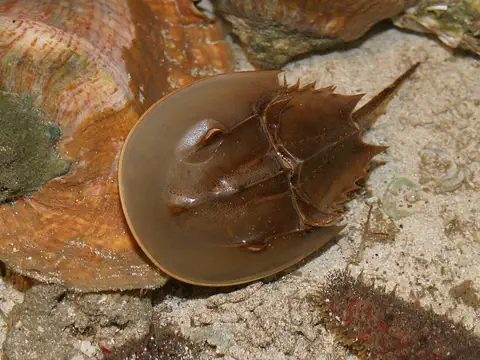
The Atlantic horseshoe crab is a living fossil: its relatives have looked much the same for hundreds of millions of years. Despite its name, it is more closely related to spiders and scorpions than to crabs. Each spring, thousands crawl onto beaches to lay eggs, feeding hungry shorebirds, and its blue blood helps keep medicines safe.
-
 Watch
Animal
Bar-tailed godwit
The bar-tailed godwit is a long-billed shorebird that breeds on Arctic tundra and spends the rest of the year on mudflats far to the south. Godwits from Alaska fly non-stop across the Pacific Ocean to New Zealand and Australia, and one young bird tracked in 2022 flew at least 13,560 kilometers without landing.
-
 Watch
Animal
Arctic tern
The Arctic tern is a small, graceful seabird with a black cap, a red bill and red legs. Every year it flies from its nesting grounds in the Arctic to the edge of the ice around Antarctica and back again. Scientists who tracked terns from Greenland and Iceland found that they flew an average of 70,900 kilometers in one year.
-
 Watch
Animal
Pied avocet
The pied avocet is a black-and-white wading bird with long blue-gray legs and a long, thin beak that curves upward. It lives on salty and brackish wetlands, lagoons, saltpans and mudflats in Europe, Africa and Asia. It sweeps its beak from side to side in shallow water to sift tiny animals from the mud.
-
Watch
Country
Canada
Canada is the second-largest country in the world, stretching across the north of North America from the Atlantic to the Pacific and up into the Arctic. It has the Rocky Mountains, thousands of islands and about 42 million people, who speak English, French and many other languages.
-
Watch
Country
Argentina
Argentina covers most of the southern part of South America. The Andes mountains run down its western side, grassy plains called the Pampas spread across the middle, and windy Patagonia stretches to the far south. INDEC, the national statistics office, estimates that about 46.5 million people lived there in 2026, many of them in and around Buenos Aires.
-
 Watch
Animal
Killdeer
The killdeer is a plover that lives in fields, lawns, shores and mudflats from Alaska and Canada to Peru and Chile. It has two black bands across its white chest and a loud call that sounds like its name. To protect its eggs, a parent may pretend to have a broken wing and lead an intruder away from the nest.
-
 Watch
Animal
Snow goose
The snow goose nests on Arctic tundra in Canada, Alaska, Greenland and Wrangel Island in Russia, and spends the winter in the United States and Mexico. Most are white with black wingtips, but some, called blue geese, have gray bodies. Snow geese travel in huge flocks, and in 2008 the US Fish and Wildlife Service said there were so many that they had damaged parts of their tundra nesting grounds.
For parents & teachers
What children will learn
- Trace a red knot's journey from the Arctic to coasts as far away as South America and Australia.
- Describe how a red knot finds and eats shellfish, and what its gizzard does.
- Explain how a knot's body changes before a long flight and why stopover sites such as Delaware Bay matter.
- Name some threats to the mudflats red knots need.
Recommended ages: 3 to 17 · About 15 minutes
Talk about it
- Why might a bird that flies thousands of kilometers need a few places along the way that are full of food?
- How could losing one stopover site affect birds that use many places on their journey?
- Why might scientists put lettered flags on birds' legs?
Try at home or in class
- On a world map or globe, use string to measure from the tip of South America to the Canadian Arctic. How many countries does the string cross?
- Hide a few dry pasta shells in a tray of damp sand. With a straw or a chopstick, try to find them by touch with your eyes closed, like a knot probing the mud.
Key vocabulary: shorebird, migration, stopover, tundra, gizzard, mudflat
Where these facts come from
- GBIF Backbone Taxonomy and GBIF Occurrence Search , Global Biodiversity Information Facility (CC0 1.0 (backbone); occurrence counts are facts derived from records under CC0, CC BY and CC BY-NC)
- Wikidata , Wikimedia Foundation (CC0 1.0)
- The IUCN Red List of Threatened Species , International Union for Conservation of Nature (IUCN terms of use (no redistribution of Red List data or range maps))
- Calidris canutus (BirdLife International, assessed 10 July 2024, published 2024) , IUCN Red List of Threatened Species
- Calidris canutus: range, population, ecology and threats text , IUCN Red List of Threatened Species
- Calidris canutus: IUCN Red List global assessment record (BirdLife International 2024), IUCN checklist on GBIF , GBIF
- Rufa red knot (Calidris canutus rufa) , U.S. Fish and Wildlife Service
- Red knot (Guide to North American Birds; text by Kenn Kaufman, 1996) , National Audubon Society
- Knot (BirdFacts) , British Trust for Ornithology
- File:Calidris canutus (summer).jpg (Sanibel Island, Florida, 12 May 2011, Hans Hillewaert) , Wikimedia Commons
- Wikimedia Commons , Wikimedia Foundation (Per file: Public domain, CC0, CC BY or CC BY-SA only (credited on each page))
Checked, not yet human-reviewed. Last updated November 1, 2026. Spotted a mistake? Tell us.