
Animal
Southern carmine bee-eater
The southern carmine bee-eater is a bright pink bird with a blue-green cap. It catches insects in the air. Hundreds of them dig nest tunnels together in sandy riverbanks.
The southern carmine bee-eater is a slim, bright pinkish-red bird with a greenish-blue crown, a dark mask and two long tail streamers. It lives in the savannas of southern and eastern Africa, catching flying insects in the air. In spring, huge colonies of up to a thousand pairs dig nest tunnels side by side in sandy riverbanks.
Merops nubicoides is a large, colonial bee-eater (family Meropidae) of central and southern Africa, a migrant that breeds in sandbanks along major rivers. BirdLife International assessed it as Least Concern for the IUCN Red List (assessed 12 June 2024, published 2024): its population is unquantified and suspected to be decreasing because of ongoing habitat destruction, but not fast enough to approach Vulnerable.
Photo: Charles J. Sharp, CC BY-SA 4.0, via Wikimedia Commons
Meet the southern carmine bee-eater
The southern carmine bee-eater is a bright pink bird.
It has a blue-green cap and a long, curved black beak.
The southern carmine bee-eater is covered in bright reddish-pink feathers, with a pink throat, a greenish-blue crown and a dark mask across its red eyes. Its beak is long, black and slightly curved, and two long feathers called streamers stick out from the middle of its tail.
It is about 24 to 27 centimeters long, plus streamers of up to 12 centimeters, and weighs about 44.5 to 66 grams. SANBI, South Africa's biodiversity institute, says it is the largest of all African bee-eaters.
Merops nubicoides belongs to the bee-eater family Meropidae. San Diego Zoo Wildlife Alliance's fact sheet (after del Hoyo et al. and Fry et al. 2018) gives a length of 24 to 27 centimeters, tail streamers up to 12 centimeters and a weight of 44.5 to 66 grams, and describes an overall bright pink appearance (a rose-carmine color rare among birds), a greenish-blue crown, a dark mask, red eyes, a black bill, long pointed wings, a pale blue rump and undertail, and sexes alike; immatures are pinkish-brown and lack streamers.
The southern species was once treated together with the northern carmine bee-eater (M. nubicus); Peter Ryan (University of Cape Town, 2009) notes it is slightly larger and has a pink, not turquoise, throat. SANBI calls it the largest of the African bee-eaters.
Quick facts
- Group
- Bird
- Length
- 0.24 to 0.27 m
- Weight
- 0.04 to 0.07 kg
Savannas and big rivers
Carmine bee-eaters live in warm, grassy places in Africa.
They like to be near rivers and lakes.
Southern carmine bee-eaters live in the savannas of southern and eastern Africa, from Kenya and Tanzania south to Angola, Namibia, Botswana, Zimbabwe, Mozambique and South Africa. They like open country near rivers, lakes and swamps.
They are migrants. They breed in sandy banks along big rivers, such as the Zambezi, in spring.
The IUCN lists Zambia and Zimbabwe as breeding range and twelve countries, from Kenya, Rwanda, Burundi, Tanzania and the DR Congo to Angola, Namibia, Botswana, Malawi, Mozambique, Eswatini and South Africa, as resident range; it calls the species a full migrant found up to 2,200 meters. Biodiversity Explorer (Iziko Museums) describes it as locally common in savanna, swamps with scattered dead trees and cultivated land, especially around rivers and lakes.
Peter Ryan (2009) describes a fairly small breeding range along major rivers from southern Angola and Zambia through northern Namibia and Botswana to Zimbabwe, and says it used to breed in Mozambique but had no recent breeding records there. SANBI describes the birds as summer migrants to woodland savanna in southern Africa.
Continent
Its habitats


Where can you find this animal?
- Lives here naturally · Countries and seas named by a scientific source
- Sightings recorded · Records of wild sightings (GBIF)
Lives here naturally · Countries and seas named by a scientific source
Savannas of central, eastern and southern Africa. The big breeding colonies are in sandbanks along major rivers, from southern Angola and Zambia through northern Namibia and Botswana to Zimbabwe. Only part of many shaded countries is bee-eater country.
Places: Zambia, Zimbabwe, Angola, Botswana, Burundi, DR Congo, Eswatini, Kenya and 6 more places.
Source: iucn-red-list · checked October 2026
Sightings recorded · Records of wild sightings (GBIF)
Counts of GBIF records of wild observations (human and machine) and preserved specimens. Records include introduced populations, vagrants, escaped or released animals and misidentifications, so a country with records is not necessarily part of the native range.
Wild sightings have been recorded in South Africa, Botswana, Namibia, Zimbabwe, Zambia, Mozambique, Malawi, Angola and 12 more places.
Source: gbif · checked October 2026
Range maps show where scientists say an animal lives, often country by country. An animal may live in only part of a country shown, and sightings records can include animals that wandered far from home.
Hunting insects on the wing
Bee-eaters catch insects while they fly.
They eat bees, termites, dragonflies and locusts.
Southern carmine bee-eaters catch big insects in midair, such as locusts, cicadas, dragonflies, flying termites and bees, and carry them back to a perch. There, they rub a bee or wasp against the branch to get rid of its sting.
They are often seen following grass fires, catching the insects that fly up to escape the flames. Later, they cough up the hard insect parts as pellets.
Biodiversity Explorer says the species feeds exclusively on insects, generally larger than those taken by other bee-eaters, such as termite alates, cicadas and locusts. SANBI lists dragonflies, termites and locusts, describes prey being rubbed against a perch to kill it, which removes the stings of bees and wasps, and notes pellets of insect exoskeleton and the habit of following grass fires to catch fleeing insects; it adds that migration routes may follow locusts.
Sources differ on 'hitch-hiking' on large animals to catch flushed insects: Ryan (2009) says this is rarely seen in the southern species, while SANBI says it has been recorded, especially on kori bustards.
Did you know?
Baby bee-eaters grow bigger than their parents.
In a zoo study, carmine bee-eater chicks weighed more than their parents by the time they were 15 to 20 days old.
Chicks exceeded adult mass at 15 to 20 days in a captive study (Elston et al. 2007, via Ryan 2009).
Pink feathers and long streamers
Its feathers are bright pink.
Two long feathers stick out from its tail.
The carmine bee-eater's rose-pink color is rare among birds. Its throat is pink, its crown is greenish-blue, and its rump and the feathers under its tail are pale blue, which shows when it flies.
Its wings are long and pointed. Males and females look alike. Young birds are a duller pinkish-brown and do not have tail streamers yet.
San Diego Zoo Wildlife Alliance describes the rose-carmine plumage as rare among birds, with a greenish-blue crown, dark mask, red eyes, black bill, black or brown legs and feet, pale blue rump and undertail coverts, long pointed wings and long central tail streamers; the sexes are alike and immatures are pinkish-brown without streamers. SANBI adds that the tail looks silver-gray and the underbelly light blue in flight.
SANBI gives an average of 26 centimeters without streamers and 62 grams (Sinclair et al. 2012), within San Diego Zoo Wildlife Alliance's ranges.
Tunnels in a sandbank
Bee-eaters dig tunnels in sandy banks.
The eggs are at the end of the tunnel. Both parents feed the chicks.
In spring, before the rains, carmine bee-eaters gather at sandy riverbanks to breed. A male offers the female an insect as a gift. Then both birds dig a tunnel, usually 1 to 2 meters long, with a nest room at the end. Most pairs dig a fresh tunnel each year.
The female lays 2 to 4 eggs, a couple of days apart. In a study of zoo birds, the eggs hatched after 20 to 21 days, and the chicks grew so fast that by 15 to 20 days old they weighed more than their parents.
Ryan (2009) describes colonies in sandy banks near water, sometimes on flat ground, with burrows dug by both sexes, typically 1 to 2 meters and up to 3.7 meters long; successful nests become fouled, so most pairs dig a new burrow each year. Birds breed early in spring, before the rains, so that chicks fledge before the rains begin. SANBI describes courtship feeding with insects and monogamous pairs.
Ryan summarizes a captive study in Florida (Elston et al. 2007): clutches of 2 to 4 (rarely 5) eggs laid about two days apart, incubation of 20 to 21 days with females incubating about three times longer than males, males delivering three to four times more food to chicks, and chicks outweighing their parents by 15 to 20 days. Younger chicks often do not survive.
A colony of a thousand pairs
Carmine bee-eaters live in huge, busy groups.
Hundreds of birds fly around their sandy bank.
Southern carmine bee-eaters are very social. Their breeding colonies can have up to 1,000 pairs, all nesting in one riverbank. Before the eggs are laid, the whole colony often bursts into the air at once, chattering and wheeling around, before settling down again.
The birds also glide on breezes rising up the bank, and males chase each other in the air, sometimes grabbing each other's beaks.
Ryan (2009) describes colonies of up to 1,000 pairs, whole colonies flushing en masse before laying, chittering and wheeling before resettling, birds soaring on the updraft where a river breeze meets the bank, and frequent aerial jostling and bill-grabbing in the pre-breeding period, probably aggressive encounters between competing males. Biodiversity Explorer gives colonies of 100 to 1,000 nests.
Predators visit colonies: Ryan describes a water monitor that, despite being mobbed by the bee-eaters, inspected burrows and took chicks. SANBI notes perching side by side on plants overhanging water, and different calls for threat and courtship.
Did you know?
Bee-eaters follow grass fires to catch insects.
Carmine bee-eaters often follow grass fires, catching the insects that fly up to escape.
Birds pursue grass fires to catch fleeing insects (SANBI).
Least concern, but colonies need care
There are lots of carmine bee-eaters.
They need quiet, safe riverbanks to raise their chicks.
The southern carmine bee-eater is listed as least concern, but its numbers are thought to be falling as its habitat is destroyed.
Because so many birds nest in a few riverbanks, colonies can be harmed easily. Dams have flooded some colonies, changing water levels can wash banks away, and too many visitors or boats can disturb the birds. Birdwatchers can help by keeping their distance from nesting colonies.
BirdLife International assessed Merops nubicoides as Least Concern for the IUCN Red List (assessed 12 June 2024, published 2024): an extremely large range and an unquantified population suspected to be decreasing because of ongoing habitat destruction. It is reported in one of seven trade datasets (Donald et al. 2024), and the generation length is 3.44 years.
Ryan (2009) reported that dam-building, especially on the Zambezi, flooded numerous colonies, that irregular water releases for hydroelectric power erode banks and collapse colonies, that some sites were deserted after the birds were taken for food, that one colony in Zimbabwe was deserted after adults there were ringed in three successive seasons, and that uncontrolled tourism can cause problems through direct disturbance and through bank erosion from boat waves. SANBI notes that some beekeepers see the birds as a threat to their bees.
IUCN Red List
How is the southern carmine bee-eater doing in the wild?
- Least Concern (this animal)
- Near Threatened
- Vulnerable
- Endangered
- Critically Endangered
- Extinct in the Wild
- Extinct
Least Concern
Not at risk of disappearing from the wild right now.
Amazing facts
-
Bee-eaters rub bees on a branch before eating them.
A carmine bee-eater rubs a bee or wasp against its perch to get rid of the sting before eating it.
Prey is rubbed against a perch to kill it, which removes stings from bees and wasps (SANBI).
-
Bee-eaters follow grass fires to catch insects.
Carmine bee-eaters often follow grass fires, catching the insects that fly up to escape.
Birds pursue grass fires to catch fleeing insects (SANBI).
-
Baby bee-eaters grow bigger than their parents.
In a zoo study, carmine bee-eater chicks weighed more than their parents by the time they were 15 to 20 days old.
Chicks exceeded adult mass at 15 to 20 days in a captive study (Elston et al. 2007, via Ryan 2009).
-
Their pink color is rare in birds.
The carmine bee-eater's rose-carmine color is rare among birds.
Rose-carmine plumage is rare among birds (San Diego Zoo Wildlife Alliance, after Fry 1984).
Words to know
- colony
- a large group of animals of the same kind that nest close together
- burrow
- a tunnel dug in the ground by an animal
- streamer
- a long, thin tail feather that sticks out beyond the rest of the tail
- migrant
- an animal that moves to different places in different seasons
- pellet
- a small lump of hard food parts that a bird coughs up
- carmine
- a deep, bright red-pink color
Discovery challenge
-
Where do carmine bee-eaters dig their nests?
Where do southern carmine bee-eaters make their nests?
What nest sites do southern carmine bee-eater colonies use?
- Tunnels in sandy riverbanks
- Cup nests in treetops
- Floating nests on lakes
Show the answer
Tunnels in sandy riverbanks
In sandy banks!
Both parents dig a tunnel into a sandy bank near water.
Burrows in sandy banks near water, sometimes on flat ground (Ryan 2009).
-
What do carmine bee-eaters eat?
What do southern carmine bee-eaters eat?
What is the southern carmine bee-eater's diet?
- Flying insects
- Fruit
- Seeds
Show the answer
Flying insects
Insects!
Big flying insects such as locusts, cicadas, dragonflies, termites and bees.
Exclusively insects, generally large ones such as termite alates, cicadas and locusts (Biodiversity Explorer).
-
How many pairs can live in one colony?
How many pairs can nest in one carmine bee-eater colony?
How large can a breeding colony be?
- Up to 1,000
- Only 2
- About 10
Show the answer
Up to 1,000
Up to a thousand!
Up to 1,000 pairs can nest in one riverbank.
Colonies support up to 1,000 pairs (Ryan 2009).
-
What color is its throat?
What color is the southern carmine bee-eater's throat?
Which throat color distinguishes the southern from the northern carmine bee-eater?
- Pink
- Turquoise
- Yellow
Show the answer
Pink
Pink!
Pink; the northern carmine bee-eater has a turquoise throat.
Pink, not turquoise (Ryan 2009).
Places where you might see it
-
 Watch
 Country
Zambia
Zambia is a landlocked country on a high plateau in south-central Africa, named after the Zambezi River. On its southern border the Zambezi thunders over Victoria Falls. About 22 million people live there, and its copper mines have long made it one of Africa's great copper producers.
-
 Watch
 Country
Botswana
Botswana is a landlocked country in the middle of southern Africa. Deep Kalahari sand covers most of it, but in the north the Okavango River spreads into a huge green delta full of wildlife. Botswana became independent in 1966 and has grown more prosperous, helped by diamonds.
-
 Watch
 Country
Zimbabwe
Zimbabwe is a landlocked country in southern Africa, high on a wide plateau between the Zambezi and Limpopo rivers. It shares Victoria Falls with Zambia, and its name is a Shona word meaning "stone houses", the name of the great stone city of Great Zimbabwe.
-
 Watch
 Country
Namibia
Namibia lies on the southwestern coast of Africa. The Namib, a desert of huge dunes kept alive by sea fog, runs along its coast, a high plateau with farms and wildlife fills its middle, and the dry Kalahari lies to the east. Namibia became independent in 1990.
Explore next
-
 Watch
3D
Animal
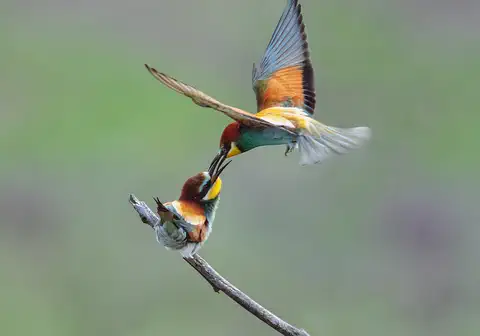
European bee-eater
The European bee-eater is one of the most colorful birds in Europe. It catches bees, dragonflies and other flying insects in midair, knocks out the stings on a branch, and digs a long tunnel in a sandy bank for its nest. Every autumn it flies to Africa for the winter.
-
 Watch
Animal
Lilac-breasted roller
The lilac-breasted roller is a dazzling bird of the open woodlands and savannas of eastern and southern Africa. It sits on high perches watching for insects, swoops down to catch them, and gets its name from the rolling, tumbling flights it makes in the breeding season.
-
 Watch
Animal
Kori bustard
The kori bustard is a huge, long-legged bird of open grassland and savanna in eastern and southern Africa. It is one of the world's heaviest flying birds, but it spends its life on the ground and flies only when it really has to. In the breeding season, males blow up their necks like balloons and fan their white feathers to attract females.
-
Watch
Country
Zambia
Zambia is a landlocked country on a high plateau in south-central Africa, named after the Zambezi River. On its southern border the Zambezi thunders over Victoria Falls. About 22 million people live there, and its copper mines have long made it one of Africa's great copper producers.
-
Watch
Country
Botswana
Botswana is a landlocked country in the middle of southern Africa. Deep Kalahari sand covers most of it, but in the north the Okavango River spreads into a huge green delta full of wildlife. Botswana became independent in 1966 and has grown more prosperous, helped by diamonds.
-
Watch
Country
Zimbabwe
Zimbabwe is a landlocked country in southern Africa, high on a wide plateau between the Zambezi and Limpopo rivers. It shares Victoria Falls with Zambia, and its name is a Shona word meaning "stone houses", the name of the great stone city of Great Zimbabwe.
-
Watch
Country
Namibia
Namibia lies on the southwestern coast of Africa. The Namib, a desert of huge dunes kept alive by sea fog, runs along its coast, a high plateau with farms and wildlife fills its middle, and the dry Kalahari lies to the east. Namibia became independent in 1990.
-
 Watch
Animal
Adélie penguin
The Adélie penguin is a medium-sized penguin, about 70 centimeters tall, with a black back, a white front and a bright white ring around each eye. It breeds in summer on rocky, ice-free ground all around Antarctica, building nests of pebbles, and spends the winter far out at sea among the pack ice.
For parents & teachers
What children will learn
- Locate the savannas and big rivers of southern Africa where carmine bee-eaters breed.
- Describe how bee-eaters catch insects in flight and remove bee stings.
- Explain how a whole colony nests together in a riverbank.
- Describe how dams, erosion and disturbance can affect nesting colonies.
Recommended ages: 3 to 17 · About 15 minutes
Talk about it
- Why might hundreds of birds nest together in the same riverbank?
- How could a dam on a river affect birds that nest in its banks?
- How can visitors watch a bird colony without disturbing it?
Try at home or in class
- Tunnel measure: with a grown-up, lay out a string 1 to 2 meters long to see how far a bee-eater digs into a riverbank.
- Color match: paint a bee-eater using pink, red, greenish-blue and black, and add two long tail streamers.
Key vocabulary: colony, burrow, streamer, migrant, pellet, carmine
Where these facts come from
- GBIF Backbone Taxonomy and GBIF Occurrence Search , Global Biodiversity Information Facility (CC0 1.0 (backbone); occurrence counts are facts derived from records under CC0, CC BY and CC BY-NC)
- Wikidata , Wikimedia Foundation (CC0 1.0)
- The IUCN Red List of Threatened Species , International Union for Conservation of Nature (IUCN terms of use (no redistribution of Red List data or range maps))
- Merops nubicoides (BirdLife International, assessed 12 June 2024, published 2024) , IUCN Red List of Threatened Species
- Merops nubicoides: justification, population and trade text , IUCN Red List of Threatened Species
- Merops nubicoides: IUCN Red List global assessment record (BirdLife International 2024), IUCN checklist on GBIF , GBIF
- Carmine Bee-eater Fact Sheet: Physical Characteristics , San Diego Zoo Wildlife Alliance Library
- Carmine Bee-eater (Animal of the week, 7 April 2021) , South African National Biodiversity Institute (SANBI)
- Showtime: Carmine Bee-eaters (Peter Ryan, Africa Birds & Birding, 2009) , University of Cape Town, Faculty of Science
- Merops nubicoides (Southern carmine bee-eater) , Biodiversity Explorer (Iziko Museums of South Africa)
- File:Southern carmine bee-eater (Merops nubicoides).jpg (14 March 2018, Charles J. Sharp) , Wikimedia Commons
- Wikimedia Commons , Wikimedia Foundation (Per file: Public domain, CC0, CC BY or CC BY-SA only (credited on each page))
Checked, not yet human-reviewed. Last updated November 1, 2026. Spotted a mistake? Tell us.