
Animal
Red fox
The red fox has orange fur and a big, fluffy tail with a white tip. It lives in woods, fields and even cities. It jumps high to catch mice.
The red fox is a small, clever member of the dog family with an orange coat, black legs and a bushy, white-tipped tail. It lives across North America, Europe, Asia and North Africa, more of the world than any other wild land carnivore, and has even moved into big cities.
Vulpes vulpes has the largest natural distribution of any wild land carnivore, across the Northern Hemisphere from the Arctic edge to North Africa and Central Asia. A solitary, adaptable omnivore and expert mouser, it thrives in farmland and cities. People introduced it to Australia in the 19th century, where it is now an invasive predator. The IUCN lists it as Least Concern.
Photo: Charles J. Sharp, CC BY-SA 4.0, via Wikimedia Commons
Meet the red fox
The red fox is a wild animal in the dog family.
It has orange fur, black legs and pointy ears. Its tail is big and bushy, with a white tip.
The red fox is a member of the dog family, but it is much smaller than a wolf: about 40 centimeters tall at the shoulder, about as high as your knee, and usually 5 to 7 kilograms. A big part of its length is its bushy tail, which is 35 to 40 centimeters long.
Most red foxes have orange-red fur, black ears and legs, and a white tip on the tail. But not all red foxes are red! Some are black or silvery, called silver foxes, and some have a dark cross on their backs, called cross foxes.
Vulpes vulpes belongs to the genus Vulpes, the true foxes. Britannica gives a total length of about 90 to 105 centimeters, of which 35 to 40 is tail, a shoulder height of about 40 centimeters and typical weights of 5 to 7 kilograms, with the largest approaching 14.
Coat color is variable despite the name. The common form is reddish with black ears and legs and a usually white-tipped tail, but North American populations include black and silver foxes, with variable white-banded hairs, and the 'cross' or brant fox, yellowish brown with a dark cross over the shoulders and down the back. All are the same species.
Quick facts
- Group
- Mammal
- Length
- 0.9 to 1.05 m
- Height
- 0.4 m
- Weight
- 5 to 7 kg
- Lifespan in the wild
- 3 years
Where it lives
Red foxes live in many parts of the world.
They live in forests, on farms, in fields and in towns. Some foxes even live in big cities.
Red foxes live across Europe, much of Asia, North Africa and North America, more of the world than any other wild meat-eating land animal. They can live in forests, tundra, prairies, deserts, mountains and farmland, and they love places where woods meet fields.
Red foxes are also very good at living near people. Many now live in cities and suburbs. People took red foxes to Australia in the 1800s, and they spread across most of that continent.
Britannica describes the red fox as having the widest natural distribution of any land mammal except humans: Europe, temperate Asia, North Africa and North America. Animal Diversity Web lists forest, tundra, prairie, desert, mountains, farmland and cities as habitats, from sea level to about 4,500 meters, with a preference for mixed edge habitats.
Introduced to Australia in the 19th century, the red fox is now established across much of the continent, where it preys on native wildlife; it was also introduced to the Falkland Islands. The map shows the native countries listed by the IUCN and, in a separate style, Australia, where foxes were introduced.
Continents
Its habitats


Where can you find this animal?
- Brought here by people · Countries and seas named by a scientific source
- Lives here naturally · Countries and seas named by a scientific source
- Sightings recorded · Records of wild sightings (GBIF)
Brought here by people · Countries and seas named by a scientific source
Brought to Australia by people in the 19th century; now established across much of the continent, where it hunts native wildlife.
Places: Australia.
Source: Encyclopaedia Britannica · checked October 2026
Lives here naturally · Countries and seas named by a scientific source
Forests, farmland, grassland, tundra edges, deserts, mountains and cities across Europe, much of Asia, North Africa, Canada and the United States. Red foxes live in only part of some countries shown. China is added from the Mammal Diversity Database, because the IUCN country list leaves it out.
Places: Afghanistan, Albania, Algeria, Armenia, Austria, Azerbaijan, Belgium, Bhutan and 67 more places.
Source: iucn-red-list · checked October 2026
Sightings recorded · Records of wild sightings (GBIF)
Counts of GBIF records of wild observations (human and machine) and preserved specimens. Records include introduced populations, vagrants, escaped or released animals and misidentifications, so a country with records is not necessarily part of the native range.
Wild sightings have been recorded in Switzerland, France, UK, Australia, Netherlands, Spain, United States, Germany and 82 more places.
Source: gbif · checked October 2026
Range maps show where scientists say an animal lives, often country by country. An animal may live in only part of a country shown, and sightings records can include animals that wandered far from home.
What it eats
Red foxes eat lots of different foods.
They catch mice and rabbits. They also eat eggs, berries and fruit. A fox jumps up high and lands on a mouse.
Red foxes are omnivores: they eat both animals and plants. Most of their food is mice, voles and rabbits, plus birds, eggs and fruit. In towns they also eat garbage and pet food left outside.
Their mouse hunting is famous. A fox stands very still, listening and watching. Then it leaps high into the air and comes down with its front paws to pin the mouse, even through snow. When there is extra food, foxes bury it and are very good at finding it again later.
The red fox is an opportunistic omnivore. Small mammals, mainly mice, voles and rabbits, form most of the diet, supplemented by birds, eggs and fruit, and, where available, carrion, grain (especially sunflower seeds), garbage, pet food and domestic poultry (Britannica).
Animal Diversity Web describes the hunting pounce: the fox stands motionless, locating a mouse by sound and sight, then leaps high and drives its forelimbs straight down to pin the prey. Foxes also cache surplus food and are very good at relocating their caches.
Did you know?
Some foxes live in big cities.
Red foxes live in many big cities, and city foxes can even have slightly different snouts from country foxes.
Biologists have reported shorter, wider snouts and smaller braincases in some urban red fox populations.
Ears, tail and a clever body
A red fox has big ears that hear tiny sounds.
It can hear a mouse under the snow! Its big, bushy tail is called a brush.
A red fox's big, pointed ears can hear the tiny rustle of a mouse in the grass or under snow, which is how it knows exactly where to pounce. Its long legs and light body make it quick and nimble.
The bushy tail, called a brush, is a big part of the fox's length. In cities, some scientists have found that foxes have slightly shorter, wider snouts than country foxes, a sign of how quickly they adapt to living near people.
Red foxes hunt small mammals largely by hearing; the motionless listening posture before the pounce lets them pinpoint prey in vegetation or snow. A light frame on long, black-stockinged legs gives agility, and the long, bushy tail, 35 to 40 centimeters, makes up more than a third of total length.
Britannica reports that some biologists have observed physical differences in urban foxes, such as shorter, wider snouts and smaller braincases than in rural foxes, alongside behavioral shifts toward being more nocturnal in cities. Red foxes are nocturnal or crepuscular, most active at night, dusk and dawn.
Growing up
Baby foxes are called kits or cubs.
They are born in a den underground. Mom and dad both look after them. By fall, the young foxes are grown up.
Red foxes usually mate in winter. About seven or eight weeks later, the mother, called a vixen, gives birth to about five young, called kits, cubs or pups. They are born in a den, often an old burrow made by another animal that the foxes have made bigger.
The kits stay in the den for about four or five weeks and stop drinking milk at 8 to 10 weeks. Both parents bring them food all summer. By fall the young foxes are fully grown and ready to leave home.
Mating takes place in winter, and after a gestation of about seven to eight weeks (Grzimek's encyclopedia gives 52 days) the vixen gives birth to an average of five young in a den, often an abandoned burrow enlarged by the parents. Both parents provision the litter.
Young stay in the den for four to five weeks and are fully weaned by 8 to 10 weeks. By autumn they are full-grown and independent and disperse. Most natural predation falls on young pups near the den. Wild red foxes live on average about three years, though captive foxes have lived 10 to 12 (Animal Diversity Web).

Solitary, clever and talkative
Red foxes usually hunt alone.
They come out at night, at dusk and at dawn. Foxes make lots of sounds, like barks and screams.
Red foxes don't live in big packs like wolves. They usually hunt alone, though a mother, father and their young share a den in spring and summer. Each fox has a home range of about 5 to 12 square kilometers, with a main den and a few spare burrows for emergencies.
Foxes are most active at night, dusk and dawn. They are very talkative: scientists have described 28 different kinds of fox calls, and each fox's voice is different enough to tell apart.
Red foxes are solitary hunters rather than pack animals, but they are social within family groups during breeding. Home ranges of roughly 5 to 12 square kilometers vary with habitat quality, and families keep a main earthen den plus emergency burrows. Activity is nocturnal or crepuscular.
Vocal communication is rich: Animal Diversity Web reports 28 described call types, used over short and long distances, with individually distinctive voices. Britannica notes that the removal of wolves and other large predators from farmland and urban areas in Europe and North America by the mid-20th century helped red foxes spread, and that coyotes can limit fox numbers in rural areas.
Did you know?
Foxes bury food and find it later.
Red foxes bury extra food and are very good at finding their hidden snacks again.
Red foxes cache surplus food and show strong ability to relocate caches.
A fox that does well with people
Red foxes are not in danger.
There are lots of them in many places. In Australia, people brought foxes long ago. There, foxes can harm small native animals.
Red foxes are listed as Least Concern. They are so adaptable that they do well on farms and in cities, and in many places their numbers are stable.
But being so good at surviving can cause problems. In Australia, where people brought foxes in the 1800s, foxes catch small native animals that never had to escape a fox before. Foxes can also carry rabies, so it is always best to watch them from a distance and never feed or touch a wild fox.
The IUCN Red List (2016 global assessment) lists the red fox as Least Concern with a stable trend; its 2023 European assessment reports an increasing trend in Europe. The species' adaptability, broad diet and tolerance of people have made it one of the most successful wild carnivores.
The same traits make it a problem where it was introduced. In Australia, established across much of the continent since the 19th century, it preys on native wildlife. Foxes are also known rabies vectors (Animal Diversity Web), which is one more reason to watch wild foxes from a distance and never feed or handle them.
IUCN Red List
How is the red fox doing in the wild?
- Least Concern (this animal)
- Near Threatened
- Vulnerable
- Endangered
- Critically Endangered
- Extinct in the Wild
- Extinct
Least Concern
Not at risk of disappearing from the wild right now.
See the IUCN Red List assessment · The IUCN Red List of Threatened Species 2022.2
Amazing facts
-
A red fox can be black or silver!
Not all red foxes are red: some are black or silver, and some have a dark cross on their backs.
Silver, black and 'cross' foxes are color forms of Vulpes vulpes, common in parts of North America.
-
Foxes bury food and find it later.
Red foxes bury extra food and are very good at finding their hidden snacks again.
Red foxes cache surplus food and show strong ability to relocate caches.
-
Foxes make lots of different sounds.
Scientists have described 28 different red fox calls, and each fox's voice sounds a little different.
Twenty-eight vocalization types have been described, with individually distinguishable voices used over short and long distances.
-
Some foxes live in big cities.
Red foxes live in many big cities, and city foxes can even have slightly different snouts from country foxes.
Biologists have reported shorter, wider snouts and smaller braincases in some urban red fox populations.
Words to know
- omnivore
- an animal that eats both plants and animals
- vixen
- a female fox
- kit
- a baby fox, also called a cub or pup
- brush
- a fox's bushy tail
- introduced
- brought by people to a place where it did not live before
- crepuscular
- most active at dawn and dusk
Discovery challenge
-
How does a fox catch a mouse?
How does a red fox usually catch a mouse?
Which describes the red fox's mousing technique?
- It jumps high and pounces
- It digs a trap
- It waits in a tree
Show the answer
It jumps high and pounces
The fox jumps up and lands on the mouse!
It listens, then leaps high and pins the mouse with its front paws.
A motionless listening pause, then a high leap with forelimbs driven straight down.
-
What do red foxes eat?
What kind of eater is a red fox?
How is the red fox's diet best described?
- Lots of foods: mice, rabbits, eggs and fruit
- Only grass
- Only fish
Show the answer
Lots of foods: mice, rabbits, eggs and fruit
Red foxes eat many foods, like mice, eggs and fruit.
They are omnivores, eating mice, voles, rabbits, birds, eggs and fruit.
An opportunistic omnivore based on small mammals, plus birds, eggs, fruit and human food.
-
Where did people take red foxes?
Where were red foxes introduced by people?
Where is the red fox an introduced, invasive species?
- Australia
- Antarctica
- The Moon
Show the answer
Australia
People took red foxes to Australia.
People brought red foxes to Australia in the 1800s.
Australia, since the 19th century, where it preys on native wildlife.
-
What should you do if you see a wild fox?
What is the safest thing to do if you see a wild fox?
Why should people not feed or handle wild foxes?
- Watch it from far away
- Try to pet it
- Give it your sandwich
Show the answer
Watch it from far away
Watch from far away and let the fox be wild.
Enjoy watching from a distance, and never touch or feed a wild fox.
Foxes are known rabies vectors, and feeding changes wild behavior.
Places where you might see it
-
 Watch
 Country
Kuwait
Kuwait is a small desert country at the top of the Persian Gulf, between Iraq and Saudi Arabia. It grew from a trading town on Kuwait Bay into a modern country after oil was found. About 4.9 million people live there, most of them in and around Kuwait City.
-
 Watch
 Country
Latvia
Latvia is the middle one of the three Baltic states, on the shores of the Baltic Sea and the Gulf of Riga. It is mostly low and green, with forests over more than half its land, and about 1.845 million people lived there at the start of 2026.
-
 Watch
 Country
San Marino
San Marino is a very small country on the slopes of Mount Titano, completely surrounded by Italy. It is one of the oldest republics in the world, and its capital, with walls and fortress towers, sits high on the mountain. About 34,000 people live there.
Experiments to try
- Watch Try it What If? Lab What if foxes became better hunters? In a meadow model, rabbits and foxes rise and fall in turns. Make every fox twice as good at catching rabbits and you might expect a meadow full of well-fed foxes. The model says the opposite: in the long run there are fewer foxes, not more. Find out why, and how real predators and prey compare.
- Watch Try it What If? Lab What if rabbits had more babies? Rabbits are famous for having lots of babies. So if every rabbit in a meadow had babies twice as fast, you would expect a meadow full of rabbits. In our rabbit and fox model, something surprising happens instead: the extra rabbits mostly end up feeding more foxes.
- Watch Try it What If? Lab What if there were no predators? In a meadow, rabbits have babies and foxes hunt them, so both numbers rise and fall in turns. Take every fox away in our model and watch what the rabbits do, then find out what happened in a real park when its wolves were taken away and brought back.
Explore next
-
 Watch
Animal
Arctic fox
The Arctic fox lives on the frozen tundra around the North Pole. Its coat changes color with the seasons, white or blue-gray in winter and brown or gray in summer, and it has short ears, a short nose and furry feet to keep the cold out. It eats lemmings, birds and leftovers from polar bears.
-
 Watch
Animal
Fennec fox
The fennec fox is the smallest member of the dog family. It lives in the Sahara and other deserts of North Africa, sleeps in cool burrows by day, and uses its enormous ears to hear insects moving under the sand at night.
-
 Watch
3D
Animal
Gray wolf
The gray wolf is the largest member of the dog family and the wild ancestor of pet dogs. Wolves live in family packs that hunt big animals like elk and moose together, and their howls can carry about 10 kilometers. After being wiped out in many places, wolves are coming back in parts of North America and Europe.
-
 Watch
3D
Animal
European rabbit
The European rabbit is the wild rabbit that all pet and farm rabbits come from. It lives in groups in big underground tunnel homes called warrens. Its numbers have fallen in its first home in Spain, Portugal and France, but people have carried it to many other places, where it became a pest.
-
 Watch
3D
Animal
Coyote
The coyote is a clever, adaptable wild dog that lives from Alaska and Canada to Panama. It is smaller than a wolf and bigger than a fox. Coyotes eat mostly mice, voles and rabbits, howl and yip to keep in touch, and live everywhere from deserts and forests to city parks.
-
Watch
Country
Kuwait
Kuwait is a small desert country at the top of the Persian Gulf, between Iraq and Saudi Arabia. It grew from a trading town on Kuwait Bay into a modern country after oil was found. About 4.9 million people live there, most of them in and around Kuwait City.
-
Watch
Country
Latvia
Latvia is the middle one of the three Baltic states, on the shores of the Baltic Sea and the Gulf of Riga. It is mostly low and green, with forests over more than half its land, and about 1.845 million people lived there at the start of 2026.
-
 Watch
3D
Animal
Domestic dog
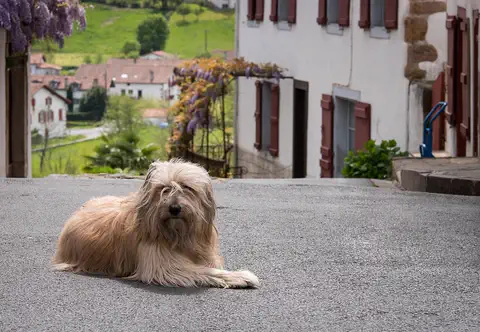
The domestic dog has lived with people for more than 12,000 years. Dogs came from gray wolves, and today there are more than 400 breeds, from tiny Chihuahuas to giant Irish wolfhounds. They live with people all over the world as pets, helpers and friends.
For parents & teachers
What children will learn
- Describe the red fox's body and how it hunts mice by sound.
- Explain why red foxes do well in so many places, including cities.
- Locate the red fox's native range and its introduced range in Australia.
- Understand how an introduced animal can harm native wildlife.
Recommended ages: 3 to 17 · About 15 minutes
Talk about it
- Why might eating many kinds of food help an animal live in so many places?
- Why could a fox be a problem in Australia but not in Europe?
- How should people behave when wild animals live near their homes?
Try at home or in class
- Close your eyes while someone crinkles paper somewhere in the room, then point to where the sound came from, the way a fox locates a mouse.
- Hide five small objects in a sandbox or garden, wait an hour, and see how many 'caches' you can find again.
Key vocabulary: omnivore, vixen, kit, brush, introduced, crepuscular
Where these facts come from
- The IUCN Red List of Threatened Species , International Union for Conservation of Nature (IUCN terms of use (no redistribution of Red List data or range maps))
- GBIF Backbone Taxonomy and GBIF Occurrence Search , Global Biodiversity Information Facility (CC0 1.0 (backbone); occurrence counts are facts derived from records under CC0, CC BY and CC BY-NC)
- Wikidata , Wikimedia Foundation (CC0 1.0)
- Vulpes vulpes (Red Fox), 2016 global assessment , IUCN Red List of Threatened Species
- Vulpes vulpes (Red Fox), 2023 European assessment , IUCN Red List of Threatened Species
- Red fox , Encyclopaedia Britannica
- Vulpes vulpes (red fox) , Animal Diversity Web, University of Michigan Museum of Zoology
- Vulpes vulpes , Mammal Diversity Database, American Society of Mammalogists
- Vulpes vulpes (red fox) , Global Invasive Species Database, IUCN SSC Invasive Species Specialist Group
- Wikimedia Commons , Wikimedia Foundation (Per file: Public domain, CC0, CC BY or CC BY-SA only (credited on each page))
Checked, not yet human-reviewed. Last updated October 28, 2026. Spotted a mistake? Tell us.