
City Africa
Cape Town
Cape Town is a city in South Africa, by the sea. A mountain with a flat top stands right behind it. You can ride a cable car to the top!
Cape Town, South Africa's oldest city, sits between Table Bay and Table Mountain. It is one of the country's three capitals, the seat of Parliament. The 2022 census counted 4,772,846 people in the City of Cape Town, and the mountains around it are part of one of the richest plant regions on Earth.
Cape Town, South Africa's legislative capital, grew from a Dutch East India Company refreshment station founded in 1652 on Table Bay, below Table Mountain, Devil's Peak and Lion's Head. Census 2022 counted 4,772,846 people in the City of Cape Town. Nearby lie Robben Island and the Cape Floral Region, both World Heritage Sites.
Photo: Diego Delso, CC BY-SA 4.0, via Wikimedia Commons
Discover Cape Town
Cape Town is a big city in South Africa.
It sits by the sea, with mountains all around. One mountain has a flat top, like a table. It is called Table Mountain.
Cape Town is South Africa's oldest city. It lies on Table Bay, with three mountains curving around its center: Devil's Peak, Table Mountain and Lion's Head.
South Africa has three capitals, and Cape Town is the legislative capital, where Parliament meets. Pretoria is the administrative capital and Bloemfontein the judicial one. South Africa's 2022 census counted 4,772,846 people in the City of Cape Town, 27.6 percent more than in 2011.
South Africa divides its capital functions: Pretoria is the administrative capital, Cape Town the legislative capital and Bloemfontein the judicial capital, while the Constitutional Court sits in Johannesburg. Cape Town, the country's oldest city, curves around Table Bay below Devil's Peak, Table Mountain and Lion's Head.
Statistics South Africa's Census 2022, the country's first digital census, counted 4,772,846 people in the City of Cape Town, 27.6 percent more than in 2011, in 1,452,845 households; average household size fell from 3.5 to 3.3 people.
- Country
- South Africa (legislative capital)
- People in the City of Cape Town (2022 census)
- 4,772,846
- Mountains around the city center
- Devil's Peak, Table Mountain and Lion's Head
- Founded
- 1652, as a Dutch East India Company station
A table-topped mountain and an island museum
A cable car carries people up Table Mountain. The floor of each car turns around, so everyone gets to see the view.
Out in the bay is an island with a museum. People ride a ferry to visit it.
The Table Mountain cableway opened on 4 October 1929. Before that, visitors had to hike up the mountain's front face. Its modern cars carry 65 passengers, and the floor turns all the way around on the way up, so everyone gets a view. The ride takes under ten minutes.
Out in Table Bay lies Robben Island. For centuries it was used as a prison. Nelson Mandela, who later became South Africa's president, spent 18 of his 27 years in prison there. Since 1997 the island has been a museum, and ferries take visitors there from the V&A Waterfront.
The cableway was inaugurated on 4 October 1929 after earlier plans for a rack railway and a funicular were halted by war; before it, the usual route up was Platteklip Gorge. Its original cars were wood and tin; Swiss-made Rotair cars now carry 65 passengers at up to 10 m/s, their floors rotating through 360 degrees.
Robben Island was used between the 17th and 20th centuries as a prison, a hospital for people the authorities wanted isolated and a military base. From 1959 it held a maximum-security prison where political prisoners opposed to apartheid were held; Nelson Mandela spent 18 of his 27 years in prison there. The last prisoners left in 1991, the prison closed in 1996, the museum was established in 1997, and UNESCO inscribed the island in 1999. Tours are guided by former political prisoners.
- Table Mountain cableway
- opened 4 October 1929; cars carry 65 people and rotate
- Robben Island
- World Heritage Site since 1999; museum since 1997
- Castle of Good Hope
- built from 1666
From a ships' garden to a city
Long ago, Khoekhoe herders brought their animals to drink from a river here.
Later, sailors from far away built a garden to grow food for their ships. The town grew around it.
Long before the city, a fresh river running down from the mountains gave water to Khoekhoe herders and their animals, and San hunters before them. In 1652 the Dutch East India Company set up a garden here to grow fruit and vegetables for ships sailing to Asia. The Castle of Good Hope was built from 1666.
European settlers followed, and enslaved people were brought to the Cape; the Slave Lodge, built in 1679, now tells their story. Later, under apartheid, laws separated people by race. Apartheid began to be taken apart in 1990, and in 1994 South Africa held its first democratic elections.
The Fresh River that still runs in canals through the Company's Garden once watered Khoekhoe herds, and San hunters lived here before them. The Dutch East India Company (VOC) laid out the garden from 1652 as a refreshment station for ships bound for the East; the Castle of Good Hope followed from 1666, and the Slave Lodge, built in 1679, now tells the story of slavery at the Cape. European settlers followed; the Auwal Mosque dates from 1794, and the Bo-Kaap was laid out in the 1790s, housing freed slaves after emancipation in the 1830s.
South African History Online dates apartheid, institutionalized racial segregation, from 1948 until 1990, when the government began to dismantle it; South Africa held its first democratic elections in 1994. The District Six Museum remembers residents removed from their homes under the Group Areas Act in the 1960s.
- Company's Garden
- from 1652, growing food for passing ships
- Bo-Kaap
- neighborhood of colorful houses, from the 1790s
- Apartheid
- 1948 to 1990; first democratic elections 1994
Ferries, cable cars and hiking trails
In Cape Town you can ride a boat across the bay.
You can ride a cable car up the mountain. Or you can walk up on a trail!
Ferries to Robben Island leave from the Nelson Mandela Gateway at the V&A Waterfront, beside the harbor. A tour, including the boat trip there and back, takes about three and a half hours.
To reach the top of Table Mountain, people either ride the cableway or hike. Platteklip Gorge, a route up the mountain's front face, is the first recorded way up: Antonio de Saldanha climbed it in the 1500s. Many people walk up and ride the cable car down.
Robben Island tours start at the Nelson Mandela Gateway at the V&A Waterfront and last about 3.5 hours including the ferry crossing, depending on the boat used.
The Table Mountain cableway runs from Tafelberg Road; before it opened in 1929, visitors climbed, usually by Platteklip Gorge, the route of the first documented ascent, by the Portuguese navigator Antonio de Saldanha in the 16th century. South African Tourism advises checking the weather before going up, because the Cape's micro-climates change quickly.
- Robben Island ferries
- leave from the Nelson Mandela Gateway at the V&A Waterfront
- Robben Island tour
- about 3.5 hours, including the ferry
- Platteklip Gorge
- the first recorded route up Table Mountain, 16th century
Winter rain and a city that saved water
In Cape Town, summer is in January and February. It is warm and dry.
Winter comes in June and July. That is when most of the rain falls.
Cape Town is in the Southern Hemisphere, so its summer comes in December to February and its winter in June to August. Most rain falls in winter: June is the wettest month, while January and February get very little.
After three dry years, in early 2018 the city's reservoirs ran very low. Officials warned of "Day Zero," when most taps would be shut off, and people were asked to use only 50 liters of water a day each. Saving water, fixing leaks and heavier rains in 2018 meant Day Zero never came.
WMO normals for Cape Town (South African Weather Service, 1961–1990) give average highs and lows of 26.5 °C and 15.6 °C in February and 17.5 °C and 7.0 °C in July. Of about 515 mm of rain a year, about 62 percent falls from May to August (321 mm), peaking at 93 mm in June; November to February each average under 20 mm.
After years of drought, the Theewaterskloof reservoir, about 40 percent of the city's storage, fell to 13 percent of capacity by January 2018. From 1 February 2018 residents were limited to 50 liters a day each. In June 2018 the City credited voluntary saving, restrictions and tariffs, pressure management, leak repair and favorable rains with averting Day Zero; by 16 July 2018 its main reservoirs stood at 55 percent.
- February, average daily high and low (WMO Cape Town station, 1961–1990)
- about 27 °C and 16 °C
- July, average daily high and low (same station and period)
- about 18 °C and 7 °C
- Water limit during the 2018 drought
- 50 liters per person per day, from 1 February 2018
Fynbos, gardens and museums
Cape Town's mountains are covered with special bushes called fynbos. Many have bright flowers.
Furry animals called rock hyraxes live on top of Table Mountain.
The mountains around Cape Town are part of the Cape Floral Region, a World Heritage Site since 2004. Its main plant life is fynbos, a shrubland of fine-leaved bushes. The region covers less than half a percent of Africa but holds nearly a fifth of its plants, and about 1,470 kinds of plants grow on Table Mountain alone. Rock hyraxes, lizards and mongooses live up there too.
In the city center, Parliament, the National Gallery, a museum and planetarium, and the National Library stand around the edges of the Company's Garden.
UNESCO's Cape Floral Region Protected Areas, inscribed in 2004, form one of the six Floral Kingdoms of the world, by far the smallest and relatively the most diverse: less than 0.5 percent of Africa's area but nearly 20 percent of its flora, with some 69 percent of an estimated 9,000 plant species found nowhere else. The dominant fynbos is a fine-leaved shrubland adapted to a Mediterranean climate and to fire; scientists study its fire adaptations and its seed dispersal by ants and termites.
Around the Company's Garden stand the Houses of Parliament, the National Gallery, the Iziko Museum and Planetarium, the National Library of South Africa and the Centre for the Book. St George's Cathedral, built of Table Mountain sandstone from 1901, earned the name "the people's cathedral" for its stand against apartheid.
- Cape Floral Region Protected Areas
- World Heritage Site since 2004
- Plant species on Table Mountain
- an estimated 1,470
- Around the Company's Garden
- Parliament, the National Gallery, Iziko Museum and Planetarium, the National Library
Cape Town on the map
Find Cape Town on the globe.
It is near the bottom of Africa, by the ocean. Look for a bay with a mountain behind it.
Cape Town is near the southwestern tip of Africa, in South Africa. The city center faces Table Bay, with Table Mountain rising behind it. The mountain's flat top is about 3 kilometers from side to side, edged by cliffs.
Robben Island lies out in the bay, opposite the city. The Cape Floral Region, with its fynbos-covered mountains, stretches across the southwestern corner of the country.
Cape Town lies at about 33.9° S and 18.4° E, at the southwestern extremity of South Africa, where UNESCO places the Cape Floral Region. The city bowl opens onto Table Bay and is enclosed by Devil's Peak, Table Mountain and Lion's Head; Robben Island lies in the bay opposite the city.
From 1652 the VOC used it as a refreshment station, supplying fresh fruit and vegetables to ships passing on their way to the East.
- Latitude
- about 33.9° south
- Longitude
- about 18.4° east
- Robben Island
- in Table Bay, opposite the city and Table Mountain
- Table Mountain
- a flat-topped mountain with a plateau about 3 km across
Amazing facts
-
The floor of Table Mountain's cable car spins around as it goes up.
Each Table Mountain cable car carries 65 people, and its floor turns all the way around on the way up.
The Swiss-made Rotair cars carry 65 passengers at up to 10 m/s, their floors rotating through 360 degrees, so the ride takes under ten minutes.
-
Cape Town grew from a garden that fed sailors.
The Company's Garden was started in 1652 to grow fresh fruit and vegetables for ships sailing to Asia.
The VOC laid out the Company's Garden from 1652 as a refreshment station; the Fresh River still runs in canals beside its main avenue.
-
In 2018, people in Cape Town saved lots of water so their taps would not run dry.
During the 2018 drought, people in Cape Town were asked to use only 50 liters of water a day each. A five-minute shower uses about 45 liters!
From 1 February 2018 Cape Town limited residents to 50 liters a day each; a five-minute shower uses around 45 liters.
-
The plants around Cape Town are very special.
The Cape Floral Region covers less than half a percent of Africa but has nearly a fifth of its plants.
About 69 percent of the Cape Floral Region's estimated 9,000 plant species are endemic, found nowhere else.
Words to know
- capital
- a city where a country's government or parliament meets
- fynbos
- a kind of shrubland with fine-leaved bushes, found around Cape Town
- endemic
- found naturally in one place and nowhere else
- reservoir
- a large lake, often made by a dam, that stores water for people to use
- apartheid
- a system of laws in South Africa that separated people by race, from 1948 until it was taken apart from 1990
- census
- an official count of all the people in a country
Discovery challenge
-
Cape Town is in which country?
Cape Town is the legislative capital of which country?
Cape Town is the legislative capital of which country, alongside Pretoria and Bloemfontein?
- Kenya
- South Africa
- Egypt
Show the answer
South Africa
South Africa! Cape Town is by the sea there.
South Africa, which has three capitals; Parliament meets in Cape Town.
South Africa: Pretoria is administrative, Cape Town legislative and Bloemfontein judicial.
-
What shape is the top of Table Mountain?
Why is Table Mountain called Table Mountain?
Which word describes the summit of the mountain that gives Table Bay its name?
- Flat, like a table
- Pointy, like a party hat
- Round, like a ball
Show the answer
Flat, like a table
Flat, like a table!
Its top is flat, like a table.
Flat: Table Mountain's summit is a broad, flat top.
-
What is special about Table Mountain's cable car?
What does the floor of a Table Mountain cable car do?
What do the floors of the Rotair cars, introduced on the 1929 cableway, do on the way up?
- It turns around
- It is made of glass
- It fills with water
Show the answer
It turns around
It turns around, so everyone sees the view!
It rotates all the way around, giving everyone a 360-degree view.
They rotate through 360 degrees.
-
Who was kept in prison on Robben Island for many years?
Which future president spent 18 years in prison on Robben Island?
Who spent 18 of his 27 years in prison on Robben Island before becoming South Africa's president?
- Nelson Mandela
- Antonio de Saldanha
- Herbert Baker
Show the answer
Nelson Mandela
Nelson Mandela. Later he became South Africa's president.
Nelson Mandela, who later became South Africa's president.
Nelson Mandela; the island's prison closed in 1996 and became a museum in 1997.
-
When does Cape Town get most of its rain?
In which season does Cape Town get most of its rain?
Which months bring about 62 percent of Cape Town's average yearly rain (WMO, 1961–1990)?
- May to August, in winter
- November to February, in summer
Show the answer
May to August, in winter
In winter! Winter there is in June and July.
In winter, from May to August; June is the wettest month.
May to August (321 of about 515 mm); November to February each average under 20 mm.
Nearby places
-
 Watch
City
Bloemfontein
Bloemfontein is the capital of the Free State province of South Africa. It is also called the country's judicial capital, because the Supreme Court of Appeal meets there. It began in 1846 as a small British post on the grassy plains.
-
 Watch
City
Maseru
Maseru is the capital of Lesotho, a country completely surrounded by South Africa. It was founded in 1869 on a hill above a crossing place on the Caledon River, which now forms the border. At the 2016 census, 343,541 people lived in the city.
-
 Watch
Natural wonder
Tugela Falls
Tugela Falls, in the Drakensberg mountains of South Africa, drops 948 meters in a series of five cascades. South African Tourism calls it the highest waterfall in Africa and second only to Angel Falls in Venezuela.
-
 Watch
Natural wonder
Orange River
The Orange River rises in the Drakensberg-Maloti highlands, where it is called the Senqu, and runs west for about 2,200 kilometers through South Africa and along the edge of Namibia's desert to the Atlantic Ocean. On the way it thunders over the 56-meter Augrabies Falls.
-
 Watch
Landmark
Cradle of Humankind
The Cradle of Humankind is a landscape of grassy hills and limestone caves near Johannesburg, South Africa. Its caves, such as Sterkfontein, Swartkrans and Kromdraai, have held fossils of early human relatives, other animals and stone tools. It became a UNESCO World Heritage Site in 1999.
-
 Watch
Natural wonder
Namib
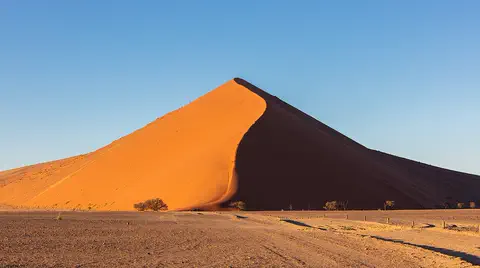
The Namib is a cool desert that runs for about 1,900 kilometers along Africa's Atlantic coast, from Angola through Namibia into South Africa. It gets almost no rain, but cold ocean water makes thick fog that drifts inland. UNESCO says its Namib Sand Sea is the only coastal desert in the world with huge dune fields influenced by fog.
-
 Watch
City
Gaborone
Gaborone is the capital of Botswana, in southern Africa. It was built as a new capital in the 1960s, almost ready when Botswana became independent in 1966. Planned for 20,000 people, it counted 246,325 in the 2022 census.
-
 Watch
City
Johannesburg
Johannesburg is South Africa's most populous city, high on the country's central plateau. It grew very fast after gold was discovered in the Witwatersrand in 1886. Today it is the capital of Gauteng province, and the 2022 census counted 4,803,262 people in the City of Johannesburg.
Explore next
-
Watch
 Country
South Africa
South Africa is the southernmost country in Africa, with the Atlantic Ocean on one side and the Indian Ocean on the other. A high plateau covers most of it, about 63.5 million people (2026) live there, and it has 12 official languages and three capital cities.
-
 Watch
Animal
African penguin
The African penguin is a penguin of warm, sunny coasts. It lives only in South Africa and Namibia, nests in burrows and under bushes, and hunts sardines and anchovies in the cold sea. Its numbers have fallen so far that it is now Critically Endangered, and people are working hard to protect it.
-
Watch
City
Johannesburg
Johannesburg is South Africa's most populous city, high on the country's central plateau. It grew very fast after gold was discovered in the Witwatersrand in 1886. Today it is the capital of Gauteng province, and the 2022 census counted 4,803,262 people in the City of Johannesburg.
-
 Watch
City
Sydney
Sydney is Australia's largest city and the capital of the state of New South Wales. It surrounds Port Jackson, a harbor of countless bays, on the lands of the Gadigal people of the Eora Nation. The British set up a convict colony here in 1788. Today the Harbour Bridge, the Opera House and its beaches are world famous, and about 5.45 million people lived in Greater Sydney in 2023.
- Watch Geography Capital cities A capital is the city where a country's government is based. Many capitals grew up over hundreds of years beside rivers and trade routes. A few, like Brasília and Canberra, were built from scratch, and some countries share out their capital's jobs among two or three cities.
- Watch Geography Latitude Latitude tells you how far north or south of the Equator a place is. Imaginary lines of latitude, called parallels, circle Earth from east to west. The Equator is 0 degrees, and the North and South Poles are 90 degrees north and 90 degrees south.
-
 Watch
City
Durban
Durban is a port city on the Indian Ocean coast of South Africa, in KwaZulu-Natal. Universalis calls its harbor the largest port in South Africa. The 2011 census counted 2,786,046 people in the Durban urban area.
-
 Watch
City
Luanda
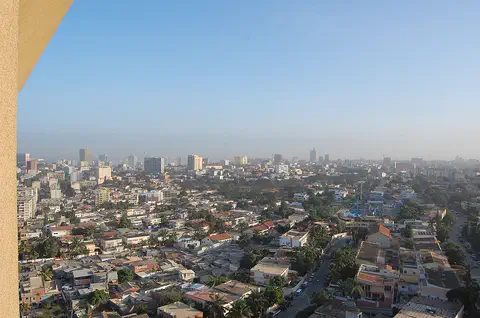
Luanda is the capital of Angola, on the Atlantic coast of Africa. It began in 1575 as a Portuguese fort and trading post beside a bay, and it is now Angola's largest city: the 2024 census counted 8,642,051 people there.
For parents & teachers
What children will learn
- Locate Cape Town at the southwestern tip of Africa, on Table Bay.
- Explain why South Africa has three capitals and what Cape Town's role is.
- Describe how Cape Town avoided running out of water in 2018.
- Explain why the Cape Floral Region is a World Heritage Site.
Recommended ages: 3 to 17 · About 15 minutes
Talk about it
- In 2018 people in Cape Town used only 50 liters of water a day. What uses the most water in your home, and how could you save some?
- Robben Island is now a museum guided by former prisoners. Why might it help visitors to hear history from people who lived it?
- In Cape Town, summer is in December and winter in June. Why are the seasons flipped in the Southern Hemisphere?
Try at home or in class
- Do a water diary: measure how many liters a shower, a toothbrushing and a glass of water use, and see how far 50 liters a day would go.
- Make a flat-topped mountain from clay, then lay a cotton-wool "tablecloth" cloud over the top, like the cloud that often covers Table Mountain.
- Find the Southern Hemisphere on a globe and shine a flashlight on it to show why June is winter in Cape Town.
Key vocabulary: capital, fynbos, endemic, reservoir, apartheid, census
Where these facts come from
- Wikidata , Wikimedia Foundation (CC0 1.0)
- Natural Earth vector data , Natural Earth (NACIS) (Public domain)
- South Africa at a glance , South African Government
- Cape Town Census , City of Cape Town
- Cape Town's iconic historical buildings , South African Tourism (southafrica.net)
- A trip to the top of Table Mountain by cableway , South African Tourism (southafrica.net)
- The Table Mountain cableway is inaugurated (4 October 1929) , South African History Online
- Robben Island , UNESCO World Heritage Centre
- Robben Island Museum , Robben Island Museum
- Robben Island Museum , South African History Online
- Cape Floral Region Protected Areas , UNESCO World Heritage Centre
- Cape residents limited to 50 litres of water , SAnews (South African Government News Agency)
- Cape Town just got a few more weeks before it runs out of water on 'Day Zero' , ScienceAlert
- Cape Town's reservoirs rebound , NASA Earth Observatory
- Table Mountain , New7Wonders of Nature
- Cape Town: climatological information , World Meteorological Organization, World Weather Information Service
- Wikimedia Commons , Wikimedia Foundation (Per file (public domain, CC0, CC BY or CC BY-SA); see each media record)
Checked, not yet human-reviewed. Last updated November 1, 2026. Spotted a mistake? Tell us.