
Animal
Common blackbird
The common blackbird is a thrush. The father bird is black with an orange-yellow beak, and the mother bird is brown. It sings a soft, fluty song.
The common blackbird is a thrush found in gardens, parks and woods across Europe, North Africa and parts of Asia. Males are glossy black with a bright yellow-orange bill and eye-ring, females are brown, and on summer evenings males sing a mellow, fluting song from high perches.
Turdus merula, the Eurasian or common blackbird, is one of Europe's commonest birds, with an estimated 58 to 88 million breeding pairs there. Originally a bird of open forest, it has adapted to farmland, parks and city gardens, was introduced by people to Australia and New Zealand, and is listed as Least Concern with an increasing population.
Photo: Hobbyfotowiki, CC0 1.0, via Wikimedia Commons
Meet the common blackbird
The blackbird is a bird you might see in a garden or a park.
The father bird is black, with a bright orange-yellow beak. The mother bird is brown. Press play to hear real blackbird calls!
The common blackbird is a member of the thrush family. Grown-up males are all black, with a bright orange-yellow bill and a yellow ring around each eye. Females and young birds are brown, often with spots and streaks on the breast.
Blackbirds are among the most common birds in Britain and much of Europe, and they often feed on lawns, looking for worms. Press play to hear real blackbird calls recorded in Scotland. Its song, which you can hear on summer evenings, is softer: a slow, mellow, fluting tune.
Turdus merula is a thrush (family Turdidae). The sexes differ: adult males are black with an orange-yellow bill and yellow eye-ring; females are brown with a streaky, spotted breast and a brown to yellowish bill. Adults average about 25 centimeters long and 80 to 125 grams (Animal Diversity Web); the BTO's average weight is 101.8 grams.
The IUCN's 2024 assessment treats Turdus simillimus, T. maximus and T. mandarinus, once lumped with it, as separate species. The recording on this step is of calls, recorded at Loch Beag in Scotland; the BTO describes the song itself as fluting and melodic, often delivered from a high perch on summer evenings.
Quick facts
- Group
- Bird
- Length
- 0.25 m
- Wingspan
- 0.34 to 0.38 m
- Weight
- 0.08 to 0.13 kg
Where it lives
Blackbirds live in Europe, North Africa and parts of Asia.
They live in woods, parks, farms and gardens. People took some blackbirds to Australia and New Zealand, and they live there now too.
Blackbirds live across nearly all of Europe, from Iceland and Portugal to Russia, and in North Africa, Türkiye and parts of western Asia. Some birds from northern Europe fly south or west for the winter, and some spend the winter in the Middle East.
Their first home was open woodland, but now they also live on farms, in orchards, parks and gardens, wherever there are grassy places with bushes nearby. People brought blackbirds to Australia and New Zealand, where they live wild today.
The IUCN's 2024 global assessment lists the blackbird as resident across Europe (including Iceland and the Faroe Islands), Northwest Africa, Türkiye, the Caucasus and the Levant, breeding in Norway and parts of China, and wintering in the Middle East. Introduced populations are established in Australia and New Zealand; an introduction to Tristan da Cunha died out.
Its original habitat is fairly open broadleaf, coniferous and mixed forest, but it now uses plantations, orchards, farmland, parks and gardens, and open grassy areas near cover, up to about 2,300 meters. Movements depend mainly on latitude: some populations are sedentary and others partly or fully migratory, and the BTO notes that many extra birds from northern Europe spend the winter in the UK.
Continents
Its habitat

Where can you find this animal?
- Brought here by people · Countries and seas named by a scientific source
- Lives here naturally · Countries and seas named by a scientific source
- Sightings recorded · Records of wild sightings (GBIF)
- Visits for part of the year · Countries and seas named by a scientific source
Brought here by people · Countries and seas named by a scientific source
Australia and New Zealand, where people released blackbirds and the IUCN lists wild introduced populations.
Places: Australia and New Zealand.
Source: iucn-red-list · checked October 2026
Lives here naturally · Countries and seas named by a scientific source
Forests, woodland edges, farmland, parks and gardens across Europe, North Africa, Türkiye, the Caucasus and the Levant, with breeding birds in Afghanistan and parts of China. Blackbirds live in only part of some countries shown.
Places: Iceland, Ireland, UK, Portugal, Spain, France, Belgium, Netherlands and 44 more places.
Source: iucn-red-list · checked October 2026
Sightings recorded · Records of wild sightings (GBIF)
Counts of GBIF records of wild observations (human and machine) and preserved specimens. Records include introduced populations, vagrants, escaped or released animals and misidentifications, so a country with records is not necessarily part of the native range.
Wild sightings have been recorded in France, UK, Sweden, Netherlands, Spain, Germany, Norway, Denmark and 80 more places.
Source: gbif · checked October 2026
Visits for part of the year · Countries and seas named by a scientific source
Countries in the Middle East where the IUCN lists blackbirds outside the breeding season.
Places: Iran, Iraq, Kuwait, Palestine, Saudi Arabia and UAE.
Source: iucn-red-list · checked October 2026
Range maps show where scientists say an animal lives, often country by country. An animal may live in only part of a country shown, and sightings records can include animals that wandered far from home.
What it eats
Blackbirds love worms.
They look in the grass and pull worms out of the ground. They also eat bugs, berries and fruit.
Blackbirds feed mostly on the ground, and earthworms are one of their main foods. They also eat insects and their larvae, poking into the soil and flipping over dead leaves to find hidden creatures.
When there are berries and fruit, blackbirds eat those too, and they sometimes visit bird tables in gardens. Parents feed their chicks earthworms and other small animals.
Blackbirds are flexible, adaptable foragers. The IUCN assessment gives a diet mainly of invertebrates, chiefly earthworms and insects and their larvae, along with fruits and seeds and occasionally small vertebrates.
The BTO notes that the species forages on the ground, turning over leaf litter, probing soil and visiting flat feeders such as bird tables. Diet may matter for courtship too: Animal Diversity Web reports that the orange color of a male's bill comes from carotenoids in his food, and that females tend to prefer males with more orange bills.
Did you know?
Some blackbirds build nests on buildings.
Blackbirds sometimes build their nests on walls or even inside buildings.
The IUCN notes that nests are frequently placed in or on a wall, outside or inside a building, as well as in bushes and trees.
Black and brown
The father blackbird is black all over.
He has a bright orange-yellow beak and a yellow ring around each eye. The mother is brown, with spots on her chest.
Male and female blackbirds look different. The male is black all over, with a bright orange-yellow bill and a yellow ring around each eye. The female is brown, with spots and streaks on her breast, and her bill can be brown or yellowish.
A blackbird is about 25 centimeters long, with a wingspan of 34 to 38 centimeters, and weighs around 100 grams. Blackbirds spend a lot of time on the ground, looking for food.
Blackbirds show clear sexual dimorphism. Adult males are uniformly black with an orange-yellow bill and a yellow eye-ring; females and juveniles are brown, with spotting and streaking on the breast, and the female's bill ranges from brown to yellow.
Bill color is a signal. According to Animal Diversity Web, carotenoids from the diet produce the male's orange bill, and females tend to choose more orange-billed males; one French study of an urban population, however, found no link between bill color and how often males visited the nest. Hatchlings are featherless and weigh about 6 grams.
Growing up
The mother builds a cup nest in a bush, a tree or even on a building.
She lays three or four eggs and keeps them warm. Both parents feed the chicks worms. Blackbirds can raise two or three families in one year.
The female builds a big cup nest of dry grass and twigs, packed with mud and lined with soft grass. It may be in a bush, a tree, a climbing plant on a wall, or even on or inside a building.
She lays 3 or 4 eggs and keeps them warm for 12 to 14 days. Both parents feed the chicks, which leave the nest about two weeks after hatching. In Britain a pair often raises two or three families in a year.
In Europe breeding runs from mid-March to early September (IUCN). The nest, usually built by the female, is a large cup of dry grass stems and twigs packed with mud and lined with fine grass, placed 0.5 to 15 meters up in a bush, tree or climbing plant, often on or inside a building.
BTO nest records give a typical clutch of 3 or 4 eggs (2 to 7), incubated by the female for 12 to 14 days, and a fledging period of 13.5 to 16 days; pairs raise 2 or 3 broods, exceptionally 5. Birds usually breed at one year old, and the BTO gives a typical life expectancy of three years; its oldest ringed blackbird lived 15 years, 2 months and 5 days.
Evening songs and city life
On summer evenings, father blackbirds sing from the tops of trees and roofs.
Father blackbirds guard their patch. They chase other blackbirds away.
On spring and summer evenings, male blackbirds sing a slow, mellow, fluting song, often from a high perch. A male defends his territory by running straight at any rival that comes in.
In courtship, a male bows his head and runs in short sprints with his bill open, singing quietly. Scientists have found that bright city lights, which make the days seem longer, can change when city blackbirds start to breed.
Males sing their fluting, melodic song from high perches, a familiar sound of summer evenings (BTO). Territorial males drive off intruders by running head-first at them, and courtship involves sprints and head-bows with the bill open and a subdued song (Animal Diversity Web).
Scientists have studied urban blackbirds closely. Animal Diversity Web cites Partecke and colleagues (2005), who found that artificial light in cities, by mimicking longer days, influences when blackbirds start to breed and mature. City birds are also exposed to frequent disturbance from people, dogs and magpies, which can reduce their foraging time.
Did you know?
One blackbird lived to be 15 years old.
Most blackbirds live only a few years, but one ringed in Britain lived for more than 15 years.
The BTO's longevity record for a ringed blackbird is 15 years, 2 months and 5 days, against a typical life expectancy of three years.
A common bird
There are lots and lots of blackbirds.
They are doing well in many places. But in some places, like London, there are fewer than before.
The blackbird is one of the most common birds in Europe, and the IUCN lists it as Least Concern. Its numbers in Europe have grown in recent years, and about 5 million pairs bred in the United Kingdom in 2016.
It is not doing well everywhere, though. In Britain, numbers fell until the mid-1990s and then partly recovered, and they have recently dropped sharply in London. Changes in farming may be one reason for losses on farmland.
The IUCN's 2024 global assessment lists Turdus merula as Least Concern, with a very preliminary estimate of 145 to 220 million mature individuals and an increasing trend: the European population, about 80 percent of the range, rose moderately over three generations.
Local declines are noted. The IUCN suggests agricultural intensification may explain greater declines on British farmland, hunting may explain scarcity in Spain's Cantabrian Mountains, and lower breeding success may lie behind declines in the Netherlands. The BTO reports a 21 percent decrease in the UK breeding population from 1967 to 2024, after a fall to the mid-1990s and a partial recovery, with a sharp recent decline in London.
IUCN Red List
How is the common blackbird doing in the wild?
- Least Concern (this animal)
- Near Threatened
- Vulnerable
- Endangered
- Critically Endangered
- Extinct in the Wild
- Extinct
Least Concern
Not at risk of disappearing from the wild right now.
See the IUCN Red List assessment · The IUCN Red List of Threatened Species 2021.3
Amazing facts
-
Only the father blackbird is black. The mother is brown!
Despite the name, only male blackbirds are black. Females are brown, with a spotted, streaky breast.
The species is strongly sexually dimorphic: black males with orange-yellow bills, brown females with brown to yellowish bills.
-
Some blackbirds build nests on buildings.
Blackbirds sometimes build their nests on walls or even inside buildings.
The IUCN notes that nests are frequently placed in or on a wall, outside or inside a building, as well as in bushes and trees.
-
A father blackbird's beak gets its orange color from his food.
A male blackbird's orange bill gets its color from his food, and females tend to choose males with more orange bills.
Dietary carotenoids color the male's bill; Animal Diversity Web reports a female preference for more orange bills.
-
One blackbird lived to be 15 years old.
Most blackbirds live only a few years, but one ringed in Britain lived for more than 15 years.
The BTO's longevity record for a ringed blackbird is 15 years, 2 months and 5 days, against a typical life expectancy of three years.
Words to know
- thrush
- a family of songbirds that includes blackbirds and robins
- eye-ring
- a ring of colored skin or feathers around a bird's eye
- territory
- an area an animal defends against others of its kind
- introduced
- brought by people to a place where it did not live before
- brood
- a family of chicks hatched from one set of eggs
Discovery challenge
-
What color is a mother blackbird?
What color is a female common blackbird?
What color is the plumage of an adult female common blackbird?
- Black
- Brown
- Bright blue
Show the answer
Brown
The mother is brown. Only the father is black.
Females are brown with spots and streaks on the breast; only males are black.
Females are brown with a streaked, spotted breast; adult males are black with orange-yellow bills.
-
What does a blackbird pull out of the grass to eat?
Which food do blackbirds often pull out of lawns?
Which invertebrate is a main food of the common blackbird?
- Earthworms
- Fish
- Acorns
Show the answer
Earthworms
Blackbirds love worms!
Blackbirds hunt on the ground and pull earthworms out of lawns. They eat insects and berries too.
The diet is mainly invertebrates, chiefly earthworms and insects and their larvae, plus fruits and seeds.
-
Where did people take blackbirds far away?
To which far-away places did people bring blackbirds?
Where does the common blackbird have introduced populations?
- Antarctica
- Australia and New Zealand
- The Moon
Show the answer
Australia and New Zealand
People took them to Australia and New Zealand.
People released blackbirds in Australia and New Zealand, and they live wild there today.
The IUCN lists introduced populations in Australia and New Zealand; one on Tristan da Cunha died out.
-
When do blackbirds often sing?
When are male blackbirds' songs a familiar sound?
When is the male blackbird's song a particular feature, according to the BTO?
- On summer evenings
- Only under water
- Only in the middle of winter nights
Show the answer
On summer evenings
They sing on summer evenings.
Male blackbirds sing their mellow, fluting song from high perches on summer evenings.
The BTO calls the fluting, melodic song, often given from a high perch, a particular feature of summer evenings.
Places where you might see it
-
 Watch
 Country
United Kingdom
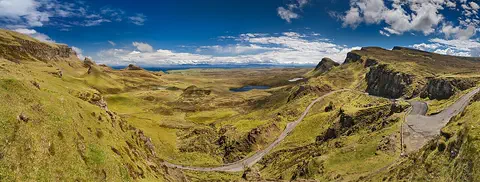
The United Kingdom, or UK, lies on islands off the northwest coast of Europe. It is made up of four parts, England, Scotland, Wales and Northern Ireland, and about 69.5 million people live there. Its capital is London.
-
 Watch
 Country
Germany
Germany is a country in north-central Europe. The land rises from flat plains by the North Sea and the Baltic Sea to forested hills and, in the far south, the Alps. About 83.5 million people (2025) live there, and its capital is Berlin.
Explore next
-
 Watch
3D
Animal
American robin
The American robin is a very familiar bird over most of North America, with a gray-brown back, a warm orange breast and a cheery song. It runs across lawns pulling up earthworms, eats lots of berries in winter, and builds a mud-lined nest for its sky-blue eggs.
-
 Watch
Animal
Common nightingale
The common nightingale is a plain brown songbird with one of the most famous songs in the world. Males sing from thick bushes, often in the middle of the night, and every year the birds fly from Europe and Asia to Africa for the winter.
-
 Watch
Animal
European robin
The European robin is a small songbird of Europe's woods, parks and gardens, famous for its orange-red breast. It sings almost all year round, even at night under streetlights, and it defends its patch fiercely. Young robins have no red breast at all: they are speckled with golden brown.
-
 Watch
3D
Animal
Common starling
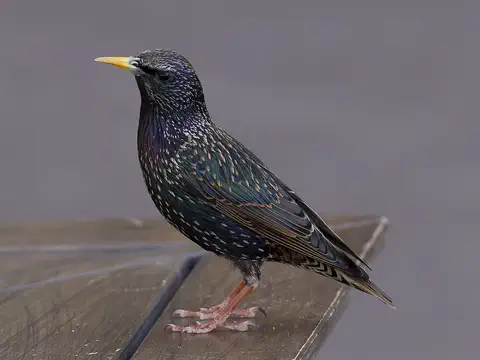
The common starling, also called the European starling, is a glossy, spotted songbird from Europe, Asia and North Africa. It is a brilliant copycat that can imitate other birds and even car alarms, and in winter huge flocks swirl through the evening sky in shows called murmurations. People also carried starlings to North America, Australia and other places, where they now live in the wild.
-
Watch
Country
United Kingdom
The United Kingdom, or UK, lies on islands off the northwest coast of Europe. It is made up of four parts, England, Scotland, Wales and Northern Ireland, and about 69.5 million people live there. Its capital is London.
-
Watch
Country
Germany
Germany is a country in north-central Europe. The land rises from flat plains by the North Sea and the Baltic Sea to forested hills and, in the far south, the Alps. About 83.5 million people (2025) live there, and its capital is Berlin.
-
 Watch
Animal
Adélie penguin
The Adélie penguin is a medium-sized penguin, about 70 centimeters tall, with a black back, a white front and a bright white ring around each eye. It breeds in summer on rocky, ice-free ground all around Antarctica, building nests of pebbles, and spends the winter far out at sea among the pack ice.
-
 Watch
Animal
African fish eagle
The African fish eagle is a big eagle of Africa's lakes, rivers and coasts, with a white head, chest and tail and a chestnut-brown body. It snatches fish from the surface of the water, and its loud, ringing call is one of the best-known sounds of Africa.
For parents & teachers
What children will learn
- Tell male and female blackbirds apart and explain what sexual dimorphism means.
- Describe how blackbirds find food on the ground.
- Describe the blackbird's nest and breeding season.
- Explain what an introduced species is, using blackbirds in Australia and New Zealand.
Recommended ages: 3 to 17 · About 12 minutes
Talk about it
- Why might a mother bird that sits on a nest be brown instead of black?
- How could street lights change the lives of birds in a city?
- What can happen when people take animals to a new country?
Try at home or in class
- Watch a lawn or park for ten minutes with a grown-up. Count how many times a blackbird or other bird stops, tilts its head and pecks.
- Listen to the blackbird calls, then listen outside on a summer evening and compare them with the birds you hear singing.
Key vocabulary: thrush, eye-ring, territory, introduced, brood
Where these facts come from
- The IUCN Red List of Threatened Species , International Union for Conservation of Nature (IUCN terms of use (no redistribution of Red List data or range maps))
- GBIF Backbone Taxonomy and GBIF Occurrence Search , Global Biodiversity Information Facility (CC0 1.0 (backbone); occurrence counts are facts derived from records under CC0, CC BY and CC BY-NC)
- Turdus merula (Eurasian Blackbird), global Red List assessment 2024 , IUCN Red List of Threatened Species
- Blackbird, BirdFacts , British Trust for Ornithology (BTO)
- Blackbird bird facts , RSPB
- Turdus merula (European blackbird) , Animal Diversity Web, University of Michigan Museum of Zoology
- Wikidata , Wikimedia Foundation (CC0 1.0)
- Wikimedia Commons , Wikimedia Foundation (Per file: Public domain, CC0, CC BY or CC BY-SA only (credited on each page))
Checked, not yet human-reviewed. Last updated October 28, 2026. Spotted a mistake? Tell us.