
Animal
Old World swallowtail
The Old World swallowtail is a big yellow and black butterfly. Its back wings have long points, like the tail of a swallow bird.
The Old World swallowtail is a large butterfly with yellow wings, black veins, blue spots and a red eyespot near the long tails on its hindwings. It lives across Europe and Asia and in northern North America. Its green and black caterpillar has a hidden orange fork that pops out when it is bothered.
Papilio machaon, of the swallowtail family Papilionidae, has a Holarctic range across Europe, Asia and northern North America. Its caterpillars feed on plants of the parsley family in Europe and on sagebrushes in North America, and defend themselves with an eversible orange gland, the osmeterium. NatureServe rates it secure globally, while Britain's own fenland race is Vulnerable.
Photo: Michael Wittwer, CC BY-SA 4.0, via Wikimedia Commons
Meet the Old World swallowtail
The Old World swallowtail is a big butterfly.
Its wings are yellow with black lines. Near the bottom are blue spots and two red spots. Its back wings end in long, thin tails.
The Old World swallowtail is a large, strong-flying butterfly. Its wings are pale yellow with black veins and bands, with a row of blue spots along the back wings and a red eyespot near the body.
Its name comes from the long, thin tails on its hindwings, which look like the forked tail of a swallow, a kind of bird. In Britain the swallowtail is a rare butterfly that lives only in a few wet fens.
Papilio machaon belongs to the swallowtail family Papilionidae (order Lepidoptera, class Insecta). Butterfly Conservation describes pale yellow wings with black veins and blue margins, and Butterflies and Moths of North America (BAMONA) identifies it by the reddish-orange eyespot near the hindwing tail, edged with black along its lower border and touching the inner edge of the wing rather than centered.
Different races, or subspecies, live in different parts of its huge range. In Britain, the native race britannicus is a fenland specialist, while migrants of the continental race gorganus occasionally arrive from mainland Europe.
Quick facts
- Group
- Invertebrate
- Wingspan
- 6.5 to 7.5 cm
Where it lives
Swallowtails live in many places.
They fly over meadows, hills and wet fens in Europe and Asia. Some live in cold northern lands in North America.
The Old World swallowtail lives across Europe and Asia, and in northern North America, from Alaska across Canada. That huge area around the top of the world is called the Holarctic.
It lives in many kinds of open country: meadows, grassland, mountain slopes, hilltops and even the treeless tundra of the north. In Britain, it lives only in the fens of the Norfolk Broads, wet marshes full of reeds and sedge.
BAMONA describes the range as Holarctic; in North America it runs from Alaska south to northern British Columbia and east across Canada to western Quebec, where the species uses open hilltops, mountain meadows and tundra. BAMONA also counts the western swallowtails that some authors treat as separate species (Papilio oregonius and P. bairdii), which carry the range from southern British Columbia south to New Mexico. Animal Diversity Web places the main range in Europe and Asia, with populations reaching subarctic and Arctic regions.
Habitat depends on the race. Britain's britannicus breeds only in open fens and marshes with vigorous Milk-parsley, now confined to the Norfolk Broads, whereas the continental race gorganus can be found in almost any habitat and is most often seen on grassland near England's south coast.
Continents
Its habitats


Where can you find this animal?
- Lives here naturally · Countries and seas named by a scientific source
- Sightings recorded · Records of wild sightings (GBIF)
Lives here naturally · Countries and seas named by a scientific source
A Holarctic butterfly of Europe and Asia; in North America it lives from Alaska across Canada to western Quebec, and BAMONA also counts western swallowtails from southern British Columbia to New Mexico that some authors treat as separate species. The map shades whole continents, not every place where swallowtails breed.
Places: Europe, Asia and North America.
Source: https://www.butterfliesandmoths.org/species/Papilio-machaon · checked October 2026
Sightings recorded · Records of wild sightings (GBIF)
Counts of GBIF records of wild observations (human and machine) and preserved specimens. Records include introduced populations, vagrants, escaped or released animals and misidentifications, so a country with records is not necessarily part of the native range.
Wild sightings have been recorded in France, Netherlands, Switzerland, Germany, Belgium, Spain, Sweden, Austria and 82 more places.
Source: gbif · checked October 2026
Range maps show where scientists say an animal lives, often country by country. An animal may live in only part of a country shown, and sightings records can include animals that wandered far from home.
What it eats
Swallowtail caterpillars eat plant leaves and flowers.
The grown-up butterflies sip sweet nectar from flowers.
Swallowtail caterpillars eat only certain plants. Tiny caterpillars munch the leaves of their food plant, and bigger ones prefer to eat its flowers. In Europe they eat plants of the parsley family, such as milk-parsley, wild carrot and wild angelica. In North America, they mostly eat sagebrush plants instead.
Adult swallowtails drink sweet nectar from flowers. As they visit flowers, they can help to pollinate them.
Larval host plants differ across the range. Butterfly Conservation reports that the British race feeds solely on Milk-parsley (Peucedanum palustre), while continental gorganus uses a variety of umbellifers such as Wild Carrot and Wild Angelica. In North America, BAMONA lists sagebrushes (Artemisia), including Arctic wormwood and wild tarragon, and only rarely plants of the parsley family.
Newly hatched caterpillars eat leaves; older caterpillars on parsley-family plants prefer the flowers. Adults feed on flower nectar, and Animal Diversity Web notes that, like other butterflies, they can be effective pollinators.
Did you know?
A baby swallowtail caterpillar looks like a bird dropping.
Very young swallowtail caterpillars look a lot like bird droppings.
Early-instar larvae closely resemble bird droppings; only after later molts do they take on the green, black and orange pattern (UK Butterflies).
A swallowtail up close
A swallowtail has two long feelers on its head.
It has four big wings. Each back wing has a long tail, blue spots and a red spot.
Like all insects, a swallowtail has six legs and a body in three parts: head, thorax and abdomen. On its head are two big eyes and two long antennae with little knobs at the tips.
Its four wings are covered in tiny scales that make the yellow and black pattern. The two back wings each have a long tail, a row of blue spots and a red eyespot ringed with blue and black. The tails and eyespot sit at the back of the butterfly, away from its head.
As in other Lepidoptera, the wings are clothed in overlapping scales that carry the pattern: pale yellow ground, black veins and bands, a black submarginal band dusted with blue on the hindwing, and a reddish-orange eyespot at the inner angle of each hindwing. BAMONA uses the shape of that eyespot, edged below with black and touching the inner margin, to separate machaon from similar North American swallowtails.
The antennae end in clubs, the large compound eyes sit at the sides of the head, and the long hindwing tails give the family its common name. Wingspan is about 6.5 to 7.5 centimeters in North America (BAMONA); Butterfly Conservation gives 76 to 83 millimeters for males and 86 to 93 for females of the British race.
From egg to butterfly
A swallowtail starts as a tiny yellow egg.
A little caterpillar hatches and eats and grows. Then it makes a chrysalis. Inside, it turns into a butterfly!
Swallowtails change completely as they grow, which is called metamorphosis. A female lays round yellow eggs one at a time on the food plant. After about a week a tiny caterpillar hatches. At first it looks a lot like a bird dropping, which helps it hide.
As it grows, it changes into a bright green caterpillar with black bands and orange spots. In Britain it is fully grown in about a month. Then it hangs on a stem in a chrysalis held by a silk belt. In Britain, the chrysalis usually lasts through the winter, and the butterfly comes out the next year.
Development is complete metamorphosis. UK Butterflies reports that eggs are laid singly on the food plant, yellow at first and darkening as the larva develops, and hatch in just over a week. Early instars resemble bird droppings; after later molts the caterpillar becomes green, banded with black and spotted with orange, reaching about 41 millimeters at around 30 days in Frohawk's classic rearing account.
The pupa is fixed upright to a stem by the cremaster and a silk girdle, comes in greenish-yellow and brown forms that match the surroundings, and in Britain overwinters. Animal Diversity Web notes that the pupal stage is the longest and most variable, from 2 to 24 weeks, and that adults live only a few weeks. BAMONA gives one flight in late May to July in the north and two flights farther south.
Strong fliers and clever caterpillars
Swallowtails are strong fliers.
If a swallowtail caterpillar is bothered, it pops out a bright orange fork. The fork has a strong smell that tells others to stay away.
Adult swallowtails fly strongly over meadows and fens. When a female is ready to lay eggs, she flies low over the plants, looking for the right food plant for her caterpillars.
The caterpillars have a clever trick. Behind the head is a hidden orange organ called an osmeterium, shaped like a letter V. When the caterpillar is touched or bothered, it pushes the orange fork out and gives off a strong smell, which tells hungry animals to stay away.
Adults are powerful fliers; UK Butterflies notes that egg-laying females fly low over vegetation searching for suitable plants and usually leave only one egg per plant at a time. In North America, BAMONA lists open hilltops among its habitats.
The larva carries an osmeterium, a V-shaped, orange eversible gland on the first thoracic segment. UK Butterflies describes it being protruded only when the larva is threatened, releasing a pungent, acrid scent. A larva that falls from its plant can hang by a silk thread, and when resting it raises the front half of its body.
Did you know?
A swallowtail chrysalis can be green or brown.
A swallowtail chrysalis can be greenish-yellow or brown, which helps it blend in with the plant it hangs on.
Pupae occur in two main color forms, greenish-yellow and brown with black markings, matching their surroundings.
Protecting swallowtails
In most places there are plenty of swallowtails.
In Britain they are rare. People look after the wet fens where they live.
Across the world the Old World swallowtail is not in danger. NatureServe calls it secure, although it can be rare in some places.
In Britain, the swallowtail is a special case. Its own British kind lives only in the fens of Norfolk, and its caterpillars eat only one plant, milk-parsley. It is listed as Vulnerable in Britain and is fully protected by law. Its future depends on people caring for the fens so that milk-parsley keeps growing.
The species has no global IUCN Red List assessment; NatureServe ranks it G5, demonstrably secure globally though rare in parts of its range (BAMONA), and Butterfly Conservation gives its European status as not threatened.
In Great Britain the native race britannicus is listed as Vulnerable on the GB Red List (2022) and is fully protected under the 1981 Wildlife and Countryside Act. Butterfly Conservation reports an abundance trend of +51 percent (1976 to 2019) but a distribution trend of −27 percent (1996 to 2019). UK Butterflies calls the population stable but highly dependent on the management of its fenland habitat, and Animal Diversity Web notes efforts to reintroduce it to parts of England where it has been lost.
Did you know?
The caterpillar can pop out a smelly orange fork.
When bothered, a swallowtail caterpillar pushes out a hidden orange fork called an osmeterium that gives off a strong smell.
The V-shaped osmeterium is everted only when the larva is irritated, releasing an acrid scent.
Amazing facts
-
A baby swallowtail caterpillar looks like a bird dropping.
Very young swallowtail caterpillars look a lot like bird droppings.
Early-instar larvae closely resemble bird droppings; only after later molts do they take on the green, black and orange pattern (UK Butterflies).
-
The caterpillar can pop out a smelly orange fork.
When bothered, a swallowtail caterpillar pushes out a hidden orange fork called an osmeterium that gives off a strong smell.
The V-shaped osmeterium is everted only when the larva is irritated, releasing an acrid scent.
-
A swallowtail chrysalis can be green or brown.
A swallowtail chrysalis can be greenish-yellow or brown, which helps it blend in with the plant it hangs on.
Pupae occur in two main color forms, greenish-yellow and brown with black markings, matching their surroundings.
-
British swallowtails eat only one kind of plant.
Caterpillars of Britain's own swallowtail eat only milk-parsley, a plant of wet fens.
The British race britannicus feeds solely on Milk-parsley (Peucedanum palustre), which ties it to open fens in the Norfolk Broads.
Words to know
- metamorphosis
- a big change in body shape as an animal grows, such as caterpillar to butterfly
- chrysalis
- the hard case a caterpillar makes while it turns into a butterfly
- osmeterium
- a hidden orange fork a swallowtail caterpillar pushes out to scare enemies
- eyespot
- a round, eye-like mark on an animal's body or wings
- nectar
- a sweet liquid made by flowers
- fen
- a wet, flat area of land with reeds and sedges
Discovery challenge
-
Why is it called a swallowtail?
Where does the swallowtail get its name?
Which feature gives the swallowtail butterflies their common name?
- Its back wings have long tails, like a swallow bird
- It swallows its own tail
- It lives with swallow birds
Show the answer
Its back wings have long tails, like a swallow bird
Its back wings have long tails, like a swallow's tail.
The long, thin tails on its hindwings look like the forked tail of a swallow.
The elongated hindwing tails, resembling a swallow's forked tail, name the family Papilionidae.
-
What does the caterpillar pop out when it is bothered?
What does a swallowtail caterpillar do when it is bothered?
How does the Old World swallowtail larva defend itself when threatened?
- It grows wings and flies away
- It pushes out a smelly orange fork
- It shoots out water
Show the answer
It pushes out a smelly orange fork
It pops out an orange fork with a strong smell.
It pushes out an orange, V-shaped organ called an osmeterium that gives off a strong smell.
It everts the osmeterium, a V-shaped orange gland behind the head, releasing an acrid scent.
-
What comes after the caterpillar?
Which life stage comes right after the caterpillar?
In the swallowtail's complete metamorphosis, which stage follows the larva?
- The egg
- The chrysalis
- A tadpole
Show the answer
The chrysalis
The caterpillar makes a chrysalis. Then the butterfly comes out.
After the caterpillar comes the chrysalis, where it changes into a butterfly.
The larva pupates, attaching itself upright to a stem by a silk girdle; the pupa can last 2 to 24 weeks.
-
What do grown-up swallowtails drink?
What do adult swallowtails feed on?
What is the adult swallowtail's food?
- Flower nectar
- Milk
- Sea water
Show the answer
Flower nectar
They sip sweet nectar from flowers.
Adults drink flower nectar; the caterpillars eat leaves and flowers.
Adults feed on flower nectar and can act as pollinators; larvae eat their host plants.
Places where you might see it
Explore next
-
 Watch
3D
Animal
Eastern tiger swallowtail
The eastern tiger swallowtail is a large butterfly of eastern North America. Males are yellow with black tiger stripes, while many females are dark, which helps them look like a bad-tasting butterfly. Its caterpillars disguise themselves as bird droppings, then turn green with big fake eyes.
-
 Watch
3D
Animal
European peacock butterfly
The European peacock butterfly has rusty-red wings with four big, colorful eyespots, like the spots on a peacock's tail. When a bird comes close, it flashes its eyespots and makes a hissing sound. Its black, spiny caterpillars live together on stinging nettles, and the adults sleep through the winter in hollow trees and sheds.
-
 Watch
3D
Animal
Painted lady
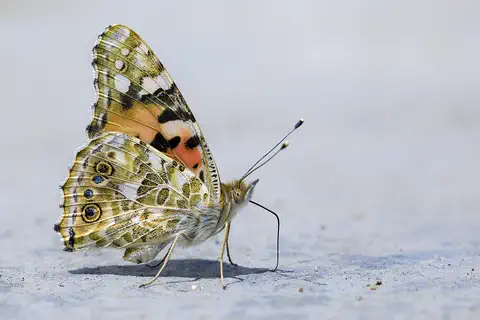
The painted lady is one of the most widespread butterflies in the world. Its orange and black wings carry it on huge journeys: each year, families of painted ladies fly between Africa and northern Europe, one generation after another.
-
 Watch
3D
Animal
Monarch butterfly
The monarch butterfly is famous for its bright orange wings and its amazing journey. Each fall, monarchs from eastern North America fly up to 3,000 miles to mountain forests in Mexico, where they spend the winter clustered together on fir trees. Their caterpillars eat only milkweed, which makes them taste bad to predators.
-
 Watch
 Country
United Kingdom
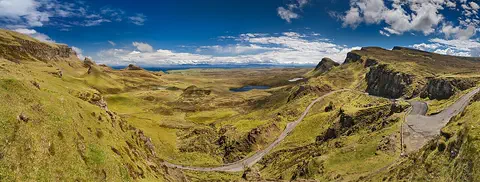
The United Kingdom, or UK, lies on islands off the northwest coast of Europe. It is made up of four parts, England, Scotland, Wales and Northern Ireland, and about 69.5 million people live there. Its capital is London.
-
 Watch
Animal
Queen Alexandra's birdwing
Queen Alexandra's birdwing is described by scientists as the largest butterfly in the world: a female's wings can stretch almost 25 centimeters across. It lives only in a small area of rainforest in Papua New Guinea, where its caterpillars eat pipevine plants. It is endangered and protected by law.
-
 Watch
Animal
American lobster
The American lobster is a big crustacean that lives on the rocky sea floor of the northwest Atlantic Ocean. It has two very different claws, one for crushing and one for tearing, and it must climb out of its hard shell again and again to grow.
-
 Watch
3D
Animal
Antarctic krill
Antarctic krill are small, shrimp-like crustaceans about 6 centimeters long that live in the icy Southern Ocean around Antarctica. They gather in enormous swarms, and almost all the bigger animals of the Antarctic, from penguins to blue whales, depend on them for food.
For parents & teachers
What children will learn
- Name the four stages of a butterfly's complete metamorphosis using the swallowtail.
- Identify the swallowtail's body parts, including antennae, thorax, wings, eyespots and tails.
- Explain how swallowtail caterpillars defend themselves.
- Understand why a species can be secure worldwide but rare in one country.
Recommended ages: 3 to 17 · About 15 minutes
Talk about it
- Why might it help a tiny caterpillar to look like a bird dropping?
- Why do you think the eyespots and tails are at the back of the wings, away from the head?
- How could looking after one plant help save a butterfly?
Try at home or in class
- Draw the four stages of the swallowtail's life cycle in a circle, with arrows from egg to caterpillar to chrysalis to butterfly.
- Look closely at a carrot top or a parsley plant: in Europe, swallowtail caterpillars feed on plants of this family.
Key vocabulary: metamorphosis, chrysalis, osmeterium, eyespot, nectar, fen
Where these facts come from
- GBIF Backbone Taxonomy and GBIF Occurrence Search , Global Biodiversity Information Facility (CC0 1.0 (backbone); occurrence counts are facts derived from records under CC0, CC BY and CC BY-NC)
- Swallowtail (Papilio machaon) , Butterfly Conservation
- Old World Swallowtail (Papilio machaon) , Butterflies and Moths of North America
- Swallowtail - Papilio machaon , UK Butterflies
- Papilio machaon (Old World swallowtail) , Animal Diversity Web, University of Michigan Museum of Zoology
- Wikidata , Wikimedia Foundation (CC0 1.0)
- Wikimedia Commons , Wikimedia Foundation (Per file: Public domain, CC0, CC BY or CC BY-SA only (credited on each page))
Checked, not yet human-reviewed. Last updated October 28, 2026. Spotted a mistake? Tell us.