
Natural wonder Africa
Lake Tanganyika
Lake Tanganyika is a very long, very deep lake in Africa. Four countries share it. Hundreds of kinds of fish live there and nowhere else.
Lake Tanganyika lies in a deep crack in Africa called a rift valley. Britannica calls it the longest freshwater lake in the world, and only Lake Baikal, in Russia, is deeper. Four countries share it: Tanzania, the Democratic Republic of the Congo, Burundi and Zambia. Its water is home to about 250 kinds of cichlid fish found nowhere else.
Lake Tanganyika fills the southern part of Africa's Western Rift: about 660 km long and 1,436 m deep by Britannica's figures (the European Space Agency gives 676 km and 1,470 m), it is the world's longest freshwater lake and the second deepest after Baikal. ESA estimates it is about 10 million years old. Its deep water holds no oxygen, yet its upper layers support some 250 endemic cichlid species, the oldest and most varied of Africa's great cichlid radiations.
Photo: Erasmus Kamugisha, CC BY-SA 4.0, via Wikimedia Commons
Discover Lake Tanganyika
Lake Tanganyika is a long, thin lake in Africa.
It is very, very deep. Steep hills rise up from the water. Four countries share it. Fishers go out in boats, and hippos and crocodiles live along the shores.
Lake Tanganyika stretches like a long blue ribbon through the middle of Africa. Britannica measures it at about 660 kilometers long, which makes it the longest freshwater lake in the world, but only 16 to 72 kilometers wide. Its deepest point is 1,436 meters down. Only Lake Baikal, in Russia, is deeper.
Four countries share the lake: Tanzania, the Democratic Republic of the Congo, Burundi and Zambia. The lake itself forms the border between Tanzania and the Democratic Republic of the Congo. For most of its length, steep land rises straight up from the shore. Many rivers flow in, but only one river, the Lukuga, carries water out, and it joins the great Congo River on its way to the Atlantic Ocean.
Britannica gives Lake Tanganyika a length of 660 km, widths of 16 to 72 km, an area of about 32,900 km² and a maximum depth of 1,436 m, second only to Lake Baikal; the European Space Agency gives 676 km and 1,470 m, and a volume of 18,880 km³, which it ranks third in the world after the Caspian and Baikal. Its deepest point lies more than 730 m below sea level, Britannica notes.
The lake forms the boundary between Tanzania and the Democratic Republic of the Congo and parts of the boundaries of Burundi and Zambia with their neighbors. The largest inflows are the Malagarasi, the Ruzizi, which drains Lake Kivu, and the Kalambo, whose Kalambo Falls drop about 215 m over the escarpment near the Zambian frontier. Despite these rivers, the lake is not the center of an extensive drainage area. Its outlet, the Lukuga River on the western shore, flows to the Lualaba and so into the Congo system; Britannica notes that silt and swamp plants sometimes block it.
- Length (Britannica)
- 660 km
- Greatest depth (Britannica)
- 1,436 m
- Area
- about 32,900 km²
- Shared by
- Burundi, Democratic Republic of the Congo, Tanzania and Zambia
- Outlet
- The Lukuga River, to the Congo
A lake in a crack in Africa
Africa is very slowly cracking apart here.
A long, low valley formed where the land pulled apart. Fresh water filled the valley. That is why the lake is so long and so deep.
Lake Tanganyika lies in the Western Rift, part of a long chain of cracks in Earth's crust that runs through East Africa. The US Geological Survey explains that two parts of the African Plate are slowly splitting apart along this rift. National Geographic explains that a rift valley is a low strip of land that forms where Earth's plates move apart, and that rift lakes form when fresh water floods these valleys.
That is how Lake Tanganyika formed. That is why the lake is long and narrow, with steep walls, while Lake Victoria, which sits on flat land between the rifts, is wide and shallow. The European Space Agency estimates that Lake Tanganyika is about 10 million years old, one of fewer than 20 ancient lakes on Earth.
Lake Tanganyika occupies the southern end of the Western Rift Valley, part of the East African Rift System, which Britannica describes as a series of massive fissures in Earth's crust running from the Zambezi valley through eastern Africa and the Red Sea to the Jordan valley. The US Geological Survey describes the Nubian and Somalian parts of the African Plate splitting along the East African Rift Zone. Britannica notes the rifts took their present form mainly through earth movements in the Pleistocene, and that the Western Rift lakes are flanked by escarpments that often rise sheer from the water.
The European Space Agency estimates the lake at about 10 million years old, one of fewer than 20 ancient lakes on Earth, and notes that its sediments are studied for records of Africa's past climate. Its great depth has a striking consequence: Britannica explains that the deep waters of Tanganyika are permanently deoxygenated, a biological desert making up three-fourths of the lake's volume, and that they contain lethal amounts of hydrogen sulfide.
A lake full of cichlids
Lake Tanganyika is full of fish.
About 250 kinds of cichlid fish live here and nowhere else. Small fish called dagaa live there too. Hippos and crocodiles live by the shore. Chimpanzees live in a park beside the lake.
Scientists say about 250 kinds of cichlid fish live in Lake Tanganyika and nowhere else. Many of them are mouthbrooders, carrying their young in their mouths. The European Space Agency, quoting the conservation group IUCN, says the lake holds more than 2,000 species of plants and animals, and over half are found nowhere else.
There are also small, sardine-like fish called dagaa. Britannica says hippos and crocodiles are common along the shores, and that oil palms, trees more typical of West Africa, grow there too. Beside the lake is Gombe Stream National Park, where the scientist Jane Goodall spent many years studying chimpanzees.
Weiss and colleagues (2015, PLoS ONE) describe roughly 250 endemic cichlid species in Lake Tanganyika, which hosts more endemic cichlid genera and more ancient lineages than any other African great lake; they propose a 'melting pot' origin in which several older lineages diversified in ancient rivers and lakes before coming together in today's basin. The European Space Agency, citing IUCN, gives more than 2,000 species in the lake, over half of them endemic. Britannica lists the mouthbrooding Tilapia and the small sardinelike Stolothrissa tanganicae (dagaa) among East African lake fishes.
Life is concentrated in the upper waters, because three-fourths of the volume below is without oxygen. The lake lies on the line dividing the floral regions of eastern and western Africa, so West African oil palms grow on its shores; Britannica adds that hippos and crocodiles abound and bird life is varied. Four protected areas border the lake, ESA notes: Gombe Stream and Mahale Mountains national parks in Tanzania, Nsumbu National Park in Zambia and the Rusizi Natural Reserve in Burundi.

Ports, fishers and explorers
Many people live around the lake.
They catch fish and grow rice by the water. Ships carry people and things from port to port. Long ago, explorers came here looking for the start of the Nile.
Many different peoples live around Lake Tanganyika. Britannica says farmers grow rice and other crops along the shores, and fishing is important. Important ports include Bujumbura in Burundi, Kalemie in the Democratic Republic of the Congo, Mpulungu in Zambia, and Kigoma and Ujiji in Tanzania.
In 1858 two British explorers, Richard Burton and John Hanning Speke, reached Ujiji on the eastern shore while searching for the source of the Nile. They were the first Europeans to visit the lake. In 1871, also at Ujiji, Henry Morton Stanley found the explorer David Livingstone.
Britannica describes the peoples of the eastern shore as predominantly Bantu-speaking, many tracing their origins to the Congo basin, and notes rice and subsistence crops along the shores and a fishery of some significance. The principal ports are Bujumbura (Burundi), Kalemie (Democratic Republic of the Congo), Mpulungu (Zambia), and Ujiji and Kigoma (Tanzania).
The first Europeans to visit the lake were Sir Richard Burton and John Hanning Speke, who reached Ujiji in 1858 during their search for the Nile's source; Speke went on that year to sight Lake Victoria. In 1871 Henry Morton Stanley met David Livingstone at Ujiji. The lake is also studied from space: in September 2006 the European Space Agency's Envisat satellite imaged it at 300 m resolution, and scientists examine its sediments to reconstruct Africa's climatic and environmental history.
Visiting safely
Big lakes can have sudden storms.
Always wear a life jacket in a boat. Stay close to your grown-up near the water. Watch hippos and crocodiles from far away.
Britannica warns that sudden, dangerous storms can arise over all the big East African lakes, so check the weather before going out on the water. It also says hippos and crocodiles abound along Lake Tanganyika's shores, so watch them only from a safe distance and keep well back from them.
The US Centers for Disease Control and Prevention (CDC) says life jackets lower the risk of drowning while boating, for people of all ages and swimming abilities, and that children should wear them for all activities in and around natural water, with a grown-up watching them closely. Floating toys are not safety devices.
Britannica notes that sudden and dangerous storms are likely over all the major East African lakes, and that hippopotamuses and crocodiles abound around Lake Tanganyika; both are best watched from a distance. The CDC states that life jackets reduce the risk of drowning while boating for people of all ages and swimming abilities, that children should use them for all activities in and around natural water, that a responsible adult should supervise children closely and constantly, and that air-filled or foam toys are not safety devices.
The lake's wildlife is protected in several places along its shores, including Gombe Stream and Mahale Mountains national parks in Tanzania and Nsumbu National Park in Zambia, according to the European Space Agency. Because so many of the lake's species live nowhere else, keeping its water clean and its shores protected matters.
Amazing facts
-
The bottom of Lake Tanganyika is lower than the sea.
The lake's deepest point is more than 730 meters below sea level, even though its surface is high up in the hills of Africa.
Britannica notes that the lake's 1,436 m maximum depth reaches more than 730 m below sea level.
-
A tall waterfall pours into the lake.
At the southern end of the lake, the Kalambo River tumbles about 215 meters over a cliff at Kalambo Falls.
Kalambo Falls, on the Zambian frontier near the lake's southern end, drops about 215 m over the rift escarpment, one of the highest waterfalls in the world by Britannica's account.
-
West African palm trees grow on the lake's shores.
The lake sits on the line between the plants of eastern and western Africa, so oil palms, trees typical of West Africa, grow on its shores.
Britannica places the lake on the boundary between the floral regions of eastern and western Africa, which is why West African oil palms grow along it.
-
Most of the animals in the lake live nowhere else.
More than 2,000 kinds of plants and animals live in the lake, and over half of them are found nowhere else on Earth.
The European Space Agency, citing IUCN, gives more than 2,000 species in the lake, over half endemic, and quotes IUCN: no place on earth holds such a variety of life.
Words to know
- rift valley
- a long valley that forms where Earth's crust is pulling apart
- escarpment
- a long, steep slope or cliff at the edge of high land
- endemic
- found in only one place in the world
- oxygen
- a gas in air and water that animals need to breathe
- outlet
- the river that carries water out of a lake
- cichlid
- a family of small, often colorful fish; many kinds carry their eggs or babies in their mouths
Discovery challenge
-
What kind of valley is Lake Tanganyika in?
What kind of valley does Lake Tanganyika fill?
Lake Tanganyika occupies the southern end of which kind of valley?
- A rift valley, where the land is pulling apart
- A valley carved by a glacier
- A canyon cut by a desert river
Show the answer
A rift valley, where the land is pulling apart
A rift valley! The land is slowly cracking apart here.
It fills part of the Western Rift, where two parts of the African Plate are splitting apart.
The Western Rift Valley of the East African Rift System, flanked by steep escarpments.
-
Which lake is even deeper than Lake Tanganyika?
Which lake is the only one deeper than Lake Tanganyika?
Which lake does Britannica rank as deeper than Lake Tanganyika?
- Lake Victoria
- Lake Baikal
- Lake Superior
Show the answer
Lake Baikal
Lake Baikal, far away in Russia, is deeper.
Lake Baikal, in Russia. Lake Tanganyika is the second deepest lake in the world.
Lake Baikal; Tanganyika is second at 1,436 m by Britannica's figure, or 1,470 m by ESA's.
-
About how many kinds of cichlid fish live only in this lake?
About how many kinds of cichlid fish are found only in Lake Tanganyika?
Roughly how many endemic cichlid species does Lake Tanganyika hold?
- About 25
- About 250
- About 25,000
Show the answer
About 250
About 250! That is a lot of kinds of fish.
About 250 kinds of cichlids live in the lake and nowhere else.
About 250 (Weiss and colleagues, 2015), with more endemic genera and ancient lineages than any other African great lake.
-
Which river carries water out of Lake Tanganyika?
Which river is Lake Tanganyika's outlet?
Which river drains Lake Tanganyika toward the Lualaba and the Congo?
- The Nile
- The Lukuga
- The Zambezi
Show the answer
The Lukuga
The Lukuga River. Its water goes on to the big Congo River.
The Lukuga flows out of the western shore and joins the river system of the Congo.
The Lukuga, on the western shore, flows to the Lualaba; silting and swamp growth sometimes block it.
-
Why can't fish live in the deepest water of the lake?
Why do almost no fish live in Lake Tanganyika's deepest water?
What makes Tanganyika's deep water, three-fourths of its volume, a biological desert?
- It has no oxygen
- It is boiling hot
- It is frozen solid
Show the answer
It has no oxygen
There is no air in the deep water, so fish cannot breathe there.
The deep water has no oxygen, so the lake's life lives in the upper layers.
It is permanently deoxygenated and contains lethal hydrogen sulfide, Britannica explains.
Nearby places
-
 Watch
Natural wonder
Mount Nyiragongo
Mount Nyiragongo is a steep volcano in the Virunga Mountains of the Democratic Republic of the Congo, near the border with Rwanda and just north of Lake Kivu. It is 3,470 meters high, and its deep summit crater often holds a lake of bubbling lava. Its lava is very runny, and eruptions in 1977, 2002 and 2021 sent lava flowing down its sides toward the city of Goma.
-
 Watch
Natural wonder
Virunga National Park
Virunga National Park, in the east of the Democratic Republic of the Congo, was founded in 1925; the park describes itself as Africa's first national park. It stretches from active volcanoes in the south to the snowy Rwenzori Mountains in the north. About one third of the world's mountain gorillas live in its forests, along with elephants, hippos, chimpanzees and hundreds of kinds of birds.
-
 Watch
Natural wonder
Lake Victoria
Lake Victoria is the largest lake in Africa, and Britannica says only Lake Superior, in North America, is a bigger freshwater lake. It is shared by Kenya, Tanzania and Uganda. The lake is wide but shallow, its only outlet is the Nile, and it is home to hundreds of kinds of colorful fish called cichlids.
-
 Watch
Natural wonder
Serengeti National Park
Serengeti National Park in northern Tanzania protects 14,763 square kilometers of grassy plains and woodlands. Each year more than a million wildebeest, with zebras and gazelles, travel a great loop across the Serengeti and into Kenya in search of grass and water, followed by lions and other predators.
-
 Watch
Natural wonder
Ngorongoro Conservation Area
The Ngorongoro Conservation Area in northern Tanzania holds the Ngorongoro Crater, a giant bowl about 16 to 20 kilometers across, left when an ancient volcano collapsed about 2.5 million years ago. Around 25,000 large animals live in and around the crater. The area also protects Olduvai Gorge and Laetoli, where scientists have found important evidence of how humans evolved.
-
 Watch
Natural wonder
Mount Kilimanjaro
Mount Kilimanjaro, in northeastern Tanzania, is what UNESCO calls the highest mountain in Africa: its top is 5,895 meters high. It is a huge volcanic mountain standing alone above the plains, and as you climb it you pass through farms, forest, moorland and high alpine desert to its icy top.
-
 Watch
City
Nairobi
Nairobi, the capital of Kenya, sits high in the highlands of East Africa. It began in the late 1890s as a railway camp beside a Maasai water hole called Enkare Nairobi, "Cold Water." Today it is one of the biggest cities in tropical Africa, with Nairobi National Park, full of wild animals, at its edge.
-
 Watch
Natural wonder
Great Rift Valley
The Great Rift Valley is a huge valley that runs through East Africa, where the continent is slowly being stretched and pulled apart. Long, steep cliffs line its sides, its floor holds lakes full of flamingos, and giant volcanoes such as Kilimanjaro and Mount Kenya rose beside it. Scientists think a new ocean may one day open here.
Explore next
-
Watch
 Country
Tanzania
Tanzania is a country in East Africa, just south of the Equator, on the Indian Ocean. It has Mount Kilimanjaro, Africa's highest mountain, deep lakes in the East African Rift, and the Serengeti, where huge herds of wildebeest travel each year.
-
Watch
 Country
Democratic Republic of the Congo
The Democratic Republic of the Congo, or DR Congo, is the second-largest country in Africa. The mighty Congo River curves through its rainforests, volcanoes rise in the east, and its capital, Kinshasa, is a center of music, fashion and popular culture.
-
Watch
 Country
Burundi
Burundi is a small, landlocked country of green hills in east-central Africa, just south of the Equator. Its western edge runs along Lake Tanganyika, the longest freshwater lake in the world. About 14.4 million people live there, and its royal drum dance is famous around the world.
-
 Watch
 Country
Zambia
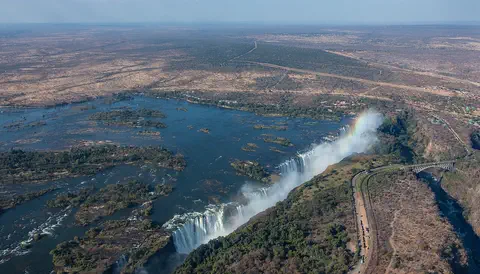
Zambia is a landlocked country on a high plateau in south-central Africa, named after the Zambezi River. On its southern border the Zambezi thunders over Victoria Falls. About 22 million people live there, and its copper mines have long made it one of Africa's great copper producers.
-
Watch
Natural wonder
Lake Victoria
Lake Victoria is the largest lake in Africa, and Britannica says only Lake Superior, in North America, is a bigger freshwater lake. It is shared by Kenya, Tanzania and Uganda. The lake is wide but shallow, its only outlet is the Nile, and it is home to hundreds of kinds of colorful fish called cichlids.
-
 Watch
Natural wonder
Lake Baikal
Lake Baikal, in southern Siberia, Russia, fills a deep crack in the Earth's crust where the land is pulling apart. UNESCO calls it the oldest and deepest lake in the world, about 25 million years old, and it holds about a fifth of the world's unfrozen fresh water. Many of its animals, like the Baikal seal, live nowhere else.
-
 Watch
Natural wonder
River Congo
The Congo is Africa's second-longest river, about 4,700 kilometers long. It curves in a giant arc through the rainforests of central Africa and empties into the Atlantic Ocean. Rain falls in its basin all year, so it carries a huge amount of water, and its wild lower rapids are home to about 320 kinds of fish, about 90 of them found nowhere else.
-
Watch
Natural wonder
Great Rift Valley
The Great Rift Valley is a huge valley that runs through East Africa, where the continent is slowly being stretched and pulled apart. Long, steep cliffs line its sides, its floor holds lakes full of flamingos, and giant volcanoes such as Kilimanjaro and Mount Kenya rose beside it. Scientists think a new ocean may one day open here.
For parents & teachers
What children will learn
- Locate Lake Tanganyika and name the four countries that share it.
- Explain how a rift valley forms and why rift lakes are long, narrow and deep.
- Describe why the lake's deep water has no oxygen and where its life is found.
- Compare Lake Tanganyika with Lake Victoria in shape, depth and origin.
Recommended ages: 3 to 17 · About 15 minutes
Talk about it
- Why might a very old lake have more kinds of fish found nowhere else than a young lake?
- Four countries share Lake Tanganyika. What might they need to agree on to keep it healthy?
- How do you think scientists study a lake that is more than a kilometer deep?
Try at home or in class
- Press two blocks of play dough together, then slowly pull them apart over a tray and watch the middle sag and crack, like a rift valley forming.
- Draw a tall rectangle for the lake. Color the top quarter blue for water with oxygen and the rest gray for water without it, then draw fish only where they can live.
Key vocabulary: rift valley, escarpment, endemic, oxygen, outlet, cichlid
Where these facts come from
- Wikidata , Wikimedia Foundation (CC0 1.0)
- Natural Earth vector data , Natural Earth (NACIS) (Public domain)
- Lake Tanganyika , Encyclopaedia Britannica
- East African lakes , Encyclopaedia Britannica
- East African lakes: Geology, climate, and hydrology , Encyclopaedia Britannica
- Earth from Space: Africa's ancient Lake Tanganyika , European Space Agency
- Rift valley , National Geographic Education
- Phylogeny of Lake Tanganyika cichlids: the 'melting pot Tanganyika' hypothesis (Weiss et al., PLoS ONE 2015) , PubMed Central (U.S. National Library of Medicine)
- East Africa (This Dynamic Planet) , U.S. Geological Survey
- Preventing Drowning , US Centers for Disease Control and Prevention
- Wikimedia Commons , Wikimedia Foundation (Per file (public domain, CC0, CC BY or CC BY-SA); see each media record)
Checked, not yet human-reviewed. Last updated October 27, 2026. Spotted a mistake? Tell us.