
Animal
Common frog
The common frog lives in ponds, gardens and woods in Europe. In spring it lays big clumps of eggs called frogspawn.
The common frog is a familiar frog of ponds and gardens across Europe. It spends most of the year in damp grass, gardens and woods, and every spring it returns to ponds to lay clumps of frogspawn that grow into tadpoles and then little froglets.
Rana temporaria is a largely terrestrial brown frog ranging from Great Britain and Spain to Russia and Kazakhstan, and as far north as the Arctic Circle in Scandinavia. It breeds in a short burst in early spring in shallow water, and the IUCN lists it as Least Concern with a stable population, although local declines have been linked to pond loss, roads and disease.
Photo: Richard Bartz, Munich aka Makro Freak Image:MFB.jpg, CC BY-SA 2.5, via Wikimedia Commons
Meet the common frog
The common frog is a brown or green frog.
It has smooth skin, long legs and a dark patch behind each eye. It can hop, swim and hide in the grass.
The common frog is a smooth-skinned frog about 7 to 10 centimeters long. Most are brown, olive green or gray, but some are yellow or even red. Dark patches on the back, stripes on the long back legs and a dark "mask" behind each eye help you recognize one.
It can change its skin color a little to blend in with its surroundings. In continental Europe it is also known as the grass frog or the russet frog.
Rana temporaria is a true frog of the family Ranidae. Britannica gives adults as 7 to 10 centimeters long, Froglife gives males up to 9 centimeters and females up to 13, and the Woodland Trust puts a typical weight at about 22 grams. Females are larger than males.
Color is highly variable: gray, olive, brown, yellowish or red, with few to many dark spots. Field marks include a dark mask behind the eye, an oval horizontal pupil, dark-barred hind legs and webbed hind feet. In continental Europe it is known as the grass frog or russet frog, and individuals can shift their color to match their background.
Quick facts
- Group
- Amphibian
- Length
- 7 to 10 cm
- Weight
- 22 g
Where it lives
Common frogs live in many parts of Europe.
They live near ponds, in gardens, fields and woods. Garden ponds are great homes for them.
Common frogs live across Europe, from Britain and Ireland to Russia. They can cope with cold and live as far north as the Arctic Circle in Scandinavia, and as high as 2,700 meters up mountains.
They need water only for breeding. In spring they gather in ponds, lakes, canals and even puddles. The rest of the year they live in damp places nearby: meadows, gardens and woodland. Garden ponds are very important to them, especially in towns and cities.
The global IUCN assessment lists the species in more than 30 countries, from Spain, France, Ireland and Great Britain east through central and northern Europe and the Balkans to Russia and Kazakhstan, from sea level to 2,700 meters. AmphibiaWeb also lists Estonia, Latvia, Lithuania and Ukraine (all but the south of Ukraine); the IUCN list leaves these four out, but they are shaded on the map. Britannica describes the range as Great Britain to central Russia.
It is largely terrestrial outside the breeding season and favors damp, shaded ground: wet meadows, woodland, scrub and gardens. Breeding sites can be almost any shallow, still water, from lakes and canals to garden ponds and puddles. Froglife stresses that garden ponds are especially important in urban areas.
Continents
Its habitats


Where can you find this animal?
- Lives here naturally · Countries and seas named by a scientific source
- Sightings recorded · Records of wild sightings (GBIF)
Lives here naturally · Countries and seas named by a scientific source
Ponds, damp meadows, woodland and gardens across much of Europe, from Spain, Ireland and Great Britain east to Russia and Kazakhstan, from sea level to 2,700 meters. In Spain, France, Italy and Greece it lives on the mainland only. Estonia, Latvia, Lithuania and Ukraine (all but the south) are added from AmphibiaWeb; the IUCN global assessment, the source for every other country, leaves them out.
Places: Albania, Austria, Belarus, Belgium, Bulgaria, Croatia, Czechia, Denmark and 27 more places.
Source: iucn-red-list · checked October 2026
Sightings recorded · Records of wild sightings (GBIF)
Counts of GBIF records of wild observations (human and machine) and preserved specimens. Records include introduced populations, vagrants, escaped or released animals and misidentifications, so a country with records is not necessarily part of the native range.
Wild sightings have been recorded in Switzerland, Netherlands, UK, France, Austria, Germany, Denmark, Sweden and 44 more places.
Source: gbif · checked October 2026
Range maps show where scientists say an animal lives, often country by country. An animal may live in only part of a country shown, and sightings records can include animals that wandered far from home.
What it eats
Common frogs eat small animals.
They eat flies, worms, snails and slugs. A long, sticky tongue catches them. Tadpoles eat tiny green plants in the water.
Adult common frogs are carnivores. They eat invertebrates, animals without backbones, such as flies, worms, snails and slugs, and sometimes even smaller amphibians. They catch their food with a long, sticky tongue.
Most hunting happens at night. Tadpoles eat something quite different: they graze on algae, tiny plant-like living things in the water, and Froglife says they also eat water fleas.
Adults are generalist predators of invertebrates. The Woodland Trust lists flies, worms, snails and slugs, with smaller amphibians taken occasionally, all captured with a long, sticky tongue; Froglife notes that the frogs are most active at night when feeding.
The diet changes completely across metamorphosis. Tadpoles graze on algae and eat water fleas, while adults hunt animals on land.
Did you know?
Common frogs can be brown, green, yellow or even red.
Most common frogs are brown, olive green or gray, but yellow, pink, red and even black ones have been seen.
Color is strikingly variable, and Froglife lists yellow, pink, red, lime-green, cream and black individuals alongside the usual browns and greens.
A body for land and water
A common frog has strong back legs for jumping.
Its back feet are webbed for swimming. It can even breathe through its skin!
A common frog is built for two worlds. Long, strong back legs push it into big jumps on land, and webbed back feet help it swim. Its smooth skin must stay damp.
Frogs breathe with lungs, but they can also breathe through their skin. The dark patch behind each eye surrounds the eardrum, a round disc frogs use to hear. Its color can change a little to help it blend in with the ground.
The species is adapted to a dual life. Long hind limbs power its jumps, the hind feet are webbed, and the moist, smooth skin is a breathing surface as well as a covering: the Woodland Trust notes that frogs breathe through their skin as well as with their lungs.
The Animal Diversity Web describes a brown-black triangular area around the eardrum, the dark mask that is one of the species' clearest field marks. In the breeding season males develop swollen nuptial pads on their forelimbs, which they use to grip females during mating, and the Animal Diversity Web reports that breeding males develop blue patches on the back and throat.
From frogspawn to froglet
In spring, frogs lay eggs in a pond.
The eggs are in a big clump of jelly called frogspawn. Tadpoles hatch out. They grow legs, lose their tails and become little froglets.
In early spring, common frogs travel to ponds to breed. A female lays a clump of frogspawn with up to 2,000 small black eggs, each inside a ball of clear jelly. Frogspawn comes in clumps; toads lay their eggs in strings.
Two to four weeks later, tiny black tadpoles hatch. Over the next months they grow back legs, then front legs, and their tails shrink away. This change is called metamorphosis. Tiny froglets leave the water, usually in early summer.
Breeding begins in early spring, from January in south-west England according to Froglife; Britannica notes that breeding starts when the water reaches about 14 °C (57 °F). Males croak to attract females and grip them in amplexus using nuptial pads. Spawn is laid in clumps in shallow water: up to 2,000 eggs per clump (Woodland Trust and Froglife), each in a jelly capsule about 1 centimeter across.
Tadpoles hatch after two to four weeks, depending on weather. They start black and become speckled with gold or bronze. Back legs grow before front legs; Britannica puts the whole metamorphosis at roughly three months, and the Woodland Trust at up to 16 weeks. Frogs reach breeding age at two to three years.

Through the seasons
In winter, common frogs rest.
They hide in mud at the bottom of ponds, or under logs and compost heaps. In spring they wake up and go back to the pond.
Common frogs follow the seasons. In early spring they head straight to ponds, and male frogs make a soft, purring croak to attract females. Some males even ride to the pond on a female's back.
In summer and autumn they hunt in damp grass and gardens. In winter they shelter in mud at the bottom of ponds, under rocks or logs, or in compost heaps. They don't sleep the whole winter, though: on warmer days they may come out to look for food.
The annual cycle is tightly seasonal. Adults leave overwintering sites in early spring and move directly to breeding ponds, where males call with a soft, repetitive croak; Froglife notes that males may arrive "piggy-back" on a female. Breeding is brief and concentrated.
After breeding, frogs disperse to feed in damp vegetation. In winter they shelter under rocks, in compost heaps or in the mud and plants at the bottom of ponds. Froglife points out that they do not truly hibernate and may forage in mild spells. Predators include herons, foxes, otters, snakes, birds of prey and domestic cats.
Did you know?
Frog eggs come in clumps. Toad eggs come in strings.
You can tell frogspawn from toadspawn: frogs lay their eggs in clumps, and toads lay them in long strings.
Common frog spawn is laid in clumps of up to 2,000 eggs, whereas toads lay their eggs in strings, an easy way to tell them apart in a pond.
Helping common frogs
Common frogs are still common in many places.
But some ponds have been filled in. A garden pond gives frogs a place to lay their eggs.
The common frog is listed as Least Concern, which means it is not in danger of disappearing. But in some places its numbers have dropped. Ponds have been filled in for building, many frogs are hit by cars as they travel to their breeding ponds, and disease has played a part too.
You can help by making a garden pond, where frogs can lay their frogspawn. A pile of logs nearby gives them a place to shelter in winter.
The IUCN assessed Rana temporaria in 2020 (published 2022) as Least Concern with a stable population trend. The threats it lists are hunting and trapping and agricultural and forestry pollution, and it records the species being used for food and in the pet trade.
In Britain, the Woodland Trust reports declines linked to the loss of breeding ponds to development, road deaths during breeding migrations and disease. Froglife notes that ranavirus outbreaks are most active in summer. Garden ponds have become important refuges, and people's records of first frogspawn each spring are used to track how climate change affects wildlife.
IUCN Red List
How is the common frog doing in the wild?
- Least Concern (this animal)
- Near Threatened
- Vulnerable
- Endangered
- Critically Endangered
- Extinct in the Wild
- Extinct
Least Concern
Not at risk of disappearing from the wild right now.
See the IUCN Red List assessment · The IUCN Red List of Threatened Species 2022.2
Amazing facts
-
Frogs can breathe through their skin.
Common frogs breathe with their lungs, but they can also take in air through their damp skin.
Besides the lungs, the moist skin serves as a breathing surface, as the Woodland Trust notes.
-
Frog eggs come in clumps. Toad eggs come in strings.
You can tell frogspawn from toadspawn: frogs lay their eggs in clumps, and toads lay them in long strings.
Common frog spawn is laid in clumps of up to 2,000 eggs, whereas toads lay their eggs in strings, an easy way to tell them apart in a pond.
-
Common frogs can be brown, green, yellow or even red.
Most common frogs are brown, olive green or gray, but yellow, pink, red and even black ones have been seen.
Color is strikingly variable, and Froglife lists yellow, pink, red, lime-green, cream and black individuals alongside the usual browns and greens.
-
Some male frogs ride to the pond on a female's back.
In spring, a male common frog may hitch a piggy-back ride to the breeding pond on a female.
Males sometimes reach breeding ponds already in amplexus, carried "piggy-back" by a female.
Words to know
- frogspawn
- a clump of frog eggs, each inside a ball of clear jelly
- tadpole
- a young frog that lives in water and has a tail
- froglet
- a tiny young frog that has just left the water
- metamorphosis
- a big change in body shape as an animal grows, like a tadpole turning into a frog
- invertebrate
- an animal without a backbone, such as a slug, worm or insect
- eardrum
- a thin, round part of the body that helps an animal hear
Discovery challenge
-
What is a clump of frog eggs called?
What is the name for a clump of common frog eggs?
What is the term for the egg masses common frogs lay in ponds?
- Frogspawn
- A nest
- A cocoon
Show the answer
Frogspawn
It is called frogspawn. Each egg is in a ball of jelly.
Frogspawn: up to 2,000 small black eggs in clear jelly, laid in a clump.
Frogspawn, laid in clumps of up to 2,000 eggs, each in a jelly capsule about a centimeter across.
-
What grows first on a tadpole?
Which legs does a common frog tadpole grow first?
In what order do a common frog tadpole's limbs develop?
- Front legs first
- Back legs first
- All four legs together
Show the answer
Back legs first
Back legs grow first. Then the front legs come.
Back legs grow first, then front legs, and then the tail shrinks away.
Hind limbs appear first, followed by forelimbs, before the tail is absorbed.
-
Where do common frogs rest in winter?
Where might a common frog spend the winter?
Which of these is a typical winter shelter for common frogs?
- In a bird's nest
- Flying south to Africa
- In mud at the bottom of a pond
Show the answer
In mud at the bottom of a pond
They rest in mud in the pond, or under logs and compost heaps.
They shelter in pond mud, under rocks or logs, or in compost heaps, and may come out on mild days.
Overwintering sites include pond-bottom mud and vegetation, rocks and compost heaps; the frogs do not truly hibernate.
-
What do common frogs like to eat?
Which of these do adult common frogs eat?
Which food is typical of adult common frogs?
- Slugs and worms
- Grass
- Fish food flakes
Show the answer
Slugs and worms
They eat slugs, worms, snails and flies.
Adults eat invertebrates such as slugs, snails, worms and flies, caught with a sticky tongue.
Adults prey on invertebrates such as flies, worms, snails and slugs; tadpoles graze on algae.
Places where you might see it
-
 Watch
 Country
United Kingdom
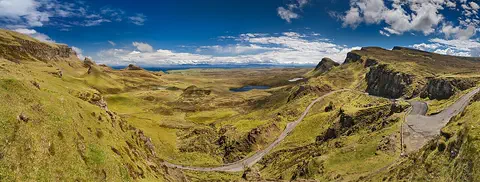
The United Kingdom, or UK, lies on islands off the northwest coast of Europe. It is made up of four parts, England, Scotland, Wales and Northern Ireland, and about 69.5 million people live there. Its capital is London.
-
 Watch
 Country
Andorra
Andorra is a tiny country high in the Pyrenees mountains, between France and Spain. It is made of steep mountain valleys, its official language is Catalan, and about 89,750 people lived there in 2026.
Explore next
-
 Watch
Animal
Common toad
The common toad is a warty brown amphibian that lives across Europe and into Asia. It spends most of the year on land, hunting slugs, worms and insects at night, then travels back to the pond where it hatched to lay long strings of eggs each spring.
-
 Watch
Animal
Wood frog
The wood frog is a brown forest frog with a dark "robber's mask" across its eyes. It lives farther north than any other North American amphibian, reaching Alaska and northern Canada. To survive winter it lets much of its body freeze, protected by sugar in its cells, and in early spring it is one of the first frogs to call, with a sound like quacking ducks.
-
Watch
Country
United Kingdom
The United Kingdom, or UK, lies on islands off the northwest coast of Europe. It is made up of four parts, England, Scotland, Wales and Northern Ireland, and about 69.5 million people live there. Its capital is London.
-
Watch
Country
Andorra
Andorra is a tiny country high in the Pyrenees mountains, between France and Spain. It is made of steep mountain valleys, its official language is Catalan, and about 89,750 people lived there in 2026.
-
 Watch
Animal
Red-eyed tree frog
The red-eyed tree frog lives in the rainforests of Central America. By day it sleeps folded up on a leaf, looking plain green. When something disturbs it, it flashes huge red eyes, orange feet and blue-and-yellow sides.
-
 Watch
3D
Animal
Axolotl
The axolotl is a salamander from the canals and lakes of Mexico City. Unlike most amphibians, it keeps its baby features, such as feathery gills and a fin, its whole life. It can regrow lost legs and even parts of its heart, but in the wild it is critically endangered.
-
 Watch
3D
Animal
Amazon milk frog
The Amazon milk frog is a large tree frog that lives high in the treetops of the rainforest in northeastern South America. It is active at night, has big golden eyes, and lays its eggs in pools of rainwater trapped in holes in trees, where its tadpoles grow up.
-
 Watch
3D
Animal
American bullfrog
The American bullfrog is the largest true frog in North America. It lives in warm, still ponds and lakes, sits and waits for food to come close, and the males' deep 'jug-o-rum' call carries more than a kilometer. Its tadpoles can take years to turn into frogs.
For parents & teachers
What children will learn
- Sequence the frog life cycle: frogspawn, tadpole, tadpole with legs, froglet, adult.
- Describe how the common frog lives through the seasons.
- Identify a common frog by its dark mask, spotted skin and striped back legs.
- Explain how garden ponds help frogs.
Recommended ages: 3 to 17 · About 15 minutes
Talk about it
- Why do you think frogs lay so many eggs?
- How is a tadpole's life different from a grown frog's life?
- What could your family or school do to help frogs nearby?
Try at home or in class
- Visit a pond in early spring (with a grown-up, keeping well back from the edge) and look for clumps of frogspawn without touching them.
- Make a frog life-cycle wheel from a paper plate, with frogspawn, tadpole, tadpole with legs, froglet and frog.
- Build a small log pile in a shady corner of a garden or schoolyard as a shelter for frogs and other small animals.
Key vocabulary: frogspawn, tadpole, froglet, metamorphosis, invertebrate, eardrum
Where these facts come from
- The IUCN Red List of Threatened Species , International Union for Conservation of Nature (IUCN terms of use (no redistribution of Red List data or range maps))
- GBIF Backbone Taxonomy and GBIF Occurrence Search , Global Biodiversity Information Facility (CC0 1.0 (backbone); occurrence counts are facts derived from records under CC0, CC BY and CC BY-NC)
- Rana temporaria (European Common Frog), 2020 global assessment , IUCN Red List of Threatened Species
- Common frog , Encyclopaedia Britannica
- Common frog (Rana temporaria) , Woodland Trust
- Common Frog , Froglife
- Rana temporaria (common frog) , Animal Diversity Web, University of Michigan Museum of Zoology
- Rana temporaria: distribution and habitat (archived copy of 22 April 2024) , AmphibiaWeb, University of California, Berkeley
- Wikidata , Wikimedia Foundation (CC0 1.0)
- Wikimedia Commons , Wikimedia Foundation (Per file: Public domain, CC0, CC BY or CC BY-SA only (credited on each page))
Checked, not yet human-reviewed. Last updated October 24, 2026. Spotted a mistake? Tell us.