
Animal
Red-eared slider
The red-eared slider is a pond turtle with a red stripe behind each eye. It loves to sit on logs in the sunshine.
The red-eared slider is a freshwater turtle from the central United States and northeastern Mexico, named for the red stripe behind each eye. It basks on logs, swims with webbed feet and eats both plants and small animals. Because so many were sold as pets and later let go, sliders now live wild in many other countries too, where they can harm native turtles.
Trachemys scripta elegans, a subspecies of the pond slider, is native to the Mississippi Valley region of the United States and northeastern Mexico. Tens of millions have been exported for the pet trade, and released pets have established populations across Europe, Asia and elsewhere; the European Union banned its import because of harm to native pond turtles.
Photo: Vaiasgaea, CC BY-SA 4.0, via Wikimedia Commons
Meet the red-eared slider
This is the red-eared slider.
It is a turtle that lives in ponds and rivers. It has a bright red stripe behind each eye. Its skin has yellow and green stripes.
The red-eared slider is a medium-sized freshwater turtle. Its best-known feature is the broad red or orange stripe behind each eye, which looks a bit like a red ear. Its dark green skin is striped with yellow, and its shell is olive to brown with yellow markings.
Sliders are one of the most familiar turtles in the world. The U.S. Geological Survey calls this kind probably the most widely illustrated turtle on Earth, because so many people have kept them as pets.
Trachemys scripta elegans is one of three subspecies of the pond slider (Trachemys scripta), in the family Emydidae. It has a broad red or orange (rarely yellow) stripe behind each eye, olive to brown skin and shell with yellow stripes, and, in young turtles, many dark eyelike spots on the yellow plastron (the lower shell).
Adults have shells 12.5 to 28.9 centimeters long. Females grow larger than males, reaching up to about 3.2 kilograms, while older males often become melanistic, darkening until they look almost black. The USGS describes it as probably the most widely illustrated turtle in the world.
Quick facts
- Group
- Reptile
- Length
- 0.13 to 0.29 m
- Weight
- up to 3.2 kg
- Lifespan in the wild
- up to 30 years
Where it lives
Red-eared sliders come from the middle of the United States and from Mexico.
They live in ponds, lakes and slow rivers. Now they also live in many other countries, because people let pet sliders go.
Wild red-eared sliders come from the central United States, from the Midwest south into northeastern Mexico. They live in quiet, shallow fresh water with lots of plants and places to bask: ponds, lakes, swamps, slow rivers and even city park ponds.
People have carried sliders far beyond their home as pets. When pets escaped or were let go, some formed wild groups. Today sliders live wild in other parts of the United States and in countries across Europe, Asia and beyond.
The USGS describes the native range as broadly covering the midwestern states, east to West Virginia (with a relict population in southern Ohio), west to eastern New Mexico and south across the Rio Grande into northeastern Mexico. Sliders favor still, shallow, well-vegetated fresh or brackish water with basking sites, but they tolerate canals and city ponds and quickly colonize new habitat.
Pet releases and escapes since the 1930s have spread the subspecies widely. Animal Diversity Web lists introduced populations in Canada, the Middle East, much of southern and western Europe, Türkiye, Cambodia, China, Japan, Indonesia, Taiwan, Thailand and Australia, and the IUCN's assessment of the pond slider also lists Germany and South Africa. The map's introduced layer shows the countries ADW lists.
Continent
Its habitat

Where can you find this animal?
- Brought here by people · Countries and seas named by a scientific source
- Lives here naturally · Countries and seas named by a scientific source
- Sightings recorded · Records of wild sightings (GBIF)
Brought here by people · Countries and seas named by a scientific source
Countries where released or escaped pet red-eared sliders have formed wild populations, as listed by Animal Diversity Web. Sliders also live outside their native range within the United States.
Places: Canada, France, Portugal, Greece, Spain, Italy, Slovenia, Austria and 10 more places.
Source: https://animaldiversity.org/accounts/Trachemys_scripta/ · checked October 2026
Lives here naturally · Countries and seas named by a scientific source
Ponds, lakes, swamps and slow rivers of the central United States, from the Midwest to the Gulf of Mexico, and northeastern Mexico. Sliders are native to only part of each country shown.
Places: United States and Mexico.
Source: https://nas.er.usgs.gov/queries/FactSheet.aspx?SpeciesID=1261 · checked October 2026
Sightings recorded · Records of wild sightings (GBIF)
Counts of GBIF records of wild observations (human and machine) and preserved specimens. Records include introduced populations, vagrants, escaped or released animals and misidentifications, so a country with records is not necessarily part of the native range.
Wild sightings have been recorded in United States, Belgium, Netherlands, France, Canada, Japan, Germany, Spain and 85 more places.
Source: gbif · checked October 2026
Range maps show where scientists say an animal lives, often country by country. An animal may live in only part of a country shown, and sightings records can include animals that wandered far from home.
What it eats
Baby sliders eat little animals, like bugs, snails and tadpoles.
Grown-up sliders eat mostly plants. They eat in the water and on land.
What a slider eats depends on its age. Young sliders are mostly meat-eaters: they gobble insects, spiders, crayfish, tadpoles, small fish and snails, because they need lots of nutrients to grow.
As they grow up, sliders become omnivores that eat mostly plants: water plants, algae, leaves, flowers and seeds, plus small animals when they can catch them. They hunt and graze both in the water and on land.
Diet shifts with age (an ontogenetic shift). Juveniles are mostly carnivorous, taking insects, larvae, spiders, crayfish, tadpoles, fish, clams, snails and other small animals, apparently because they cannot extract enough nutrients from plants. Adults become omnivores with a large plant component: aquatic and land plants, algae, flowers and seeds, along with freshwater invertebrates.
In a southern Illinois study cited by ADW, adult stomachs held more than 40 percent plant material; females ate more mollusks than males, especially while nesting. The USGS notes that sliders also eat frog eggs, tadpoles and even water snakes.
Did you know?
The warmth of the nest decides if baby sliders are boys or girls.
Slider eggs in cooler nests hatch as boys, and eggs in warmer nests hatch as girls.
Nests below 28.6 degrees Celsius produce all males, above 29.6 degrees all females, and in between a mix.
An amazing body
The red stripe behind the eye is not really an ear!
Sliders have webbed feet for swimming. They can see lots of colors.
That red 'ear' is just a stripe of colorful skin. Sliders have webbed feet with five toes, which make them good swimmers, and they walk well on land too.
Their eyes are amazing too. Sliders can see violet, blue, green and red, and also ultraviolet light, which people cannot see. Males have long front claws, which they wave in front of females during courtship.
The carapace is oval with a rough surface; the plastron is flat and smooth. The feet are webbed, with five digits on each limb, and both sexes have foreclaws, which may be longer in males and are used in courtship displays.
Sliders rely heavily on vision; their eyes have receptors for ultraviolet, violet, blue, green and red light. They are also notably cold-tolerant: hatchlings can supercool their body fluids and survive temperatures as low as minus 4 degrees Celsius. ADW reports a Mississippi study suggesting the bright yellow and red markings act as warning colors, since largemouth bass there avoided eating hatchling sliders.
Growing up
A mother slider digs a hole on land and lays her eggs.
The eggs stay warm in the ground. The babies hatch and crawl to the water all by themselves.
Between April and July, a female slider leaves the water to dig a nest in a sunny spot, sometimes walking more than a kilometer to find a good place. She lays about 6 to 11 eggs and then leaves; the babies get no care from their parents.
The eggs take about two to three months to develop. Here is a surprise: the warmth of the nest decides whether the babies are boys or girls. Many hatchlings stay snug in the nest through the winter before coming out. Females are grown up at about 5 to 8 years old, males at 2 to 5.
The breeding season runs from about April to late October. Females nest mainly between April and July, often after dark or in rain, digging an oval nest about 10 to 14 centimeters deep; they lay one or two clutches a year (up to four), averaging 6 to 11 eggs (range 2 to 20), and may travel more than 1.6 kilometers over land to nest. There is no parental care.
Embryos develop over about 60 to 95 days. Sex is set by temperature: nests below 28.6 degrees Celsius produce males, nests above 29.6 degrees produce females. Many hatchlings overwinter in the nest for up to 10 months, living on yolk reserves. Males mature at 2 to 5 years, females at 5 to 8, and pond sliders can live up to 30 years in the wild.
Sunbathers in a crowd
Sliders love to sunbathe.
They climb onto logs and rocks to warm up. Lots of sliders sit together, and they do not fight over space.
Red-eared sliders spend a lot of time basking: climbing onto logs, rocks and banks to soak up the sun. Sliders rely on the sun to keep warm, and warming up speeds up their bodies and helps them digest food.
Sliders are social and are often found in large numbers in the same place. They are not territorial and do not defend a patch of pond. They are most active in warm months, but on sunny winter days they may still come out to bask.
Basking is central to slider life. Sliders bask on logs, rocks, banks and floating debris, keeping body temperatures between about 18.2 and 33.6 degrees Celsius; warming raises metabolic rate and aids digestion. They do not bury themselves for warmth, relying on basking instead, and are active on sunny days even in cold months.
They are gregarious and not territorial. Communication involves visual displays, eye movements, vibrations and touch. During courtship a male performs 'titillation', vibrating his long foreclaws in the water near the female's face. Predators include snakes, alligators, wading birds, crows, large fish, opossums, skunks and raccoons.
Did you know?
Sliders can see colors that we cannot see.
Slider eyes can detect ultraviolet light, which is invisible to people.
Slider retinas have receptors spanning ultraviolet, violet, blue, green and red.
Pets that should stay home
Red-eared sliders are popular pets.
Pet turtles should never be let go outside. In some places, sliders that were let go cause trouble for the turtles that belong there.
In their home range, red-eared sliders are common. Their biggest story is about pets. Between 1989 and 1997, more than 52 million were shipped from the United States to other countries, and many pets were later released into ponds and rivers. Releases peaked during a cartoon craze for turtles in the late 1980s and early 1990s.
Released sliders can cause problems for native turtles. The European Union banned bringing them in because released pets harm Europe's native pond turtles. If you have a pet turtle, it should never be let go outdoors; ask a vet or a reptile rescue for help instead.
The IUCN lists the pond slider as a species as Least Concern (assessed 2010, flagged as needing an update) with a stable population; threats it names include roads and harvesting, and the species is traded for pets and food. The Global Invasive Species Database reports more than 52 million red-eared sliders exported from the United States between 1989 and 1997, and calls for education on the dangers of releasing pet turtles.
The USGS traces introductions mainly to pet releases and escapes since the 1930s, peaking during the Teenage Mutant Ninja Turtles craze of the late 1980s and early 1990s. The European Union banned imports because of the negative impact released pets can have on native European pond turtles. In the United States, the sale of turtles under 4 inches long was banned in 1975 to prevent the spread of salmonella illness in children.
Did you know?
Baby sliders can stay in the nest all winter.
Many slider hatchlings stay snug in their underground nest for up to 10 months before coming out.
Overwintering hatchlings remain in the nest up to 10 months, living on internalized yolk; they can supercool and survive minus 4 degrees Celsius.
Amazing facts
-
The warmth of the nest decides if baby sliders are boys or girls.
Slider eggs in cooler nests hatch as boys, and eggs in warmer nests hatch as girls.
Nests below 28.6 degrees Celsius produce all males, above 29.6 degrees all females, and in between a mix.
-
Baby sliders can stay in the nest all winter.
Many slider hatchlings stay snug in their underground nest for up to 10 months before coming out.
Overwintering hatchlings remain in the nest up to 10 months, living on internalized yolk; they can supercool and survive minus 4 degrees Celsius.
-
Sliders can see colors that we cannot see.
Slider eyes can detect ultraviolet light, which is invisible to people.
Slider retinas have receptors spanning ultraviolet, violet, blue, green and red.
-
A cartoon made lots of people want pet turtles.
Releases of pet sliders peaked during a craze for a turtle cartoon in the late 1980s and early 1990s.
The USGS notes that slider releases peaked during the Teenage Mutant Ninja Turtles craze of the late 1980s and early 1990s.
Words to know
- bask
- to lie in the sun to warm up
- carapace
- the top part of a turtle's shell
- plastron
- the bottom part of a turtle's shell
- introduced species
- an animal or plant people brought to a place where it did not live before
- omnivore
- an animal that eats both plants and animals
- native
- living naturally in a place, not brought there by people
Discovery challenge
-
What gives the red-eared slider its name?
Which feature gives the red-eared slider its name?
Which field mark gives Trachemys scripta elegans its common name?
- Red ear-shaped feathers
- A red stripe behind each eye
- A red shell
Show the answer
A red stripe behind each eye
It has a red stripe behind each eye. It is not really an ear!
The broad red or orange stripe behind each eye looks a bit like a red ear.
The broad red postocular stripe behind each eye.
-
What should you never do with a pet turtle?
What should a family never do with a pet slider it cannot keep?
Which action spread red-eared sliders around the world and harms native turtles?
- Feed it
- Let it go in a pond or river
- Give it a warm place to bask
Show the answer
Let it go in a pond or river
Never let a pet turtle go outside. It can cause trouble for wild turtles.
Released pets can harm native turtles; a reptile rescue can help instead.
Pet releases since the 1930s created populations worldwide; the EU banned imports to protect native pond turtles.
-
What decides if a baby slider is a boy or a girl?
What decides whether slider eggs hatch as males or females?
What determines the sex of slider hatchlings?
- How warm the nest is
- The color of the egg
- The day of the week
Show the answer
How warm the nest is
Warm nests make girls, and cooler nests make boys.
Nest temperature: cooler nests produce males, warmer nests produce females.
Temperature-dependent sex determination: below 28.6 degrees Celsius males, above 29.6 degrees females.
-
Why do sliders sit in the sun?
Why do red-eared sliders bask on logs?
What does basking do for a slider?
- To warm up their bodies
- To dry their feathers
- To hide from the rain
Show the answer
To warm up their bodies
The sun warms them up, which helps them digest their food.
Basking warms them, which speeds up their bodies and helps them digest food.
Basking raises body temperature, boosting metabolic rate and aiding digestion.
Places where you might see it
-
 Watch
 Country
United States
The United States is a large country in North America made of 50 states, from icy Alaska to the warm islands of Hawaii. It has the Grand Canyon, the Mississippi River and Yellowstone, and about 342 million people live there.
-
 Watch
 Country
Mexico
Mexico is a large country in southern North America, between the Pacific Ocean and the Gulf of Mexico. It has smoking volcanoes, ancient cities built by the Maya and other peoples, and about 132 million people, many of them in and around Mexico City.
Explore next
-
 Watch
Animal
Painted turtle
The painted turtle is one of the most common turtles in North America. Its dark shell and skin are decorated with bright red and yellow markings, and on sunny days dozens may pile onto one log to bask. It lives in ponds, marshes and slow streams from Canada to northern Mexico.
-
Watch
Country
United States
The United States is a large country in North America made of 50 states, from icy Alaska to the warm islands of Hawaii. It has the Grand Canyon, the Mississippi River and Yellowstone, and about 342 million people live there.
-
Watch
Country
Mexico
Mexico is a large country in southern North America, between the Pacific Ocean and the Gulf of Mexico. It has smoking volcanoes, ancient cities built by the Maya and other peoples, and about 132 million people, many of them in and around Mexico City.
-
 Watch
3D
Animal
American alligator
The American alligator is a large, armored reptile of the swamps, marshes and lakes of the southeastern United States. Alligator mothers guard their nests and carry their babies to the water, and the holes alligators dig help many other animals survive dry seasons.
-
 Watch
Animal
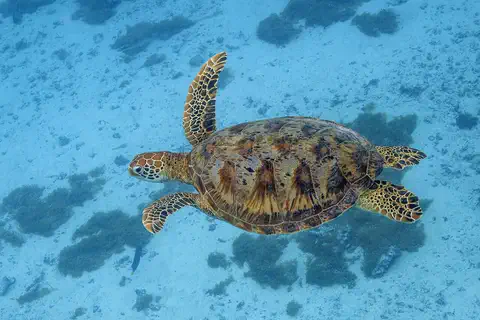
Green sea turtle
The green sea turtle is the largest sea turtle with a hard shell. It lives in warm seas around the world and, unlike other sea turtles, grown-ups eat mostly seagrass and algae. Females swim hundreds or even thousands of kilometers to lay their eggs on the beaches where they hatched long ago.
-
 Watch
Animal
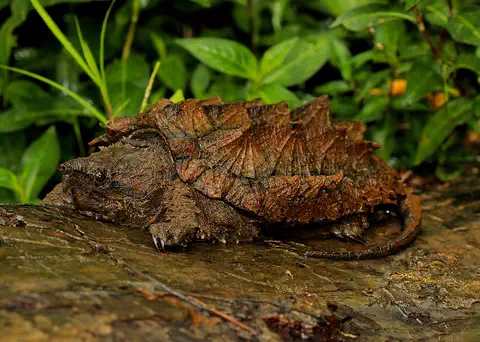
Alligator snapping turtle
The alligator snapping turtle is the largest freshwater turtle in the United States. It lies still on the bottom of rivers and lakes with its mouth open, wiggling a worm-like lure on its tongue to trick fish into swimming close. Its numbers have fallen, and it is now endangered.
-
 Watch
Animal
Aldabra giant tortoise
The Aldabra giant tortoise is one of the largest land tortoises on Earth. Wild ones live on Aldabra Atoll, a ring of coral islands in the Indian Ocean, where more than 100,000 of them graze, browse and shape the land like elephants do in Africa. They can live for more than 100 years.
-
 Watch
Animal
American crocodile
The American crocodile is a large reptile of warm coasts and mangrove swamps, from the southern tip of Florida through Mexico, Central America, the Caribbean and northern South America. It is shy, it basks in the sun to warm up, and mother crocodiles carry their babies to the water.
For parents & teachers
What children will learn
- Identify a red-eared slider by its red stripe and striped skin.
- Explain why turtles bask and how nest temperature sets hatchling sex.
- Explain how the pet trade spread sliders and why pets must never be released.
- Describe how released pets can harm native wildlife.
Recommended ages: 3 to 17 · About 15 minutes
Talk about it
- Why might a turtle that is common at home become a problem in another country?
- A slider can live 30 years or more. What should a family think about before getting one?
- Why do you think young sliders eat more animals than grown-up sliders do?
Try at home or in class
- Put two thermometers outside, one in the sun and one in the shade, and compare them after 20 minutes: that is why sliders bask.
- Cut a paper oval 20 centimeters long to show an adult slider's shell, and a 3-centimeter one for a hatchling.
Key vocabulary: bask, carapace, plastron, introduced species, omnivore, native
Where these facts come from
- GBIF Backbone Taxonomy and GBIF Occurrence Search , Global Biodiversity Information Facility (CC0 1.0 (backbone); occurrence counts are facts derived from records under CC0, CC BY and CC BY-NC)
- Trachemys scripta elegans (Red-eared Slider) fact sheet , U.S. Geological Survey, Nonindigenous Aquatic Species
- Trachemys scripta (pond slider) , Animal Diversity Web, University of Michigan Museum of Zoology
- Trachemys scripta elegans, Global Invasive Species Database , IUCN SSC Invasive Species Specialist Group
- Trachemys scripta (Pond Slider), Red List assessment 2010 , IUCN Red List of Threatened Species
- File:A beautiful turtle sitting on a branch.jpg (photo details: Natura 2000 site GR3000006, Greece) , Wikimedia Commons
- Wikidata , Wikimedia Foundation (CC0 1.0)
- Wikimedia Commons , Wikimedia Foundation (Per file: Public domain, CC0, CC BY or CC BY-SA only (credited on each page))
Checked, not yet human-reviewed. Last updated October 28, 2026. Spotted a mistake? Tell us.