
Animal
Springbok
The springbok is a fast antelope from southern Africa. When it is excited, it jumps high into the air with stiff legs. It eats grass and leaves.
The springbok is a slim, brown and white antelope of the dry plains of southern Africa. When it is excited or alarmed, it pronks: it bounces high with stiff legs and can lift a hidden crest of white hair on its back. It can live on plants without drinking. There are millions of springbok, and their numbers are growing.
Antidorcas marsupialis is a mixed-feeding antelope of the arid south-west of Africa, placed in its own genus because of the skin fold on its back that hides an erectile white crest. It is listed as Least Concern (IUCN; assessed 2016, published 2016) with an increasing trend and an estimated 2 to 2.5 million animals, many of them on private game farms.
Photo: Giles Laurent, CC BY-SA 4.0, via Wikimedia Commons
Meet the springbok
The springbok is a slim antelope.
It is brown and white. It has a dark stripe on its side and curly, ringed horns.
The springbok is a slim antelope that stands up to about 87 centimeters at the shoulder and weighs 27 to 48 kilograms. Its coat is pale to rich cinnamon brown, with white on the head, ears, belly, backs of the legs, rump and tail. A heavy dark stripe runs along each side.
Both males and females have ringed horns, but the females' are smaller and thinner.
Britannica's account (by Richard Estes) gives a shoulder height of 69 to 87 centimeters and a mass of 27 to 48 kilograms. Of the several subspecies, which are adapted to different climates, the Highveld-Karoo springbok is the smallest and the Kaokoveld form of Namibia the largest. The coat is pale to rich cinnamon brown with extensive white on the head, ears, underparts, backs of the legs, rump and tail, set off by a heavy black side stripe, a narrow cheek stripe and a dark tail tip.
The heavily ringed horns are 35 to 49 centimeters long, shaped like a stethoscope with hooked tips pointing inward, and smaller and thinner in females. Springbok belong to the gazelle tribe, Antilopini, of the family Bovidae, but are placed in their own genus because of a skin fold along the back that hides a crest of white hair.
Quick facts
- Group
- Mammal
- Height
- 0.69 to 0.87 m
- Weight
- 27 to 48 kg
- Top speed
- up to 88 km/h
- Lifespan in the wild
- 7 to 9 years
Dry plains of the south-west
Springbok live in southern Africa.
They live on dry, open plains with grass and low bushes.
Springbok live in the dry, open country of southern Africa: in Namibia, Botswana, South Africa and the south-west corner of Angola. They live on grasslands, in dry shrubland and at the edge of deserts, from sea level up to about 2,000 meters.
They do not live in wooded savannas. In South Africa, hunting and disease wiped them out across much of the country in the 1800s. Since then, people have brought them back to parks and farms, and many springbok now live on private game farms.
The IUCN assessment lists the species as extant in Angola, Botswana, Namibia and South Africa, with presence uncertain in Lesotho, from sea level to 2,000 meters. Its historical range covered the central and western parts of southern Africa with marginal extensions into south-western Angola, where numbers are now greatly reduced, and the western lowlands of Lesotho. Habitats are savanna, shrubland, grassland and desert.
In South Africa it was exterminated over much of its range in the late 1800s by hunting and rinderpest; it has since been reintroduced widely, and introduced herds now also live outside the natural range. It is absent from woodland savanna, almost certainly because of heartwater, a disease to which it shows no resistance (IUCN).
Continent
Its habitats


Where can you find this animal?
- Lives here naturally · Countries and seas named by a scientific source
- Sightings recorded · Records of wild sightings (GBIF)
Lives here naturally · Countries and seas named by a scientific source
Dry grasslands, shrublands, savannas and desert edges of south-western and southern Africa, from sea level to about 2,000 meters; in Angola only in the far south-west, in greatly reduced numbers. Lesotho (presence uncertain) is left off. It lives in only part of each country shown, and many herds are on private land.
Places: Angola, Botswana, Namibia and South Africa.
Source: iucn-red-list · checked October 2026
Sightings recorded · Records of wild sightings (GBIF)
Counts of GBIF records of wild observations (human and machine) and preserved specimens. Records include introduced populations, vagrants, escaped or released animals and misidentifications, so a country with records is not necessarily part of the native range.
Wild sightings have been recorded in Namibia, South Africa, Botswana, Angola, Germany, United States, Eswatini, Kenya and 6 more places.
Source: gbif · checked October 2026
Range maps show where scientists say an animal lives, often country by country. An animal may live in only part of a country shown, and sightings records can include animals that wandered far from home.
Grass, leaves and melons
Springbok eat plants.
They eat grass when it rains. When it is dry, they eat leaves and melons.
Springbok change their food with the seasons. In the rainy season they graze on young, juicy grass. In the dry season they browse on leaves, flowers and other small plants, and eat wild tsama melons.
Springbok drink water when they find it, but they do not need to. They can live on leaves and other plants that hold at least a little water for as long as they need to, which helps them survive in very dry places.
The springbok is a mixed feeder, comparable to Thomson's gazelle: it grazes in the rainy season and browses on foliage, forbs and tsama melons in the dry season (Britannica). The IUCN describes it as primarily a browser that also takes grass, favoring young, succulent grass before it becomes woody. In the hot, dry season it eats flowers, which hold about twice the water of the grass it eats when water is plentiful (Animal Diversity Web).
It drinks when water is available but can subsist indefinitely on browse with a water content of at least 10 percent, so it does not depend on water holes, a great advantage in a drought-prone climate.
Did you know?
Long ago, springbok traveled in giant herds.
Springbok once made huge journeys in vast herds called treks, which no longer happen.
Mass migrations (treckbokken) once crossed southern Africa; they no longer occur (IUCN).
Horns, stripes and a hidden crest
A springbok has a secret patch of white hair on its back.
It can show the white patch when it jumps.
Along the middle of a springbok's back is a fold of skin. Most of the time it stays closed. When the springbok is excited, the fold opens and a crest of long white hair stands up, joining the white rump into one big white patch.
The springbok's scientific name, marsupialis, refers to this hidden pouch. Springbok are fast too: they have been timed at 88 kilometers per hour.
A skin fold running from the mid-back to the rump conceals a crest of white hair that can be erected when the animal is excited; the name marsupialis refers to this concealed pouch, which is lined with sebaceous scent glands (Britannica). The crest can be raised on its own, but in the full display it merges with the white rump patch.
Springbok have been clocked at 88 kilometers per hour, as fast as any gazelle, yet cheetahs can outrun them over a short distance and African wild dogs over a long one. Larger males carry horns of about 36 to 48 centimeters (Animal Diversity Web).
Spring babies
A springbok mother has one baby.
Most babies are born in spring, before the rains come.
Springbok mate at the end of the rainy season, when they are in their best condition. About six months later, in October and November, most babies are born. That is spring in southern Africa, just before the next rains. A mother usually has one baby, which weighs about 4 kilograms.
The timing can shift by as much as two months, which helps springbok cope with the changeable weather of dry country. Young females can become pregnant when only six or seven months old, but males take two years to grow up.
The annual rut begins at the end of the rainy season, when the animals are in peak condition, and most young are born about six months later, in October and November, shortly before the rains (Britannica); Grzimek gives a gestation of about 5.75 months. Timing can vary by as much as two months, an adaptive response to the unpredictable arid climate. A single young is usual, with a birth mass of about 4.4 kilograms (Wikidata, citing a 2004 scientific account of the species).
Females can conceive as early as six to seven months of age, while males take two years to mature. Animal Diversity Web gives an average life expectancy of 7 to 9 years, and the IUCN uses a generation length of 4.2 years.
Pronking
Springbok jump high with stiff legs.
This is called pronking. They do it when they are excited or scared.
When a springbok is excited or frightened, it may start pronking: a series of high, stiff-legged bounces with its back bent, its head low and its hooves bunched together. The leaps can be up to 3.5 meters high, and the white crest on its back may open.
In the mating season, males guard territories. They grunt loudly, attack bushes with their horns and leave piles of dung. Outside the mating season, males and females form mixed herds that gather at water holes and fresh green plants after thunderstorms.
Pronking is a series of stiff-legged vertical leaps, up to 3.5 meters high, made with the head down, hooves bunched and back arched (Animal Diversity Web); the full display combines bowed back and lowered neck with the spinal crest and rump patch merged into one big white patch (Britannica). The leaps are said to distract predators such as lions and cheetahs.
Rutting males defend territories of 25 to 70 hectares with loud grunts, horning vegetation and ritualized middens of urine and dung. Outside the rut, mixed herds gather at water holes and at flushes of growth after local thunderstorms. Springbok once made huge migrations, called treks; these no longer happen, but seasonal concentrations still occur in parts of the Kalahari (IUCN).
Did you know?
A springbok hides a patch of white hair on its back.
A fold of skin on a springbok's back opens to show a crest of white hair.
The name marsupialis refers to the dorsal skin pouch, lined with scent glands.
Millions of springbok
There are lots and lots of springbok.
Many live in big parks. Many more live on farms.
The springbok is listed as Least Concern, and its numbers are growing. Experts estimated about 2 to 2.5 million springbok in southern Africa, and about 730,000 in Namibia alone.
Long ago, enormous herds traveled across the plains. Those great journeys no longer happen. Today springbok live in national parks such as Etosha in Namibia and the Kgalagadi Transfrontier Park, and many more live on private game farms, where they are valued for their meat.
The IUCN lists Antidorcas marsupialis as Least Concern (IUCN SSC Antelope Specialist Group; assessed 14 June 2016, published 2016), increasing, with no major threats to its long-term survival. Skinner (2013) estimated 2 to 2.5 million animals in southern Africa, including about 730,000 in Namibia, and East (1999) estimated that about 60 percent lived on private land and 12 percent in protected areas.
Springbok are well represented in protected areas, including Etosha and Namib-Naukluft in Namibia, Makgadikgadi-Nxai Pan in Botswana, the Kgalagadi Transfrontier Park shared by Botswana and South Africa, and Karoo National Park; the status of the herd in Angola's Iona National Park, estimated at 2,500 in 1975, is unknown. Springbok are hunted and traded for meat, skins and horns, and are among the most valued species in southern Africa's game-ranching industry.
IUCN Red List
How is the springbok doing in the wild?
- Least Concern (this animal)
- Near Threatened
- Vulnerable
- Endangered
- Critically Endangered
- Extinct in the Wild
- Extinct
Least Concern
Not at risk of disappearing from the wild right now.
See the IUCN Red List assessment · The IUCN Red List of Threatened Species 2022.2
Amazing facts
-
Springbok can jump very high.
A pronking springbok can bounce up to 3.5 meters into the air.
Pronking leaps reach up to 3.5 meters, with the head down and the back arched.
-
Springbok can go a long time without drinking.
Springbok can live on leaves alone, as long as the plants hold at least a little water.
They can subsist indefinitely on browse with at least 10 percent water content.
-
A springbok hides a patch of white hair on its back.
A fold of skin on a springbok's back opens to show a crest of white hair.
The name marsupialis refers to the dorsal skin pouch, lined with scent glands.
-
Long ago, springbok traveled in giant herds.
Springbok once made huge journeys in vast herds called treks, which no longer happen.
Mass migrations (treckbokken) once crossed southern Africa; they no longer occur (IUCN).
Words to know
- pronking
- jumping high again and again with stiff legs and an arched back
- antelope
- a hoofed, plant-eating animal with horns, related to cattle and goats
- browse
- to eat leaves, shoots and flowers from bushes and small plants
- graze
- to eat grass
- crest
- a line of raised hair or feathers on an animal's back or head
- territory
- an area an animal guards against others of its kind
Discovery challenge
-
What is it called when a springbok jumps up and down with stiff legs?
What is the springbok's stiff-legged jumping display called?
What is the name of the springbok's stiff-legged leaping display?
- Pronking
- Swimming
- Hibernating
Show the answer
Pronking
Pronking. Springbok pronk when they are excited or scared.
Pronking: high, stiff-legged bounces up to 3.5 meters with the back arched.
Pronking, in which the spinal crest and rump patch merge into one white display.
-
What does a springbok hide on its back?
What is hidden in the fold of skin along a springbok's back?
What does the dorsal skin fold of Antidorcas marsupialis conceal?
- A crest of white hair
- A baby springbok
- Spare water
Show the answer
A crest of white hair
A patch of white hair. It stands up when the springbok is excited.
A crest of white hair that stands up when the springbok is excited.
An erectile crest of white hair; the pouch is lined with sebaceous scent glands.
-
How can springbok live without drinking?
How can springbok live in places with little water?
How does the springbok cope without surface water?
- They get water from the plants they eat
- They store water in their horns
- They sleep until it rains
Show the answer
They get water from the plants they eat
They get water from the plants they eat.
They get water from leaves, flowers and melons, so they do not have to drink.
They can subsist indefinitely on browse with at least 10 percent water.
-
Where do springbok live?
In which part of Africa do springbok live?
Which region of Africa is the springbok native to?
- Southern Africa
- North Africa
- The rainforests of central Africa
Show the answer
Southern Africa
In the south of Africa.
Southern Africa: Namibia, Botswana, South Africa and south-western Angola.
South-western and southern Africa, in four range countries (IUCN).
Places where you might see it
-
 Watch
 Country
Namibia
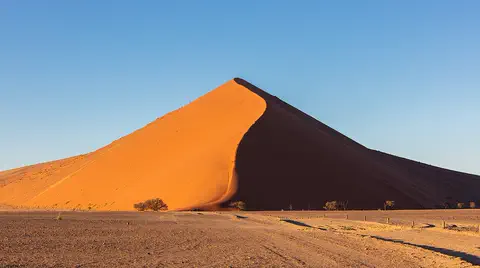
Namibia lies on the southwestern coast of Africa. The Namib, a desert of huge dunes kept alive by sea fog, runs along its coast, a high plateau with farms and wildlife fills its middle, and the dry Kalahari lies to the east. Namibia became independent in 1990.
-
 Watch
 Country
South Africa
South Africa is the southernmost country in Africa, with the Atlantic Ocean on one side and the Indian Ocean on the other. A high plateau covers most of it, about 63.5 million people (2026) live there, and it has 12 official languages and three capital cities.
-
 Watch
 Country
Botswana
Botswana is a landlocked country in the middle of southern Africa. Deep Kalahari sand covers most of it, but in the north the Okavango River spreads into a huge green delta full of wildlife. Botswana became independent in 1966 and has grown more prosperous, helped by diamonds.
Experiments to try
Explore next
-
 Watch
Animal
Thomson's gazelle
Thomson's gazelle is a small, slim antelope of the grassy plains of Kenya and Tanzania. A bold black stripe runs along its side, between its reddish-brown back and white belly. It eats mostly short grass and can run at up to 70 kilometers per hour. Herds in the Serengeti travel with the seasons, like the wildebeest and zebras. It is listed as Least Concern, but its numbers have fallen.
-
 Watch
Animal
Impala
The impala is a slender, reddish-brown antelope of the savannas of eastern and southern Africa. It can both graze on grass and browse on leaves, lives in herds, and when startled the whole herd bursts into spectacular leaps. Only males have the long, curving horns.
-
 Watch
3D
Animal
Cheetah
The cheetah is the fastest land animal. It can go from standing still to 72 kilometers per hour in about two and a half seconds, and its top speed is around 100 kilometers per hour, as fast as a car on a highway. Cheetahs live mostly in Africa, with a very small group in Iran.
-
 Watch
Animal
Meerkat
Meerkats are small members of the mongoose family that live in dry, open country in southern Africa. They live in groups called mobs, dig for insects all day, and take turns as lookouts, standing tall and calling out if an eagle or jackal comes near. Everyone helps raise the babies.
-
 Watch
3D
Animal
African wild dog
The African wild dog, or painted dog, has a patchy coat unlike any other dog's, big round ears and only four toes on its front feet. It lives in close packs that hunt together, share food and care for the pups. It is endangered: the IUCN estimated in 2025 that only about 1,676 adults are left in the wild.
-
Watch
Country
Namibia
Namibia lies on the southwestern coast of Africa. The Namib, a desert of huge dunes kept alive by sea fog, runs along its coast, a high plateau with farms and wildlife fills its middle, and the dry Kalahari lies to the east. Namibia became independent in 1990.
-
Watch
Country
South Africa
South Africa is the southernmost country in Africa, with the Atlantic Ocean on one side and the Indian Ocean on the other. A high plateau covers most of it, about 63.5 million people (2026) live there, and it has 12 official languages and three capital cities.
-
Watch
Country
Botswana
Botswana is a landlocked country in the middle of southern Africa. Deep Kalahari sand covers most of it, but in the north the Okavango River spreads into a huge green delta full of wildlife. Botswana became independent in 1966 and has grown more prosperous, helped by diamonds.
For parents & teachers
What children will learn
- Describe how the springbok's diet changes with the seasons.
- Explain how an animal can live in dry places without drinking.
- Describe the springbok's pronking display.
- Understand how a species can recover after being wiped out in much of its range.
Recommended ages: 3 to 17 · About 15 minutes
Talk about it
- Why might it help a springbok to have its babies just before the rains?
- What do you think a predator sees when a springbok pronks?
- Most springbok now live on farms. Is that good, bad or both for the species?
Try at home or in class
- Use a tape measure to mark 3.5 meters up a wall or along the floor to see how high a pronking springbok can leap.
- Weigh a slice of melon, leave it out to dry for a day, and weigh it again to see how much water it held.
Key vocabulary: pronking, antelope, browse, graze, crest, territory
Where these facts come from
- GBIF Backbone Taxonomy and GBIF Occurrence Search , Global Biodiversity Information Facility (CC0 1.0 (backbone); occurrence counts are facts derived from records under CC0, CC BY and CC BY-NC)
- Wikidata , Wikimedia Foundation (CC0 1.0)
- The IUCN Red List of Threatened Species , International Union for Conservation of Nature (IUCN terms of use (no redistribution of Red List data or range maps))
- Antidorcas marsupialis (IUCN SSC Antelope Specialist Group, assessed 14 June 2016, published 2016) , IUCN Red List of Threatened Species
- Antidorcas marsupialis: range, population, habitat and threats text , IUCN Red List of Threatened Species
- Springbok (Richard Estes) , Encyclopaedia Britannica
- Antidorcas marsupialis (springbok) , Animal Diversity Web, University of Michigan
- File:174 Male Springbok in Etosha National Park Photo by Giles Laurent.jpg (Etosha National Park, Namibia, 29 July 2025) , Wikimedia Commons
- Wikimedia Commons , Wikimedia Foundation (Per file: Public domain, CC0, CC BY or CC BY-SA only (credited on each page))
Checked, not yet human-reviewed. Last updated November 1, 2026. Spotted a mistake? Tell us.