
Animal
Stoat
The stoat is a small, long, quick animal. It has brown fur, a white tummy and a black tip on its tail.
The stoat is a small, slender hunter with a long body, short legs and a black-tipped tail. It lives across the northern parts of Europe, Asia and North America, and in snowy places some stoats turn white in winter.
Mustela erminea is a small mustelid with a circumboreal range across Europe, Asia and North America. A specialist predator of small mammals, it is famous for its white winter coat, called ermine, and for delayed implantation. It is Least Concern globally but an introduced pest in New Zealand.
Photo: Marton Berntsen, crop by User:MPF, CC BY-SA 4.0, via Wikimedia Commons
Meet the stoat
The stoat is a small, quick animal with a long, thin body.
It has brown fur on its back and white fur on its tummy. The end of its tail is black. In snowy places, some stoats turn white in winter.
The stoat is a member of the weasel family, the mustelids. It has a long, thin body, short legs and a tail that ends in a bushy black tip. Most stoats are about 30 to 40 centimeters long and weigh only 200 to 400 grams, about as much as a can of soup.
In summer a stoat is sandy-brown to chestnut on top and creamy white underneath. In snowy places some stoats turn white for winter. That white fur is called ermine, and stoats are sometimes called ermines too.
Mustela erminea is a small, slender carnivore of the family Mustelidae, typically 30 to 40 centimeters long and 200 to 400 grams (Woodland Trust). It is larger than the weasel and told apart by its longer tail with a bushy black tip, and by the straight line along its sides where brown back meets pale belly (New Zealand Department of Conservation).
How many kinds of stoat there are is debated. A 2021 genetic study by Colella and colleagues proposed three species: Mustela erminea in Europe, Asia and the far northwest of North America, the American ermine (M. richardsonii) across the rest of North America and Greenland, and the Haida ermine (M. haidarum) on Haida Gwaii, off British Columbia, and a few nearby islands. The American Society of Mammalogists' Mammal Diversity Database now lists all three, but the IUCN's 2016 global assessment still treats the stoat as one species, and this page follows it. Its white winter fur, called ermine, was once heavily traded: about 30,000 pelts were sold in Finland alone in the 1930s (IUCN).
Quick facts
- Group
- Mammal
- Length
- 0.3 to 0.4 m
- Weight
- 0.2 to 0.4 kg
Where it lives
Stoats live in the cool, northern parts of the world.
They live in Europe, Asia and North America. They like places with lots of hiding spots and lots of mice and voles.
Stoats live across the northern half of the world, in Europe, Asia and North America, from the Arctic all the way south to places like Portugal and northern Virginia. They live from the seashore up to high mountains.
Stoats like edges and in-between places: the borders of forests, scrub, meadows, marshes, riverbanks and hedgerows, where there are plenty of voles and mice. They keep to cover and often travel along hedges and stone walls, out of sight of foxes and birds of prey.
The IUCN describes a circumboreal range from Greenland and the Canadian and Siberian Arctic islands south to about 35 degrees north, with much variation: to central California, northern Arizona and northern Virginia in North America, Portugal in Europe, and northeastern China and the western Himalaya in Asia. It lives from sea level to at least 4,050 meters.
Stoats use successional and forest-edge habitats, scrub, alpine meadows, marshes, riverside woods, hedgerows and riverbanks with many small mammals, as well as tundra and mountain tops, while avoiding dense forest and desert. People introduced stoats to New Zealand in the late 1800s.
Continents
Its habitats


Where can you find this animal?
- Brought here by people · Countries and seas named by a scientific source
- Lives here naturally · Countries and seas named by a scientific source
- Sightings recorded · Records of wild sightings (GBIF)
Brought here by people · Countries and seas named by a scientific source
Brought to New Zealand by people from as early as 1879 to control rabbits; now a serious threat to native birds there.
Places: New Zealand.
Source: iucn-red-list · checked October 2026
Lives here naturally · Countries and seas named by a scientific source
Northern Europe, Asia and North America, from the Arctic south to about 35 degrees north: Alaska, Canada and the northern United States, most of Europe, and northern and central Asia including Japan's Hokkaido and Honshu mountains. Stoats live in only part of some countries shown, such as China, India and the United States.
Places: Afghanistan, Albania, Austria, Azerbaijan, Belarus, Belgium, Bosnia & Herz., Bulgaria and 45 more places.
Source: iucn-red-list · checked October 2026
Sightings recorded · Records of wild sightings (GBIF)
Counts of GBIF records of wild observations (human and machine) and preserved specimens. Records include introduced populations, vagrants, escaped or released animals and misidentifications, so a country with records is not necessarily part of the native range.
Wild sightings have been recorded in Switzerland, France, UK, Netherlands, Norway, United States, Canada, Denmark and 43 more places.
Source: gbif · checked October 2026
Range maps show where scientists say an animal lives, often country by country. An animal may live in only part of a country shown, and sightings records can include animals that wandered far from home.
What it eats
Stoats eat small animals like voles, mice and rabbits.
A stoat can run into a mouse's tunnel to find it. It can also climb trees to look for eggs in birds' nests.
Stoats are carnivores and expert hunters of small mammals such as voles, mice and rats. In Britain their favorite prey is the rabbit, even though a rabbit can be more than five times bigger than a stoat. They also eat birds and eggs.
A stoat's long, thin body lets it chase mice and voles right into their underground tunnels, and it is a good climber, so it can reach birds' nests in trees. Stoats hunt by day and by night.
The IUCN calls the stoat a specialist predator of small mammals, especially voles, that occasionally eats fruit, earthworms, insects, eggs and birds; its local distribution tracks rodents and rabbits and hares. In Britain the rabbit is its main prey, and stoat numbers fell sharply when the disease myxomatosis devastated British rabbits in the 1950s and 1960s (Game & Wildlife Conservation Trust).
Its narrow body lets it follow rodents into burrows, and it climbs well. Stoats are active day and night. Because prey numbers rise and fall, so do stoat populations, especially in the far north.
Did you know?
Stoats can swim across water to reach islands.
Stoats can swim across up to 1.5 kilometers of water to reach islands.
New Zealand's Department of Conservation reports stoats swimming water gaps of up to 1.5 kilometers, and possibly reaching farther islands by rafting on driftwood.
An amazing body
A stoat's body is long and thin, like a furry tube.
It can squeeze into small holes. Its tail has a black tip. In winter, some stoats turn white, but the tail tip stays black.
A stoat's long, thin body and short legs let it slip into burrows and between rocks. In summer its back is brown and its front is white, with a neat straight line between the two colors.
In snowy places some stoats turn completely or partly white in winter, which helps them blend in with the snow. The black tip of the tail always stays black. Scientists think this black tip may distract birds of prey, so they aim at the tail instead of the stoat's body.
The elongated, short-legged mustelid body is suited to pursuing prey underground. The summer coat is sandy-brown to chestnut above and white to cream below, divided by a straight line along the flanks. In colder, snowier regions stoats molt into a white winter coat, the ermine, which helps them blend in with snow; in milder areas they may stay brown or turn patchy, but the tail tip always remains black (Woodland Trust).
One idea is that the black tail tip draws the attack of a bird of prey away from the stoat's body. Stoats are agile climbers and can swim across water gaps of up to 1.5 kilometers to reach islands (New Zealand Department of Conservation).
Growing up
Baby stoats are called kits.
They are born in spring, often many at a time. Their mother looks after them in a hidden den until they can hunt.
Stoats have their babies, called kits, in spring. A litter usually has about 6 to 12 kits, born in a hidden den such as a hollow tree or an old rabbit burrow. The mother looks after them until they can take care of themselves at about 12 weeks old.
Stoats have a surprising trick called delayed implantation. A young female can mate when she is only a few weeks old, but her kits are not born until about nine to ten months later.
A litter of around 6 to 12 kits is born in spring in a den taken over from another animal, such as a rabbit burrow or a hole in a tree, and the female cares for them until they are independent at around 12 weeks (Woodland Trust; New Zealand Department of Conservation).
The stoat's reproductive timing is unusual. Females can become pregnant only a few weeks after their own birth, but delayed implantation means the young are not born until about nine to ten months later. Young stoats disperse widely: in New Zealand, juveniles have traveled more than 70 kilometers in two weeks.
A busy life
Stoats mostly live alone.
They are always busy, running, climbing and looking for food. Stoats can even swim!
Stoats are solitary: each one lives on its own most of the year, and they only meet to breed. They are active by day and at night.
Stoats are hard to see because they dash quickly from cover to cover. Some people say stoats "dance", leaping and twisting near rabbits. Nobody is sure whether this is really a hunting trick or something else, so scientists are still curious about it.
Stoats are solitary for most of the year and active day and night. Male home ranges vary from 4 to 200 hectares, usually 10 to 40 hectares (IUCN). Populations are unstable, because stoats live short lives and breed fast, and they rise and fall with their small-mammal prey.
Stoats have been seen leaping and twisting in a so-called dance near rabbits. The Woodland Trust notes that it is unclear whether this is a real hunting technique or the result of a parasite infection, a nice example of a behavior scientists have not fully explained.
Did you know?
Some stoats turn white in winter, but the tail tip stays black.
In snowy places some stoats turn white in winter. The white fur is called ermine, but the tip of the tail always stays black.
Stoats in colder regions molt into white ermine fur in winter; in milder areas they may stay brown or turn patchy, and the tail tip is black in every coat.
Stoats and people
There are lots of stoats in the world.
But stoats did not live in New Zealand until people brought them there long ago. Now people there work to protect native birds from stoats.
Stoats are listed as Least Concern, because they live across a huge area and are common in many places. Long ago, many were trapped for their white winter fur.
In New Zealand, the story is different. People brought stoats there as early as 1879 to control rabbits. But stoats became a serious danger to many of New Zealand's native birds. Today people in New Zealand trap stoats to protect birds such as kiwi.
The IUCN lists the stoat as Least Concern (assessed 2015, published 2016, marked as needing an update) with a stable trend: it is widespread and abundant with no major range-wide threats, though trapping, habitat loss and declining prey can matter locally, and it is still hunted for fur in Russia.
In New Zealand stoats were introduced, along with weasels and ferrets, from as early as 1879 to control rabbits. The Department of Conservation calls them the number-one killer of many of the country's endangered native species, including young kiwi and hole-nesting birds, and runs predator control toward a goal called Predator Free 2050.
IUCN Red List
How is the stoat doing in the wild?
- Least Concern (this animal)
- Near Threatened
- Vulnerable
- Endangered
- Critically Endangered
- Extinct in the Wild
- Extinct
Least Concern
Not at risk of disappearing from the wild right now.
See the IUCN Red List assessment · The IUCN Red List of Threatened Species 2022.2
Amazing facts
-
Some stoats turn white in winter, but the tail tip stays black.
In snowy places some stoats turn white in winter. The white fur is called ermine, but the tip of the tail always stays black.
Stoats in colder regions molt into white ermine fur in winter; in milder areas they may stay brown or turn patchy, and the tail tip is black in every coat.
-
Stoats can swim across water to reach islands.
Stoats can swim across up to 1.5 kilometers of water to reach islands.
New Zealand's Department of Conservation reports stoats swimming water gaps of up to 1.5 kilometers, and possibly reaching farther islands by rafting on driftwood.
-
A stoat can catch a rabbit much bigger than itself.
In Britain, rabbits are a stoat's favorite prey, even though a rabbit can be more than five times bigger.
Rabbits, which can be more than five times a stoat's size, are its main prey in Britain; stoat numbers fell when myxomatosis devastated rabbits in the 1950s and 1960s.
-
Nobody knows for sure why stoats sometimes "dance".
Stoats have been seen leaping and twisting in a kind of dance. Scientists are not sure if it is a hunting trick.
The stoat's so-called dance near rabbits may be a hunting technique or a result of parasite infection; the question is still open.
Words to know
- mustelid
- a member of the weasel family, which includes stoats, weasels, otters and badgers
- ermine
- the white winter fur of a stoat, and another name for the stoat
- kit
- a baby stoat
- delayed implantation
- a pause in a pregnancy before the babies start to grow
- introduced species
- an animal that people brought to a place where it did not live before
- camouflage
- colors or patterns that help an animal blend in with its surroundings
Discovery challenge
-
What color is the tip of a stoat's tail?
What color is the tip of a stoat's tail, even in winter?
Which color does the stoat's tail tip keep in both its summer and winter coats?
- White
- Black
- Orange
Show the answer
Black
The tip of a stoat's tail is black.
The bushy tail tip stays black all year, even when the rest of the stoat turns white.
The black tip persists in the white ermine coat and may divert attacks by birds of prey.
-
What happens to some stoats in snowy winters?
What happens to the fur of some stoats in snowy places in winter?
How does the coat of many northern stoats change in winter?
- It turns white
- It turns green
- It all falls out
Show the answer
It turns white
Some stoats turn white, like the snow.
Some stoats turn completely or partly white, which helps them blend in with the snow.
Stoats in colder, snowier regions molt into white ermine; those in milder areas may stay brown or turn patchy.
-
Why can a stoat chase a mouse into its hole?
What lets a stoat follow mice and voles into their tunnels?
Which body feature lets a stoat pursue rodents into burrows?
- Its long, thin body
- Its big wings
- Its very long neck
Show the answer
Its long, thin body
A stoat is long and thin, so it fits into small holes.
Its long, thin body and short legs let it squeeze into tunnels.
The elongated, slender mustelid body with short limbs allows pursuit of rodents underground.
-
Where did people bring stoats long ago?
To which country did people bring stoats, where they now threaten native birds?
Where are stoats an introduced predator that threatens native birds?
- Norway
- Canada
- New Zealand
Show the answer
New Zealand
People brought stoats to New Zealand. Now people there protect birds like kiwi.
Stoats were brought to New Zealand from 1879 to control rabbits, and now people trap them to protect native birds.
Introduced to New Zealand from 1879, stoats are a leading cause of losses among endangered native birds; Norway and Canada are within the native range.
Places where you might see it
-
 Watch
 Country
Norway
Norway stretches along the western side of the Scandinavian Peninsula, far into the Arctic. Deep, narrow inlets of the sea called fjords cut into its mountains, and about 5.6 million people live there, many of them near Oslo, the capital.
-
 Watch
 Country
Canada
Canada is the second-largest country in the world, stretching across the north of North America from the Atlantic to the Pacific and up into the Arctic. It has the Rocky Mountains, thousands of islands and about 42 million people, who speak English, French and many other languages.
-
 Watch
 Country
New Zealand
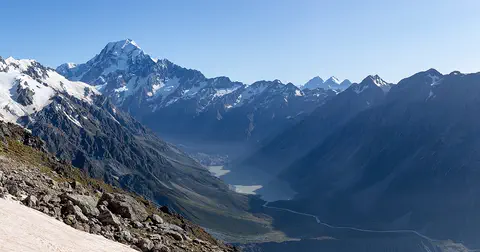
New Zealand, also called Aotearoa, is an island country in the South Pacific. Its two main islands have snowy mountains, glaciers, volcanoes and deep fiords, and about 5.36 million people lived there in 2026.
Explore next
-
 Watch
Animal
Red fox
The red fox is a small, clever member of the dog family with an orange coat, black legs and a bushy, white-tipped tail. It lives across North America, Europe, Asia and North Africa, more of the world than any other wild land carnivore, and has even moved into big cities.
-
 Watch
Animal
Arctic fox
The Arctic fox lives on the frozen tundra around the North Pole. Its coat changes color with the seasons, white or blue-gray in winter and brown or gray in summer, and it has short ears, a short nose and furry feet to keep the cold out. It eats lemmings, birds and leftovers from polar bears.
-
Watch
Country
Norway
Norway stretches along the western side of the Scandinavian Peninsula, far into the Arctic. Deep, narrow inlets of the sea called fjords cut into its mountains, and about 5.6 million people live there, many of them near Oslo, the capital.
-
Watch
Country
Canada
Canada is the second-largest country in the world, stretching across the north of North America from the Atlantic to the Pacific and up into the Arctic. It has the Rocky Mountains, thousands of islands and about 42 million people, who speak English, French and many other languages.
-
Watch
Country
New Zealand
New Zealand, also called Aotearoa, is an island country in the South Pacific. Its two main islands have snowy mountains, glaciers, volcanoes and deep fiords, and about 5.36 million people lived there in 2026.
-
 Watch
3D
Animal
European rabbit
The European rabbit is the wild rabbit that all pet and farm rabbits come from. It lives in groups in big underground tunnel homes called warrens. Its numbers have fallen in its first home in Spain, Portugal and France, but people have carried it to many other places, where it became a pest.
-
 Watch
Animal
Aardvark
The aardvark is a shy night digger of African savannas. It sniffs out ant and termite nests, rips them open with its spade-like claws and laps up the insects with a sticky tongue about 30 centimeters long. Its name means 'earth pig' in Afrikaans.
-
 Watch
Animal
African buffalo
The African buffalo is a huge, cow-like grazer with heavy, curving horns. It lives in herds that can number in the thousands, and a herd will rush to protect a calf in danger. It lives across much of Africa south of the Sahara, from open savannas to rainforests.
For parents & teachers
What children will learn
- Describe how the stoat's long, thin body suits hunting in tunnels.
- Explain seasonal coat change and camouflage, using the stoat's white winter fur.
- Locate the stoat's native range across the northern hemisphere.
- Understand what an introduced species is, using stoats in New Zealand as an example.
Recommended ages: 3 to 17 · About 15 minutes
Talk about it
- Why might turning white help a stoat in winter, and when might it be a problem?
- Why could an animal that is common in one country be a serious problem in another?
- Scientists are not sure why stoats 'dance'. How could you find out?
Try at home or in class
- Cut a brown and a white paper stoat shape and place each on white paper and on brown leaves: which hides best in each season?
- Measure 35 centimeters with a ruler and compare it with your arm to see how small a stoat is.
Key vocabulary: mustelid, ermine, kit, delayed implantation, introduced species, camouflage
Where these facts come from
- The IUCN Red List of Threatened Species , International Union for Conservation of Nature (IUCN terms of use (no redistribution of Red List data or range maps))
- GBIF Backbone Taxonomy and GBIF Occurrence Search , Global Biodiversity Information Facility (CC0 1.0 (backbone); occurrence counts are facts derived from records under CC0, CC BY and CC BY-NC)
- Mustela erminea, global Red List assessment (assessed 2015, published 2016) , IUCN Red List of Threatened Species
- Stoat (Mustela erminea) , Woodland Trust
- Stoats , New Zealand Department of Conservation
- Stoat Mustela erminea (National Gamebag Census overview) , Game & Wildlife Conservation Trust
- Mustela erminea (Beringian ermine); taxonomy notes citing Colella et al. 2021 , American Society of Mammalogists, Mammal Diversity Database
- Wikidata , Wikimedia Foundation (CC0 1.0)
- Wikimedia Commons , Wikimedia Foundation (Per file: Public domain, CC0, CC BY or CC BY-SA only (credited on each page))
Checked, not yet human-reviewed. Last updated October 27, 2026. Spotted a mistake? Tell us.