
City Europe
Plovdiv
Plovdiv is a big, very old city in Bulgaria. Its old town sits on rocky hills.
Plovdiv is the second-largest city in Bulgaria, on the rich plains of the Maritsa River, Universalis says. Its old town on rocky hills has Roman, Byzantine and Ottoman layers, and in 2019 it was a European Capital of Culture. Bulgaria's 2021 census counted 319,612 people.
Plovdiv, long the most populous Bulgarian city and now the second (Universalis), grew as a trading crossroads on the Maritsa plain between Istanbul and the Adriatic. Census 7 September 2021: 319,612; official estimate 31 December 2025: 333,994.
Photo: Adam Jones from Kelowna, BC, Canada, CC BY-SA 2.0, via Wikimedia Commons
Discover Plovdiv
Plovdiv is a big city in Bulgaria. Only one city in Bulgaria is bigger: Sofia, the capital.
Plovdiv's old town sits on rocky hills.
Universalis says Plovdiv was for a long time the most populous city in Bulgaria, and it is now the second. It is the center of the province of the same name and a center of culture.
Bulgaria's census of 7 September 2021 counted 319,612 people in Plovdiv. The National Statistical Institute's estimate for 31 December 2025 is 333,994.
Universalis: long the most populous of Bulgarian cities, Plovdiv, an important crossroads, was a major place of trade on the rich plains of the Maritsa and on the route between Istanbul and the Adriatic; it remains Bulgaria's second city (319,600 at the 2021 census), the administrative center of the province of the same name and a cultural hub.
National Statistical Institute via City Population (city of Plovdiv): census 1 February 2011 338,153; census 7 September 2021 319,612; estimate 31 December 2025 333,994 (rank 2, after Sofia).
- Country
- Bulgaria (center of the province of the same name)
- People in Plovdiv (census, 7 September 2021)
- 319,612
- Newer estimate (31 December 2025)
- 333,994
- Rank
- Bulgaria's second city (Universalis)
Red roofs from a hilltop
This photo was taken from the top of a hill. You can see lots of houses with red roofs and green trees. A rocky hill rises in the middle.
This photo looks over the old town of Plovdiv from Bunardzhik Hill on 10 July 2018. Houses with red-tiled roofs climb between green trees, and a bare rocky hill rises in the middle. Farther away, the city spreads out across a flat plain toward mountains on the horizon.
Universalis says the old town, at once Roman, Byzantine and Ottoman, clings to rocky peaks and draws many visitors with its unusual, well-kept heritage.
Commons: 'View over Old Town from Bunardzhik Hill - Plovdiv - Bulgaria - 01', Flickr photo by Adam Jones (transferred to Commons by the account Adam63; FlickreviewR passed), CC BY-SA 2.0, taken 10 July 2018; category Views of Plovdiv.
Universalis: the old town, at once Roman, Byzantine and Ottoman, clinging to rocky peaks, is very popular with tourists thanks to its singular and well-preserved heritage; archaeological sites (two Roman theaters) are particularly numerous. Wikidata: Bunardzhik (Q12274023), a hill, 0.39 km NW of the city point.
- Photo
- view over the Old Town from Bunardzhik Hill, 10 July 2018
- Bunardzhik
- a hill in Plovdiv, about 0.4 km from the city's Wikidata point (Wikidata)
- The old town
- Roman, Byzantine and Ottoman, clinging to rocky peaks (Universalis)
Layers on three hills
People have lived in Plovdiv for a very, very long time. Long ago, the Romans built a big theater there, and you can still see it today.
Bulgaria's entry for 'The Ancient Plovdiv' on UNESCO's tentative list says the first signs of people here date from the end of the third millennium BCE, more than 4,000 years ago. Over the Three Hills, layer after layer was left by Thracian, Hellenic and Roman cultures, the Middle Ages, the Ottoman period, the National Revival and the 20th century.
The entry calls the Antique Theatre one of the most impressive examples of theater building in the Roman provinces. Many houses in the old town come from the 18th and 19th centuries.
Tentative-list entry 'The Ancient Plovdiv' (submitted by Bulgaria 14 September 2004, criteria (ii)(iv)(vi); the State Party's text): the first evidence of human presence dates from the end of the 3rd millennium BC; the layers over the Three Hills hold marks of prehistory, Thracian, Hellenic and Roman cultures, the Middle Ages, the Ottoman period, the National Revival and the 20th century; the highest concentration of early layers is at the archaeological site 'Nebeth tepe'; the Antique Theatre is one of the most imposing examples of the theater architecture of the Roman provinces; the National Revival layer (18th-19th centuries) has the highest concentration and degree of preservation, a variety of Balkan vernacular architecture.
- First people
- evidence from the end of the 3rd millennium BCE (Bulgaria's World Heritage tentative-list entry)
- Layers
- prehistory, Thracian, Hellenic and Roman cultures, the Middle Ages, the Ottoman period, the National Revival and the 20th century
- Antique Theatre
- 'one of the most imposing examples' of theater building in the Roman provinces (tentative-list entry)
A crossroads on the plain
Long ago, traders passed through Plovdiv on a road that crossed the land. Today trains stop at the city's central station.
Universalis calls Plovdiv an important crossroads that was a major place of trade on the route between Istanbul and the Adriatic Sea. Bulgaria's tentative-list entry says its place on a transport corridor across the Balkans linked East and West even in the distant past.
Today trains stop at Plovdiv Central railway station, which Wikidata says opened in 1873.
Universalis: an important crossroads, a major trading place in the rich plains of the Maritsa and on the route between Istanbul and the Adriatic. Tentative-list entry: its position on the transport corridor crossing the Balkans secured a strategic place in communications between East and West since the remote past.
Wikidata (from the city point Q459): Plovdiv Central railway station (Q7205164), opened 1873, 0.86 km S.
- On an old route
- between Istanbul and the Adriatic (Universalis)
- East and West
- on a transport corridor crossing the Balkans (tentative-list entry)
- Plovdiv Central railway station
- about 0.9 km south of the city's Wikidata point; opened 1873 (Wikidata)
A plain, a river and rocky hills
Plovdiv sits on a wide, flat plain beside a river called the Maritsa. Its old town is up on rocky hills.
Universalis says Plovdiv lies in the rich plains of the Maritsa River, and that the city's factories process the farm products of the area. The old town clings to rocky peaks, and Bulgaria's tentative-list entry speaks of the Three Hills of the ancient town.
Big newer housing areas stand at the edges of the city and across the Maritsa. They rise above suburbs of low houses with small gardens that soon look like villages and countryside.
Universalis: the rich plains of the Maritsa; industries process the local farm products; the old town clings to rocky peaks; new large housing estates stand in several sectors at the city's edge and beyond the Maritsa, above suburbs of low houses with small gardens that soon take on a village and country look; Plovdiv's influence reaches the other towns of the plain and the Rhodope. Tentative-list entry: the Three Hills; the earliest layers are concentrated at the site 'Nebeth tepe'. Wikidata: Nebet Tepe (Q12288006) 1.35 km NE of the city point.
- River
- the Maritsa, with new housing areas on its far bank (Universalis)
- Land
- the rich plains of the Maritsa (Universalis)
- Nebet Tepe
- a hill in the old town, about 1.4 km northeast of the city's Wikidata point (Wikidata)
Factories, schools and culture
Many people in Plovdiv work in factories that make food and other things. The city also has schools, old Roman theaters and lots of visitors.
Universalis says Plovdiv's factories process farm products from the plain: canned fruit and vegetables and tobacco, along with machines and textiles. Since the end of the 1990s its work has become more varied. The Trakia industrial zone employs several tens of thousands of people in transport, food and new technology.
Plovdiv's schools, colleges and cultural centers make it a true provincial capital, and in 2019 it was named a European Capital of Culture.
Universalis: industries spread across the city process local farm products (fruit and vegetable canning, tobacco processing, machines, textiles), diversified from the end of the 1990s; only Sofia has more varied activities; industry still leads, notably the Trakia industrial zone, employing several tens of thousands in transport, agri-food and new technologies; its socio-cultural facilities and schools make it a true provincial capital with influence over the other towns of the plain and the Rhodope; this richness and diversity led to its being named European Capital of Culture in 2019.
- Industries
- canned fruit and vegetables, tobacco processing, machines and textiles (Universalis)
- Trakia industrial zone
- employs several tens of thousands of people in transport, food and new technology (Universalis)
- 2019
- European Capital of Culture (Universalis)
Plovdiv on the map
Find Bulgaria on the globe. Plovdiv is in the south-central part of the country, beside the Maritsa River.
Plovdiv lies at about 42.1° north and 24.7° east, in the plains of the Maritsa River.
Measured from the city's center point on Wikidata, Bunardzhik Hill is about 0.4 kilometer northwest, the central railway station about 0.9 kilometer south and Nebet Tepe in the old town about 1.4 kilometers northeast.
Plovdiv lies at about 42.14° N and 24.74° E (Wikidata point Q459; the Natural Earth/sheet point is 1.68 km from it; the tentative-list entry gives 42°9' N, 24°45' E for the ancient town). From the Wikidata point: Bunardzhik (Q12274023) 0.39 km NW; Plovdiv Central railway station (Q7205164) 0.86 km S; Nebet Tepe (Q12288006) 1.35 km NE.
- Latitude
- about 42.1° north
- Longitude
- about 24.7° east
- Setting
- the plains of the Maritsa (Universalis)
Amazing facts
-
For a long time, Plovdiv had more people than any other city in Bulgaria!
Universalis says Plovdiv was for a long time the most populous city in Bulgaria. Today it is the second.
Universalis: long the most populous of Bulgarian cities, Plovdiv remains the second (319,600 at the 2021 census).
-
People have lived in Plovdiv for more than 4,000 years!
Bulgaria's tentative-list entry says the first signs of people at Plovdiv date from the end of the third millennium BCE, more than 4,000 years ago.
Tentative-list entry 'The Ancient Plovdiv': the first evidence of human presence dates from the end of the 3rd millennium BC (that is, about 2000 BCE or a little before: more than 4,000 years ago).
-
Plovdiv was a European Capital of Culture in 2019.
Universalis says the richness and variety of Plovdiv led to its being named a European Capital of Culture in 2019.
Universalis: this richness and diversity allowed Plovdiv to be named European Capital of Culture in 2019.
Words to know
- crossroads
- a place where important roads or routes meet
- plain
- a large area of flat land
- layer
- one level of remains left by people from one time, under or over others
- millennium
- a period of one thousand years
- province
- one of the areas that a country is divided into
- census
- an official count of all the people in a country
Discovery challenge
-
Plovdiv is a city in which country?
Plovdiv is the second city of which country?
Universalis calls Plovdiv the second city of which country?
- Bulgaria
- Italy
- Poland
Show the answer
Bulgaria
Bulgaria!
Bulgaria.
Bulgaria.
-
Which river flows by Plovdiv?
Plovdiv lies in the plains of which river?
According to Universalis, Plovdiv lies in the rich plains of which river?
- The Maritsa
- The Thames
- The Volga
Show the answer
The Maritsa
The Maritsa!
The Maritsa.
The Maritsa.
-
Who built the big old theater in Plovdiv long ago?
The Antique Theatre of Plovdiv is an example of the theater building of which ancient people's provinces?
Bulgaria's tentative-list entry calls the Antique Theatre an example of the theater architecture of which provinces?
- The Romans
- The Vikings
- The Aztecs
Show the answer
The Romans
The Romans!
The Romans.
The Roman provinces.
-
In which year was Plovdiv a European Capital of Culture?
In which year was Plovdiv named a European Capital of Culture?
Universalis: in which year was Plovdiv a European Capital of Culture?
- 2019
- 1873
- 2004
Show the answer
2019
2019!
2019.
2019.
-
How many hills does Plovdiv's ancient town have?
Bulgaria's tentative-list entry speaks of how many hills of ancient Plovdiv?
Over how many hills are the layers of 'The Ancient Plovdiv' spread, in the tentative-list entry?
- Three
- Seven
- One
Show the answer
Three
Three!
Three: the Three Hills.
Three (the Three Hills).
Nearby places
-
 Watch
City
Sofia
Sofia, the capital of Bulgaria, lies in a valley near the middle of the Balkans, at the foot of Vitosha Mountain. The Romans called it Serdica, and an old church of St. Sofia later gave the city its name. About 1.2 million people lived there in 2025.
-
 Watch
Landmark
Selimiye Mosque
The Selimiye Mosque in Edirne, Türkiye, was built from 1569 to 1575 for the Ottoman sultan Selim II. Its architect, Sinan, called it his masterpiece. A single great dome rests on eight supports, and four minarets about 71 meters tall stand around it. It became a UNESCO World Heritage Site in 2011.
-
 Watch
City
Thessaloniki
Thessaloniki is the heart of Greece's second-biggest urban area, on the Thermaic Gulf, a bay of the Aegean Sea. Founded in 315 BC, it became a port and provincial capital, and its old churches and city walls are a UNESCO World Heritage site. The municipality had 319,044 people at the 2021 census.
-
 Watch
City
Skopje
Skopje is the capital and biggest city of North Macedonia, in the Balkans of southeastern Europe. It stands on the Vardar River, where an old stone bridge links the main square with the Old Bazaar. About 526,000 people lived in the City of Skopje at the end of 2024.
-
 Watch
City
Bucharest
Bucharest, the capital of Romania, lies on a wide plain beside the Dâmbovița River. First written about in 1459, it became the capital of Walachia in 1659 and of Romania in 1862. Today it is a city of broad boulevards, a huge parliament palace, the Romanian Athenaeum concert hall and an open-air Village Museum.
-
 Watch
Natural wonder
Mount Olympus
Mount Olympus is the highest mountain in Greece, about 2,918 meters tall, rising almost straight up from the shore of the Aegean Sea. It is made of limestone that formed in a warm, shallow sea long ago. Greece's first national park was created here in 1938, and nearly 2,000 kinds of plants grow on its slopes.
-
 Watch
Natural wonder
Sea of Marmara
The Sea of Marmara is a small inland sea between the Black Sea and the Aegean Sea, joined to them by two narrow straits. A big fault runs across its floor, and its water comes in two layers: less salty water from the Black Sea on top, and saltier Mediterranean water below.
-
 Watch
Landmark
Aqueduct of Valens
The Aqueduct of Valens is a bridge of arches in Istanbul, Türkiye, 971 meters long with 86 arches. It carried a water channel across a valley between two hills. It is named after the emperor Valens, and a research project at Radboud University dates its construction to 368 to 373.
Explore next
-
Watch
 Country
Bulgaria
Bulgaria is a country on the eastern side of the Balkan Peninsula, with the Danube River to the north and the Black Sea to the east. Mountains cross it from west to east, and about 6.4 million people lived there at the end of 2025.
-
Watch
City
Sofia
Sofia, the capital of Bulgaria, lies in a valley near the middle of the Balkans, at the foot of Vitosha Mountain. The Romans called it Serdica, and an old church of St. Sofia later gave the city its name. About 1.2 million people lived there in 2025.
-
 Watch
City
Istanbul
Istanbul is the biggest city in Türkiye, built on both sides of the Bosporus, the narrow strait between Europe and Asia. Once called Byzantium and then Constantinople, it was the capital of two great empires. About 15.7 million people lived in Istanbul province in 2023.
-
 Watch
City
Amsterdam
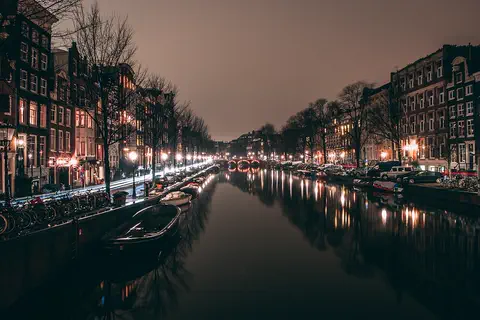
Amsterdam is the capital of the Netherlands. It began as a fishing village beside a dam on the Amstel River, which gave the city its name. Today about 942,000 people live among its rings of canals, hundreds of bridges, houseboats and bicycles.
-
 Watch
City
Antwerp
Antwerp is a city in Belgium on the Scheldt river, and Universalis calls it the second port of continental Europe, after Rotterdam. Belgium's statistics office estimated 565,615 people in the city on 1 January 2026. In the 1500s it was one of Europe's great trading cities.
-
 Watch
City
Athens
Athens is the capital of Greece and one of the oldest cities in the world. Above it rises the Acropolis, a rocky hill crowned by the marble Parthenon, built about 2,500 years ago. Ancient Athens was home to early democracy, great thinkers and theater.
-
 Watch
City
Barcelona
Barcelona, the capital of Catalonia in northeastern Spain, lies on the Mediterranean between mountains and the sea. It is famous for the buildings of the architect Antoni Gaudí, including the Sagrada Família, a giant church begun in 1882. About 1.7 million people live in the city (2025).
-
 Watch
City
Belgrade
Belgrade, the capital of Serbia, stands where the Sava River flows into the Danube. Its name, Beograd, means "white city", probably because of the white limestone walls of its old fortress above the rivers. At the 2022 census, about 1.2 million people lived in the city itself and about 1.7 million in the wider City of Belgrade.
For parents & teachers
What children will learn
- Locate Plovdiv on the Maritsa plain in Bulgaria.
- Explain how a city can hold layers from many different times, one on top of another.
- Describe why a city on an old trade route could grow into a crossroads.
- Compare a census count with a newer estimate.
Recommended ages: 3 to 17 · About 15 minutes
Talk about it
- Why might people choose to build on rocky hills?
- What could archaeologists learn from layers left by different peoples?
- Why do you think a city might be chosen as a Capital of Culture?
Try at home or in class
- Layer cake: stack colored paper or sand in a jar, one layer for each time named on this page, oldest at the bottom.
- Number check: the 2021 census counted 319,612 people and the end-2025 estimate is 333,994. What is the difference?
- Route map: draw a line on a map from Istanbul to the Adriatic Sea and find Plovdiv along the way.
Key vocabulary: crossroads, plain, layer, millennium, province, census
Where these facts come from
- Wikidata , Wikimedia Foundation (CC0 1.0)
- Natural Earth vector data , Natural Earth (NACIS) (Public domain)
- Plovdiv , Encyclopædia Universalis
- The Ancient Plovdiv (Tentative List) , UNESCO World Heritage Centre
- Bulgaria: Cities and Towns , City Population (Thomas Brinkhoff), from the National Statistical Institute of Bulgaria
- File:View over Old Town from Bunardzhik Hill - Plovdiv - Bulgaria - 01 (41537222430).jpg (Adam Jones, July 2018) , Wikimedia Commons
- Wikimedia Commons , Wikimedia Foundation (Per file (public domain, CC0, CC BY or CC BY-SA); see each media record)
Checked, not yet human-reviewed. Last updated November 1, 2026. Spotted a mistake? Tell us.