
City Asia
Quezon City
Quezon City is a very big city in the Philippines. In 2024, more than three million people lived there!
Quezon City is a city in Metro Manila, in the Philippines, northeast of the city of Manila. The 2024 census counted 3,084,270 people there. It has a large university, a big nature park, busy shopping districts and a very rainy season.
Quezon City, northeast of Manila (Larousse), is one of the cities of Metro Manila; the census of 1 July 2024 counted 3,084,270 inhabitants (City Population, from the Philippine Statistics Authority). Larousse calls it a residential center with a university and says it was the capital until 1976. The city counted 2026 as its 87th foundation year.
Photo: Patrickroque01, CC BY-SA 4.0, via Wikimedia Commons
Discover Quezon City
Quezon City is a huge city in the Philippines.
It is right next to Manila. In 2024, more than three million people lived there.
Quezon City is one of the cities of Metro Manila, in the Philippines. Larousse places it northeast of Manila and calls it a residential center with a university.
The 2024 census counted 3,084,270 people in Quezon City. That is almost twice as many as in 1990, when the census counted 1,669,776.
Larousse: city of the Philippines, northeast of Manila; 2,173,831 inhabitants (2000 census); residential center; university. City Population (Philippine Statistics Authority), Metro Manila cities and municipalities, Quezon City: 1,669,776 (1 May 1990), 2,173,831 (2000), 2,761,720 (2010), 2,936,116 (2015), 2,960,048 (2020), 3,084,270 (1 July 2024). The 2024 figure is 1.85 times the 1990 count.
- Country
- Philippines; northeast of Manila (Larousse)
- People in Quezon City (census 2024)
- 3,084,270
- Region
- Metro Manila (City Population)
- People in 1990 (census)
- 1,669,776
A university, an eco park and a coliseum
Look at all the roofs among the trees, and the tall towers far away!
Quezon City has a big nature park. It also has a track where people jog and ride bikes.
This photo, taken in September 2017, looks out over the Katipunan area: low buildings with red, green and gray roofs among trees, a wide road with cars, and a group of tall towers that the photographer names as Eastwood City. Its Commons title names both Quezon City and Marikina.
The city government describes the Academic Oval of the University of the Philippines as a track for bikers, joggers and walkers, lined with acacia trees about fifty years old. La Mesa Ecopark covers 33 hectares of the La Mesa Watershed, with nature walks and bird watching.
Commons description: the Katipunan area and Eastwood City seen from a high-rise building in Quezon City (the description names it), Patrickroque01 (own work; category 'Photographs by Patrick Roque'), 6 September 2017; title '(Quezon City and Marikina)'. Quezon City government: Academic Oval of UP Diliman, popular with bikers, joggers and walkers, lined with half-century-old acacia trees; La Mesa Ecopark (LME), 33 ha in the La Mesa Watershed, Brgy. Greater Lagro, a joint initiative of the MWSS, the city government and a water company; nature walks, rappelling, wall climbing, bird watching; Araneta Coliseum and New Frontier Theater in Cubao host sports games, graduations and concerts. Wikidata, from the city point (Q1475): University of the Philippines Diliman (Q3176886) 1.90 km ENE; Araneta Coliseum (Q625986) 3.33 km S; Eastwood City (Q5331012) 5.69 km SE; La Mesa Ecopark (Q48770714) 7.47 km NNE.
- University of the Philippines Academic Oval
- a track for bikers, joggers and walkers, lined with half-century-old acacia trees (city government)
- La Mesa Ecopark
- 33 hectares in the La Mesa Watershed (city government)
- Araneta Coliseum, Cubao
- hosts sports games, graduations and concerts (city government)
A planned city that grew fast
Quezon City is less than one hundred years old.
In 2024, more than three million people lived there.
Quezon City is young. The city government celebrated its 87th foundation year in 2026, while Larousse gives 1948 as the year it was founded. Larousse adds that it was the capital of the Philippines until 1976.
It has kept growing: the census counted 2,173,831 people in 2000, 2,761,720 in 2010 and 3,084,270 in 2024.
Quezon City government ('QC Stops for Your Next Trip'): 'Celebrate Quezon City's 87th foundation year with us' (2026). Larousse: 'founded in 1948, it was the capital until 1976' (the two sources do not agree on the founding year: no founding year is given on the panel). City Population (Philippine Statistics Authority): 1,669,776 (1990), 2,173,831 (2000), 2,761,720 (2010), 2,936,116 (2015), 2,960,048 (2020), 3,084,270 (2024).
- Foundation year
- the city celebrated its 87th foundation year in 2026 (city government); Larousse gives 1948
- Capital of the Philippines
- until 1976 (Larousse)
- People
- 2,173,831 (2000); 3,084,270 (2024) (census)
Trains, jeepneys and a free city bus
People ride trains, buses and jeepneys around Quezon City.
The city even has a free bus!
The city government says Cubao is easy to reach: two rail lines, MRT Line 3 and LRT Line 2, link it with Metro Manila's north-south and east-west routes. Buses, traditional jeepneys and modern jeepneys leave from its terminals for nearby cities and the provinces.
The city's free bus program, QCity Bus (Libreng Sakay, 'free ride'), reaches most of its tourism districts. During the city's Car-Free, Carefree Sundays, part of Tomas Morato Avenue closes to cars so people can walk, jog, cycle and skate.
Quezon City government: Cubao gives access to Metro Manila's north-south and east-west corridors via MRT-3 and LRT-2; transport terminals offer provincial and local trips by bus, traditional jeepney and modern jeepney; most tourism districts can be reached by the QCity Bus: Libreng Sakay program; Car-Free, Carefree Sundays on parts of Tomas Morato Avenue (jogging, walking, cycling, skating). Wikidata: University Avenue MRT station (Q7894520) 0.97 km NE of the city point; Araneta Center–Cubao station (Q4784087) 3.09 km S. The QC Elevated Promenade, a walkway with a bike ramp and LED lights, runs along Elliptical Road toward Quezon Avenue (city government).
- Rail in Cubao
- MRT Line 3 and LRT Line 2 (city government)
- Road transport
- buses, traditional jeepneys and modern jeepneys from Cubao's terminals (city government)
- QCity Bus
- a free bus ride program (Libreng Sakay) that reaches most tourism districts (city government)
Warm all year, with a very wet season
Quezon City is warm all year.
From June to October it rains a lot. From January to April it is much drier.
The Japan Meteorological Agency's averages for the Science Garden station in Quezon City, for 1991 to 2020, show a monthly average temperature from 25.9 °C in January to 29.6 °C in May.
About 2,937 millimeters of rain fall in a year, most of it from June to October. August is the wettest month, with 598.7 millimeters, and January the driest, with 25.6.
Japan Meteorological Agency, world normals (period 1991-2020 as stated on the normals index), Quezon City/Science Garden station 98430 (14.65° N, 121.04° E, 45 m; 0.81 km W of the city point): monthly mean temperature 25.9, 26.2, 27.7, 29.2, 29.6, 28.8, 27.9, 27.8, 27.7, 27.5, 27.2, 26.3 °C; precipitation 25.6, 29.6, 28.8, 80.2, 203.6, 349.8, 470.2, 598.7, 553.0, 282.5, 204.8, 110.6 mm (sum 2,937.4 mm; June-October 2,254.2 mm, 77%).
- Average temperature, coolest and warmest months (JMA, Quezon City/Science Garden, 1991–2020)
- 25.9 °C (January) and 29.6 °C (May)
- Wettest month (same table)
- August, 598.7 mm
- Rain in a year (twelve months added up)
- about 2,937 mm
Food streets, festivals and markets
Quezon City has streets full of cafés and places to eat.
Twice a year, one street has a big fair with food, music and art!
The city government names several tourism districts. Cubao mixes shops, offices, homes, hotels and entertainment. Along Maginhawa Street there are locally owned cafés, art galleries and photo studios, and every May and December the street holds fairs with food, music and art.
Banawe, called the 'Chinatown of Quezon City', is known for its restaurants, and the city celebrates the Lunar New Year and the Mid-Autumn Mooncake festival there.
Quezon City government ('QC Stops for Your Next Trip'): Cubao, 'Center of the Universe', a hub of retail, entertainment, residential, office and hospitality development, with the Araneta Coliseum and New Frontier Theater; Cubao Expo shops; Maginhawa Art and Food Hub (Maginhawa to V. Luna Extension), with Summer Fest and the Arts and Food Festival every May and December; Banawe, the 'Chinatown of Quezon City', marked by the Filipino-Chinese Friendship Arch at Quezon Avenue, with Lunar New Year and Mid-Autumn Mooncake festival celebrations and many auto parts shops.
- Maginhawa Art and Food Hub
- cafés, galleries and street fairs every May and December (city government)
- Banawe
- called the 'Chinatown of Quezon City', with many restaurants (city government)
- Cubao
- a hub of shops, offices, homes and entertainment (city government)
Quezon City on the map
Find the Philippines on the globe, in Southeast Asia. Quezon City is right next to Manila.
Quezon City lies at about 14.65° north and 121.05° east, in Metro Manila, northeast of the city of Manila.
On Wikidata, the University of the Philippines Diliman is about 1.9 kilometers east-northeast of the city's point, the Araneta Coliseum about 3.3 kilometers south, and La Mesa Ecopark about 7.5 kilometers north-northeast.
Quezon City lies at about 14.65° N, 121.05° E (Wikidata point of Quezon City, Q1475; the Natural Earth/sheet point is 1.88 km W of it). Larousse: northeast of Manila. Wikidata, from the city point: UP Diliman 1.90 km ENE; Araneta Coliseum 3.33 km S; Eastwood City 5.69 km SE; La Mesa Ecopark 7.47 km NNE; JMA Science Garden station 0.81 km W.
- Latitude
- about 14.65° north
- Longitude
- about 121.05° east
- Neighbor
- Manila, to the southwest (Larousse: Quezon City lies northeast of Manila)
Amazing facts
-
Quezon City has a free city bus!
The city's QCity Bus program, called Libreng Sakay ('free ride'), reaches most of its tourism districts.
Quezon City government: most tourism districts are accessible via the QCity Bus: Libreng Sakay program.
-
In August, Quezon City gets more rain than in the first four months of the year put together!
In the JMA averages for 1991 to 2020, August brings 598.7 millimeters of rain to Quezon City, more than January to April together (164.2).
JMA normals 1991–2020, Science Garden: August 598.7 mm vs January-April 164.2 mm combined.
-
Old acacia trees line a running track at the university!
The city government says the University of the Philippines' Academic Oval is lined with acacia trees about fifty years old, and bikers, joggers and walkers use it.
Quezon City government: half-century-old acacia trees line the Academic Oval, 'the green heart' of the UP Diliman campus.
Words to know
- jeepney
- a shared minibus used for public transport in the Philippines
- watershed
- an area of land where rain gathers and drains into a river or reservoir
- reservoir
- a lake, often made by a dam, that stores water for people to use
- rainy season
- the months of the year when most of the rain falls
- census
- an official count of all the people living in a place
- district
- an area of a city with its own character
Discovery challenge
-
Quezon City is in which country?
Quezon City is part of Metro Manila, in which country?
Quezon City, northeast of Manila, is in which country?
- Philippines
- Peru
- Portugal
Show the answer
Philippines
The Philippines!
The Philippines.
The Philippines.
-
Which month brings the most rain to Quezon City?
In the 1991–2020 averages, which is Quezon City's wettest month?
Which month has the highest mean precipitation in the JMA 1991–2020 normals for Science Garden?
- August
- January
- April
Show the answer
August
August!
August, with 598.7 millimeters.
August, 598.7 mm.
-
Which vehicles carry people around Quezon City, along with buses and trains?
Besides buses and trains, which shared vehicles leave from Cubao's transport terminals?
Which traditional and modern vehicles does the city government list beside buses at Cubao's terminals?
- Jeepneys
- Gondolas
- Dog sleds
Show the answer
Jeepneys
Jeepneys!
Jeepneys, traditional and modern.
Traditional and modern jeepneys.
-
How many people did the 2024 census count in Quezon City?
How many people lived in Quezon City at the 2024 census?
What population did the Philippine Statistics Authority's 2024 census record for Quezon City?
- 3,084,270
- 308,427
- 30,842,700
Show the answer
3,084,270
3,084,270!
3,084,270 people.
3,084,270 (1 July 2024).
Nearby places
-
 Watch
Natural wonder
Taal Volcano
Taal Volcano is a volcanic island in Taal Lake, on the island of Luzon in the Philippines. The lake fills a much bigger caldera, and a lake fills the island's own main crater. It is one of the Philippines' most active volcanoes.
-
 Watch
City
Cagayan de Oro
Cagayan de Oro is a city in the north of Mindanao, one of the two biggest islands of the Philippines. The encyclopedia Larousse calls it a farm market and a center of gold mining. The Philippines' 2024 census counted 741,617 people in the city.
-
 Watch
City
Kaohsiung
Kaohsiung is a city on the southwest coast of Taiwan, with the largest international port on the island. The port's history says it began as a small fishing village, and it was opened to trade with other countries in 1863. The census of 1 November 2020 counted 2,734,275 people in Kaohsiung City.
-
 Watch
Natural wonder
Mount Apo
Mount Apo, on the island of Mindanao, is the highest mountain in the Philippines. It is a volcano with hundreds of sulfur vents on its upper slopes, and its forests are a stronghold of the critically endangered Philippine eagle.
-
 Watch
City
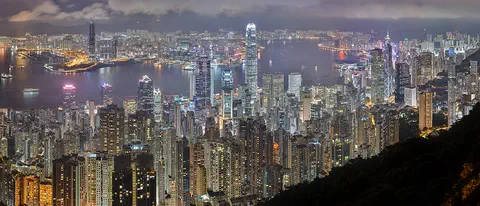
Hong Kong
Hong Kong, on the south coast of China, grew around one of the world's great natural harbors. It was a British colony for 156 years and has been a special administrative region of China since 1997. About 7.5 million people lived there in mid-2026.
-
 Watch
City
Macau
Macau is a small city on the south coast of China. It was a busy trading port under Portuguese administration from the mid-1500s until 1999, when it came under Chinese sovereignty. Its historic center, where Chinese and Portuguese buildings mix, is a UNESCO World Heritage Site.
-
 Watch
Landmark
Taipei 101
Taipei 101 is a skyscraper in Taipei, Taiwan, 508 meters tall with its spire and 101 stories high. When it opened, it was the tallest building in the world. Inside hangs a 660-ton steel ball, a tuned mass damper, that helps steady the tower in typhoon winds and earthquakes.
-
 Watch
City
Taipei
Taipei is a big city in the north of Taiwan, in a flat basin with rivers and hills. Its tower, Taipei 101, is 508 meters tall. Trains of the Taipei Metro carry people around the city, and its night markets are famous for snacks. About 2.4 million people were registered in Taipei City in September 2026.
Explore next
-
 Watch
 Country
Philippines
The Philippines is an island country in Southeast Asia, in the western Pacific Ocean. It has more than 7,000 islands, about 50 volcanoes and rich coral reefs, and about 112.7 million people were counted there in 2024.
-
Watch
City
Taipei
Taipei is a big city in the north of Taiwan, in a flat basin with rivers and hills. Its tower, Taipei 101, is 508 meters tall. Trains of the Taipei Metro carry people around the city, and its night markets are famous for snacks. About 2.4 million people were registered in Taipei City in September 2026.
-
 Watch
City
Jakarta
Jakarta, Indonesia's largest city and its capital, lies on the northwest coast of the island of Java, where the Ciliwung River meets the Java Sea. About 11 million people live there (2025). Indonesia is building a new capital called Nusantara, but under the law Jakarta stays the capital until the president signs a decree moving it.
-
Watch
City
Cagayan de Oro
Cagayan de Oro is a city in the north of Mindanao, one of the two biggest islands of the Philippines. The encyclopedia Larousse calls it a farm market and a center of gold mining. The Philippines' 2024 census counted 741,617 people in the city.
-
 Watch
City
Abu Dhabi
Abu Dhabi is the capital of the United Arab Emirates. It began in the 1700s as a small settlement around fresh water on an island, guarded by a coral-stone watchtower. Before oil, it relied on fishing and pearl diving; since the 1960s, money from oil has turned it into a city of towers. An official estimate gave the city about 1.75 million people in 2023.
-
 Watch
City
Almaty
Almaty is the main city of Kazakhstan, in the southeast of the country at the foot of the Ala-Tau mountains. It was founded in 1854 where a Kazakh village called Almaty, 'village of apple trees', stood. It was the capital until 1998, and about 2,387,900 people lived there on 1 September 2026.
-
 Watch
City
Amman
Amman is the capital of Jordan, built on steep hills around a valley high on a plateau. Long ago it was a Roman city called Philadelphia, and its Roman theater, carved into a hillside, still holds about 6,000 people. Today the city spreads across the hills, with houses faced in pale stone. About 4.6 million people lived in Amman Governorate at the end of 2021.
-
 Watch
City
Ankara
Ankara is the capital of Türkiye, in the interior of Anatolia, about 200 kilometers from the Black Sea. People have lived here since the Stone Age, and Romans, Byzantines, Seljuks and Ottomans all left buildings behind. It became the capital in 1923, and today it is a city of government, universities and museums.
For parents & teachers
What children will learn
- Locate Quezon City in Metro Manila, in the Philippines.
- Read census counts and describe how a city grew from 1990 to 2024.
- Explain what a rainy season is, using real monthly rainfall.
- Describe how trains, buses and jeepneys move people in a big city.
Recommended ages: 3 to 17 · About 15 minutes
Talk about it
- Why might a city close a street to cars on Sundays?
- What would you pack for a visit to Quezon City in August, and in January?
- Why do big cities need parks and watersheds?
Try at home or in class
- Rain chart: draw Quezon City's twelve monthly rainfall bars and shade the rainy season.
- Growth chart: plot the census counts for 1990, 2000, 2010, 2015, 2020 and 2024.
- Street fair: plan a food-and-art fair for your street, with a map of stalls.
Key vocabulary: jeepney, watershed, reservoir, rainy season, census, district
Where these facts come from
- Wikidata , Wikimedia Foundation (CC0 1.0)
- Natural Earth vector data , Natural Earth (NACIS) (Public domain)
- Quezón City , Larousse encyclopédie
- Philippines: Metro Manila (Cities and Municipalities) , City Population (Thomas Brinkhoff), from the Philippine Statistics Authority
- QC Stops for Your Next Trip , Quezon City Government
- University of the Philippines Academic Oval , Quezon City Government
- La Mesa Eco Park , Quezon City Government
- QC Elevated Promenade , Quezon City Government
- Quezon City/Science Garden: monthly normals (1991–2020) , Japan Meteorological Agency
- World station normals (search by region and country) , Japan Meteorological Agency
- File:Katipunan area with Eastwood (view from SMDC Blue) (Quezon City and Marikina)(2017-09-06).jpg (Patrickroque01) , Wikimedia Commons
- Wikimedia Commons , Wikimedia Foundation (Per file (public domain, CC0, CC BY or CC BY-SA); see each media record)
Checked, not yet human-reviewed. Last updated November 1, 2026. Spotted a mistake? Tell us.