
Animal
Chicken
Chickens are farm birds. Hens lay eggs, roosters crow, and fluffy chicks peep. They scratch the ground to find seeds and bugs.
The chicken is a domesticated bird: people raise it on farms and in backyards all over the world for eggs and meat. Its wild ancestor is the red junglefowl of the forests of southern and Southeast Asia, and scientists think chickens were first domesticated about 3,500 years ago near rice fields in Southeast Asia.
Gallus gallus domesticus, the domestic chicken, descends from the red junglefowl and is now one of the world's most numerous animals. A 2022 re-evaluation of chicken bones from more than 600 archaeological sites placed domestication in Southeast Asia by about 1500 BC, linked to dry rice farming, and showed that chickens were long valued as special animals before they became a common food.
Photo: Kruppert, CC BY-SA 3.0, via Wikimedia Commons
Meet the chicken
Chickens are birds that live with people.
A grown-up girl chicken is a hen. A grown-up boy chicken is a rooster. Both have a red, floppy comb on top of their heads.
Chickens are domesticated birds, which means people have raised them for thousands of years. There are hundreds of breeds, and they come in many sizes and colors, from white to black to golden brown. Some breeds are kept for eggs, some for meat and some just for their looks.
Adult males are called roosters and adult females are called hens. Both have a fleshy red crest on the head, called a comb, and flaps of skin under the beak, called wattles. Roosters usually have bigger combs and wattles, and larger spurs on their legs.
The domestic chicken, Gallus gallus domesticus, belongs to the pheasant family Phasianidae and is a domesticated form of the red junglefowl, Gallus gallus. Happy Hollow Park and Zoo notes that there are hundreds of breeds, grouped by physical traits, place of origin and main use: eggs, meat or ornament.
Both sexes have a comb, a fleshy crest on the head, and wattles below the beak; roosters typically have larger combs and wattles and larger leg spurs. Because breeds differ so much in size and color, there is no single typical chicken size.
Quick facts
- Group
- Bird
- Length
- up to 0.7 m
- Lifespan in the wild
- 5 to 8 years
Where chickens live
Chickens live on farms and in backyards all over the world.
Their wild cousins, red junglefowl, still live in forests in Asia.
Chickens live wherever people keep them: on farms, in backyards and in villages on every continent except Antarctica. Wherever they live, they spend much of their time scratching and pecking at the ground.
Their wild ancestor, the red junglefowl, lives in thick forests in southern Asia, including India, and Southeast Asia. In the morning and evening, junglefowl come out into clearings to look for food.
As a domesticated animal, the chicken has no wild range of its own; the map shows the continents where people keep chickens. Its ancestor, the red junglefowl, is native to southern and Southeast Asia, where Animal Diversity Web describes it in thick secondary forest, feeding in open clearings in the morning and evening.
After domestication, chickens spread with people. Research by a team from the universities of Exeter, Oxford, Munich and other institutions found that they were carried across Asia and then around the Mediterranean along the routes of early Greek, Etruscan and Phoenician sea traders, reaching Europe around 800 BC and spreading by sea to Oceania and Africa.
Continents
Did you know?
Charles Darwin guessed where chickens came from.
Charles Darwin first suggested that chickens came from the red junglefowl because they look so alike.
Darwin proposed the red junglefowl as the chicken's ancestor on the basis of appearance; genetic work in 2020 narrowed it to a Southeast Asian subspecies.
Where can you find this animal?
- Kept by people · Countries and seas named by a scientific source
- Sightings recorded · Records of wild sightings (GBIF)
Kept by people · Countries and seas named by a scientific source
Chickens are domesticated: people keep them on every continent except Antarctica. This is not a wild range. Their wild ancestor, the red junglefowl, lives in forests of southern and Southeast Asia.
Places: Africa, Asia, Europe, North America, South America and Australia and Oceania.
Source: https://animaldiversity.org/accounts/Gallus_gallus/ · checked October 2026
Sightings recorded · Records of wild sightings (GBIF)
Counts of GBIF records of wild observations (human and machine) and preserved specimens. Records include introduced populations, vagrants, escaped or released animals and misidentifications, so a country with records is not necessarily part of the native range.
Wild sightings have been recorded in Colombia, United States, Netherlands, Belgium, Puerto Rico, New Zealand, Thailand, India and 129 more places.
Source: gbif · checked October 2026
Range maps show where scientists say an animal lives, often country by country. An animal may live in only part of a country shown, and sightings records can include animals that wandered far from home.
What chickens eat
Chickens eat seeds, grain, plants and bugs.
They scratch the ground with their feet and peck with their beaks. They swallow tiny stones to help mash their food.
Chickens are omnivores, which means they eat both plants and animals. They spend much of the day scratching and pecking at the ground for seeds, insects and worms, and sometimes they catch a lizard, a small snake or a young mouse.
Farm chickens are usually fed special chicken food, plus grains such as oats and corn, seeds and vegetables. They also eat grit, small pebbles and bits of shell that help grind up food in their stomachs.
Chickens are omnivores. Happy Hollow describes them scratching soil for seeds, insects and occasionally larger prey such as lizards, small snakes or young mice; domestic flocks are usually given a commercial diet supplemented with oats, corn, seeds and vegetation, along with grit of small pebbles and shells to aid digestion.
Animal Diversity Web lists corn, soybeans, worms, grass and ground grains in the red junglefowl's diet and notes that junglefowl cannot detect sweet tastes; they can taste salt but most avoid it. Researchers think grain from dry rice farming drew wild junglefowl down from the trees and toward people, starting their domestication.
Did you know?
Chickens can't taste sweet things.
Red junglefowl, the chicken's wild ancestor, cannot taste sweetness.
Animal Diversity Web reports that red junglefowl cannot detect sweet tastes and mostly avoid salt.
Combs, wattles and wings
A chicken has a red comb on its head and red wattles under its beak.
It has wings, but it can only fly a little way. It flaps up to sleep up high.
A chicken's comb and wattles are made of soft, bare skin. Roosters usually have bigger ones than hens, and roosters also have larger spurs on their legs.
Chickens have wings, but they can only fly short distances, to reach a perch or escape danger. Most of the time they stay on the ground, walking, scratching and pecking. Their wild ancestor, the red junglefowl, has gold, red, brown, orange and shiny green feathers, and the rooster has a long tail.
The comb and wattles are fleshy outgrowths of the head and throat, generally larger in roosters, which also carry larger leg spurs. Chickens fly only short distances, mainly to roost or flee predators, and spend most of their time foraging on the ground.
Animal Diversity Web describes the red junglefowl as up to 70 centimeters long, with gold, red, brown, maroon, orange and metallic green plumage, white ear patches and grayish feet; roosters have tails nearly 28 centimeters long and are said to be more brightly colored than domestic roosters. Wild males molt into a duller 'eclipse' plumage from June to October.
From egg to chicken
A hen lays eggs. If an egg has a chick inside, the hen keeps it warm.
After about three weeks, a fluffy chick pecks its way out. Peep, peep!
Over up to two weeks, a hen lays a clutch of up to a dozen eggs in a nest, then sits on them. When an egg is fertilized and kept warm, a chick grows inside it. In just one day its heart starts to beat, and by the fourth day all its organs are there. The chick feeds on the yolk.
After about 21 days, the chick breaks through its shell, which can take 10 to 20 hours. Red junglefowl chicks are fully feathered by four or five weeks old, leave their mother at about 12 weeks and are grown up at about five months.
Animal Diversity Web describes red junglefowl laying an egg each day during the spring and summer breeding season. In a fertilized egg the heart and blood vessels form and begin working on the first day, all organs are present by day four and the skeleton begins to calcify, using calcium from the shell, around day 13; the embryo feeds on the yolk throughout.
Hatching follows at about 21 days and can take 10 to 20 hours. Junglefowl chicks are fully feathered at four to five weeks, are chased from the group by the mother at about 12 weeks and mature at about five months, females slightly later than males. Domestic chickens typically live 5 to 8 years, some up to 20.

The pecking order
Chickens live together in a flock.
They cluck to talk to each other. Roosters crow, 'cock-a-doodle-doo!' Some chickens are the bosses of the flock.
Chickens live in flocks with a ranking called a pecking order: some chickens are in charge and others give way to them. Chicks start learning the pecking order when they are only a week old.
Chickens talk by clucking. Roosters crow to tell other roosters 'this is my place' or when something disturbs them. In a junglefowl flock, the hens feed safely under the protection of the top rooster.
Chickens are gregarious and live in flocks with a dominance hierarchy, the pecking order, which Animal Diversity Web describes for junglefowl as separate orders for males and females. Dominance is shown by raising the tail and head; submission by lowering them, crouching and tilting the head. When a dominant cock dies, the next in line takes over at once.
The pecking order is introduced to chicks at about a week old and is settled in about seven weeks. Chickens communicate by clucking, and roosters crow as a territorial signal to other roosters or when disturbed.
Did you know?
Long ago, some chickens were treated as very special birds.
When chickens first reached Europe, people often did not eat them. Some were buried with people.
Early European chickens were often buried whole or with people, suggesting veneration rather than food use.
Chickens and people
People have kept chickens for thousands of years.
Long ago, some people kept chickens as special birds, not for food. Now chickens live all over the world.
Chickens are domesticated, so they are not listed as an endangered or wild species. They are now one of the most common animals in the world.
Scientists found that when chickens first spread to Europe, people often treated them as special and did not eat them. Some chickens were even buried with people. Eating chickens and eggs became common later, and in Britain chickens were not eaten regularly until the third century AD.
As a domesticated animal, the chicken is not assessed on the IUCN Red List. Its ancestor, the red junglefowl, is listed as Least Concern, but Animal Diversity Web notes that most wild populations have interbred with domestic and feral chickens, threatening the genetic purity of wild junglefowl.
The 2022 Antiquity and PNAS studies re-dated chicken bones from more than 600 sites in 89 countries. They found that early European chickens were often buried alone, unbutchered, or with people, suggesting they were venerated rather than eaten; the Roman Empire later helped make chickens and eggs common food.
Did you know?
A chick's heart starts beating after just one day in the egg.
Inside a fertilized egg, a chick's heart starts to beat on the very first day.
Heart and blood vessels develop and begin to function within the first day of incubation.
Amazing facts
-
Chickens can't taste sweet things.
Red junglefowl, the chicken's wild ancestor, cannot taste sweetness.
Animal Diversity Web reports that red junglefowl cannot detect sweet tastes and mostly avoid salt.
-
A chick's heart starts beating after just one day in the egg.
Inside a fertilized egg, a chick's heart starts to beat on the very first day.
Heart and blood vessels develop and begin to function within the first day of incubation.
-
Long ago, some chickens were treated as very special birds.
When chickens first reached Europe, people often did not eat them. Some were buried with people.
Early European chickens were often buried whole or with people, suggesting veneration rather than food use.
-
Charles Darwin guessed where chickens came from.
Charles Darwin first suggested that chickens came from the red junglefowl because they look so alike.
Darwin proposed the red junglefowl as the chicken's ancestor on the basis of appearance; genetic work in 2020 narrowed it to a Southeast Asian subspecies.
Words to know
- domesticated
- raised by people for many generations, so it lives with people instead of in the wild
- hen
- an adult female chicken
- rooster
- an adult male chicken
- comb
- the fleshy red crest on a chicken's head
- wattles
- flaps of skin that hang below a chicken's beak
- pecking order
- the ranking of who is in charge in a flock
Discovery challenge
-
Which wild bird did chickens come from?
What is the chicken's wild ancestor?
From which wild species was the chicken domesticated?
- The red junglefowl
- The ostrich
- The penguin
Show the answer
The red junglefowl
Chickens came from the red junglefowl of Asia.
The red junglefowl, which lives in forests in southern and Southeast Asia.
The red junglefowl, Gallus gallus, of southern and Southeast Asia.
-
What is the red thing on top of a chicken's head?
What is a chicken's comb?
What is the fleshy crest on a chicken's head called?
- A comb
- A beak
- A tail
Show the answer
A comb
It is called a comb.
The comb is a fleshy red crest on the head; roosters usually have bigger ones.
The comb, present in both sexes and usually larger in roosters.
-
How long does a chick grow inside its egg?
About how long does it take a chick to hatch?
About how long is incubation before a chick hatches?
- About 21 days
- About 1 year
- About 1 hour
Show the answer
About 21 days
About three weeks.
About 21 days, and breaking out of the shell can take 10 to 20 hours.
About 21 days, with hatching itself taking 10 to 20 hours.
-
Where were chickens first kept by people?
Where do scientists think chickens were first domesticated?
Where was chicken domestication underway by about 1500 BC?
- Southeast Asia
- Antarctica
- South America
Show the answer
Southeast Asia
In Southeast Asia, near rice fields.
In Southeast Asia, where wild junglefowl came to eat grain in rice fields.
The Southeast Asian peninsula, linked to the spread of dry rice farming.
Places where you might see it
Experiments to try
- Watch What If? Lab What if you had no teeth? Your teeth cut, tear and grind food into small pieces so you can swallow it. Imagine eating with no teeth at all! Find out what each kind of tooth does, how baby teeth make way for adult teeth, and how birds manage without any teeth, using a muscly stomach called a gizzard.
- Watch What If? Lab What if dinosaurs still lived today? Most dinosaurs died out 66 million years ago, after a huge asteroid hit Earth. One group survived: birds, which scientists count as living dinosaurs. Imagine the other dinosaurs had survived too. Where could they live, what would they eat, and how would they fit into today's world?
Explore next
-
 Watch
Animal
Wild turkey
The wild turkey is a big, bronze-feathered bird of North American forests and clearings. It walks most of the time but can run, fly and even roost high in trees at night. By the early 1900s wild turkeys had become rare in many places, but people helped them come back, and now they live in every U.S. state except Alaska.
-
 Watch
3D
Animal
Indian peafowl
The Indian peafowl is a large bird of the pheasant family from South Asia. Males, called peacocks, have a bright blue neck and a long train of shimmering feathers decorated with eyespots, which they spread into a giant fan to impress females, called peahens. It is the national bird of India.
-
 Watch
3D
Animal
Mallard
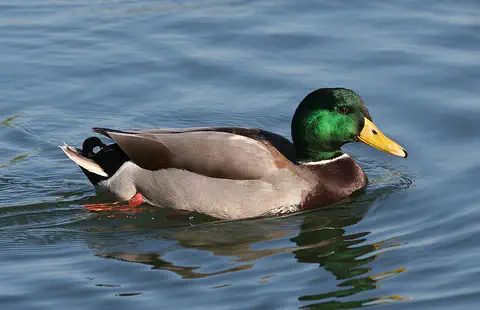
The mallard is perhaps the most familiar duck in the world, found on ponds, lakes, rivers and city parks across North America, Europe and Asia. Males have glossy green heads; females are mottled brown. Almost all farm ducks are descended from mallards.
-
 Watch
3D
Animal
Cattle
Cattle are large farm animals that people tamed from wild oxen long ago. They eat grass and digest it with a stomach that has four parts. Farmers around the world keep cattle for milk, meat and leather, and in some places oxen still pull plows and carts.
-
 Watch
3D
Animal
Domestic pig
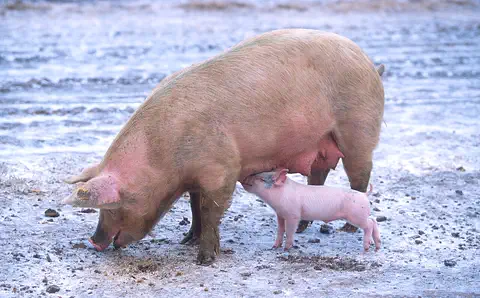
Domestic pigs live with people on every continent except Antarctica. Their ancestor is the wild boar, which people began taming about 9,000 years ago. Pigs are among the smartest farm animals, with a super-sensitive snout for digging up food.
-
 Watch
 Country
Thailand
Thailand is a tropical country in the middle of mainland Southeast Asia, with forested mountains in the north, rice fields on its central plains and a long, narrow peninsula in the south. Its capital is Bangkok, and about 65.8 million people were on its civil register at the end of 2025.
- Watch What If? Lab What if you had no teeth? Your teeth cut, tear and grind food into small pieces so you can swallow it. Imagine eating with no teeth at all! Find out what each kind of tooth does, how baby teeth make way for adult teeth, and how birds manage without any teeth, using a muscly stomach called a gizzard.
-
 Watch
Animal
Common pheasant
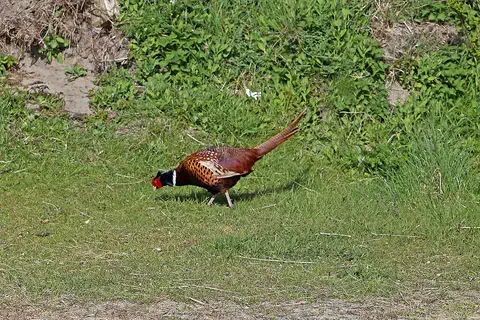
The common pheasant is a long-tailed ground bird. Its wild home is Asia, from the Caspian Sea to China and Korea, but people have taken it to Europe, North America, New Zealand and other places. Males are bright and coppery with a red face; females are mottled brown.
For parents & teachers
What children will learn
- Explain what 'domesticated' means and name the chicken's wild ancestor.
- Describe the parts of a chicken, including the comb, wattles and spurs.
- Describe how a chick develops inside an egg.
- Explain how and when scientists think chickens were domesticated and spread.
Recommended ages: 3 to 17 · About 15 minutes
Talk about it
- How is a farm chicken different from a wild red junglefowl?
- Why might rice fields have drawn wild junglefowl closer to people?
- Why do you think a flock needs a pecking order?
Try at home or in class
- With an adult, look carefully at a raw egg in a bowl and find the yolk and the white.
- Make a 21-day calendar and mark what happens inside an egg on days 1, 4, 13 and 21.
Key vocabulary: domesticated, hen, rooster, comb, wattles, pecking order
Where these facts come from
- GBIF Backbone Taxonomy and GBIF Occurrence Search , Global Biodiversity Information Facility (CC0 1.0 (backbone); occurrence counts are facts derived from records under CC0, CC BY and CC BY-NC)
- Wikidata , Wikimedia Foundation (CC0 1.0)
- Gallus gallus (red junglefowl) , Animal Diversity Web, University of Michigan Museum of Zoology
- Domestic chicken , Happy Hollow Park and Zoo
- Major new international research reveals new evidence about when, where, and how chickens were domesticated , University of Exeter
- Researchers pinpoint date when chickens were first domesticated , Smithsonian Magazine
- Wikimedia Commons , Wikimedia Foundation (Per file: Public domain, CC0, CC BY or CC BY-SA only (credited on each page))
Checked, not yet human-reviewed. Last updated October 28, 2026. Spotted a mistake? Tell us.