
Animal
Canada goose
The Canada goose is a big goose with a black neck and a white chin strap. It says 'honk!' Flocks fly in a V shape in the sky.
The Canada goose is a big, black-necked goose with a white chinstrap, found near lakes, rivers, fields and parks across North America. Many migrate in noisy V-shaped flocks, but more and more stay all year on city lawns. People also brought Canada geese to Britain and other parts of Europe.
Branta canadensis is a large goose of the family Anatidae, native to North America and introduced to Britain in the 17th century and also to other parts of northern Europe and to New Zealand. A grazer of grass, sedges and grain, it has increased dramatically in North America and is listed as Least Concern.
Photo: JackyM59, CC BY-SA 4.0, via Wikimedia Commons
Meet the Canada goose
The Canada goose is a big bird.
It has a black head and neck, with a white stripe under its chin like a strap. Its body is brown and tan. It honks loudly!
The Canada goose is a big waterbird with a long black neck, a black head and a bright white 'chinstrap' that runs from cheek to cheek. Its breast is tan or pale, its back is brown, and it has large webbed feet and a wide, flat bill.
Canada geese come in many sizes. Scientists recognize at least 11 kinds, or subspecies, and in general the geese get smaller farther north and darker farther west. People often call them 'honkers' because of their loud calls.
Branta canadensis is a goose of the family Anatidae. Cornell's All About Birds gives a length of 76 to 110 centimeters, a weight of 3 to 9 kilograms and a wingspan of 127 to 170 centimeters: a wide range, because at least 11 subspecies are recognized, generally smaller to the north and darker to the west. The four smallest forms are now treated as a separate species, the cackling goose.
Adults have a black head with white cheeks and chinstrap, a black neck, a tan breast and a brown back. Mates tend to be of similar size, a pattern called assortative mating, and within a pair the male is usually the larger bird.
Quick facts
- Group
- Bird
- Length
- 0.76 to 1.1 m
- Wingspan
- 1.27 to 1.7 m
- Weight
- 3 to 9 kg
- Lifespan in the wild
- up to 33.25 years
Native and introduced homes
Canada geese come from North America.
They live near lakes, rivers and ponds, and on grassy parks and fields. People also took them to Britain and other places in Europe.
Canada geese are native to North America, from Greenland and Canada through the United States to Mexico and some Caribbean islands. They live almost anywhere near water: lakes, rivers, ponds and marshes, and the lawns of parks, golf courses and airports, where they can graze and see danger coming.
Canada geese were introduced to Britain in the 1600s, and the BTO estimated about 55,000 breeding pairs in the UK in 2013–17. Introduced Canada geese also live in other parts of northern Europe and in New Zealand.
The IUCN's 2018 global assessment lists the Canada goose as native in Canada, the United States, Greenland, Mexico and parts of the Caribbean. It lists introduced resident populations in the United Kingdom, Belgium, Germany, the Netherlands, Norway and Sweden, breeding introduced birds in Finland and New Zealand, and introduced birds in France, Poland, Denmark, Austria, Czechia, European Russia and Ukraine.
The BTO reports that Canada geese were first introduced to English parkland around 1665 and spread hugely after translocations in the 1950s and 1960s; the UK holds about 55,000 breeding pairs (2013–17) and about 165,000 birds in winter. Cornell notes the species is drawn to lawns because it can digest grass and because open lawns give a clear view of approaching predators.
Continents
Its habitats


Where can you find this animal?
- Brought here by people · Countries and seas named by a scientific source
- Lives here naturally · Countries and seas named by a scientific source
- Sightings recorded · Records of wild sightings (GBIF)
Brought here by people · Countries and seas named by a scientific source
Canada geese brought by people now live in the wild in Britain (since the 1600s), other parts of northern and central Europe and New Zealand.
Places: UK, Belgium, Germany, Netherlands, Norway, Sweden, Finland, New Zealand and 7 more places.
Source: iucn-red-list · checked October 2026
Lives here naturally · Countries and seas named by a scientific source
Lakes, rivers, marshes, fields and parks across North America, from Greenland and Canada to Mexico and some Caribbean islands. Northern birds migrate south for the winter; many southern birds stay all year.
Places: Canada, United States, Greenland, Mexico, Bahamas, Cuba and Puerto Rico.
Source: iucn-red-list · checked October 2026
Sightings recorded · Records of wild sightings (GBIF)
Counts of GBIF records of wild observations (human and machine) and preserved specimens. Records include introduced populations, vagrants, escaped or released animals and misidentifications, so a country with records is not necessarily part of the native range.
Wild sightings have been recorded in United States, Canada, Sweden, UK, Belgium, Netherlands, Norway, Germany and 55 more places.
Source: gbif · checked October 2026
Range maps show where scientists say an animal lives, often country by country. An animal may live in only part of a country shown, and sightings records can include animals that wandered far from home.
Grazing and dabbling
Canada geese eat grass, seeds and berries.
They nibble grass on lawns and fields. In the water they tip forward to reach plants.
Canada geese are plant eaters. In spring and summer they graze on grasses and sedges. In fall and winter they eat more berries and seeds, including grain left in farm fields, and they seem especially fond of blueberries.
They are very good at pulling kernels off dry corn cobs. In the water they dabble, tipping forward and stretching their necks underwater to reach plants. Two kinds of Canada goose have adapted to cities, where they graze on lawn grass all year round.
The diet is mainly plant material. Cornell describes a shift from grasses and sedges, including skunk cabbage leaves and eelgrass, in spring and summer to berries and seeds, including agricultural grain, in fall and winter, with a particular liking for blueberries and efficient removal of kernels from dry corn cobs.
Geese graze in fields and on lawns and dabble in shallow water by tipping forward. Two subspecies have adapted to urban environments and graze on domestic grasses year round. Cornell links a northward shift in the wintering areas of some migratory populations to waste grain becoming more available in fall and winter, along with changes in hunting pressure and weather.
Did you know?
Big geese pick big partners.
Canada geese tend to choose mates of a similar size, a pattern called assortative mating.
Assortative mating by size is documented, and males are usually the larger partner.
Built for flying in a V
Canada geese have big, strong wings.
They fly together in a V shape. Different geese take turns at the front.
A Canada goose's big wings can stretch up to 1.7 meters. Migrating flocks fly in long V formations, with experienced geese taking turns leading. They fly by day and by night.
Like other geese, they have large webbed feet for swimming and a wide, flat bill for grazing. In late summer, even geese that do not migrate south fly north to molt, replacing their old feathers.
Migrating flocks of family groups and individuals fly in V formation, with experienced birds taking turns at the lead; flights often begin at dusk but may start at any time, and birds fly both by day and by night. Geese breeding farthest north migrate longest, while those breeding in southern Canada and the conterminous United States move shorter distances or not at all.
Most populations also make northward molt migrations after breeding. Non-breeders and failed breeders may travel from several kilometers to more than 1,500 kilometers north to molt on fresh, early-growth vegetation; even 'resident' birds move north to molt. In Britain, the BTO notes molt gatherings at sites such as the Beauly Firth in Scotland.
Goslings
The mother goose builds a nest on the ground near water.
She keeps the eggs warm while the father keeps watch. The fluffy yellow goslings can swim and even dive!
The female chooses a slightly raised spot near water, often on a muskrat mound, and builds a big cup of dry grass, moss and lichen, lined with her soft down feathers. She lays 2 to 8 creamy white eggs and keeps them warm for 25 to 28 days while the male guards her.
The goslings hatch covered in yellowish down with their eyes open. When they are 1 or 2 days old, they leave the nest and can walk, swim, feed and even dive. Many young geese stay with their parents for their whole first year.
The female selects the nest site, usually a slightly raised spot near water with a clear view, builds an open cup of dry grasses, lichens and mosses and lines it with down from the second egg on. Clutches are 2 to 8 creamy white eggs; she alone incubates for 25 to 28 days while the male guards.
Goslings hatch with yellowish down and open eyes, carrying enough yolk energy for two days, and leave the nest at 1 to 2 days old able to walk, swim, feed and dive. Several families may merge into 'gang broods'. Young often stay with their parents through their first year. Most Canada geese first breed in their fourth year. The oldest known wild bird, a female banded in Ohio in 1969, was at least 33 years 3 months old.

Partners and protectors
Canada goose partners stay together for life.
They guard their nest and goslings. An angry goose may hiss and honk to warn you away.
Canada geese mate for life, and pairs stay together all year. For much of the year they live in large flocks, and many birds in a flock may be related.
In spring, pairs leave the flock and defend a nesting territory. A goose warns intruders by pumping its head, opening its bill, hissing, honking and making its neck feathers vibrate. Give nesting geese plenty of space.
Canada geese mate for life with very low 'divorce' rates, and pairs remain together year-round; Cornell notes pair bonds are unstable until birds are two or three years old and that extra-pair copulations occur. Outside the breeding season they gather in large flocks, often of related birds.
In spring pairs leave the flocks and defend territories whose spacing depends on nest sites and density; some populations are semi-colonial. Threat displays include head-pumping, an open bill with raised tongue, hissing, honking and vibrating neck feathers, and disputes can escalate to fights in which geese grab each other and strike with their wings. Families stay close, and individuals return to the same stopover and wintering areas year after year.
Did you know?
One Canada goose lived more than 33 years.
The oldest known wild Canada goose was a female at least 33 years and 3 months old.
The longevity record is a female banded in Ohio in 1969 and shot in Ontario in 2001, at least 33 years 3 months old.
A goose success story, and a puzzle
There are lots and lots of Canada geese.
Some people love them. Others think there are too many in parks. People work on ways to share space with geese.
Canada geese are Least Concern, and their numbers in North America have risen fast. One estimate counts about 7.1 million breeding birds. One large kind, the 'giant' Canada goose, was nearly wiped out in the early 1900s, then brought back so successfully that it is now common in many towns.
Today some people see park geese as a nuisance, because they eat lawns and leave droppings, and geese near airports can be dangerous for planes. In the UK, the BTO says numbers have more than doubled since 1984.
The IUCN lists the Canada goose as Least Concern (global assessment, 2018) with an increasing trend; it does not give a global population figure. Cornell reports increases of more than 7 percent per year in North America between 1966 and 2019 and cites a Partners in Flight breeding estimate of 7.1 million; hunters harvest about 2.6 million a year without apparent effect on numbers.
The 'giant' subspecies, B. c. maxima, was nearly driven extinct in the early 1900s; restoration programs were so successful that it became a nuisance in many urban and suburban areas, where geese graze and foul lawns and pose a collision risk at airports. In the UK, the BTO reports a 128 percent increase in breeding birds from 1995 to 2024.
IUCN Red List
How is the canada goose doing in the wild?
- Least Concern (this animal)
- Near Threatened
- Vulnerable
- Endangered
- Critically Endangered
- Extinct in the Wild
- Extinct
Least Concern
Not at risk of disappearing from the wild right now.
See the IUCN Red List assessment · The IUCN Red List of Threatened Species 2021.3
Amazing facts
-
One Canada goose lived more than 33 years.
The oldest known wild Canada goose was a female at least 33 years and 3 months old.
The longevity record is a female banded in Ohio in 1969 and shot in Ontario in 2001, at least 33 years 3 months old.
-
Baby geese can dive when they are only a day or two old.
Canada goose goslings leave the nest at 1 to 2 days old, already able to walk, swim, feed and dive.
Goslings are precocial and carry enough yolk reserves to survive two days before feeding.
-
Geese take turns flying at the front of the V.
In a V formation, experienced Canada geese take turns leading the flock.
Migrating flocks of families and individuals fly in V formation, with experienced birds rotating at the lead.
-
Big geese pick big partners.
Canada geese tend to choose mates of a similar size, a pattern called assortative mating.
Assortative mating by size is documented, and males are usually the larger partner.
Words to know
- gosling
- a baby goose
- subspecies
- a group within a species that looks a little different and lives in its own area
- V formation
- the V shape that flocks of geese make when they fly
- molt
- to shed old feathers and grow new ones
- introduced species
- an animal that people brought to a place where it did not live before
- graze
- to eat grass or other low plants
Discovery challenge
-
What shape do flying geese make?
What shape do migrating Canada geese fly in?
In what formation do migrating flocks of Canada geese fly?
- A circle
- A V
- A square
Show the answer
A V
They fly in a V shape.
A V formation, with experienced geese taking turns at the front.
V formation, with experienced individuals rotating at the lead.
-
Who keeps the goose eggs warm?
Which parent sits on the eggs?
Which parent incubates Canada goose eggs?
- The mother
- The father
- Both, taking turns
Show the answer
The mother
The mother sits on the eggs. The father keeps watch.
Only the female incubates; the male guards her and the nest.
The female alone incubates for 25 to 28 days while the male guards.
-
Where do Canada geese come from?
Where are Canada geese native?
What is the native range of Branta canadensis?
- North America
- Australia
- Africa
Show the answer
North America
They come from North America.
North America; people brought them to Britain and other places.
North America; European and New Zealand populations are introduced.
-
What do Canada geese like to eat?
What do Canada geese mostly eat?
What is the main diet of Canada geese?
- Grass, seeds and berries
- Fish
- Insects only
Show the answer
Grass, seeds and berries
They eat grass, seeds and berries.
Mostly plants: grasses and sedges in summer, berries and grain in winter.
Plant material: grasses and sedges in spring and summer, berries and seeds, including grain, in fall and winter.
Places where you might see it
-
 Watch
 Country
Canada
Canada is the second-largest country in the world, stretching across the north of North America from the Atlantic to the Pacific and up into the Arctic. It has the Rocky Mountains, thousands of islands and about 42 million people, who speak English, French and many other languages.
-
 Watch
 Country
United States
The United States is a large country in North America made of 50 states, from icy Alaska to the warm islands of Hawaii. It has the Grand Canyon, the Mississippi River and Yellowstone, and about 342 million people live there.
-
Watch
Natural wonder
Mississippi River
The Mississippi River flows about 3,770 kilometers from Lake Itasca in Minnesota to the Gulf of Mexico, through the middle of the United States. Its basin drains about 40 percent of the continental United States. Long ago Native Americans paddled canoes on it; later came steamboats, and today huge barges carry grain and fuel. Millions of birds follow it when they migrate.
Explore next
-
 Watch
3D
Animal
Mallard
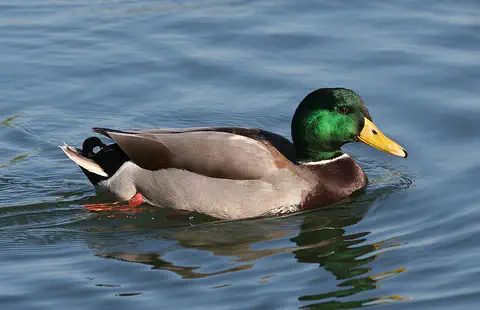
The mallard is perhaps the most familiar duck in the world, found on ponds, lakes, rivers and city parks across North America, Europe and Asia. Males have glossy green heads; females are mottled brown. Almost all farm ducks are descended from mallards.
-
 Watch
Animal
Mute swan
The mute swan is among the largest waterfowl, all white with an orange bill topped by a black knob. It is native to Europe and Asia, where it lives on lakes, rivers and park ponds. People took mute swans to North America and other places, where they now live in the wild and can cause problems for native wildlife.
-
Watch
Country
Canada
Canada is the second-largest country in the world, stretching across the north of North America from the Atlantic to the Pacific and up into the Arctic. It has the Rocky Mountains, thousands of islands and about 42 million people, who speak English, French and many other languages.
-
Watch
Country
United States
The United States is a large country in North America made of 50 states, from icy Alaska to the warm islands of Hawaii. It has the Grand Canyon, the Mississippi River and Yellowstone, and about 342 million people live there.
-
Watch
Natural wonder
Mississippi River
The Mississippi River flows about 3,770 kilometers from Lake Itasca in Minnesota to the Gulf of Mexico, through the middle of the United States. Its basin drains about 40 percent of the continental United States. Long ago Native Americans paddled canoes on it; later came steamboats, and today huge barges carry grain and fuel. Millions of birds follow it when they migrate.
-
 Watch
Animal
Mandarin duck
The mandarin duck is a small, very colorful duck from East Asia. The male has orange 'sail' feathers on his back and orange whiskers on his face, while the female is soft gray and brown. Mandarins nest in holes in trees, and the ducklings jump down to the ground soon after hatching.
-
 Watch
Animal
Adélie penguin
The Adélie penguin is a medium-sized penguin, about 70 centimeters tall, with a black back, a white front and a bright white ring around each eye. It breeds in summer on rocky, ice-free ground all around Antarctica, building nests of pebbles, and spends the winter far out at sea among the pack ice.
-
 Watch
Animal
African fish eagle
The African fish eagle is a big eagle of Africa's lakes, rivers and coasts, with a white head, chest and tail and a chestnut-brown body. It snatches fish from the surface of the water, and its loud, ringing call is one of the best-known sounds of Africa.
For parents & teachers
What children will learn
- Identify a Canada goose and explain why sizes vary so much between subspecies.
- Describe how Canada geese feed and how their diet changes through the year.
- Explain migration, V formations and molt migrations.
- Compare the native North American range with introduced populations in Europe and discuss why geese can become a nuisance.
Recommended ages: 3 to 17 · About 15 minutes
Talk about it
- Why might lawns in parks be so attractive to Canada geese?
- Why might some geese stop migrating south for the winter?
- How could a town keep both its parks and its geese healthy?
Try at home or in class
- Watch geese or ducks at a local pond with an adult and count how many are grazing, swimming and resting.
- With friends, walk in a V shape and take turns being the leader, like a flock of geese.
Key vocabulary: gosling, subspecies, V formation, molt, introduced species, graze
Where these facts come from
- The IUCN Red List of Threatened Species , International Union for Conservation of Nature (IUCN terms of use (no redistribution of Red List data or range maps))
- GBIF Backbone Taxonomy and GBIF Occurrence Search , Global Biodiversity Information Facility (CC0 1.0 (backbone); occurrence counts are facts derived from records under CC0, CC BY and CC BY-NC)
- Wikidata , Wikimedia Foundation (CC0 1.0)
- Branta canadensis (Canada Goose), Red List global assessment 2018 , IUCN Red List of Threatened Species
- Canada Goose overview , Cornell Lab of Ornithology, All About Birds
- Canada Goose identification , Cornell Lab of Ornithology, All About Birds
- Canada Goose life history , Cornell Lab of Ornithology, All About Birds
- Canada Goose, BirdFacts , British Trust for Ornithology
- Wikimedia Commons , Wikimedia Foundation (Per file: Public domain, CC0, CC BY or CC BY-SA only (credited on each page))
Checked, not yet human-reviewed. Last updated October 24, 2026. Spotted a mistake? Tell us.