All animals
Tap an animal to meet it: where it lives, what it eats, how it grows, and a narrated adventure with Olly.
598 to explore · page 13 of 13
-
 Watch
3D
Animal
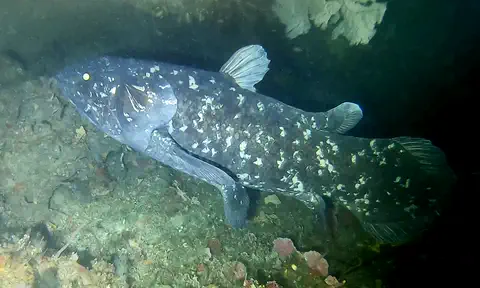
West Indian Ocean coelacanth
The West Indian Ocean coelacanth is a large, blue, spotted fish that lives in deep, rocky waters off eastern Africa. Its group was known only from fossils and thought to have died out about 66 million years ago, until a living one was found in South Africa in 1938.
-
 Watch
Animal
Western diamondback rattlesnake
The western diamondback rattlesnake is a heavy-bodied snake of the deserts and dry grasslands of the southwestern United States and Mexico. It has diamond patterns, a black-and-white striped tail and a rattle that buzzes as a warning. It is venomous, so it is a snake to admire from far away, but it would much rather hide or slip away than meet a person.
-
 Watch
Animal
Western gorilla
The western gorilla is a great ape, one of our closest animal relatives. It lives in family groups led by a big silverback male, eats leaves and fruit in the rainforests of central Africa, and is quiet and peaceful unless it feels threatened.
-
 Watch
3D
Animal
Western honey bee
The western honey bee lives in big families called colonies, with one queen and many workers. Workers collect nectar and pollen from flowers, turn nectar into honey, and tell each other where food is by dancing. As they travel, they pollinate many plants, including crops people eat.
-
 Watch
3D
Animal
Whale shark
The whale shark is the largest fish in the world. This gentle giant swims through warm seas with its huge mouth open, filtering tiny plankton and small fish from the water, and every whale shark has its own pattern of pale spots.
-
 Watch
Animal
White rhinoceros
The white rhinoceros is the largest rhino and one of the biggest animals on land. It is not really white: its name may come from its wide, square lips, perfect for mowing grass. Careful protection has brought it back from the edge.
-
 Watch
Animal
White stork
The white stork is a tall white bird with black flight feathers, a red bill and long orange legs. It nests on rooftops, chimneys and trees across Europe, North Africa and western Asia, and many storks soar south to spend the winter in Africa or South Asia.
-
 Watch
Animal
White-faced capuchin
The white-faced capuchin is a smart, curious monkey from the forests of Central America, with black fur and a cream-white face, throat and shoulders. It eats fruit and hunts insects, lives in close family troops led by an alpha male, and on one island in Panama some capuchins crack open nuts and crabs with stones.
-
 Watch
Animal
White-tailed deer
White-tailed deer live in forests, fields and even towns from Canada down to South America. They are named for the white underside of the tail, which they hold up like a flag when they run. Males grow new antlers every year.
-
 Watch
3D
Animal
White's tree frog
White's tree frog, called the green tree frog in Australia, is a large, chubby frog from northern and eastern Australia and New Guinea. Big sticky pads on its fingers and toes help it climb, and it often moves into gardens, water tanks and even bathrooms. It is common and not in danger.
-
 Watch
Animal
Whooping crane
The whooping crane is the tallest bird in North America, snowy white with a red cap and black wingtips. In 1941 only about 21 were left. After decades of careful protection, scientists estimated about 540 cranes from the wild flock that flies between Canada and Texas in its main Texas winter home in 2025–2026.
-
 Watch
3D
Animal
Wild boar
Wild boars are bristly wild pigs that live in forests and fields across Europe, Asia and North Africa. They sniff out food with their powerful snouts, live in family groups called sounders, and are the wild ancestors of farm pigs.
-
 Watch
Animal
Wild turkey
The wild turkey is a big, bronze-feathered bird of North American forests and clearings. It walks most of the time but can run, fly and even roost high in trees at night. By the early 1900s wild turkeys had become rare in many places, but people helped them come back, and now they live in every U.S. state except Alaska.
-
 Watch
Animal
Willow ptarmigan
The willow ptarmigan is a plump grouse of the Arctic tundra and northern mountains in North America, Europe and Asia. It changes its feathers twice a year, from mottled brown in summer to white in winter, so it is camouflaged all year. In winter, thick feathers on its feet work like snowshoes, and it lives mostly on willow buds and twigs.
-
 Watch
Animal
Wilson's bird-of-paradise
Wilson's bird-of-paradise lives only in the hill forests of two islands, Waigeo and Batanta, off the west of New Guinea in Indonesia. The male is dazzling: a crimson back, a yellow cape, a shiny green chest, blue feet, a patch of bare blue skin on top of his head and two curly tail feathers. He clears a patch of forest floor and dances there to impress females.
-
 Watch
Animal
Wolverine
The wolverine is a strong, stocky member of the weasel family that lives in the cold north of North America, Europe and Asia. It travels huge distances, eats almost anything it can find, and digs dens in deep snow for its babies. Its fierce reputation is often exaggerated: it avoids wolves and bears.
-
 Watch
Animal
Wood duck
The wood duck lives on ponds, rivers and swamps surrounded by trees in North America. It nests in tree holes, some of them high up, and the day after hatching the ducklings jump to the ground. Hunting and the loss of big trees once made it rare, but protection and nest boxes helped it come back.
-
 Watch
Animal
Wood frog
The wood frog is a brown forest frog with a dark "robber's mask" across its eyes. It lives farther north than any other North American amphibian, reaching Alaska and northern Canada. To survive winter it lets much of its body freeze, protected by sugar in its cells, and in early spring it is one of the first frogs to call, with a sound like quacking ducks.
-
 Watch
Animal
Yellow boxfish
The yellow boxfish lives inside its own box: a hard shell of bony plates joined together, with holes for its eyes, mouth and fins. Young boxfish are bright yellow with black polka dots, and big adults turn bluish. Its skin can release a toxic slime that protects it from predators, and it paddles slowly around reefs nibbling algae and small animals.
-
 Watch
Animal
Yellow tang
The yellow tang is a lemon-yellow surgeonfish of Pacific coral reefs, most common around Hawaii. It grazes on algae all day, which helps keep reefs from being smothered by seaweed, and it has a sharp white spine on each side of its tail for defense. It is one of the most collected fish for home aquariums.
-
 Watch
Animal
Yellow-eyed penguin
The yellow-eyed penguin, or hoiho, lives only in New Zealand. It is a tall, heavy penguin with yellow eyes and a pale yellow band of feathers running around the back of its head. It hides its nest under bushes and trees near the shore, out of sight of other penguins. It is endangered: on the South Island and Stewart Island its breeding pairs fell by about two-thirds between 1999 and 2019.
-
 Watch
3D
Animal
Yellowfin tuna
The yellowfin tuna is a large, torpedo-shaped fish of warm oceans around the world. It has a dark blue back, a silver belly and long, bright yellow fins. Yellowfin travel huge distances, dive deep to hunt fish and squid, and are important to fisheries all around the world.