All animals
Tap an animal to meet it: where it lives, what it eats, how it grows, and a narrated adventure with Olly.
442 to explore · page 1 of 10
-
 Watch
Animal
Aardvark
The aardvark is a shy night digger of African savannas. It sniffs out ant and termite nests, rips them open with its spade-like claws and laps up the insects with a sticky tongue about 30 centimeters long. Its name means 'earth pig' in Afrikaans.
-
 Watch
Animal
Adélie penguin
The Adélie penguin is a medium-sized penguin, about 70 centimeters tall, with a black back, a white front and a bright white ring around each eye. It breeds in summer on rocky, ice-free ground all around Antarctica, building nests of pebbles, and spends the winter far out at sea among the pack ice.
-
 Watch
Animal
African buffalo
The African buffalo is a huge, cow-like grazer with heavy, curving horns. It lives in herds that can number in the thousands, and a herd will rush to protect a calf in danger. It lives across much of Africa south of the Sahara, from open savannas to rainforests.
-
 Watch
Animal
African fish eagle
The African fish eagle is a big eagle of Africa's lakes, rivers and coasts, with a white head, chest and tail and a chestnut-brown body. It snatches fish from the surface of the water, and its loud, ringing call is one of the best-known sounds of Africa.
-
 Watch
Animal
African forest elephant
The African forest elephant is a separate species from the bigger bush elephant. It lives in the rainforests of central and western Africa, eats lots of fruit and spreads the seeds of forest trees in its dung. It is Critically Endangered.
-
 Watch
Animal
African penguin
The African penguin is a penguin of warm, sunny coasts. It lives only in South Africa and Namibia, nests in burrows and under bushes, and hunts sardines and anchovies in the cold sea. Its numbers have fallen so far that it is now Critically Endangered, and people are working hard to protect it.
-
 Watch
3D
Animal
African wild dog
The African wild dog, or painted dog, has a patchy coat unlike any other dog's, big round ears and only four toes on its front feet. It lives in close packs that hunt together, share food and care for the pups. It is endangered: the IUCN estimated in 2025 that only about 1,676 adults are left in the wild.
-
 Watch
Animal
Aldabra giant tortoise
The Aldabra giant tortoise is one of the largest land tortoises on Earth. Wild ones live on Aldabra Atoll, a ring of coral islands in the Indian Ocean, where more than 100,000 of them graze, browse and shape the land like elephants do in Africa. They can live for more than 100 years.
-
 Watch
Animal
Alligator gar
The alligator gar is one of the largest freshwater fish in North America. It has a broad snout lined with teeth, armor-like scales, and a swim bladder that works like a lung, so it can gulp air in warm, still water. It lives in the big rivers, swamps and bayous of the southern United States, Mexico and Central America.
-
 Watch
Animal
Alligator snapping turtle
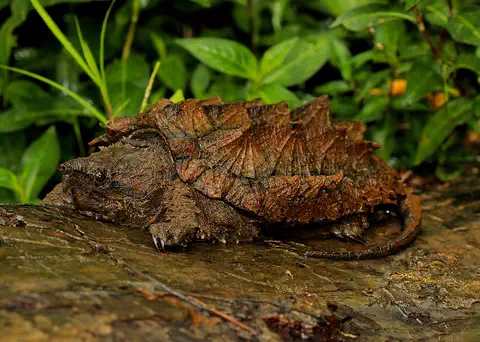
The alligator snapping turtle is the largest freshwater turtle in the United States. It lies still on the bottom of rivers and lakes with its mouth open, wiggling a worm-like lure on its tongue to trick fish into swimming close. Its numbers have fallen, and it is now endangered.
-
 Watch
Animal
Alpaca
Alpacas are small, woolly members of the camel family from the high Andes Mountains of South America. People bred them from wild vicuñas thousands of years ago, mainly for their soft, warm fleece. Every alpaca lives with people.
-
 Watch
3D
Animal
Amazon milk frog
The Amazon milk frog is a large tree frog that lives high in the treetops of the rainforest in northeastern South America. It is active at night, has big golden eyes, and lays its eggs in pools of rainwater trapped in holes in trees, where its tadpoles grow up.
-
 Watch
Animal
Amazon river dolphin
The Amazon river dolphin, or boto, is the largest river dolphin. Many adults are pink. It lives only in fresh water, in the Amazon and Orinoco river basins of South America, and its bendy neck and big flippers let it twist between tree trunks in flooded forests as it hunts fish using sound.
-
 Watch
3D
Animal
American alligator
The American alligator is a large, armored reptile of the swamps, marshes and lakes of the southeastern United States. Alligator mothers guard their nests and carry their babies to the water, and the holes alligators dig help many other animals survive dry seasons.
-
 Watch
3D
Animal
American bison
The American bison is the largest land animal in North America. Once tens of millions roamed the Great Plains, but by the 1890s fewer than a thousand were left. Careful protection, starting with a tiny herd in Yellowstone, brought bison back.
-
 Watch
Animal
American black bear
The American black bear is the most common bear in North America. It lives mostly in forests, climbs trees with its short, curved claws, eats mainly plants, and spends the winter in a den. Not all black bears are black: some are brown, cinnamon, blue-gray or even white.
-
 Watch
3D
Animal
American bullfrog
The American bullfrog is the largest true frog in North America. It lives in warm, still ponds and lakes, sits and waits for food to come close, and the males' deep 'jug-o-rum' call carries more than a kilometer. Its tadpoles can take years to turn into frogs.
-
 Watch
Animal
American crocodile
The American crocodile is a large reptile of warm coasts and mangrove swamps, from the southern tip of Florida through Mexico, Central America, the Caribbean and northern South America. It is shy, it basks in the sun to warm up, and mother crocodiles carry their babies to the water.
-
 Watch
Animal
American crow
The American crow is an all-black bird found across much of North America, from fields and beaches to city centers. It eats almost anything, lives in close family groups, gathers in huge winter roosts, and a University of Washington study found that wild crows can recognize and remember a human face.
-
 Watch
Animal
American flamingo
The American flamingo is a tall, bright pink wading bird of the Caribbean. It gets its color from pigments in the tiny water animals and algae it eats, and it feeds by filtering water through its bent bill with its head upside down. Flamingos live and nest in huge, noisy groups.
-
 Watch
Animal
American goldfinch
The American goldfinch is a small finch that eats almost nothing but seeds. In summer the male is bright lemon yellow with a black cap and black wings, and in winter both males and females turn a soft olive brown. Goldfinches wait until late summer to build their nests.
-
 Watch
Animal
American lobster
The American lobster is a big crustacean that lives on the rocky sea floor of the northwest Atlantic Ocean. It has two very different claws, one for crushing and one for tearing, and it must climb out of its hard shell again and again to grow.
-
 Watch
3D
Animal
American robin
The American robin is a very familiar bird over most of North America, with a gray-brown back, a warm orange breast and a cheery song. It runs across lawns pulling up earthworms, eats lots of berries in winter, and builds a mud-lined nest for its sky-blue eggs.
-
 Watch
Animal
American toad
The American toad is a common, warty toad of eastern North America, found in forests, prairies, farms and backyards. It has big poison glands behind its eyes, hunts insects and worms at night, and in spring the males sing a long, musical trill from shallow ponds, where females lay thousands of eggs in long strings.
-
 Watch
Animal
Andean condor
The Andean condor is one of the largest flying birds in the world. With wings up to 3.2 meters across, it soars over the Andes Mountains of South America, barely flapping, as it searches for dead animals to eat. It is a vulture, nature's clean-up crew.
-
 Watch
3D
Animal
Antarctic krill
Antarctic krill are small, shrimp-like crustaceans about 6 centimeters long that live in the icy Southern Ocean around Antarctica. They gather in enormous swarms, and almost all the bigger animals of the Antarctic, from penguins to blue whales, depend on them for food.
-
 Watch
Animal
Arabian oryx
The Arabian oryx is a white desert antelope with long, straight horns and a black-and-white face. Hunting wiped it out in the wild, but animals kept in zoos were bred and returned to the deserts of Arabia. Today it lives wild again in five countries.
-
 Watch
Animal
Arapaima
The arapaima is one of the biggest freshwater fish in the world, longer than a grown-up is tall. It lives in the warm, slow rivers and flooded lakes of the Amazon, and it must swim up to the surface to gulp air every few minutes.
-
 Watch
Animal
Arctic fox
The Arctic fox lives on the frozen tundra around the North Pole. Its coat changes color with the seasons, white or blue-gray in winter and brown or gray in summer, and it has short ears, a short nose and furry feet to keep the cold out. It eats lemmings, birds and leftovers from polar bears.
-
 Watch
Animal
Arctic tern
The Arctic tern is a small, graceful seabird with a black cap, a red bill and red legs. Every year it flies from its nesting grounds in the Arctic to the edge of the ice around Antarctica and back again. Scientists who tracked terns from Greenland and Iceland found that they flew an average of 70,900 kilometers in one year.
-
 Watch
Animal
Army ant
Army ants hunt together in giant swarms and never build a permanent nest. This page is about the best-studied kind, Eciton burchellii, of Central and South American forests. Each night of its traveling phase the colony moves, and the workers link their legs to build a living camp around their queen and young.
-
 Watch
Animal
Asian black bear
The Asian black bear is a black bear with a cream crescent on its chest, shaped like a new moon. It lives in forests and mountains from Iran and Pakistan across the Himalayas and Southeast Asia to China, Korea, Japan and the Russian Far East. It eats mostly plants, especially fruit and nuts, and in cold places it sleeps through the winter.
-
 Watch
3D
Animal
Asian elephant
The Asian elephant is the largest land animal in Asia. It is a little smaller than its African cousins, with smaller ears, a head shaped like two domes and a trunk with one finger-like tip. It lives in forests and grassy clearings in 13 countries of South and Southeast Asia.
-
 Watch
3D
Animal
Atlantic blue crab
The Atlantic blue crab is a swimming crab with bright blue claws and back legs shaped like paddles. It lives along the Atlantic coast of the Americas, especially in bays where rivers meet the sea, like the Chesapeake Bay. A mother crab carries up to two million eggs in a spongy orange mass under her body.
-
 Watch
Animal
Atlantic bluefin tuna
The Atlantic bluefin tuna is the largest of all tunas: big ones can be about 4 meters long. Its torpedo-shaped body is built for long journeys, and it can keep its body warmer than the water around it. Bluefin tuna were badly overfished, but with fishing limits set by countries working together, the numbers caught are now controlled.
-
 Watch
3D
Animal
Atlantic cod
The Atlantic cod is a large, speckled fish of the cold North Atlantic. It has a whisker-like barbel on its chin and three fins along its back. For hundreds of years people have caught cod for food, so many that some cod populations crashed and are still being rebuilt today.
-
 Watch
3D
Animal
Atlantic ghost crab
The Atlantic ghost crab is a sand-colored crab of beaches along the Atlantic coast of the Americas. It is so pale that it almost disappears on the sand, like a ghost. It digs deep burrows, comes out mostly at night, and runs very fast on its long legs.
-
 Watch
3D
Animal
Atlantic herring
The Atlantic herring is a small, silvery fish of the cold North Atlantic. Herring swim in enormous schools, eat tiny floating plankton, and lay their sticky eggs on the sea floor. Whales, seabirds and many fish depend on them for food, and people have fished for them for hundreds of years.
-
 Watch
3D
Animal
Atlantic horseshoe crab
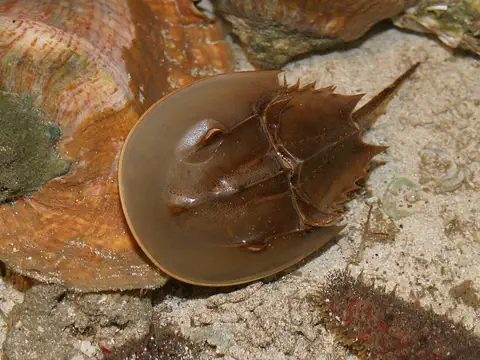
The Atlantic horseshoe crab is a living fossil: its relatives have looked much the same for hundreds of millions of years. Despite its name, it is more closely related to spiders and scorpions than to crabs. Each spring, thousands crawl onto beaches to lay eggs, feeding hungry shorebirds, and its blue blood helps keep medicines safe.
-
 Watch
3D
Animal
Atlantic mackerel
The Atlantic mackerel is a sleek, shiny fish of the North Atlantic Ocean, with a blue-green back covered in wavy black bars and a silvery white belly. Mackerel swim in large schools near the surface, eat tiny crustaceans and lay floating eggs. Many fish and sea mammals eat them, and so do people.
-
 Watch
Animal
Atlantic mudskipper
The Atlantic mudskipper is a fish that spends much of its time out of the water. It lives on the muddy shores of mangrove swamps and river mouths along the coast of West and Central Africa, where it skips across the mud on its strong front fins and catches food on land.
-
 Watch
3D
Animal
Atlantic puffin
The Atlantic puffin is a small seabird of the North Atlantic, often called the clown of the sea because of its huge, colorful bill. It spends most of its life far out on the ocean and comes ashore only in summer to nest in burrows on islands and cliff tops. Underwater, its small wings work like flippers.
-
 Watch
Animal
Atlantic salmon
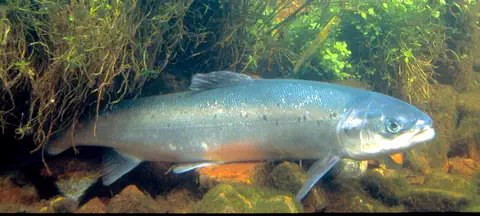
The Atlantic salmon hatches in a river, swims out to the North Atlantic Ocean to feed and grow, then returns to the very river where it was born to lay its eggs. Along the way it changes color and shape several times.
-
 Watch
Animal
Atlas moth
The atlas moth is one of the largest moths in the world, with wings up to about 24 centimeters across. It lives in tropical and subtropical forests of southern and Southeast Asia. Its caterpillars eat a lot and spin silk cocoons, and the adults cannot eat at all: they live for only about a week.
-
 Watch
Animal
Australian box jellyfish
The Australian box jellyfish has a clear, box-shaped bell with bunches of long tentacles at each of its four corners. Unlike most jellyfish it swims on purpose, it has 24 eyes but no brain, and it grows very fast after leaving the tiny polyp it started from. Its sting is very dangerous, so people in northern Australia swim carefully in stinger season.
-
 Watch
3D
Animal
Axolotl
The axolotl is a salamander from the canals and lakes of Mexico City. Unlike most amphibians, it keeps its baby features, such as feathery gills and a fin, its whole life. It can regrow lost legs and even parts of its heart, but in the wild it is critically endangered.
-
 Watch
Animal
Aye-aye
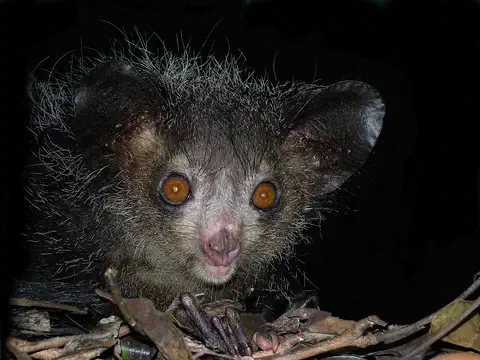
The aye-aye is a lemur from Madagascar, and the largest primate that is active at night. It taps on branches with its long, skinny middle finger, listens with its enormous ears for hidden grubs, then bites into the wood and hooks them out.
-
 Watch
Animal
Bactrian camel
The Bactrian camel is the two-humped camel of Central Asia's cold deserts and steppes. People tamed it thousands of years ago, and it carried goods along the Silk Road. Its wild cousin, the wild camel, is a separate species that is endangered.