All animals
Tap an animal to meet it: where it lives, what it eats, how it grows, and a narrated adventure with Olly.
598 to explore · page 12 of 13
-
 Watch
Animal
Spinner dolphin
The spinner dolphin is famous for leaping out of the water and spinning around several times before splashing back. These slim, long-beaked dolphins live in warm oceans around the world, rest in calm bays by day and hunt deep-sea fish and squid at night.
-
 Watch
Animal
Spiny softshell turtle
The spiny softshell turtle is a freshwater turtle of North America with a round, flat, leathery shell and a snorkel-like snout. It lives in rivers, lakes and creeks, where it buries itself in sand or mud and snatches crayfish and other prey. Females grow much bigger than males.
-
 Watch
Animal
Spot-fin porcupinefish
The spot-fin porcupinefish is a spiny relative of the pufferfish that lives on warm reefs all around the world. Its spines usually lie flat, but when it is threatened it swallows water and swells into a prickly ball. At night it uses a strong, beak-like mouth to crack open snails, hermit crabs and sea urchins.
-
 Watch
3D
Animal
Spotted eagle ray
The spotted eagle ray is a ray that 'flies' through warm Atlantic waters by flapping its wide, wing-like fins. Its dark back is covered in white spots, its tail is long and whip-like, and its snout looks a bit like a duck's bill, which it uses to dig for clams and other shellfish.
-
 Watch
3D
Animal
Spotted hyena
The spotted hyena is the largest of the hyenas and a skilled hunter of the African savanna. Many people think hyenas only eat leftovers, but in East and Southern Africa they catch most of their own food. They live in big clans led by females, and they whoop, groan and 'giggle' to talk.
-
 Watch
Animal
Spring peeper
The spring peeper is a tiny treefrog of eastern North America, about as long as a quarter is wide, with a dark X-shaped mark on its back. Early each spring, hundreds of males gather at small ponds and fill the night with high "peep" calls, one of the first signs that winter is over.
-
 Watch
Animal
Springbok
The springbok is a slim, brown and white antelope of the dry plains of southern Africa. When it is excited or alarmed, it pronks: it bounces high with stiff legs and can lift a hidden crest of white hair on its back. It can live on plants without drinking. There are millions of springbok, and their numbers are growing.
-
 Watch
Animal
Staghorn coral
Staghorn coral is a reef-building coral of Florida, the Bahamas and the Caribbean. Each colony is made of many tiny polyps that build a branching skeleton like a stag's antlers, and tiny algae living inside them give it food and color. Once one of the most common Caribbean corals, it is now critically endangered.
-
 Watch
Animal
Steller's sea eagle
Steller's sea eagle is one of the largest sea and fish eagles. Dark brown with bright white shoulders, tail and legs and an enormous orange-yellow beak, it nests in far eastern Russia and feeds mainly on salmon. In winter many fly south to Japan.
-
 Watch
3D
Animal
Stoat
The stoat is a small, slender hunter with a long body, short legs and a black-tipped tail. It lives across the northern parts of Europe, Asia and North America, and in snowy places some stoats turn white in winter.
-
 Watch
Animal
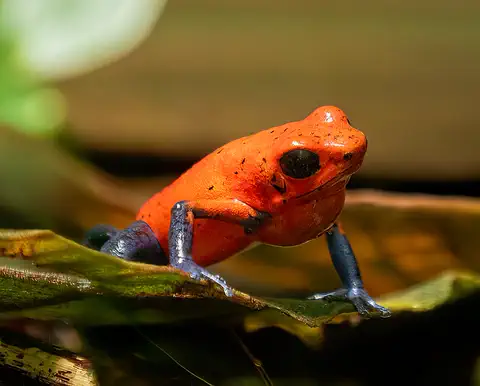
Strawberry poison frog
The strawberry poison frog is a tiny frog of the rainforest floor in Nicaragua, Costa Rica and Panama. Its bright colors warn hunters that its skin is poisonous, and its parents take amazing care of their young: the mother carries each tadpole to its own little pool and feeds it eggs.
-
 Watch
Animal
Striped skunk
The striped skunk is a cat-sized mammal of North America with bold black and white fur. It comes out at night to hunt insects and other small foods, and it is famous for its warning dance and its strong-smelling spray, which it uses only when it feels threatened.
-
 Watch
Animal
Sugar glider
The sugar glider is a small marsupial from the forests of eastern Australia. Stretchy skin between its front and back legs works like a parachute, so it can glide up to 50 meters between trees. It comes out at night to lick sweet sap and nectar and to catch insects, and it lives in family groups that share a nest.
-
 Watch
Animal
Sulphur-crested cockatoo
The sulphur-crested cockatoo is a large white parrot with a bright yellow crest. It lives in forests and towns in northern and eastern Australia and New Guinea. Cockatoos live in noisy flocks, take turns keeping watch while others feed, and in Sydney some have learned to open garbage bins by watching each other.
-
 Watch
Animal
Sumatran orangutan
The Sumatran orangutan is a shaggy red great ape that lives almost all its life in the treetops of northern Sumatra, in Indonesia. Its hair is longer and lighter than its Bornean cousin's, and a mother has a baby only every eight or nine years.
-
 Watch
Animal
Sumatran rhinoceros
The Sumatran rhinoceros is the smallest kind of rhino and the only rhino in Asia with two horns. Its reddish-brown skin is covered in patches of long hair, which is why people call it the hairy rhino. It lives alone in dense rainforest, eats leaves and twigs, and cools off in mud wallows. Only a few dozen are left in the wild, all in Indonesia.
-
 Watch
Animal
Sun bear
The sun bear is the smallest of the world's eight kinds of bear, and it has the longest tongue. It lives in the forests of Southeast Asia, climbs trees with long curved claws, and rips open logs to find insects and honey. Every bear has its own chest patch, like a fingerprint.
-
 Watch
Animal
Sunda slow loris
The Sunda slow loris is a small primate from the rainforests of Southeast Asia. It comes out at night, creeping slowly through the branches with a super-strong grip, and licks sap, nectar and gum from trees. It is one of very few venomous mammals, and it is Endangered because so many are caught for the pet trade.
-
 Watch
Animal
Superb fairywren
The superb fairywren is a tiny Australian songbird that lives in family groups. In the breeding season the male is bright sky blue and black; the female is brown with an orange-red face. Older family members help feed the chicks, and mothers even call to their eggs before the chicks hatch.
-
 Watch
Animal
Superb lyrebird
The superb lyrebird is a large, ground-living songbird of Australia's moist forests. It is a famous copycat: most of its song is made of sounds borrowed from other birds and even machines. The male has a spectacular tail that he throws over his head as he dances and sings.
-
 Watch
Animal
Swordfish
The swordfish is a huge ocean hunter with a long, flat bill like a sword. It swings its bill to slash at fish and squid, then eats them. It dives deep into cold, dark water by day, and a special 'brain heater' near its eyes keeps its brain warm. Grown-up swordfish have no scales and no teeth.
-
 Watch
Animal
Takahē
The takahē is a large bird from New Zealand that cannot fly. It is the biggest living rail in the world, with blue and green feathers, a huge red beak and strong red legs. People thought it had died out, until it was found again in the mountains of Fiordland in 1948. In 2023 there were about 500 takahē, in wild grasslands and in safe sanctuaries, and the number is growing.
-
 Watch
3D
Animal
Tardigrade
Tardigrades, or water bears, are tiny eight-legged animals about a millimeter long or less. They live in damp moss, soil, fresh water and the sea all over the world, and they can survive drying out completely by curling into a little barrel called a tun.
-
 Watch
Animal
Tasmanian devil
The Tasmanian devil is the world's largest surviving meat-eating marsupial. It lives only on the island of Tasmania, comes out at night, and has jaws strong enough to eat a whole meal, bones and all. Its loud screeches sound fierce, but many of its displays are bluff.
-
 Watch
Animal
Tawny frogmouth
The tawny frogmouth is a big-headed, wide-mouthed bird of Australia's woodlands, parks and gardens. It looks like an owl, but its closest relatives are nightjars. By day it sits still on a branch, its streaky gray feathers matching the bark; at dusk and at night it watches for insects, frogs and other small animals and swoops down to catch them.
-
 Watch
Animal
Tawny owl
The tawny owl is a medium-sized woodland owl, about the size of a pigeon, with a round head, big dark eyes and brown, streaky feathers that hide it against tree bark. It hunts mice and voles at night on silent wings, and its hoots are a familiar sound at night.
-
 Watch
Animal
Texas horned lizard
The Texas horned lizard is a wide, flat lizard covered in pointed scales, with big horns at the back of its head. It lives in dry, open country in the south-central United States and northern Mexico, where it eats mostly ants, especially harvester ants. It hides by blending in with the soil, and it can even catch rainwater on its back to drink.
-
 Watch
Animal
Thomson's gazelle
Thomson's gazelle is a small, slim antelope of the grassy plains of Kenya and Tanzania. A bold black stripe runs along its side, between its reddish-brown back and white belly. It eats mostly short grass and can run at up to 70 kilometers per hour. Herds in the Serengeti travel with the seasons, like the wildebeest and zebras. It is listed as Least Concern, but its numbers have fallen.
-
 Watch
Animal
Thorny devil
The thorny devil is a small Australian desert lizard covered in spikes from head to tail. Despite its fierce name it is slow and harmless, it eats nothing but ants, and tiny channels in its skin carry water to its mouth.
-
 Watch
3D
Animal
Tiger
The tiger is a huge cat with orange fur and dark stripes that help it hide in tall grass and forest shadows. It lives alone, hunts deer and wild pigs, and loves to swim. Wild tigers live only in Asia, and they are endangered.
-
 Watch
3D
Animal
Tiger shark
The tiger shark is one of the biggest sharks in the sea. Young tiger sharks have dark spots and stripes like a tiger, which fade as they grow. It eats an amazing range of food, and it travels long distances between warm and cooler seas.
-
 Watch
Animal
Titicaca water frog
The Titicaca water frog lives only in Lake Titicaca, high in the Andes between Peru and Bolivia, and in a few nearby lakes. It never leaves the water. Loose, baggy folds of skin hang from its body, and it takes in almost all the oxygen it needs through its skin. Once there were millions, but it is now endangered.
-
 Watch
3D
Animal
Toco toucan
The toco toucan is the biggest toucan, and its huge orange bill is the largest of any bird compared with its body. The bill is light and hollow. It is a tool for picking fruit, and scientists have found it also works like a radiator that lets out body heat. Tocos live in open woodlands and savannas of South America.
-
 Watch
Animal
Tokay gecko
The tokay gecko is one of the biggest geckos in the world, a blue-gray lizard covered in orange spots. It lives in forests and on houses across South and Southeast Asia, hunts insects at night, climbs walls and ceilings with special toe pads, and gets its name from the male's loud to-kay call.
-
 Watch
Animal
Trumpeter swan
The trumpeter swan is the largest native waterfowl in North America. It is all white with a big black beak, and its deep call sounds like a French horn. Hunting nearly wiped it out in the early 1900s, but with protection and people bringing swans back to old homes, its numbers have grown again.
-
 Watch
Animal
Tuatara
The tuatara looks like a spiny lizard, but it is not one. It is the last living member of a group of reptiles that lived alongside the dinosaurs. Today wild tuatara live only on small islands off New Zealand, where they come out at night, grow very slowly and can live for around 100 years.
-
 Watch
Animal
Tufted puffin
The tufted puffin is a seabird of the North Pacific Ocean. In summer it has a white face, a huge orange and yellow bill and long yellow tufts of feathers that curve back from above its eyes. It digs a burrow on an island to raise one chick, and it flaps its wings to 'fly' underwater after small fish. It spends the winter at sea.
-
 Watch
Animal
Turkey vulture
The turkey vulture is a large, dark bird with a bare red head, named because its head looks like a wild turkey's. It spends much of its time soaring with its wings held in a shallow V and rarely flaps. Unlike most birds, it has a keen sense of smell, which helps it find dead animals to eat. It lives from southern Canada to the tip of South America.
-
 Watch
Animal
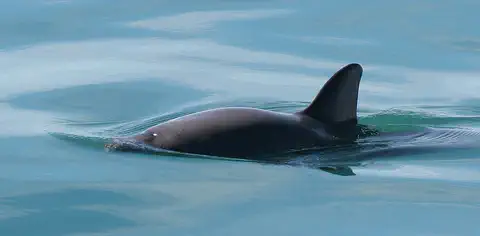
Vaquita
The vaquita is one of the smallest members of the whale, dolphin and porpoise family, and the most endangered marine mammal in the world. It lives only in the northern Gulf of California in Mexico. In 2025, survey teams saw between 7 and 10 different vaquitas and at least one new calf, and many people are working to keep them safe from fishing nets.
-
 Watch
3D
Animal
Veiled chameleon
The veiled chameleon lives in the dry mountains of Yemen and Saudi Arabia. It has a tall helmet-like casque on its head, eyes that can look two ways at once, feet that grip like hands and a super-fast sticky tongue. It changes color to show its mood, not to hide.
-
 Watch
Animal
Victoria crowned pigeon
The Victoria crowned pigeon is a huge blue pigeon from the lowland rainforests of northern New Guinea and nearby islands. On its head is a fan of lacy feathers with white tips, like a crown. It walks on the forest floor in small groups, eating fallen fruit and seeds, and flies up into the trees to sleep.
-
 Watch
Animal
Vietnamese mossy frog
The Vietnamese mossy frog is a tree frog from the forests of Vietnam, southern China and Laos. Its green skin, black spots and little bumps and spines make it look like a clump of moss. It hides in water-filled holes and rock crevices, often with only its eyes showing, and it eats large insects.
-
 Watch
Animal
Virginia opossum
The Virginia opossum is the only marsupial that lives north of Mexico. It is about the size of a house cat, with a white face, a pink nose and a long, bare tail that can grip branches. It comes out at night and eats almost anything, and a mother can carry a big litter of tiny babies in her pouch.
-
 Watch
Animal
Wallace's flying frog
Wallace's flying frog is a big, bright green frog of the rainforests of Southeast Asia. Its fingers and toes are joined by wide webs of skin, partly black, and it uses them to glide from tree to tree. It lives high in the trees and comes down only to breed, laying its eggs in a foam nest that hangs over a rain pool.
-
 Watch
3D
Animal
Walrus
The walrus is a huge Arctic sea mammal with long ivory tusks and a thick mustache of whiskers. It feels for clams on the sea floor, sucks out the soft part, and rests in big, noisy groups on sea ice and beaches.
-
 Watch
Animal
Wandering albatross
The wandering albatross has the largest known wingspan of any living bird, up to about 3.4 meters from tip to tip. It soars over the stormy Southern Ocean using the wind, catching squid and fish at the surface, and comes ashore only to breed on remote islands. A pair raises one chick at most every two years.
-
 Watch
Animal
Weddell seal
The Weddell seal lives farther south than any other mammal that lives in Antarctica all year. It spends the dark winter under the sea ice, diving deep for fish and keeping breathing holes open by scraping the ice with its teeth.
-
 Watch
Animal
West Indian manatee
The West Indian manatee is a large, slow, plant-eating marine mammal nicknamed the sea cow. It lives in warm coasts, rivers and springs from Florida and the Caribbean to Brazil, grazing on seagrass and other water plants for up to 8 hours a day. It cannot stand cold water for long, and being hit by boats is one of the dangers it faces.