Invertebrates
Animals without a backbone: insects, spiders, crabs, snails, octopuses, jellyfish and more.
77 to explore · page 2 of 2
-
 Watch
3D
Animal
Housefly
The housefly is a small gray fly with two big red eyes and one pair of see-through wings. It cannot chew, so it soaks up liquid food with a mouth like a sponge. Houseflies started out in central Asia and now live almost everywhere that people live. Their eggs hatch in less than a day, and the young grow up fast.
-
 Watch
Animal
Immortal jellyfish
The immortal jellyfish is a tiny sea jelly only about 3 millimeters across. Most jellyfish die after they grow up and make babies, but this one can do something amazing: a starving adult can turn back into a polyp, the young stage, and grow up all over again. It can still be eaten or get sick, so it does not really live forever.
-
 Watch
3D
Animal
Japanese spider crab
The Japanese spider crab is a gentle giant of the sea floor off Japan. Its body is only about the size of a large pizza, but its legs can stretch almost 4 meters from claw tip to claw tip, more than any other crab. It crawls slowly along the bottom, eating dead animals and plants.
-
 Watch
Animal
Leafcutter ant
Leafcutter ants are farmers. Workers cut pieces of leaves, carry them home along busy trails and use them to grow a fungus garden underground, and the fungus is their food. This page is about one well-known kind, Atta cephalotes, which lives in Central and South America in giant nests of hundreds of thousands to millions of ants.
-
 Watch
Animal
Lion's mane jellyfish
The lion's mane jellyfish is one of the biggest jellyfish in the world. Its bell is usually 30 to 50 centimeters across, but in very cold seas it can grow to about 2 meters, and hundreds of long, hair-like tentacles trail beneath it to catch food.
-
 Watch
3D
Animal
Luna moth
The luna moth is a large green moth of the forests of eastern North America. Its long, twisting wing tails may help it escape hungry bats. Grown-up luna moths have no working mouth, so they live only about a week, just long enough to find a mate and lay eggs.
-
 Watch
3D
Animal
Madagascar hissing cockroach
The Madagascar hissing cockroach is one of the largest cockroaches in the world, up to 10 centimeters long, and it has no wings. It lives on the floor of rainforests on the island of Madagascar, where it eats fallen leaves and fruit. It makes a hissing sound by pushing air out of the breathing holes on its body.
-
 Watch
Animal
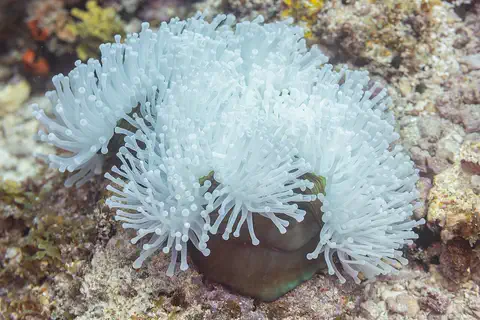
Magnificent sea anemone
The magnificent sea anemone is a large sea anemone of warm Indian and Pacific Ocean reefs. Its body is a soft column topped with hundreds of finger-shaped tentacles, and it often perches on top of rocks in plain view. Many kinds of clownfish live safely among its stinging tentacles.
-
 Watch
Animal
Mexican red-knee tarantula
The Mexican red-knee tarantula is a large, calm spider with black legs and bright orange-red patches at its leg joints. It lives only in a small part of western Mexico, where it hides in burrows by day and waits at the entrance for food at night. Because so many were taken for the pet trade and its forest is shrinking, it is listed as Vulnerable.
-
 Watch
Animal
Mimic octopus
The mimic octopus is a long-armed, brown-and-white octopus that lives on sandy sea floors in Southeast Asia. Scientists first filmed it in 1998 and were amazed: it changes its shape, colors and movements to look like other animals, including a flatfish, a lionfish and a sea snake.
-
 Watch
3D
Animal
Monarch butterfly
The monarch butterfly is famous for its bright orange wings and its amazing journey. Each fall, monarchs from eastern North America fly up to 3,000 miles to mountain forests in Mexico, where they spend the winter clustered together on fir trees. Their caterpillars eat only milkweed, which makes them taste bad to predators.
-
 Watch
Animal
Moon jellyfish
The moon jellyfish is a clear, saucer-shaped jelly found in coastal seas around the world. It has no eyes, brain or heart, and it is about 95 percent water. Four horseshoe-shaped rings show through its bell, and short stinging tentacles fringe its edge to catch tiny plankton.
-
 Watch
3D
Animal
Northern giant hornet
The northern giant hornet, once called the Asian giant hornet, is the world's largest hornet. It lives in forests of eastern Asia, where each colony is started by one queen in an underground nest. Its workers hunt other insects, including honey bees, to feed the young hornets.
-
 Watch
Animal
Ochre sea star
The ochre sea star lives on wave-washed rocky shores along the Pacific coast of North America. It can be purple, orange or brown, and it pries open mussels to eat them with a stomach it pushes out of its body. It is so important to its shore that scientists call it a keystone species.
-
 Watch
3D
Animal
Old World swallowtail
The Old World swallowtail is a large butterfly with yellow wings, black veins, blue spots and a red eyespot near the long tails on its hindwings. It lives across Europe and Asia and in northern North America. Its green and black caterpillar has a hidden orange fork that pops out when it is bothered.
-
 Watch
Animal
Orchid mantis
The orchid mantis is a praying mantis from the rainforests of Southeast Asia that looks like a flower. Its white and pink colors fool bees and other insects that visit flowers, and the mantis catches them. Its leg flaps look like petals, and scientists recently found that they also help young mantises glide through the air.
-
 Watch
Animal
Pacific banana slug
The Pacific banana slug is one of the biggest slugs in the world, often as long as a banana and sometimes yellow like one. It lives in the damp rainforests along the Pacific coast of North America, where it eats fallen leaves, mushrooms and other plant matter, helping to recycle the forest.
-
 Watch
3D
Animal
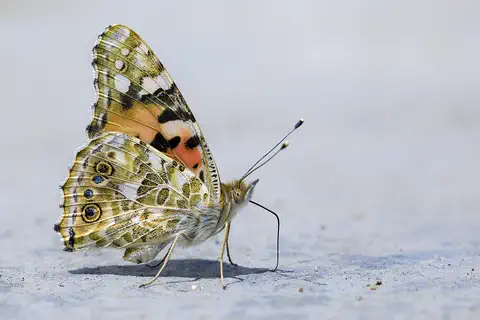
Painted lady
The painted lady is one of the most widespread butterflies in the world. Its orange and black wings carry it on huge journeys: each year, families of painted ladies fly between Africa and northern Europe, one generation after another.
-
 Watch
Animal
Peacock mantis shrimp
The peacock mantis shrimp is one of the most colorful animals on coral reefs in the Indian and Pacific Oceans. It is famous for its club-shaped arms, which strike so fast that they can smash snail shells, and for its amazing eyes on movable stalks.
-
 Watch
Animal
Peacock spider
The peacock spider is a jumping spider from Australia, smaller than a grain of rice. The male has a rainbow-colored abdomen with flaps that unfold into a fan, like a peacock's tail. He waves the fan and his long third legs in a dance to win over a female, and he sends little vibrations through the ground at the same time.
-
 Watch
3D
Animal
Periodical cicada
The periodical cicada spends 17 years underground as a nymph, sipping juice from tree roots. Then, in late spring, millions of them dig out on the same few nights, turn into winged adults and fill the trees with their loud songs, all within a few weeks.
-
 Watch
Animal
Portuguese man o' war
The Portuguese man o' war is not a true jellyfish. It is a siphonophore: a colony of many tiny, identical animals, each with its own job. A gas-filled float with a crest catches the wind like a sail, while long stinging tentacles below catch fish.
-
 Watch
Animal
Purple sea urchin
The purple sea urchin is a spiny, ball-shaped animal of North America's Pacific coast, up to about 10 centimeters across. It scrapes algae with a mouth of five teeth, walks on tiny tube feet, and can even carve a hollow in solid rock. Since 2014 its numbers have exploded in parts of California, and hungry urchins have eaten away large areas of kelp forest.
-
 Watch
Animal
Queen Alexandra's birdwing
Queen Alexandra's birdwing is described by scientists as the largest butterfly in the world: a female's wings can stretch almost 25 centimeters across. It lives only in a small area of rainforest in Papua New Guinea, where its caterpillars eat pipevine plants. It is endangered and protected by law.
-
 Watch
3D
Animal
Red swamp crayfish
The red swamp crayfish is a dark red freshwater crustacean with long claws covered in bright red bumps. It comes from the swamps and streams of the southern United States and northern Mexico, where it digs burrows in the mud. People have carried it around the world for food, and in many new places it harms the plants and animals that already live there.
-
 Watch
3D
Animal
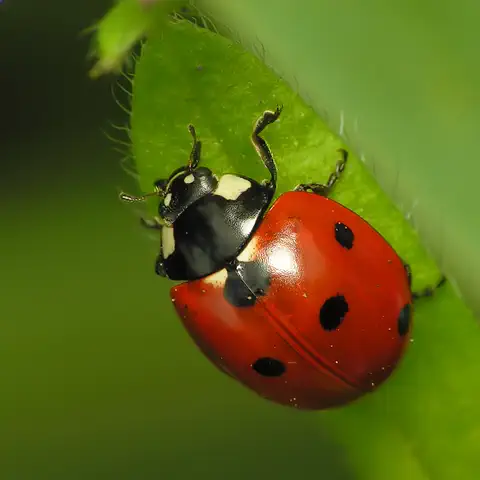
Seven-spot ladybird
The seven-spot ladybird, or ladybug, is a domed red beetle with seven black spots. Both the young and the adults hunt aphids, small insects that suck plant juices, so gardeners and farmers are glad to see them. Its bright colors warn predators that it tastes horrible.
-
 Watch
Animal
Staghorn coral
Staghorn coral is a reef-building coral of Florida, the Bahamas and the Caribbean. Each colony is made of many tiny polyps that build a branching skeleton like a stag's antlers, and tiny algae living inside them give it food and color. Once one of the most common Caribbean corals, it is now critically endangered.
-
 Watch
3D
Animal
Tardigrade
Tardigrades, or water bears, are tiny eight-legged animals about a millimeter long or less. They live in damp moss, soil, fresh water and the sea all over the world, and they can survive drying out completely by curling into a little barrel called a tun.
-
 Watch
3D
Animal
Western honey bee
The western honey bee lives in big families called colonies, with one queen and many workers. Workers collect nectar and pollen from flowers, turn nectar into honey, and tell each other where food is by dancing. As they travel, they pollinate many plants, including crops people eat.