Search the Discovery Encyclopedia
-
 Natural wonder
Amazon rainforest
The Amazon rainforest covers about 6 million square kilometers around the Amazon River and its branches in northern South America, and about 60 percent of it is in Brazil. Britannica calls it the world's richest and most varied home for living things, with millions of kinds of insects, plants and animals.
-
 Country
Malaysia
Malaysia is a country in Southeast Asia, just north of the Equator. One part is on the Malay Peninsula and the other is on the island of Borneo. It has rainforests, huge caves, Mount Kinabalu and the city of Kuala Lumpur, with about 34.4 million people (2026).
-
 Natural wonder
Amazon River
The Amazon River flows from tiny streams in the Andes Mountains of Peru across Colombia and Brazil to the Atlantic Ocean. NASA calls it the largest river in the world: about 219,000 cubic meters of water pour into the ocean every second, nearly a fifth of all the water that rivers carry to the oceans.
-
 Natural wonder
Iguaçu Falls
Iguaçu Falls, on the Iguaçu River where Brazil and Argentina meet, is a system of many waterfalls and rapids almost three kilometers wide, with drops of up to about 80 meters. Clouds of spray keep the rainforest around it green and wet.
-
 Country
Peru
Peru is a country on the Pacific coast of South America. It has a dry desert coast, the high Andes mountains and the Amazon rainforest, and about 34 million people lived there in 2025, many of them in the capital, Lima.
-
 Country
Gabon
Gabon is a country on the Atlantic coast of Africa, right on the equator. About three-fourths of it is covered by dense rainforest, home to forest elephants, gorillas and mandrills. Most people live in towns and cities, and the 2026 census counted about 3.5 million people.
-
 Country
Ghana
Ghana is a country in West Africa on the Gulf of Guinea. It has a coast of sandy bays, a belt of rainforest and wide northern savannas, and one of the world's largest artificial lakes, Lake Volta. In 1957 it became independent, and its capital is Accra.
-
 Country
Brazil
Brazil covers about half of South America and is the fifth-largest country in the world. It holds most of the Amazon River basin and much of the world's largest rainforest, and about 214 million people lived there in 2026, most of them near the Atlantic coast.
-
 Country
Brunei
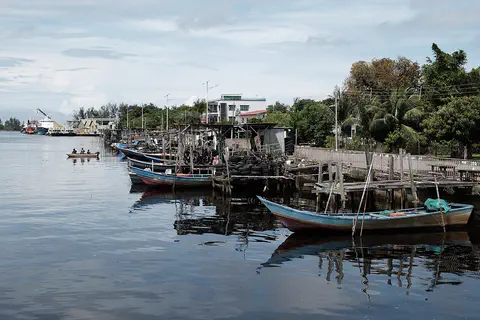
Brunei is a small country on the north coast of the island of Borneo, in Southeast Asia. Most of it is covered in rainforest, where proboscis monkeys and sun bears live. Its capital has a famous water village built on stilts, and about 459,000 people lived in Brunei in 2025.
-
 Country
Guinea
Guinea is a country on the Atlantic coast of West Africa. Three of West Africa's great rivers, the Niger, the Sénégal and the Gambia, begin in its Fouta Djallon highlands. It has rainy coasts, high plateaus, savanna and rainforest, and about 17.5 million people were counted there in 2025.
-
 Natural wonder
K'gari
K'gari, off the coast of Queensland in Australia, is the largest sand island in the world. Sand dunes rise up to about 250 meters, rainforest grows right on the sand, and about half of the world's perched dune lakes sparkle among the dunes. Once called Fraser Island, it was officially renamed K'gari, the Butchulla people's name for it, in 2023.
-
 Country
Panama
Panama is a narrow country in Central America that joins North and South America. Since 1914 the Panama Canal has let ships cross from the Atlantic Ocean to the Pacific without sailing around South America. Panama has rainforests, more than 1,600 islands and about 4.6 million people (2025).
-
 Country
Ecuador
Ecuador is a country in northwestern South America, named after the equator, which crosses it. In a small space it holds Pacific beaches, high snowy volcanoes of the Andes, part of the Amazon rainforest and the Galápagos Islands, whose wildlife helped Charles Darwin develop his ideas.
-
 Country
Liberia
Liberia is a country on the Atlantic coast of West Africa, with long beaches, many rivers and lush rainforest. It was founded in the 1820s as a home for formerly enslaved people from the United States and became independent in 1847. About 5.8 million people lived there in 2026.
-
 Country
Nigeria
Nigeria is a large country in West Africa, named after the Niger River. It has rainforests in the south and dry grasslands in the north, and it is Africa's most populous country, with about 238 million people in 2025 who speak hundreds of languages.
-
 Country
Cameroon
Cameroon sits where western and central Africa meet. In the south are thick rainforests full of monkeys and apes, by the coast rises Mount Cameroon, an active volcano, and in the north are dry savanna plains. About 29.9 million people lived there in 2025, and French and English are both official languages.
-
 Country
Colombia
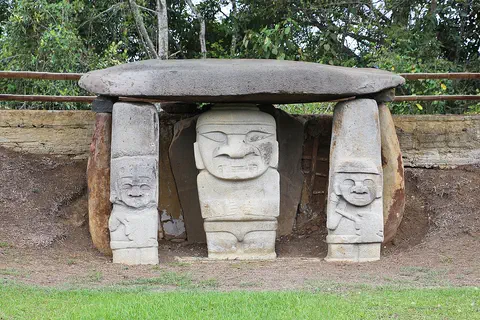
Colombia is in the northwest of South America, with coasts on both the Caribbean Sea and the Pacific Ocean. Three ranges of the Andes run through it, and most people live in the cool mountains, where the capital, Bogotá, sits on a high plateau. About 53.4 million people lived there in 2026, according to DANE, the national statistics office.
-
 Country
Honduras
Honduras is a mountainous country in Central America, with the Caribbean Sea to the north and a short Pacific coast to the south. Its forests are home to jaguars and macaws, the Maya city of Copán stands in the west, and about 10.2 million people live there (official 2026 estimate).
-
 Country
Indonesia
Indonesia is a country of about 17,500 islands in Southeast Asia, spread across the Equator between the Indian and Pacific oceans. It has more than 100 active volcanoes, rainforests full of wildlife, and about 286 million people (2025).
-
 Country
Sri Lanka
Sri Lanka is an island country in the Indian Ocean, just south of India. Green highlands rise in the middle, surrounded by plains and sandy beaches. About 22 million people live there, and the island is famous for its tea, its ancient cities and its wild elephants.
-
 Country
Costa Rica
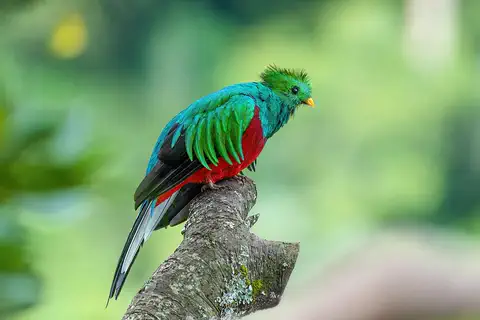
Costa Rica is a small country in Central America between the Caribbean Sea and the Pacific Ocean. Volcanoes and mountains run down its middle, its forests are full of wildlife, and many national parks protect them. Since 1949 it has had no army. About 5.2 million people lived there in 2025.
-
 Country
Madagascar
Madagascar is the fourth-largest island in the world, in the Indian Ocean off southeastern Africa. It split from other land more than 60 million years ago, so many of its plants and animals, such as its lemurs, live nowhere else. About 32.7 million people lived there in 2025.
-
 Natural wonder
Angel Falls
Angel Falls is a waterfall in Canaima National Park in Venezuela. It pours off the cliff of Auyán-tepui, a giant table-shaped mountain, and falls about 979 meters. UNESCO calls it the world's highest waterfall.
-
 Natural wonder
River Congo
The Congo is Africa's second-longest river, about 4,700 kilometers long. It curves in a giant arc through the rainforests of central Africa and empties into the Atlantic Ocean. Rain falls in its basin all year, so it carries a huge amount of water, and its wild lower rapids are home to about 320 kinds of fish, about 90 of them found nowhere else.
-
 Country
Sierra Leone
Sierra Leone is a country on the Atlantic coast of West Africa. Its name comes from Portuguese words meaning Lion Mountains, after the hills around Freetown's huge natural harbor. Rainforests, rivers and mangrove swamps are home to chimpanzees and pygmy hippos, and the 2021 census counted about 7.5 million people.
-
 Country
Côte d'Ivoire
Côte d'Ivoire, also called Ivory Coast, is a country on the coast of West Africa. It has lagoons along the sea, rainforest in the south and savanna in the north. It became the world's leading grower of cocoa beans in the late 1980s, and about 32.7 million people lived there in 2025.
-
 Country
Republic of the Congo
The Republic of the Congo lies on the equator in west-central Africa. Thick rainforests cover much of it, the mighty Congo River forms its eastern border, and it has a short coast on the Atlantic Ocean. Forest elephants and gorillas live in its parks. About 6.5 million people lived there in 2025, most of them in two cities.
-
 Natural wonder
Virunga National Park
Virunga National Park, in the east of the Democratic Republic of the Congo, was founded in 1925; the park describes itself as Africa's first national park. It stretches from active volcanoes in the south to the snowy Rwenzori Mountains in the north. About one third of the world's mountain gorillas live in its forests, along with elephants, hippos, chimpanzees and hundreds of kinds of birds.
-
 Country
Central African Republic
The Central African Republic is a landlocked country in the very center of Africa, about the size of France. Grassy savannas cover the north, rainforests grow in the south, and the capital, Bangui, stands on the Ubangi River. About 5.5 million people lived there in 2025.
-
 Natural wonder
Phong Nha–Ke Bang National Park
Phong Nha–Ke Bang National Park, in central Vietnam near the border with Laos, protects one of the world's great limestone landscapes. UNESCO says its rocks began forming about 400 million years ago, and more than 220 kilometers of caves and underground rivers have been mapped. One of them, Son Doong, holds the world's largest known cave passage.
-
Life around the world
River boats from Manaus, Brazil
Manaus, a city of about 2.3 million people, sits where the dark Rio Negro meets the muddy Solimões. Rivers are the main way to reach most towns in Amazonas state. Big wooden boats called recreios carry passengers and cargo for a day or more, with hooks for hammocks, while fast boats called expressos cut the time.
-
Country
Democratic Republic of the Congo
The Democratic Republic of the Congo, or DR Congo, is the second-largest country in Africa. The mighty Congo River curves through its rainforests, volcanoes rise in the east, and its capital, Kinshasa, is a center of music, fashion and popular culture.