Search the Discovery Encyclopedia
-
 Natural wonder
Amazon rainforest
The Amazon rainforest covers about 6 million square kilometers around the Amazon River and its branches in northern South America, and about 60 percent of it is in Brazil. Britannica calls it the world's richest and most varied home for living things, with millions of kinds of insects, plants and animals.
- What If? Lab What if a rainforest had little rain? Rainforests are tall, green forests that get a great deal of rain. In 2005 and 2010, big droughts hit the Amazon rainforest, and satellites watched what happened to its trees. Use those real events to imagine a rainforest with little rain: drier leaves, hungry animals and a forest that might change.
- What If? Lab What if a cactus grew in a rainforest? Desert cacti are built to save every drop of water. A rainforest gets rain almost all year. Move a desert cactus into the rainforest and its water-saving tricks could turn into trouble, because soggy soil can make its roots rot. Yet some cacti really do live in rainforests, high up in the trees!
-
 Country
Malaysia
Malaysia is a country in Southeast Asia, just north of the Equator. One part is on the Malay Peninsula and the other is on the island of Borneo. It has rainforests, huge caves, Mount Kinabalu and the city of Kuala Lumpur, with about 34.4 million people (2026).
-
 Natural wonder
Amazon River
The Amazon River flows from tiny streams in the Andes Mountains of Peru across Colombia and Brazil to the Atlantic Ocean. NASA calls it the largest river in the world: about 219,000 cubic meters of water pour into the ocean every second, nearly a fifth of all the water that rivers carry to the oceans.
-
 Natural wonder
Iguaçu Falls
Iguaçu Falls, on the Iguaçu River where Brazil and Argentina meet, is a system of many waterfalls and rapids almost three kilometers wide, with drops of up to about 80 meters. Clouds of spray keep the rainforest around it green and wet.
-
 Country
Peru
Peru is a country on the Pacific coast of South America. It has a dry desert coast, the high Andes mountains and the Amazon rainforest, and about 34 million people lived there in 2025, many of them in the capital, Lima.
-
 Country
Gabon
Gabon is a country on the Atlantic coast of Africa, right on the equator. About three-fourths of it is covered by dense rainforest, home to forest elephants, gorillas and mandrills. Most people live in towns and cities, and the 2026 census counted about 3.5 million people.
-
 Country
Ghana
Ghana is a country in West Africa on the Gulf of Guinea. It has a coast of sandy bays, a belt of rainforest and wide northern savannas, and one of the world's largest artificial lakes, Lake Volta. In 1957 it became independent, and its capital is Accra.
-
 Animal
Okapi
The okapi has a velvety reddish-brown coat and zebra-like stripes on its legs, but its closest living relative is the giraffe. It lives only in the rainforests of the Democratic Republic of the Congo, where it browses leaves with a long, dark tongue. It is endangered.
-
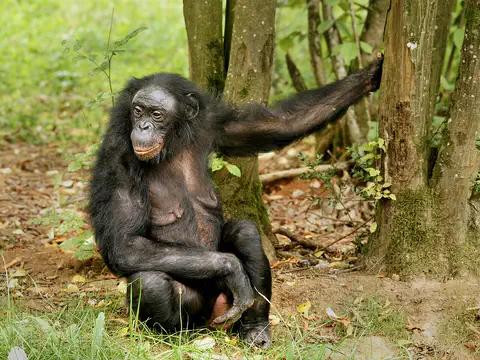 Animal
Bonobo
The bonobo is a great ape that looks a lot like a chimpanzee but is more slender, with a rounder head. It lives only in the rainforests south of the Congo River, in groups where females take the lead and squabbles rarely turn into fights.
-
 Country
Brazil
Brazil covers about half of South America and is the fifth-largest country in the world. It holds most of the Amazon River basin and much of the world's largest rainforest, and about 214 million people lived there in 2026, most of them near the Atlantic coast.
-
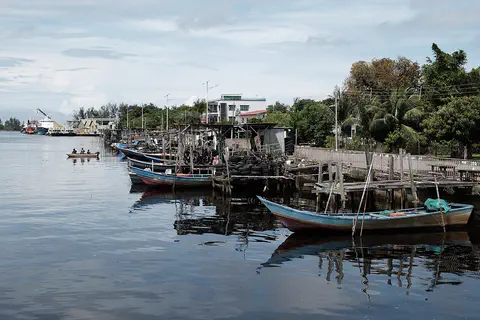 Country
Brunei
Brunei is a small country on the north coast of the island of Borneo, in Southeast Asia. Most of it is covered in rainforest, where proboscis monkeys and sun bears live. Its capital has a famous water village built on stilts, and about 459,000 people lived in Brunei in 2025.
-
 Country
Guinea
Guinea is a country on the Atlantic coast of West Africa. Three of West Africa's great rivers, the Niger, the Sénégal and the Gambia, begin in its Fouta Djallon highlands. It has rainy coasts, high plateaus, savanna and rainforest, and about 17.5 million people were counted there in 2025.
-
 Animal
Jaguar
The jaguar is the largest cat in North and South America. It lives near rivers and swamps, swims well, and has such a powerful bite that it can crack a turtle's shell. Most jaguars live in the Amazon rainforest.
-
 Natural wonder
K'gari
K'gari, off the coast of Queensland in Australia, is the largest sand island in the world. Sand dunes rise up to about 250 meters, rainforest grows right on the sand, and about half of the world's perched dune lakes sparkle among the dunes. Once called Fraser Island, it was officially renamed K'gari, the Butchulla people's name for it, in 2023.
-
 Animal
Ocelot
The ocelot is a medium-sized wild cat of the Americas, from southern Texas to northern Argentina. Its golden coat has chains of dark-edged spots, and no two ocelots look alike. It hunts mostly at night, catching mice, rats, lizards and birds, and it needs thick plants to hide in.
-
 Country
Panama
Panama is a narrow country in Central America that joins North and South America. Since 1914 the Panama Canal has let ships cross from the Atlantic Ocean to the Pacific without sailing around South America. Panama has rainforests, more than 1,600 islands and about 4.6 million people (2025).
-
 Country
Ecuador
Ecuador is a country in northwestern South America, named after the equator, which crosses it. In a small space it holds Pacific beaches, high snowy volcanoes of the Andes, part of the Amazon rainforest and the Galápagos Islands, whose wildlife helped Charles Darwin develop his ideas.
-
 Country
Liberia
Liberia is a country on the Atlantic coast of West Africa, with long beaches, many rivers and lush rainforest. It was founded in the 1820s as a home for formerly enslaved people from the United States and became independent in 1847. About 5.8 million people lived there in 2026.
-
 Country
Nigeria
Nigeria is a large country in West Africa, named after the Niger River. It has rainforests in the south and dry grasslands in the north, and it is Africa's most populous country, with about 238 million people in 2025 who speak hundreds of languages.
-
 Animal
Army ant
Army ants hunt together in giant swarms and never build a permanent nest. This page is about the best-studied kind, Eciton burchellii, of Central and South American forests. Each night of its traveling phase the colony moves, and the workers link their legs to build a living camp around their queen and young.
-
 Country
Cameroon
Cameroon sits where western and central Africa meet. In the south are thick rainforests full of monkeys and apes, by the coast rises Mount Cameroon, an active volcano, and in the north are dry savanna plains. About 29.9 million people lived there in 2025, and French and English are both official languages.
-
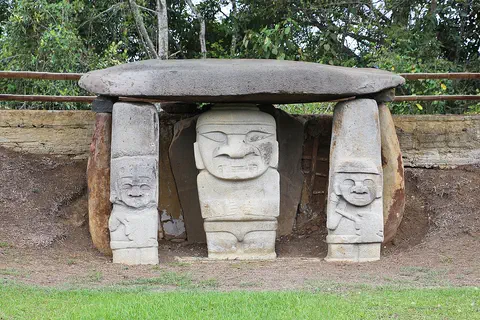 Country
Colombia
Colombia is in the northwest of South America, with coasts on both the Caribbean Sea and the Pacific Ocean. Three ranges of the Andes run through it, and most people live in the cool mountains, where the capital, Bogotá, sits on a high plateau. About 53.4 million people lived there in 2026, according to DANE, the national statistics office.
-
 Country
Honduras
Honduras is a mountainous country in Central America, with the Caribbean Sea to the north and a short Pacific coast to the south. Its forests are home to jaguars and macaws, the Maya city of Copán stands in the west, and about 10.2 million people live there (official 2026 estimate).
-
 Animal
Mandrill
The mandrill is the largest and most colorful of the Old World monkeys. Grown-up males have red noses, blue-ridged cheeks and a golden beard. Mandrills roam the rainforests of west-central Africa in huge, noisy groups called hordes.
-
 Animal
Sun bear
The sun bear is the smallest of the world's eight kinds of bear, and it has the longest tongue. It lives in the forests of Southeast Asia, climbs trees with long curved claws, and rips open logs to find insects and honey. Every bear has its own chest patch, like a fingerprint.
-
 Country
Indonesia
Indonesia is a country of about 17,500 islands in Southeast Asia, spread across the Equator between the Indian and Pacific oceans. It has more than 100 active volcanoes, rainforests full of wildlife, and about 286 million people (2025).
-
 Country
Sri Lanka
Sri Lanka is an island country in the Indian Ocean, just south of India. Green highlands rise in the middle, surrounded by plains and sandy beaches. About 22 million people live there, and the island is famous for its tea, its ancient cities and its wild elephants.
-
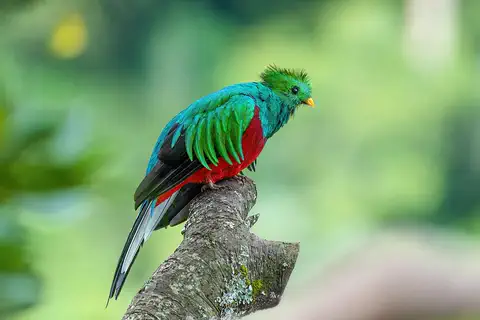 Country
Costa Rica
Costa Rica is a small country in Central America between the Caribbean Sea and the Pacific Ocean. Volcanoes and mountains run down its middle, its forests are full of wildlife, and many national parks protect them. Since 1949 it has had no army. About 5.2 million people lived there in 2025.
-
 Animal
King cobra
The king cobra is the largest venomous snake in the world, growing to more than 5 meters long. It lives in forests and near streams in South and Southeast Asia, eats mainly other snakes, and the mother builds a nest of leaves and guards her eggs.
-
 Country
Madagascar
Madagascar is the fourth-largest island in the world, in the Indian Ocean off southeastern Africa. It split from other land more than 60 million years ago, so many of its plants and animals, such as its lemurs, live nowhere else. About 32.7 million people lived there in 2025.
-
 Natural wonder
Angel Falls
Angel Falls is a waterfall in Canaima National Park in Venezuela. It pours off the cliff of Auyán-tepui, a giant table-shaped mountain, and falls about 979 meters. UNESCO calls it the world's highest waterfall.
-
 Animal
Gray parrot
The gray parrot is a gray, red-tailed parrot from the rainforests of West and Central Africa. It lives in big, noisy flocks, eats fruit and seeds, and is famous for copying sounds. Trapping for the pet trade and forest loss have made it endangered.
-
 Animal
Harpy eagle
Harpy eagles are among the largest and most powerful eagles in the world. They live in the lowland rainforests of Central and South America, where they hunt sloths and monkeys in the treetops. Forest loss and shooting have made them rare.
-
 Natural wonder
River Congo
The Congo is Africa's second-longest river, about 4,700 kilometers long. It curves in a giant arc through the rainforests of central Africa and empties into the Atlantic Ocean. Rain falls in its basin all year, so it carries a huge amount of water, and its wild lower rapids are home to about 320 kinds of fish, about 90 of them found nowhere else.
-
 Animal
Electric eel
The electric eel is a long, snake-shaped fish from South America that makes its own electricity. It uses weak pulses to find its way and talk, and strong ones to catch food. Despite its name, it is not a true eel at all.
-
 Animal
Green iguana
The green iguana is a large lizard from the forests of Central and South America. It climbs high into trees to bask in the sun, eats leaves, flowers and fruit, and dives into rivers to get away from danger. It can grow to about 2 meters long, tail included.
-
 Country
Sierra Leone
Sierra Leone is a country on the Atlantic coast of West Africa. Its name comes from Portuguese words meaning Lion Mountains, after the hills around Freetown's huge natural harbor. Rainforests, rivers and mangrove swamps are home to chimpanzees and pygmy hippos, and the 2021 census counted about 7.5 million people.
-
 Country
Côte d'Ivoire
Côte d'Ivoire, also called Ivory Coast, is a country on the coast of West Africa. It has lagoons along the sea, rainforest in the south and savanna in the north. It became the world's leading grower of cocoa beans in the late 1980s, and about 32.7 million people lived there in 2025.
-
 Animal
Orchid mantis
The orchid mantis is a praying mantis from the rainforests of Southeast Asia that looks like a flower. Its white and pink colors fool bees and other insects that visit flowers, and the mantis catches them. Its leg flaps look like petals, and scientists recently found that they also help young mantises glide through the air.
-
 Animal
Scarlet macaw
The scarlet macaw is a large parrot of the rainforests of Mexico, Central America and South America. It is famous for its bright red, yellow and blue feathers. It cracks hard nuts with its powerful beak, flies in noisy flocks and stays with one mate for life.
-
 Animal
Goliath beetle
The Goliath beetle is one of the largest beetles on Earth, from about 5 to 11 centimeters long. It lives in the rainforests of central and eastern Africa, where the adults drink tree sap. Its huge grubs need protein-rich food to grow, and they may even hunt other small animals.
-
 Animal
Great hornbill
The great hornbill is a very large bird of Asia's forests, with a long tail, broad black-and-white wings and an enormous curved yellow bill topped by a helmet called a casque. It eats mostly figs, and the female seals herself inside a tree hole to raise her chick.
-
 Animal
Green anaconda
The green anaconda is one of the largest snakes on Earth. This olive-green, spotted boa lives in the rivers, swamps and flooded grasslands of northern South America, where it lies hidden in shallow water with only its eyes and nose showing.
-
 Animal
Leafcutter ant
Leafcutter ants are farmers. Workers cut pieces of leaves, carry them home along busy trails and use them to grow a fungus garden underground, and the fungus is their food. This page is about one well-known kind, Atta cephalotes, which lives in Central and South America in giant nests of hundreds of thousands to millions of ants.
-
 Animal
Boa constrictor
The boa constrictor is a large, heavy snake of South America. Of all the boas, it lives in the greatest variety of places, from rainforests to dry scrub and farms. It catches food by squeezing, it has no venom, and mothers give birth to live babies.
-
 Animal
Clouded leopard
The clouded leopard is a forest cat of mainland Southeast Asia and the Himalayan foothills. It is named for the cloud-shaped patches on its coat, and it is an amazing climber that can creep headfirst down a tree trunk. It is Vulnerable, and fewer of them are left each year.
-
 Animal
Hercules beetle
The Hercules beetle is one of the largest beetles in the world: the biggest males can reach 18 centimeters, horns included. It lives in rainforests from southern Mexico to Bolivia and on a few Caribbean islands. Its huge grubs spend more than a year eating rotting wood before they turn into beetles.
-
 Animal
Western gorilla
The western gorilla is a great ape, one of our closest animal relatives. It lives in family groups led by a big silverback male, eats leaves and fruit in the rainforests of central Africa, and is quiet and peaceful unless it feels threatened.
-
 Animal
Amazon milk frog
The Amazon milk frog is a large tree frog that lives high in the treetops of the rainforest in northeastern South America. It is active at night, has big golden eyes, and lays its eggs in pools of rainwater trapped in holes in trees, where its tadpoles grow up.
-
 Animal
Emperor scorpion
The emperor scorpion is one of the biggest scorpions in the world, up to about 20 centimeters long. It lives in the warm, humid forests of West Africa, where it digs burrows and hunts insects such as termites at night. Mothers give birth to live young and carry them on their backs. Like other scorpions, it glows blue-green under ultraviolet light.
-
 Animal
Philippine eagle
The Philippine eagle is one of the largest and rarest eagles in the world. It lives only in the mountain rainforests of four Philippine islands, where it hunts monkeys, civets, flying squirrels and other forest animals. It is the national bird of the Philippines, and it is critically endangered.
-
 Animal
Bornean orangutan
The Bornean orangutan is a shaggy red great ape that spends almost all its life in the treetops of Borneo's rainforests. It eats mostly ripe fruit, builds a new leafy bed every night, and lives a quieter, more solitary life than other great apes.
-
 Animal
Goliath birdeater
The Goliath birdeater is a giant tarantula from the rainforests of northern South America. With legs spreading about 28 centimeters and a weight of up to about 170 grams, it is described as the heaviest spider in the world. Despite its name, it eats mostly worms and insects, not birds.
-
 Animal
Common blue morpho
The common blue morpho is a large butterfly of the forests of Mexico, Central America and South America. The tops of its wings flash bright blue, but the undersides are brown with big eyespots, which camouflage it when it lands with its wings closed. Adults sip juice from rotting fruit instead of nectar.
-
 Animal
Dyeing poison frog
The dyeing poison frog lives in the rainforests of Suriname, Guyana, French Guiana and nearby Brazil. It comes in many dazzling patterns of blue, yellow, black and white, which warn predators about poison in its skin. Fathers carry their tadpoles on their backs to little pools of water.
-
 Animal
Golden poison frog
The golden poison frog is a small frog from one small area of rainforest in western Colombia. It comes in bright yellow, orange or mint green, and its skin holds a very strong poison that comes from the insects it eats. Scientists call it the most toxic of all frogs. It is endangered because its forest is being cleared.
-
 Animal
Keel-billed toucan
The keel-billed toucan lives in the forests of southern Mexico, Central America and northern South America. Its huge, colorful bill can be a third of its whole length, yet it is light, and the bird uses it to pick fruit from thin branches.
-
 Animal
Pygmy hippopotamus
The pygmy hippopotamus is a small, shy relative of the common hippo. It lives alone in the swampy rainforests of West Africa, mostly in Liberia, rests in water by day and feeds on land at night. It is endangered, with fewer than 2,500 adults left.