Asia
Countries, cities, landmarks and natural wonders of Asia. Pick one to explore it, or open the globe.
138 to explore · page 1 of 3
-
 Watch
Life around the world
A school day in Tokyo
In Tokyo, many children walk to their local school in neighborhood groups. Lessons are 45 minutes long in elementary school. At lunchtime, pupils set and clear the table in their classroom, and they share the job of cleaning their school. The school year starts in April.
-
 Watch
 Country
Afghanistan
Afghanistan is a landlocked country in south-central Asia. The high Hindu Kush mountains run across its middle, sandy deserts lie in the southwest, and the capital, Kabul, sits in a valley about 1,800 meters above sea level.
-
 Watch
 Country
Azerbaijan
Azerbaijan is a country on the southern side of the Caucasus Mountains, along the western shore of the Caspian Sea. It has high mountains, wide lowlands and forests, its capital is Baku, and about 10.3 million people lived there in mid-2026.
-
 Watch
 Country
Indonesia
Indonesia is a country of about 17,500 islands in Southeast Asia, spread across the Equator between the Indian and Pacific oceans. It has more than 100 active volcanoes, rainforests full of wildlife, and about 286 million people (2025).
-
 Watch
 Country
Japan
Japan is an island country in East Asia. Most of its land is steep mountains and forest, Mount Fuji is its tallest peak, and about 124 million people live there, many of them in big cities such as Tokyo.
-
 Watch
 Country
Kyrgyzstan
Kyrgyzstan is a mountain country in Central Asia, with no coast on the sea. The high Tien Shan mountains cover much of it, and Lake Issyk-Kul, one of the largest high-mountain lakes in the world, lies in the northeast. Its capital is Bishkek.
-
 Watch
Natural wonder
Mount Everest
Mount Everest, in the Himalayas on the border of Nepal and China, is what Britannica calls the highest mountain in the world. In 2020 China and Nepal announced its height as 8,848.86 meters. It grew as two giant plates of Earth's crust pushed together, and it is still rising a tiny bit each year.
-
 Watch
 Country
Pakistan
Pakistan is a country in South Asia that stretches from icy mountain peaks in the north down the fertile valley of the Indus River to the Arabian Sea. It has busy cities such as Karachi and Lahore, its capital is Islamabad, and its 2023 census counted 241.49 million people.
-
 Watch
 Country
South Korea
South Korea occupies the southern part of the Korean Peninsula in East Asia, with sea on three sides. It is mostly mountains and hills, its capital Seoul is one of its many big cities, and the national census counted about 51.8 million people in 2025.
-
 Watch
 Country
Syria
Syria lies on the east coast of the Mediterranean Sea in southwestern Asia. Behind a short coast rise mountains, and beyond them stretches a wide, dry steppe crossed by the Euphrates River. Damascus, its capital, is considered one of the oldest cities in the world.
-
 Watch
 Country
Thailand
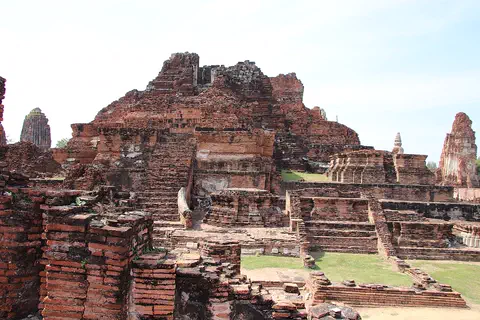
Thailand is a tropical country in the middle of mainland Southeast Asia, with forested mountains in the north, rice fields on its central plains and a long, narrow peninsula in the south. Its capital is Bangkok, and about 65.8 million people were on its civil register at the end of 2025.
-
 Watch
Journey
The Silk Road
The Silk Road was not one road but a web of trade routes, about 6,400 kilometers long, linking China with Central Asia and the Mediterranean. For more than 1,500 years, caravans carried silk, tea, spices and glass, and travelers shared ideas, beliefs and inventions.
-
 Watch
 Country
United Arab Emirates
The United Arab Emirates, or UAE, is a country of seven emirates on the Arabian Peninsula, on the Persian Gulf and the Gulf of Oman. Most of it is desert, and its cities, Abu Dhabi, Dubai and Sharjah, line the coast. Dubai has the Burj Khalifa, the world's tallest building.
-
Watch
Life around the world
Riding the Shinkansen from Tokyo to Osaka
The Tokaido Shinkansen, Japan's first bullet train line, opened in 1964 between Tokyo and Osaka. Today its trains reach 285 km/h, the fastest take 2 hours 21 minutes from Tokyo to Shin-Osaka, and in fiscal year 2023 the average delay was just 1.6 minutes per train.
-
 Watch
Life around the world
Breakfast noodles in Hanoi
Pho is a soup of rice noodles, meat and a fragrant broth, and in Vietnam it is mostly eaten for breakfast. In Hanoi, near where pho is thought to have begun, cooks focus on a clear broth simmered with bones, meat, ginger, shallots and spices, served at street stalls from early morning.
-
 Watch
 Country
Türkiye (Turkey)
Türkiye, also called Turkey, lies partly in Asia and partly in Europe. A narrow waterway called the Bosporus runs through its biggest city, Istanbul, and its land is mostly mountains and high plains. About 86 million people live there.
-
 Watch
Life around the world
Lunch at a Singapore hawker center
A hawker center is a building full of small food stalls, each cooking its own dishes, with shared tables in the middle. Singapore built them to move street cooks indoors, and today they are where people from Chinese, Malay, Indian and other communities eat side by side. UNESCO calls them community dining rooms.
-
 Watch
Life around the world
Lunchbox delivery in Mumbai
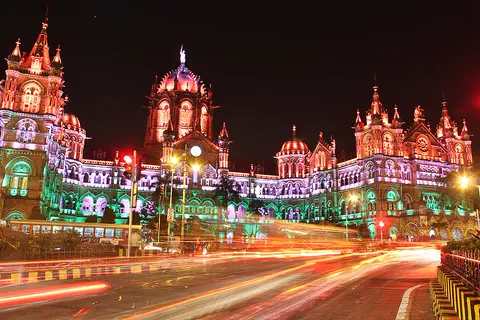
Every working day, Mumbai's dabbawalas collect home-cooked lunches in metal tiffin boxes, carry them by bicycle, on foot and on the city's local trains, and deliver them to offices by lunchtime. Colored letters, numbers and symbols painted on each box tell them where it goes, and the empty boxes travel home in the afternoon.
- Watch Life around the world Living root bridges of Meghalaya In the hills of Meghalaya, in northeast India, Khasi and Jaintia villagers guide the hanging roots of rubber fig trees across streams on bamboo frames. Over many years the roots take hold, thicken and grow together into living bridges that can carry people across rivers swollen by monsoon rain.
-
 Watch
Life around the world
Living in a vertical city: Hong Kong
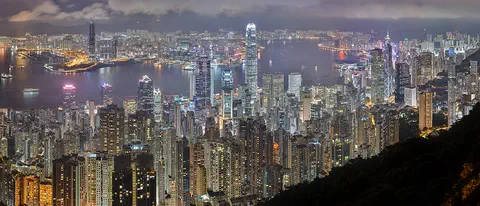
Hong Kong is hilly, and only about a quarter of its land is built on. Its 7.5 million people live close together, many in apartment buildings. A long chain of outdoor escalators climbs one hillside, ferries cross Victoria Harbour, and trains carry millions of passengers every day.
-
 Watch
 Country
India
India is a huge country in South Asia, shaped like a big triangle pointing into the Indian Ocean. The Himalayas rise along its north, heavy monsoon rains arrive every summer, and about 1.46 billion people (2025) live there, speaking hundreds of languages.
-
 Watch
Life around the world
Living in a ger in Mongolia
A ger is a round, portable home with lattice walls, roof poles and a crown at the top, covered in layers of wool felt and canvas and tied with ropes. Herding families in Mongolia take it down and move it with their animals, and many families also live in gers around the capital, Ulaanbaatar.
- Watch Life around the world Living with snow in Yakutsk Yakutsk, a city of more than 300,000 people beside the Lena River in Siberia, is one of the coldest cities in the world: in January, the average daily high is about -35°C. People dress in layers, many buildings stand on stilts above frozen ground called permafrost, and young children stay home from school on the coldest days.
-
Watch
Natural wonder
Mount Fuji
Mount Fuji, 3,776 meters high, is the highest mountain in Japan and an active volcano that last erupted in 1707. Its almost perfect cone was built by three volcanoes, one on top of another, and it has inspired artists for hundreds of years.
-
 Watch
 Country
China
China is the largest country in Asia, almost as big as all of Europe. The land steps down from the high, cold Plateau of Tibet in the west to plains and coasts in the east, and about 1.4 billion people live there, along with giant pandas in the mountains of south-central China.
-
 Watch
Natural wonder
Ha Long Bay
Ha Long Bay is a bay in northeast Vietnam where more than a thousand limestone islands rise straight out of the sea. Over millions of years, water dissolved the limestone into towers and caves, and then the sea flooded in around them. Together with the nearby Cat Ba Archipelago it is a World Heritage site.
-
 Watch
Natural wonder
Dead Sea
The Dead Sea is a salt lake in the Middle East, with Jordan on its eastern shore and the Palestinian West Bank along part of its western shore. Its surface lies far below sea level, about 435 meters down in 2019, and its water is nearly ten times saltier than the ocean, so swimmers bob on top without trying.
-
 Watch
Natural wonder
Lake Baikal
Lake Baikal, in southern Siberia, Russia, fills a deep crack in the Earth's crust where the land is pulling apart. UNESCO calls it the oldest and deepest lake in the world, about 25 million years old, and it holds about a fifth of the world's unfrozen fresh water. Many of its animals, like the Baikal seal, live nowhere else.
-
 Watch
Natural wonder
Himalayas
The Himalayas are a giant wall of mountains in Asia, between the high Plateau of Tibet and the plains of India. They hold the highest mountains in the world, including Mount Everest. They rose when the land carrying India crashed into Asia, and their snow and ice feed great rivers such as the Ganges and the Indus.
-
 Watch
 Country
Iran
Iran is a country in southwestern Asia. A high, dry plateau fills its middle, with mountain ranges all around it, and about 92 million people (2025) live there. Long ago it was called Persia, and its capital today is Tehran.
-
 Watch
Natural wonder
Ganges
The Ganges, called the Ganga in India, flows about 2,510 kilometers from a glacier in the Himalayas across the plains of northern India to the Bay of Bengal, through India and Bangladesh. Its basin is home to hundreds of millions of people who farm, fish and travel on it. For many Hindus it is the holiest of rivers. Near the sea it builds a giant delta with the Brahmaputra.
-
 Watch
Natural wonder
Yangtze River
The Yangtze, called Chang Jiang (Long River) in China, is the longest river in Asia, about 6,300 kilometers. It starts in glacier meltwater on the Plateau of Tibet, cuts through deep gorges, passes huge cities like Chongqing, Wuhan and Nanjing, and reaches the East China Sea at Shanghai. Nearly a third of China's people live in its basin.
-
 Watch
 Country
Vietnam
Vietnam stretches about 1,650 kilometers along the coast of Southeast Asia, with mountains in the west and two great river deltas, the Red River in the north and the Mekong in the south. About 102.3 million people lived there in 2025. Its capital is Hanoi, and its largest city is Ho Chi Minh City.
-
Watch
Natural wonder
Phong Nha–Ke Bang National Park
Phong Nha–Ke Bang National Park, in central Vietnam near the border with Laos, protects one of the world's great limestone landscapes. UNESCO says its rocks began forming about 400 million years ago, and more than 220 kilometers of caves and underground rivers have been mapped. One of them, Son Doong, holds the world's largest known cave passage.
-
Watch
Natural wonder
Gobi Desert
The Gobi is a giant desert stretching across Mongolia and China. Britannica says its name comes from a Mongolian word meaning waterless place. Much of it is bare rock and gravel rather than sand, winters are bitterly cold and summers hot, and its rocks hold remarkable dinosaur fossils, including the first dinosaur eggs known to science.
-
 Watch
Natural wonder
K2
K2 is the world's second highest mountain, 8,611 meters tall, in the Karakoram Range of Asia. It got its short name in 1856, when a surveyor marked it as the second peak he measured in the Karakoram. It is one of the hardest mountains to climb, and its summit was first reached in 1954.
-
 Watch
Natural wonder
Mount Ararat
Mount Ararat is a huge volcanic mountain in the far east of Türkiye, close to where Türkiye, Iran and Armenia meet. It has two peaks: Great Ararat, about 5,165 meters high and the tallest mountain in Türkiye, and the smaller, cone-shaped Little Ararat. Snow covers the top all year, and a glacier clings to its north side.
-
 Watch
Natural wonder
Negev
The Negev is a dry region in the Middle East, shaped like a triangle with its point at the Red Sea. Its name comes from a Hebrew word meaning to dry. It has huge craters called makhteshim, carved by erosion, ancient towns on an old incense trade route, and farms watered by pipelines.
-
 Watch
Natural wonder
Ajanta Caves
The Ajanta Caves are about 30 halls and rooms carved by hand into a curving cliff above the Waghora River in western India. Buddhist communities made them in two big phases, starting more than 2,000 years ago. Their wall paintings and stone carvings are some of the most famous ancient art in India, and they have been a UNESCO World Heritage Site since 1983.
-
 Watch
Natural wonder
Son Doong Cave
Son Doong is a cave in the mountains of central Vietnam, inside Phong Nha–Ke Bang National Park. A river carved it, and its main passage is so wide and tall that a whole city block of skyscrapers could fit inside. Explorers first went in only in 2009. UNESCO says it holds the world's largest documented cave passage.
-
 Watch
Natural wonder
Sundarbans
The Sundarbans is a vast mangrove forest where the Ganges and Brahmaputra rivers meet the Bay of Bengal. It is shared by Bangladesh and India. Twice a day the tides flood its muddy islands, and its trees are made to live in salty water. It is one of the last homes of the Bengal tiger, and both countries protect it as a World Heritage Site.
-
 Watch
Natural wonder
Kaziranga National Park
Kaziranga National Park lies beside the great Brahmaputra River in Assam, in northeastern India. Every year the river floods parts of the park, keeping its tall grasslands, marshes and pools alive. It is home to the world's largest population of greater one-horned rhinoceroses, more than 2,600 in 2024, which grew from only a handful about a hundred years earlier.
-
 Watch
Natural wonder
Pamukkale
Pamukkale, in southwestern Türkiye, is a hillside of bright white terraces and pools built by warm spring water. The water is full of a dissolved mineral called calcium carbonate, and as it flows over the slope it leaves the mineral behind as a rock called travertine. Its name means "cotton castle". On top stand the ruins of Hierapolis, an ancient spa town.
-
 Watch
Natural wonder
Komodo National Park
Komodo National Park, in Indonesia, is a group of rugged, dry islands between Sumbawa and Flores. Its three main islands, Komodo, Rinca and Padar, were made by volcanoes. The park contains most of the places where wild Komodo dragons, the largest living lizards, still live, along with rich coral reefs visited by turtles, dolphins and whales.
-
 Watch
Natural wonder
Wadi Rum
Wadi Rum, in southern Jordan, is a desert of towering sandstone and granite mountains rising from valleys of red sand. Wind, water and salt have carved arches, gorges and honeycomb patterns into the rock. People have lived here for at least 12,000 years, leaving behind about 25,000 rock carvings and 20,000 inscriptions.
-
 Watch
Natural wonder
Chitwan National Park
Chitwan National Park, in the lowlands of southern Nepal, was Nepal's first national park. Its sal forests, tall grasslands and rivers are home to the second-largest population of greater one-horned rhinoceroses in the world, 694 in 2021, and to Bengal tigers, 145 counted in and around the park in 2026.
-
 Watch
Natural wonder
Mount Agung
Mount Agung is a cone-shaped volcano on the eastern end of Bali, in Indonesia, and the island's highest point at about 3,000 meters. It erupted strongly in 1963 and 1964, and again with explosions, ash clouds and lava in its crater from 2017 to 2019. Scientists watch it all the time and set safety zones around it when it is restless.
-
 Watch
Landmark
Agra Fort
Agra Fort is a huge red sandstone fortress beside the Yamuna River in Agra, India. The Mughal emperor Akbar began it in 1565. Its walls, about 2.5 kilometers around, protect palaces, halls and mosques added by later emperors. It was both an army base and a royal home.