Asia
Countries, cities, landmarks and natural wonders of Asia. Pick one to explore it, or open the globe.
138 to explore · page 2 of 3
-
 Watch
Landmark
Al-Aqsa Mosque
Al-Aqsa Mosque stands at the southern end of a huge raised plaza in the Old City of Jerusalem. Built in the early 700s, it has a silver-gray dome, and the golden Dome of the Rock stands nearby. The plaza is important to Muslims and to Jews.
-
 Watch
Landmark
Al-Masjid al-Haram
Al-Masjid al-Haram, the Great Mosque of Mecca in Saudi Arabia, was built around the Kaaba, a cube-shaped building that Muslims face when they pray. It is the most important place of pilgrimage in Islam. In 2026, 1,707,301 pilgrims came to Mecca for the hajj, and the mosque can hold up to about one million worshippers.
-
 Watch
Landmark
Angkor
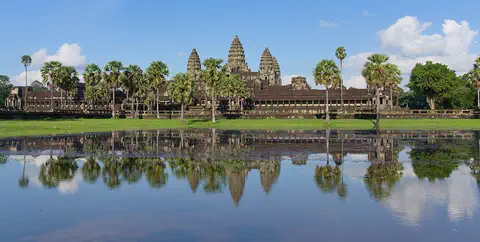
Angkor, in northwestern Cambodia, was the capital of the Khmer Empire from the 9th to the 15th century. Its kings built city after city here, with scores of temples, such as Angkor Wat and the Bayon, and giant reservoirs and canals to water the rice fields. Today it covers about 400 square kilometers, and more than 100,000 people live in villages inside it.
-
Watch
Landmark
Angkor Wat
Angkor Wat, near the town of Siem Reap in Cambodia, was built in the 12th century by the Khmer king Suryavarman II. Britannica (2026) calls it the world's largest religious structure. It was built as a Hindu temple and later became a Buddhist place of worship.
-
 Watch
City
Ankara
Ankara is the capital of Türkiye, in the interior of Anatolia, about 200 kilometers from the Black Sea. People have lived here since the Stone Age, and Romans, Byzantines, Seljuks and Ottomans all left buildings behind. It became the capital in 1923, and today it is a city of government, universities and museums.
-
 Watch
Landmark
Anuradhapura
Anuradhapura, in north-central Sri Lanka, was the island's capital for more than 1,000 years. Its ruins include huge bell-shaped brick monuments called dagobas, monasteries, palaces and ancient reservoirs. It is an important place for Buddhists, and a World Heritage Site since 1982.
-
 Watch
 Country
Armenia
Armenia is a small, landlocked country just south of the Caucasus mountains. Most of it is high mountains and plateaus, its tallest peak is Mount Aragats, and about 3.1 million people lived there in 2025.
-
 Watch
Landmark
Baalbek
Baalbek, in the Bekaa Valley of Lebanon, has some of the largest and best-preserved Roman temples ever built. For more than two centuries, builders raised enormous temples on a platform made of giant stone blocks. In a quarry nearby lies a carved block of about 1,650 tons that was never moved.
-
 Watch
Landmark
Babylon
Babylon was one of the most famous cities of the ancient world, beside the Euphrates River in what is now Iraq. Kings like Hammurabi and Nebuchadnezzar II ruled from here. Today its ruins are a UNESCO World Heritage Site, and about 85 percent of it has never been dug up.
-
 Watch
City
Baghdad
Baghdad, the capital of Iraq, stands on the Tigris River in the land once called Mesopotamia. It was founded in 762 as a round city, and for about 500 years it was one of the greatest cities in the world and a great center of learning, where scholars studied math, medicine and the stars. Today it is Iraq's largest city.
-
 Watch
 Country
Bahrain
Bahrain is a small island country in the Persian Gulf, linked to Saudi Arabia by a long causeway. Long ago it was the center of a trading land called Dilmun, and for centuries its people dived for pearls. About 1.6 million people live there today.
-
 Watch
Landmark
Baikonur Cosmodrome
Baikonur Cosmodrome is a huge rocket launch site on the flat grasslands of Kazakhstan. The Soviet Union began building it in secret in 1955. Sputnik 1, the first satellite, launched from here in 1957, and Yuri Gagarin, the first person in space, in 1961. Today Russia rents it from Kazakhstan, and crews have launched from it to the International Space Station as recently as 2025.
-
 Watch
City
Baku
Baku, the capital of Azerbaijan, curves around a bay on the Caspian Sea, the world's largest inland body of water. Its old walled town, with the Maiden Tower and a palace of the Shirvan shahs, is a World Heritage Site, and oil has made the city important for more than 150 years.
-
 Watch
City
Bangkok
Bangkok, the capital of Thailand, lies on the delta of the Chao Phraya River, about 40 kilometers from the sea. It became the capital in 1782, when the new royal palace and temples were built. Once called the 'Venice of the East' for its canals, it is now a huge, busy city with skyscrapers and an elevated railway.
-
 Watch
 Country
Bangladesh
Bangladesh is a low, flat country in South Asia, built by two great rivers, the Ganges and the Brahmaputra. Monsoon rains flood its fields each year, the Sundarbans mangrove forest lines its coast, and about 176 million people lived there in 2025.
-
 Watch
City
Beijing
Beijing, the capital of China, has been the country's capital for most of the last 600 years. At its heart is the Forbidden City, the emperors' palace. About 21.8 million people lived in the Beijing municipality at the end of 2024.
-
 Watch
 Country
Bhutan
Bhutan is a small, landlocked kingdom on the eastern ridges of the Himalayas, between India and China. Its land climbs from steamy forests in the south to snowy peaks over 7,300 meters in the north. About 790,000 people live there, mostly in villages in its green valleys.
-
 Watch
Landmark
Borobudur
Borobudur is a huge Buddhist monument in central Java, Indonesia, built about 1,200 years ago. It is shaped like a stepped pyramid around a small hill, with carved walls and 72 bell-shaped stupas on its round top terraces. For centuries it lay hidden under volcanic ash and plants, and today it is a UNESCO World Heritage Site.
-
 Watch
 Country
Brunei
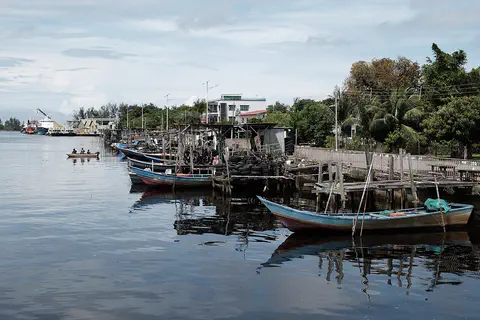
Brunei is a small country on the north coast of the island of Borneo, in Southeast Asia. Most of it is covered in rainforest, where proboscis monkeys and sun bears live. Its capital has a famous water village built on stilts, and about 459,000 people lived in Brunei in 2025.
-
 Watch
Landmark
Burj Khalifa
Burj Khalifa in Dubai, United Arab Emirates, is 828 meters tall, the tallest building in the world (2026). It took about six years to build, from 2004 to 2010. Its Y-shaped plan, inspired by a desert flower, helps it stand up to strong winds.
-
 Watch
Landmark
Byblos
Byblos, on the Mediterranean coast of Lebanon, is one of the oldest towns in the world where people have lived without a break. Its ruins stack up like layers of a cake: fishermen's huts, Phoenician temples and walls, a Roman theater and a Crusader castle. The Phoenician alphabet developed here.
-
 Watch
 Country
Cambodia
Cambodia is a country in mainland Southeast Asia, a land of wide plains and great rivers. Its Tonle Sap lake more than doubles in size every rainy season, and Angkor, with the remains of capitals built from the 800s to the 1400s, is one of the most important archaeological sites in Southeast Asia.
-
Watch
 Country
Cyprus
Cyprus is the third-largest island in the Mediterranean Sea, after Sicily and Sardinia. It has two mountain ranges with a flat plain between them, hot dry summers and rainy winters, and its first known village was built about 9,000 years ago.
-
 Watch
City
Damascus
Damascus, the capital of Syria, grew beside a river in a green oasis at the edge of the desert. People have lived there for thousands of years, and many scholars think it may be the oldest city in the world that has been lived in all the time. Its walled Old City, with its Great Mosque, markets and courtyard houses, is a UNESCO World Heritage Site.
-
 Watch
Landmark
Dome of the Rock
The Dome of the Rock stands on a wide raised plaza in the Old City of Jerusalem. It was finished in 691 or 692, about 1,330 years ago, which makes it the oldest Islamic monument still standing. Its eight walls are covered in marble and mosaics, and its gilded dome, about 20 meters across, covers a large rock that is deeply important to Muslims.
-
 Watch
Landmark
Ephesus
Ephesus was a great Greek and Roman city on the west coast of what is now Türkiye. Its ruins include ancient streets, a theater for nearly 25,000 people and the Library of Celsus, whose two-story front has been rebuilt. Archaeologists have been digging there since 1895.
-
 Watch
Landmark
Fatehpur Sikri
Fatehpur Sikri, the "City of Victory," was built on a ridge near Agra, India, by the Mughal emperor Akbar from 1571. It was his capital until 1585. Its red sandstone palaces, halls and great mosque still stand, and its gateway, the Buland Darwaza, is 40 meters tall.
-
Watch
Landmark
Forbidden City
The Forbidden City in Beijing was built between 1406 and 1420 as the palace of China's emperors. Over about 500 years, 24 emperors came to the throne there. High walls and a wide moat surround it. Since 1925 it has been the Palace Museum, and it became a World Heritage Site in 1987.
-
 Watch
 Country
Georgia
Georgia is a country at the eastern end of the Black Sea, below the high, icy Greater Caucasus mountains. It has warm, wet coasts, dry eastern plains and old monasteries, and about 3.9 million people lived there at the start of 2026.
-
 Watch
Landmark
Great Wall of China
The Great Wall is not one wall but many walls, built over about 2,000 years across northern China. The best-kept part, built under the Ming emperors, runs about 8,850 kilometers, with watchtowers, gates and signal towers along the way.
-
 Watch
Landmark
Hagia Sophia
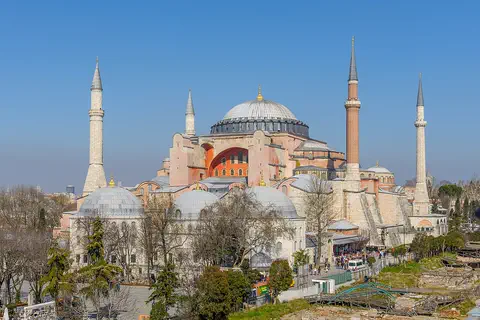
Hagia Sophia in Istanbul was built in under six years, from 532 to 537, for the emperor Justinian. Its enormous dome seems to float on a ring of 40 windows. Over almost 1,500 years it has been a church, a mosque and a museum, and since 2020 it has been a mosque.
-
 Watch
Landmark
Harmandir Sahib (Golden Temple)
Harmandir Sahib, often called the Golden Temple, is the most important gurdwara, or place of worship, for Sikhs. It stands on a small island in a pool in Amritsar, India, and a marble causeway leads out to it. Its upper stories are covered in gilded copper, and its free kitchen serves meals to about 100,000 people a day.
-
 Watch
City
Ho Chi Minh City
Ho Chi Minh City, once called Saigon, is Vietnam's largest city and the economic heart of the country. It lies on the Saigon River, north of the Mekong Delta. Since merging with two neighboring provinces in 2025, it has more than 14 million people, and in 2024 it opened its first metro line.
-
 Watch
City
Hong Kong
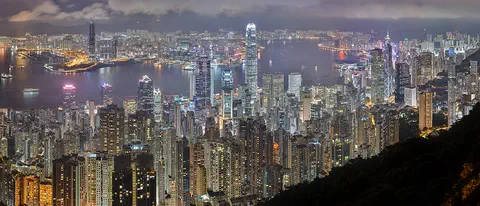
Hong Kong, on the south coast of China, grew around one of the world's great natural harbors. It was a British colony for 156 years and has been a special administrative region of China since 1997. About 7.5 million people lived there in mid-2026.
-
 Watch
 Country
Iraq
Iraq is a country in the Middle East. Its two great rivers, the Tigris and the Euphrates, water a wide plain that was once called Mesopotamia, where some of the world's earliest cities grew. About 46.1 million people were counted there in 2024, and its capital is Baghdad.
-
 Watch
City
Istanbul
Istanbul is the biggest city in Türkiye, built on both sides of the Bosporus, the narrow strait between Europe and Asia. Once called Byzantium and then Constantinople, it was the capital of two great empires. About 15.7 million people lived in Istanbul province in 2023.
-
 Watch
City
Jakarta
Jakarta, Indonesia's largest city and its capital, lies on the northwest coast of the island of Java, where the Ciliwung River meets the Java Sea. About 11 million people live there (2025). Indonesia is building a new capital called Nusantara, but under the law Jakarta stays the capital until the president signs a decree moving it.
-
 Watch
City
Jerusalem
Jerusalem is one of the oldest cities in the world, built on hills in the Middle East. Inside the walls of its Old City stand places that are deeply important to Jews, Christians and Muslims, and pilgrims and visitors come from all over the world.
-
 Watch
 Country
Jordan
Jordan is a kingdom in Southwest Asia, mostly covered by rocky desert. It is home to Petra, a city carved into red sandstone cliffs long ago, the wild valleys of Wadi Rum, and the shore of the Dead Sea, the lowest place on land. About 11.5 million people lived there in 2025.
-
 Watch
 Country
Kazakhstan
Kazakhstan is the largest country in Central Asia and the ninth largest in the world. It has no ocean coast, but the Caspian Sea lies along its southwest edge. About 20.6 million people lived there in 2026, and its capital is Astana.
-
 Watch
Landmark
Kiyomizu-dera
Kiyomizu-dera is a Buddhist temple on the slope of Mount Otowa in Kyoto, Japan. The temple says it was founded in 778. Its Main Hall, rebuilt in 1633, has a famous wooden stage about 13 meters high, held up by 18 giant pillars joined without nails. The name means "pure water," after a waterfall on the grounds.
-
 Watch
 Country
Kuwait
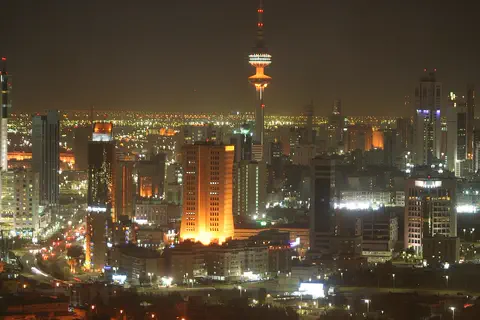
Kuwait is a small desert country at the top of the Persian Gulf, between Iraq and Saudi Arabia. It grew from a trading town on Kuwait Bay into a modern country after oil was found. About 4.9 million people live there, most of them in and around Kuwait City.
-
 Watch
City
Kyoto
Kyoto was the capital of Japan for more than 1,000 years, from 794 to 1868. Its streets still follow a grid planned in 794. About 1.4 million people live there (2022), among hundreds of old temples, shrines, gardens and workshops.
-
 Watch
 Country
Laos
Laos is a landlocked country in mainland Southeast Asia, covered mostly by forested mountains. The Mekong River runs along its western side, and most people live in villages and grow rice. Its capital, Vientiane, stands on the Mekong.
-
Watch
 Country
Lebanon
Lebanon is a small country on the eastern shore of the Mediterranean Sea. Snowcapped mountains rise steeply behind its narrow coast, and its coast holds some of the oldest settlements in the world, such as Byblos. Arabic is the official language, and the capital is Beirut.
-
 Watch
 Country
Malaysia
Malaysia is a country in Southeast Asia, just north of the Equator. One part is on the Malay Peninsula and the other is on the island of Borneo. It has rainforests, huge caves, Mount Kinabalu and the city of Kuala Lumpur, with about 34.4 million people (2026).
-
 Watch
Landmark
Mausoleum at Halicarnassus
The Mausoleum at Halicarnassus was the tomb of Mausolus, ruler of Caria, in what is now southwestern Turkey. Built around 353 to 351 BCE, it was covered in sculptures by four famous Greek artists and became one of the Seven Wonders of the World. An earthquake probably brought it down, and its stones went into other buildings, but its name lives on in the word 'mausoleum'.
-
 Watch
City
Mecca
Mecca is a city in western Saudi Arabia, in a dry valley ringed by mountains, about 70 kilometers from the Red Sea. About 2.4 million people lived there at the 2022 census. Its Great Mosque surrounds the Kaaba, and in 2026 more than 1.7 million pilgrims came to the city for the hajj.