Birds
Animals with feathers and beaks that hatch from eggs.
105 to explore · page 2 of 3
-
 Watch
3D
Animal
Great blue heron
The great blue heron is the largest heron in North America. It wades slowly through marshes, rivers and ponds, or stands as still as a statue, then strikes like lightning with its dagger-shaped bill to catch fish, frogs and even small mammals.
-
 Watch
3D
Animal
Great egret
The great egret is a tall, all-white heron that lives in wetlands on every continent except Antarctica. It wades slowly through shallow water, waits, then strikes like lightning to catch fish. Once nearly wiped out in the United States by hunters who wanted its lacy feathers, it made a remarkable comeback.
-
 Watch
Animal
Great hornbill
The great hornbill is a very large bird of Asia's forests, with a long tail, broad black-and-white wings and an enormous curved yellow bill topped by a helmet called a casque. It eats mostly figs, and the female seals herself inside a tree hole to raise her chick.
-
 Watch
Animal
Great horned owl
The great horned owl is a large, powerful owl with two long, earlike tufts of feathers on its head. It is one of the most common owls in North America and lives in almost any kind of semi-open place, from deserts and forests to city parks. It hunts mostly at night.
-
 Watch
Animal
Greater bird-of-paradise
The greater bird-of-paradise is a rainforest bird of southern New Guinea and the Aru Islands. Males have a yellow head, a green throat, long tail wires and huge golden flank plumes, which they show off in group dances high in tall trees to win a female.
-
 Watch
Animal
Greater flamingo
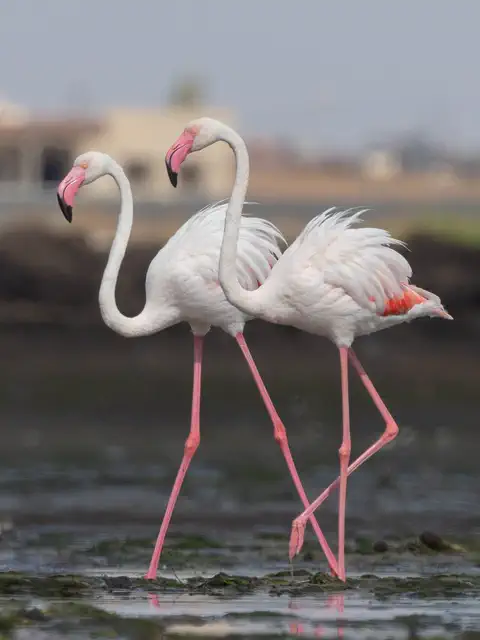
The greater flamingo is the tallest and heaviest flamingo, standing up to about 1.45 meters tall. It lives in salty lagoons and lakes across Africa, southern Europe, the Middle East and South Asia. It feeds by holding its bent bill upside down in the water and filtering out tiny animals, and it gets its pink color from what it eats.
-
 Watch
Animal
Greater roadrunner
The greater roadrunner is a long-legged member of the cuckoo family that lives in deserts and scrubby country in the southwestern United States and Mexico. It flies only a little but runs fast, chasing lizards, insects and even snakes, and it has clever ways of coping with desert heat.
-
 Watch
Animal
Grey crowned crane
The grey crowned crane is a gray African crane with a spiky crown of golden feathers, white and red cheeks and a red throat pouch. It is one of only two cranes that can perch in trees. It is the national bird of Uganda, and it is Endangered because its wetlands are disappearing.
-
 Watch
3D
Animal
Harpy eagle
Harpy eagles are among the largest and most powerful eagles in the world. They live in the lowland rainforests of Central and South America, where they hunt sloths and monkeys in the treetops. Forest loss and shooting have made them rare.
-
 Watch
Animal
Hoatzin
The hoatzin is a strange and wonderful bird of the Amazon and Orinoco rivers. It eats mostly leaves and digests them slowly with the help of bacteria, a bit like a cow. Its chicks have claws on their wings that help them climb back up through the branches.
-
 Watch
Animal
House sparrow
The house sparrow is one of the most widespread songbirds in the world. It is native to Europe, Asia and North Africa, but people released it in many other places, and now it lives in towns and farms almost everywhere people do. Its numbers have fallen sharply in some places, including Britain and North America.
-
 Watch
Animal
Hyacinth macaw
The hyacinth macaw is the largest parrot in the world, about a meter long and deep blue from head to tail. It lives in the open woodlands, palm groves and wetlands of central South America, especially Brazil's Pantanal, and cracks very hard palm nuts with its enormous beak.
-
 Watch
3D
Animal
Indian peafowl
The Indian peafowl is a large bird of the pheasant family from South Asia. Males, called peacocks, have a bright blue neck and a long train of shimmering feathers decorated with eyespots, which they spread into a giant fan to impress females, called peahens. It is the national bird of India.
-
 Watch
Animal
Kākāpō
The kākāpō is a large, moss-green parrot from New Zealand with an owl-like face. It cannot fly, it is active at night, and it eats only plants. It nearly died out, but careful work by New Zealand's Department of Conservation has grown the population to 325 birds (September 2026).
-
 Watch
Animal
Kea
The kea is a big, olive-green parrot found only on the South Island of New Zealand. It lives in mountain forests and alpine meadows, digs for food with its long, curved beak, nests on the ground and is famous for being curious, playful and clever.
-
 Watch
3D
Animal
Keel-billed toucan
The keel-billed toucan lives in the forests of southern Mexico, Central America and northern South America. Its huge, colorful bill can be a third of its whole length, yet it is light, and the bird uses it to pick fruit from thin branches.
-
 Watch
3D
Animal
King penguin
The king penguin is the second-largest penguin in the world. It lives in huge, noisy colonies on windy islands in the Southern Ocean and dives deep to catch lantern fish. Its babies grow a thick coat of brown fluff and take more than a year to raise.
-
 Watch
Animal
Laughing kookaburra
The laughing kookaburra is one of the larger members of the kingfisher family. It lives in the woodlands of eastern Australia, pounces on insects, worms and small animals, and lives in family groups. Its famous 'laugh' is really a territorial call that warns other birds to stay away.
-
 Watch
3D
Animal
Lesser flamingo
The lesser flamingo is the smallest flamingo. Millions live on salty, soda-rich lakes in Africa and India, where they sweep their upside-down bills through the water to filter out tiny algae, which help give them their pink color.
-
 Watch
Animal
Lilac-breasted roller
The lilac-breasted roller is a dazzling bird of the open woodlands and savannas of eastern and southern Africa. It sits on high perches watching for insects, swoops down to catch them, and gets its name from the rolling, tumbling flights it makes in the breeding season.
-
 Watch
3D
Animal
Little penguin
The little penguin is the smallest penguin in the world, only about 33 centimeters long and about 1 kilogram. It lives along the coasts of southern Australia and New Zealand, where it is also called the fairy penguin, the blue penguin or kororā. It fishes at sea by day and comes ashore after dark to its burrow.
-
 Watch
3D
Animal
Mallard
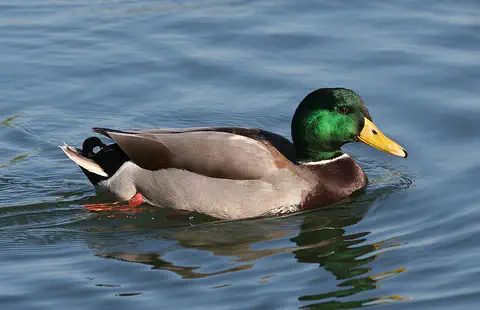
The mallard is perhaps the most familiar duck in the world, found on ponds, lakes, rivers and city parks across North America, Europe and Asia. Males have glossy green heads; females are mottled brown. Almost all farm ducks are descended from mallards.
-
 Watch
Animal
Mandarin duck
The mandarin duck is a small, very colorful duck from East Asia. The male has orange 'sail' feathers on his back and orange whiskers on his face, while the female is soft gray and brown. Mandarins nest in holes in trees, and the ducklings jump down to the ground soon after hatching.
-
 Watch
Animal
Mute swan
The mute swan is among the largest waterfowl, all white with an orange bill topped by a black knob. It is native to Europe and Asia, where it lives on lakes, rivers and park ponds. People took mute swans to North America and other places, where they now live in the wild and can cause problems for native wildlife.
-
 Watch
Animal
New Caledonian crow
The New Caledonian crow lives only on the islands of New Caledonia in the Pacific. It looks like an ordinary black crow, but it makes and uses tools: hooked sticks and cut strips of leaf that it pokes into holes in dead wood to pull out insects and grubs.
-
 Watch
Animal
North Island brown kiwi
The North Island brown kiwi is a flightless bird that lives only in New Zealand's North Island. It has shaggy brown feathers, no tail, and a long bill with nostrils near the tip, so it can sniff out worms and grubs in the dark. The father keeps the huge egg warm for 75 to 90 days.
-
 Watch
Animal
Northern cardinal
The northern cardinal is a crested songbird of eastern North America and Mexico. Males are brilliant red with a black face; females are warm brown with red touches. Cardinals crack seeds with their thick bills, stay in the same area all year, and both males and females sing.
-
 Watch
Animal
Northern mockingbird
The northern mockingbird is a slim gray songbird famous for copying sounds. It sings long strings of phrases, many borrowed from other birds, and sometimes sings all night. It lives in towns, farms and brushy places across the United States, Mexico and the Caribbean.
-
 Watch
Animal
Osprey
Ospreys are large, fish-eating hawks found near water on every continent except Antarctica. They plunge feet first to grab fish, build huge stick nests and, in many places, migrate thousands of kilometers. After pesticides made them rare, they have made a big comeback.
-
 Watch
3D
Animal
Peregrine falcon
The peregrine falcon is a crow-sized bird of prey famous for its hunting dive, called a stoop. Diving from high above, it can reach about 320 kilometers per hour, making it the fastest animal on Earth. It lives on every continent except Antarctica, even in big cities.
-
 Watch
Animal
Philippine eagle
The Philippine eagle is one of the largest and rarest eagles in the world. It lives only in the mountain rainforests of four Philippine islands, where it hunts monkeys, civets, flying squirrels and other forest animals. It is the national bird of the Philippines, and it is critically endangered.
-
 Watch
Animal
Pileated woodpecker
The pileated woodpecker is the largest woodpecker in North America that is still alive today, nearly as big as a crow, with a flaming red crest. It chisels big rectangular holes in dead trees to reach carpenter ants, and the nest holes it carves later shelter owls, ducks, bats and other animals.
-
 Watch
Animal
Rainbow lorikeet
The rainbow lorikeet is a colorful parrot of northern and eastern Australia. It feeds mostly on nectar and pollen, which it collects with a brush-tipped tongue. Noisy, fast-flying flocks are a common sight in forests, parks and gardens.
-
 Watch
Animal
Red-crowned crane
The red-crowned crane is one of the world's largest cranes, white with a black neck and a bright red crown. Pairs bow, bob and leap in a courtship dance. It nests in wetlands of eastern Russia, China and Japan, and it is Vulnerable because those wetlands are disappearing.
-
 Watch
3D
Animal
Red-tailed hawk
The red-tailed hawk is probably the most common hawk in North America. It soars in wide circles over fields or waits on a pole or fence post, watching for voles, mice and rabbits, then drops down to catch them with its sharp talons.
-
 Watch
Animal
Resplendent quetzal
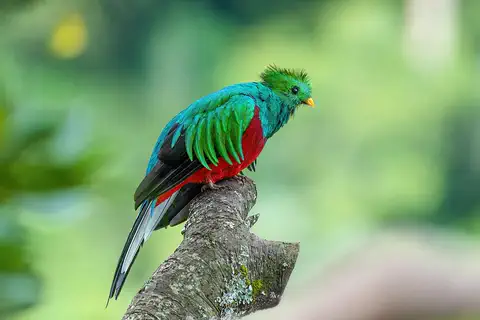
The resplendent quetzal is a glittering green and red bird of the cloud forests of southern Mexico and Central America. Males grow long, flowing plumes, up to about 90 centimeters. Quetzals eat mostly small fruits related to avocados, and the bird is the national emblem of Guatemala.
-
 Watch
3D
Animal
Rock pigeon
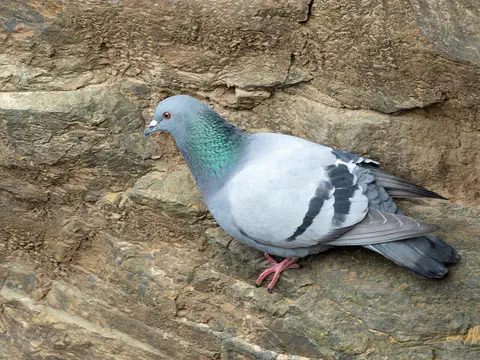
The rock pigeon, also called the rock dove, is the pigeon you see in city squares. Its wild ancestors nest on sea cliffs and mountain ledges, and city pigeons use buildings as if they were cliffs. Pigeons are famous for finding their way home from far away.
-
 Watch
3D
Animal
Roseate spoonbill
The roseate spoonbill is a bright pink wading bird with a long, flat bill shaped like a spoon. It sweeps its bill from side to side through shallow water and grabs the shrimp or small fish it feels. Its pink color comes from the food it eats.
-
 Watch
3D
Animal
Ruby-throated hummingbird
The ruby-throated hummingbird is the only hummingbird that nests in eastern North America. It weighs only 2 to 6 grams, beats its wings about 53 times a second and can fly forward, backward and hover in one spot. Each fall it flies south to Mexico and Central America for the winter.
-
 Watch
Animal
Scarlet ibis
The scarlet ibis is a bright red wading bird of South America, red all over except for black wingtips. It probes mud and shallow water with its long, curved bill for crabs, crayfish and insects, and its color comes from pigments in its food.
-
 Watch
3D
Animal
Scarlet macaw
The scarlet macaw is a large parrot of the rainforests of Mexico, Central America and South America. It is famous for its bright red, yellow and blue feathers. It cracks hard nuts with its powerful beak, flies in noisy flocks and stays with one mate for life.
-
 Watch
Animal
Secretarybird
The secretarybird is a bird of prey that hunts on foot. It strides across the African savanna on the longest legs of any raptor, walking 20 to 30 kilometers a day, and stamps on grasshoppers, mice, lizards and even snakes with lightning-fast kicks.
-
 Watch
Animal
Shoebill
The shoebill is a tall gray bird of African swamps, named for its enormous bill shaped like a wooden shoe. It stands as still as a statue among the papyrus, then lunges forward to grab big, slippery fish such as lungfish.
-
 Watch
Animal
Snowy owl
The snowy owl is a large white owl that nests on the Arctic tundra. Unlike most owls it hunts in daylight, and in the endless light of an Arctic summer it may hunt at any hour. Lemmings are its favorite food.
-
 Watch
Animal
Sociable weaver
The sociable weaver is a sparrow-sized bird of the dry savannas of southern Africa. Whole colonies, sometimes hundreds of birds, build and share one enormous thatched nest with many separate rooms. It is among the largest nests built by any bird.
-
 Watch
3D
Animal
Southern cassowary
The southern cassowary is a large flightless bird of the rainforests of northern Australia and New Guinea. It has a vivid blue neck, red wattles and a tall helmet called a casque. By eating fallen fruit and spreading the seeds in its droppings, it helps the rainforest grow. Cassowaries are wild and strong, so people watch them from a safe distance.
-
 Watch
3D
Animal
Southern crested caracara
The southern crested caracara is a large bird of prey from South America and a surprising member of the falcon family. It has a black crest, a bare orange-red face and long yellow legs, and it eats almost anything: dead animals, small creatures and insects.
-
 Watch
Animal
Steller's sea eagle
Steller's sea eagle is one of the largest sea and fish eagles. Dark brown with bright white shoulders, tail and legs and an enormous orange-yellow beak, it nests in far eastern Russia and feeds mainly on salmon. In winter many fly south to Japan.