Mammals
Warm-blooded animals with hair or fur that feed their babies milk.
140 to explore · page 2 of 3
-
 Watch
Animal
Dugong
The dugong is a large, slow marine mammal that grazes on seagrass meadows in warm, shallow coastal seas from East Africa to the western Pacific. It is a relative of the manatee and, surprisingly, more closely related to elephants than to cows. It has a whale-like tail, a big bristly snout and very good hearing.
-
 Watch
Animal
Eastern chipmunk
Eastern chipmunks are small ground squirrels with five dark stripes down their backs. They live in the woods, yards and parks of eastern North America, carry food in stretchy cheek pouches, and store it in underground burrows for the winter.
-
 Watch
Animal
Eastern gorilla
The eastern gorilla is the gorilla of the misty mountains and forests of east-central Africa. It has two kinds: the shaggy mountain gorilla, whose numbers are slowly growing, and the big Grauer's gorilla, which has become much rarer.
-
 Watch
3D
Animal
Eastern gray squirrel
Eastern gray squirrels are bushy-tailed tree squirrels from the forests of eastern North America, and they are a common sight in parks and gardens. They bury nuts to eat later. People also took them to Britain and other countries; in Britain they cause problems for the native red squirrel.
-
 Watch
Animal
Eastern grey kangaroo
The eastern grey kangaroo is a big, woolly gray kangaroo of eastern Australia and Tasmania. It hops on powerful back legs, balances with its long tail and grazes on grass in groups called mobs. Its joey is born weighing less than a gram and grows up in its mother's pouch.
-
 Watch
3D
Animal
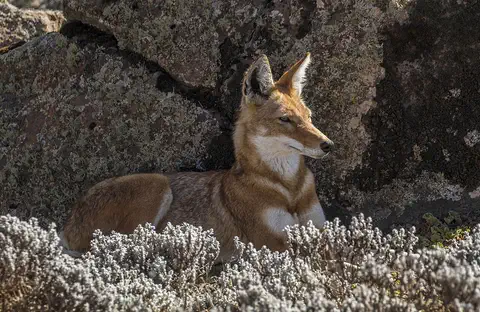
Ethiopian wolf
The Ethiopian wolf is a slender red wolf that lives only in the high mountains of Ethiopia. Wolf families share a territory, but each wolf hunts alone for rats and mole-rats. It is one of the rarest wild dogs on Earth.
-
 Watch
Animal
Eurasian lynx
The Eurasian lynx is the largest of the four kinds of lynx. It has black ear tufts, a ruff of fur around its face, a short black-tipped tail and big furry paws for snow. It hides in forests and ambushes deer such as roe deer, and it has returned to parts of Europe where it had disappeared.
-
 Watch
Animal
European hedgehog
European hedgehogs are spiny mammals of woods, farmland, parks and gardens in western and northern Europe. They snuffle around at night for bugs and worms, roll into a ball to protect themselves and hibernate through the winter. Their numbers are falling in many countries.
-
 Watch
3D
Animal
European rabbit
The European rabbit is the wild rabbit that all pet and farm rabbits come from. It lives in groups in big underground tunnel homes called warrens. Its numbers have fallen in its first home in Spain, Portugal and France, but people have carried it to many other places, where it became a pest.
-
 Watch
Animal
Fennec fox
The fennec fox is the smallest member of the dog family. It lives in the Sahara and other deserts of North Africa, sleeps in cool burrows by day, and uses its enormous ears to hear insects moving under the sand at night.
-
 Watch
Animal
Fishing cat
The fishing cat is a stocky, spotted wild cat of the wetlands of South and Southeast Asia. It is an excellent swimmer and diver, and fish are its main food. It lives in marshes, swamps, mangroves and along rivers, and it is Vulnerable because so many of these wetlands are being lost.
-
 Watch
Animal
Giant anteater
The giant anteater is the biggest of the four kinds of anteater. It has no teeth at all, but its sticky tongue, about 60 centimeters long, flicks in and out up to 150 times a minute to slurp up ants and termites. Babies ride on their mothers' backs.
-
 Watch
Animal
Giant otter
The giant otter is the longest otter in the world, up to about 1.8 meters from nose to tail. It lives in the rivers and lakes of South America in noisy family groups that hunt fish together by day. It is endangered, and people are working to protect it.
-
 Watch
Animal
Giant panda
The giant panda is a black-and-white bear that lives in misty mountain forests in China. About 99 percent of its food is bamboo, and it spends up to 16 hours a day eating. Pandas were once endangered, but protecting their forests has helped them, and they are now listed as Vulnerable.
-
 Watch
3D
Animal
Giraffe
Giraffes are the tallest animals on Earth. A long neck and a long dark tongue let them eat leaves from treetops that other animals cannot reach, and their patchy coats help them blend into the shade of the trees.
-
 Watch
3D
Animal
Golden hamster
Golden hamsters, also called Syrian hamsters, are popular pets all over the world. But in the wild they live only in a small area of farmland on the border of Syria and Türkiye, and the IUCN lists them as Endangered.
-
 Watch
Animal
Golden lion tamarin
The golden lion tamarin is a small, bright orange monkey with a lion-like mane. It lives only in the Atlantic coastal forest of Brazil. In the 1970s only about 200 were left in the wild; thanks to decades of work, a census in 2022 and 2023 counted about 4,800.
-
 Watch
Animal
Gray whale
The gray whale is a baleen whale of the North Pacific Ocean. It sucks up mud from the seafloor to catch tiny animals, and it makes one of the longest yearly journeys of any mammal: about 16,000 kilometers there and back between Arctic feeding seas and shallow lagoons in Mexico.
-
 Watch
3D
Animal
Gray wolf
The gray wolf is the largest member of the dog family and the wild ancestor of pet dogs. Wolves live in family packs that hunt big animals like elk and moose together, and their howls can carry about 10 kilometers. After being wiped out in many places, wolves are coming back in parts of North America and Europe.
-
 Watch
Animal
Grévy's zebra
Grévy's zebra is the largest zebra, with narrow stripes, a white belly and big, round ears. It lives only in the dry grasslands and scrub of northern Kenya and Ethiopia, and it is endangered: only a few thousand are left in the wild.
-
 Watch
Animal
Ground pangolin
The ground pangolin is a shy African mammal covered in overlapping scales. It sniffs out ants and termites at night and licks them up with a long, sticky tongue. Pangolins are in trouble because people take them illegally, and many people are working to protect them.
-
 Watch
Animal
Guinea pig
The guinea pig is not a pig and does not come from Guinea. It is a rodent, first tamed thousands of years ago by people in the Andes mountains of South America. Today it is a popular pet around the world, and in parts of Peru, Ecuador and Bolivia it is still raised for food.
-
 Watch
3D
Animal
Harbor porpoise
The harbor porpoise is a small relative of whales and dolphins. It lives in cool coastal waters of the Northern Hemisphere, in bays, harbors and fjords. It is shy, usually swims alone or in tiny groups, and rolls quietly to the surface to breathe.
-
 Watch
3D
Animal
Harbor seal
The harbor seal lives along the northern coasts of North America, Europe and Asia, and it is one of the most common marine mammals on the east and west coasts of the United States. It has spotted fur, a dog-like face and no ear flaps, and it wriggles like a caterpillar on land. Its pups can swim within minutes of being born.
-
 Watch
Animal
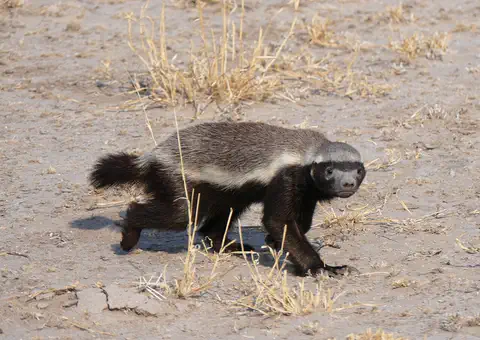
Honey badger
The honey badger, or ratel, is a stocky member of the weasel family that lives across Africa, the Middle East and India. Its gray or white back and black underside make it easy to spot. It digs with huge front claws, travels far to find food, and breaks into bees' nests for honey and bee grubs.
-
 Watch
3D
Animal
Horse
Horses are grazing animals built for running, with long legs that end in a single hard hoof. People tamed wild horses about 6,000 years ago on the grasslands of Europe and Asia, and horses changed history: they pulled plows, carried riders and connected faraway places.
-
 Watch
3D
Animal
House mouse
House mice are small rodents that first lived in Europe, Asia and North Africa. By living alongside people, they have spread to every continent except Antarctica. They are quick runners and can have babies when only a few weeks old.
-
 Watch
3D
Animal
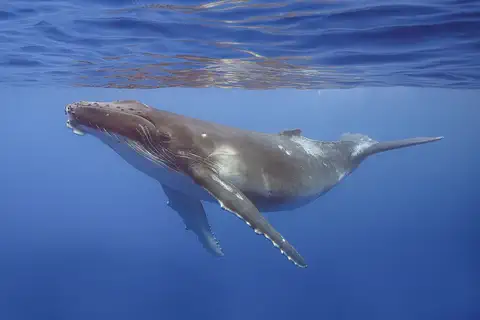
Humpback whale
The humpback whale is a baleen whale famous for leaping out of the water, slapping its giant flippers and singing long, complex songs. It lives in every ocean and makes one of the longest journeys of any mammal, between cold feeding waters and warm waters where calves are born. Once hunted almost to extinction, it is now recovering.
-
 Watch
Animal
Impala
The impala is a slender, reddish-brown antelope of the savannas of eastern and southern Africa. It can both graze on grass and browse on leaves, lives in herds, and when startled the whole herd bursts into spectacular leaps. Only males have the long, curving horns.
-
 Watch
3D
Animal
Indian rhinoceros
The Indian rhinoceros, also called the greater one-horned rhino, has a single horn and deep folds in its skin that make it look armor-plated. It grazes on tall grass by rivers in India and Nepal, swims well, and has made a remarkable comeback from about 200 animals to more than 4,000.
-
 Watch
3D
Animal
Jaguar
The jaguar is the largest cat in North and South America. It lives near rivers and swamps, swims well, and has such a powerful bite that it can crack a turtle's shell. Most jaguars live in the Amazon rainforest.
-
 Watch
Animal
Japanese macaque
The Japanese macaque, or snow monkey, lives farther north than any other monkey or ape except people. Thick fur keeps it warm through snowy winters, and some troops have learned to sit in warm hot springs.
-
 Watch
Animal
Koala
The koala is a tree-living marsupial from eastern Australia. It eats almost nothing but eucalyptus leaves, sleeps up to 20 hours a day to save energy, and carries its jellybean-sized baby in a pouch that opens toward its back legs.
-
 Watch
Animal
Large flying fox
The large flying fox is a giant fruit bat of Southeast Asia, with wings about 1.5 meters across. It flies out at night to eat fruit, flowers and nectar, spreading seeds and pollinating trees. Because of hunting and forest loss, it is now Endangered.
-
 Watch
3D
Animal
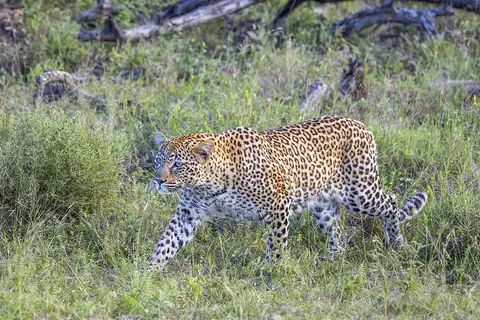
Leopard
The leopard is a strong, spotted big cat and the best climber of them all. It can carry its food high up into a tree, away from lions and hyenas. Leopards live in more kinds of places than any other big cat, from deserts to rainforests, across Africa and Asia.
-
 Watch
Animal
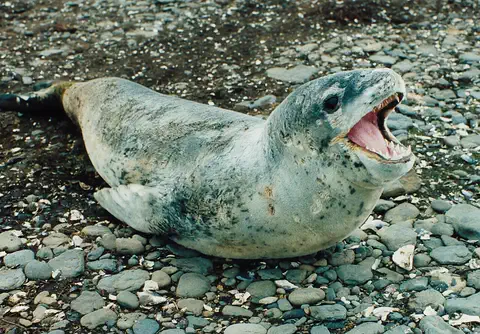
Leopard seal
The leopard seal is a large, slender seal of the icy seas around Antarctica, named for the dark spots on its gray coat. It is a fast, powerful hunter with a big head and long teeth, and it eats everything from tiny krill to fish, penguins and young seals.
-
 Watch
3D
Animal
Lion
The lion is the only big cat that lives in a family group, called a pride. Lionesses hunt together, males guard the pride's land, and their roar can be heard about 8 kilometers away. Wild lions live in Africa, plus one small group in western India.
-
 Watch
3D
Animal
Llama
Llamas are South American cousins of camels, without the hump. People in the Andes Mountains bred them from wild guanacos thousands of years ago, and they still carry loads, give wool and even guard sheep. Llamas do not live in the wild: every llama lives with people.
-
 Watch
Animal
Mandrill
The mandrill is the largest and most colorful of the Old World monkeys. Grown-up males have red noses, blue-ridged cheeks and a golden beard. Mandrills roam the rainforests of west-central Africa in huge, noisy groups called hordes.
-
 Watch
Animal
Maned wolf
The maned wolf lives in the grasslands and open woodlands of central South America. It looks like a big red fox on long black legs, but it is neither a fox nor a true wolf. It eats small animals and lots of fruit, and its long legs help it see over tall grass.
-
 Watch
Animal
Meerkat
Meerkats are small members of the mongoose family that live in dry, open country in southern Africa. They live in groups called mobs, dig for insects all day, and take turns as lookouts, standing tall and calling out if an eagle or jackal comes near. Everyone helps raise the babies.
-
 Watch
Animal
Moose
The moose is the largest member of the deer family. It lives in northern forests, wades and even dives into lakes to eat water plants, and bull moose grow enormous new antlers every year. In Europe it is called an elk.
-
 Watch
Animal
Mountain goat
Mountain goats are white, woolly climbers that live on steep cliffs in the mountains of western North America. Grippy hooves let them cross icy rock where few predators dare to follow. Despite the name, they are not true goats.
-
 Watch
Animal
Muskox
Muskoxen are shaggy Arctic grazers with long coats that nearly reach the ground and a super-warm underwool called qiviut. Herds protect their calves by standing in a ring with their horns facing out. Despite the name, they are more closely related to goats and sheep than to oxen.
-
 Watch
Animal
Naked mole-rat
Naked mole-rats are almost hairless rodents that spend their whole lives in tunnels under the dry lands of eastern Africa. They live in big colonies where only one female, the queen, has babies, and they can live for around 30 years.
-
 Watch
3D
Animal
Narwhal
The narwhal is a toothed whale of the icy Arctic Ocean. Most males have a long, spiral tusk that is really a tooth growing forward out of the front of the jaw, and it can be up to about 3 meters long. Narwhals dive deep under the sea ice to catch fish, squid and shrimp.
-
 Watch
Animal
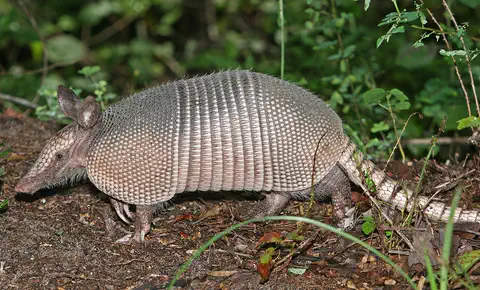
Nine-banded armadillo
The nine-banded armadillo is a small, armored digger that lives from Argentina all the way to the United States. It sniffs out beetles and other bugs in the soil, can hold its breath for six minutes, and almost always has four identical babies at once.
-
 Watch
Animal
North American beaver
The North American beaver is the largest rodent in North America and a champion builder. It gnaws down trees with its strong orange teeth, builds dams that turn streams into ponds, and lives with its family in a lodge made of branches and mud.