Search the Discovery Encyclopedia
-
 Animal
Mountain goat
Mountain goats are white, woolly climbers that live on steep cliffs in the mountains of western North America. Grippy hooves let them cross icy rock where few predators dare to follow. Despite the name, they are not true goats.
-
 Animal
Kea
The kea is a big, olive-green parrot found only on the South Island of New Zealand. It lives in mountain forests and alpine meadows, digs for food with its long, curved beak, nests on the ground and is famous for being curious, playful and clever.
-
 Animal
Puma
The puma, also called the cougar or mountain lion, is a big, slender cat with plain tan fur and a long tail. It lives in more of the Americas than any other wild cat, from Canada all the way to the southern tip of South America, in mountains, forests, deserts and swamps.
-
 Animal
Llama
Llamas are South American cousins of camels, without the hump. People in the Andes Mountains bred them from wild guanacos thousands of years ago, and they still carry loads, give wool and even guard sheep. Llamas do not live in the wild: every llama lives with people.
-
 Animal
Alpaca
Alpacas are small, woolly members of the camel family from the high Andes Mountains of South America. People bred them from wild vicuñas thousands of years ago, mainly for their soft, warm fleece. Every alpaca lives with people.
-
 Animal
Red panda
The red panda is a cat-sized tree climber with rusty-red fur and a bushy ringed tail. It lives in cool mountain forests of the Himalayas and southern China and eats mostly bamboo leaves. Despite its name, it is not a close relative of the giant panda. It is endangered.
-
 Animal
Brown bear
The brown bear lives in more places than any other bear, from European forests to the mountains of Asia and the rivers of Alaska. It eats almost anything, from berries to salmon, and spends the long winter asleep in a cozy den. Grizzly bears and Kodiak bears are brown bears too.
-
 Animal
Giant panda
The giant panda is a black-and-white bear that lives in misty mountain forests in China. About 99 percent of its food is bamboo, and it spends up to 16 hours a day eating. Pandas were once endangered, but protecting their forests has helped them, and they are now listed as Vulnerable.
-
 Animal
Golden eagle
The golden eagle is one of the largest and fastest birds of prey in North America, and it lives across much of the Northern Hemisphere. It soars over mountains and open country on wings more than two meters wide and dives at tremendous speed to catch rabbits, hares and ground squirrels.
-
 Animal
Pallas's cat
Pallas's cat, or the manul, is a small wild cat of the cold, dry grasslands and mountains of Central Asia. Its long, thick fur makes it look bigger than it really is, and its flat face and low, round ears help it peek over rocks without being seen. It hunts pikas and other small animals.
-
 Animal
Snow leopard
The snow leopard lives high in the mountains of Central Asia, where it is freezing cold and the ground is steep and rocky. Thick fur, huge furry paws and a tail almost as long as its body help it survive. It is so hard to spot that people call it the ghost cat of the mountains.
-
 Animal
Andean condor
The Andean condor is one of the largest flying birds in the world. With wings up to 3.2 meters across, it soars over the Andes Mountains of South America, barely flapping, as it searches for dead animals to eat. It is a vulture, nature's clean-up crew.
-
 Animal
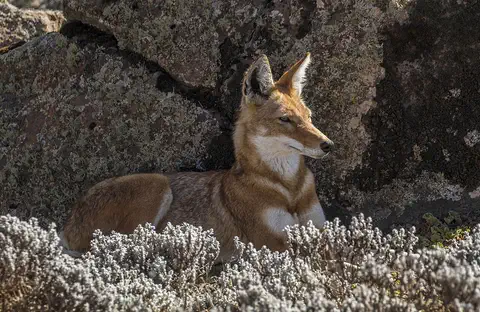
Ethiopian wolf
The Ethiopian wolf is a slender red wolf that lives only in the high mountains of Ethiopia. Wolf families share a territory, but each wolf hunts alone for rats and mole-rats. It is one of the rarest wild dogs on Earth.
-
 Animal
Eastern gorilla
The eastern gorilla is the gorilla of the misty mountains and forests of east-central Africa. It has two kinds: the shaggy mountain gorilla, whose numbers are slowly growing, and the big Grauer's gorilla, which has become much rarer.
-
 Animal
Spectacled bear
The spectacled bear, or Andean bear, is the only bear that lives in South America. It is named for the pale markings that ring the eyes of many bears, like a pair of glasses. It lives in the forests of the Andes Mountains, climbs trees, builds platforms in branches and eats mostly fruit and bromeliads.
-
 Animal
Asian black bear
The Asian black bear is a black bear with a cream crescent on its chest, shaped like a new moon. It lives in forests and mountains from Iran and Pakistan across the Himalayas and Southeast Asia to China, Korea, Japan and the Russian Far East. It eats mostly plants, especially fruit and nuts, and in cold places it sleeps through the winter.
-
 Animal
Japanese macaque
The Japanese macaque, or snow monkey, lives farther north than any other monkey or ape except people. Thick fur keeps it warm through snowy winters, and some troops have learned to sit in warm hot springs.
-
 Animal
Veiled chameleon
The veiled chameleon lives in the dry mountains of Yemen and Saudi Arabia. It has a tall helmet-like casque on its head, eyes that can look two ways at once, feet that grip like hands and a super-fast sticky tongue. It changes color to show its mood, not to hide.
-
 Animal
Thorny devil
The thorny devil is a small Australian desert lizard covered in spikes from head to tail. Despite its fierce name it is slow and harmless, it eats nothing but ants, and tiny channels in its skin carry water to its mouth.
-
 Animal
Guinea pig
The guinea pig is not a pig and does not come from Guinea. It is a rodent, first tamed thousands of years ago by people in the Andes mountains of South America. Today it is a popular pet around the world, and in parts of Peru, Ecuador and Bolivia it is still raised for food.
-
 Animal
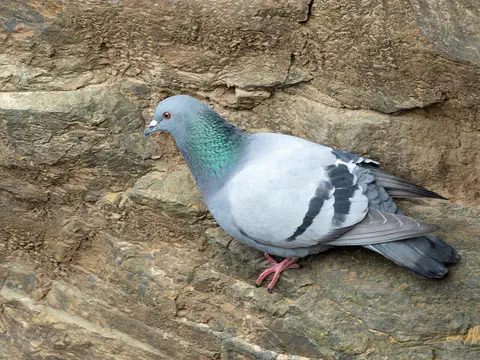
Rock pigeon
The rock pigeon, also called the rock dove, is the pigeon you see in city squares. Its wild ancestors nest on sea cliffs and mountain ledges, and city pigeons use buildings as if they were cliffs. Pigeons are famous for finding their way home from far away.
-
 Animal
Philippine eagle
The Philippine eagle is one of the largest and rarest eagles in the world. It lives only in the mountain rainforests of four Philippine islands, where it hunts monkeys, civets, flying squirrels and other forest animals. It is the national bird of the Philippines, and it is critically endangered.
-
 Animal
Monarch butterfly
The monarch butterfly is famous for its bright orange wings and its amazing journey. Each fall, monarchs from eastern North America fly up to 3,000 miles to mountain forests in Mexico, where they spend the winter clustered together on fir trees. Their caterpillars eat only milkweed, which makes them taste bad to predators.
-
 Animal
Olm
The olm is a long, pale salamander that spends its whole life in underground rivers and lakes in the caves of southeastern Europe. Its eyes are covered by skin, it keeps pink feathery gills all its life, and it finds food by smell and by feeling vibrations. Olms can live for many decades and survive years without eating.
-
 Animal
Caracal
The caracal is a sleek, reddish-gold wild cat of Africa, the Middle East and Central Asia to India. Its name comes from a Turkish word meaning "black ears", for its black-backed ears with long tufts. It hunts on the ground, but it can leap two meters or more into the air to catch birds.
-
 Animal
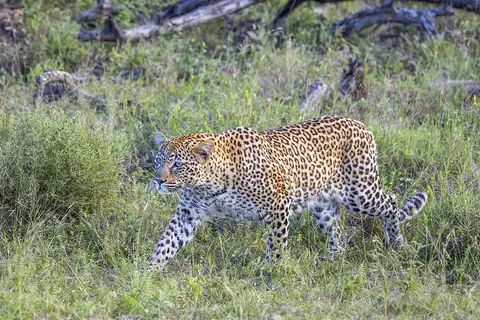
Leopard
The leopard is a strong, spotted big cat and the best climber of them all. It can carry its food high up into a tree, away from lions and hyenas. Leopards live in more kinds of places than any other big cat, from deserts to rainforests, across Africa and Asia.
-
 Animal
Red deer
The red deer is one of the largest deer in the world. It lives in forests, hills and moors across Europe and into western Asia and North Africa. Males, called stags, grow huge branching antlers every year and roar to win mates in autumn.
-
 Animal
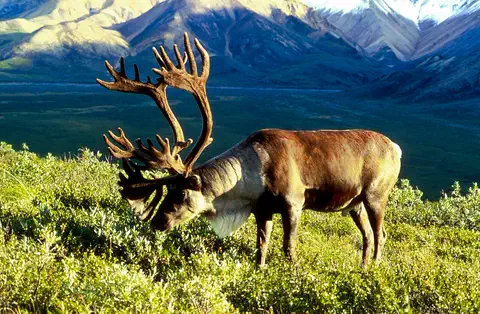
Reindeer
Reindeer, called caribou in North America, are deer of the Arctic tundra and northern forests. They are the only deer in which females grow antlers too. Some herds walk thousands of kilometers a year, and people in northern Europe and Asia have herded reindeer for a very long time.
-
 Animal
Gray wolf
The gray wolf is the largest member of the dog family and the wild ancestor of pet dogs. Wolves live in family packs that hunt big animals like elk and moose together, and their howls can carry about 10 kilometers. After being wiped out in many places, wolves are coming back in parts of North America and Europe.
-
 Animal
Wolverine
The wolverine is a strong, stocky member of the weasel family that lives in the cold north of North America, Europe and Asia. It travels huge distances, eats almost anything it can find, and digs dens in deep snow for its babies. Its fierce reputation is often exaggerated: it avoids wolves and bears.
-
 Animal
Common raven
The common raven is the biggest member of the crow family and the largest songbird. It lives across most of the Northern Hemisphere, from deserts to Arctic tundra. Ravens eat almost anything, play games in the air, and have solved puzzles that scientists designed to test how well they can plan ahead.
-
 Animal
Common wombat
The common wombat, or bare-nosed wombat, is a stocky, barrel-shaped marsupial of south-eastern Australia and Tasmania. It is one of the world's largest burrowing animals, spends about two thirds of its life underground and leaves cube-shaped poop to mark its patch.
-
 Animal
Domestic goat
Domestic goats are lively farm animals that came from a wild goat of Asia. They reach up to nibble leaves, twigs and weeds that other farm animals leave behind, and people keep them for milk, cheese, meat, wool and leather.
-
 Animal
Eurasian lynx
The Eurasian lynx is the largest of the four kinds of lynx. It has black ear tufts, a ruff of fur around its face, a short black-tipped tail and big furry paws for snow. It hides in forests and ambushes deer such as roe deer, and it has returned to parts of Europe where it had disappeared.
-
 Animal
Rainbow trout
The rainbow trout gets its name from the pink-red band along each side. It comes from the cool rivers and lakes of western North America and far eastern Russia. Some rainbows stay in fresh water all their lives, while others, called steelhead, swim out to the ocean and come back to spawn.
-
 Animal
Domestic sheep
Domestic sheep are farm animals that people tamed in western Asia thousands of years ago. They graze on grass, digest it with a four-part stomach and stick together in flocks. People keep sheep for wool, meat, milk and leather.
-
 Animal
Clouded leopard
The clouded leopard is a forest cat of mainland Southeast Asia and the Himalayan foothills. It is named for the cloud-shaped patches on its coat, and it is an amazing climber that can creep headfirst down a tree trunk. It is Vulnerable, and fewer of them are left each year.
-
 Animal
Fire salamander
The fire salamander is a shiny black amphibian with bold yellow spots, found in cool, damp forests across much of Europe. Its colors warn predators that its skin makes bad-tasting toxins. Unlike most amphibians, the mother keeps her eggs inside her body and gives birth to live larvae in a stream.
-
 Animal
Peregrine falcon
The peregrine falcon is a crow-sized bird of prey famous for its hunting dive, called a stoop. Diving from high above, it can reach about 320 kilometers per hour, making it the fastest animal on Earth. It lives on every continent except Antarctica, even in big cities.
-
 Animal
California condor
The California condor is the largest wild bird in North America, a giant vulture with wings about 2.8 meters wide. In the 1980s only 22 were left. Thanks to a huge rescue effort, the US Fish and Wildlife Service counted 607 condors at the end of 2025, 392 of them flying free.
-
 Animal
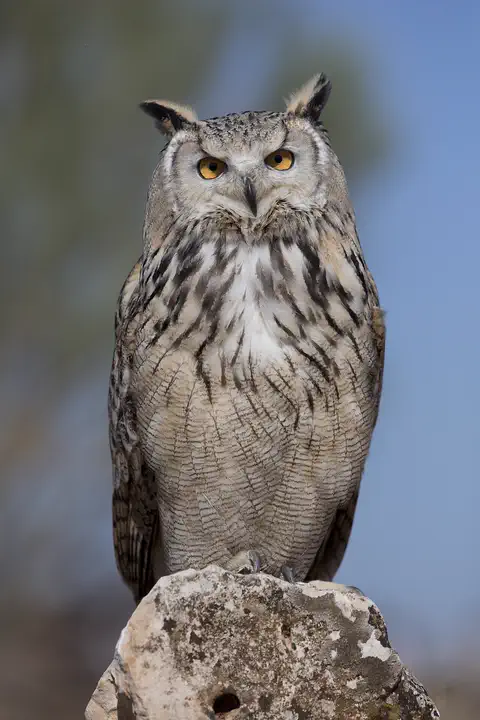
Eurasian eagle-owl
The Eurasian eagle-owl is one of the biggest owls in the world, with wings up to about 2 meters across, big orange eyes and two tall ear tufts. It lives across Europe and Asia, nests on rocky ledges and flies silently at night to catch rats, voles, hares and birds.
-
 Animal
American black bear
The American black bear is the most common bear in North America. It lives mostly in forests, climbs trees with its short, curved claws, eats mainly plants, and spends the winter in a den. Not all black bears are black: some are brown, cinnamon, blue-gray or even white.
-
 Animal
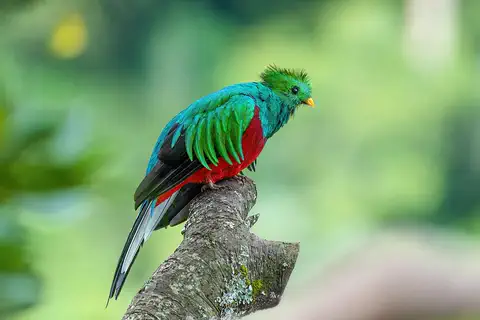
Resplendent quetzal
The resplendent quetzal is a glittering green and red bird of the cloud forests of southern Mexico and Central America. Males grow long, flowing plumes, up to about 90 centimeters. Quetzals eat mostly small fruits related to avocados, and the bird is the national emblem of Guatemala.
-
 Animal
Northern giant hornet
The northern giant hornet, once called the Asian giant hornet, is the world's largest hornet. It lives in forests of eastern Asia, where each colony is started by one queen in an underground nest. Its workers hunt other insects, including honey bees, to feed the young hornets.
-
 Animal
Old World swallowtail
The Old World swallowtail is a large butterfly with yellow wings, black veins, blue spots and a red eyespot near the long tails on its hindwings. It lives across Europe and Asia and in northern North America. Its green and black caterpillar has a hidden orange fork that pops out when it is bothered.
-
 Animal
Panamanian golden frog
The Panamanian golden frog is a small, bright yellow toad with black patches from the forest streams of Panama. Males wave their arms to talk to each other. A disease caused by the chytrid fungus wiped out the wild frogs, and none has been seen in the wild since 2009, so zoos and scientists are caring for golden frogs and working to return them to nature one day.
-
 Animal
Japanese giant salamander
The Japanese giant salamander is one of the biggest salamanders in the world, growing up to 1.5 meters long. It lives its whole life in cool, clear rivers in Japan, breathes mostly through its wrinkly skin, and the fathers guard the eggs and babies for months.