All animals
Tap an animal to meet it: where it lives, what it eats, how it grows, and a narrated adventure with Olly.
442 to explore · page 2 of 10
-
 Watch
3D
Animal
Bald eagle
The bald eagle is one of North America's biggest birds, with a white head and tail, a dark brown body and a huge yellow bill. It lives near lakes, rivers and coasts and eats mostly fish. Once rare because of hunting and pesticides, it has made an amazing comeback.
-
 Watch
Animal
Bar-tailed godwit
The bar-tailed godwit is a long-billed shorebird that breeds on Arctic tundra and spends the rest of the year on mudflats far to the south. Godwits from Alaska fly non-stop across the Pacific Ocean to New Zealand and Australia, and one young bird tracked in 2022 flew at least 13,560 kilometers without landing.
-
 Watch
Animal
Barn owl
The barn owl is a pale, ghostly owl with a heart-shaped face that works like a dish to collect sound. It hunts mice and voles at night over fields and grassland, finding them by hearing alone if it has to. Barn owls live on every continent except Antarctica.
-
 Watch
3D
Animal
Barn swallow
The barn swallow is a small, speedy bird with a glossy blue back, a reddish throat and a long, deeply forked tail. It catches insects in the air, builds cup-shaped mud nests on barns and bridges, and makes long migrations between the Northern Hemisphere, where it nests, and the Southern Hemisphere, where it spends the winter.
-
 Watch
3D
Animal
Basking shark
The basking shark is the second-biggest fish in the world, after the whale shark. It swims slowly near the surface with its enormous mouth open, sieving tiny floating animals called zooplankton out of the water. It is gentle and lives mainly in cool seas.
-
 Watch
Animal
Bee hummingbird
The bee hummingbird of Cuba is the smallest living bird: about 5.5 to 6 centimeters long and weighing only about 2 grams. It hovers in front of small flowers to sip nectar, also eats tiny insects and spiders, and lays eggs the size of peas.
-
 Watch
Animal
Beluga whale
The beluga whale is a small white whale of the Arctic. It has no fin on its back, a soft, round forehead it can change shape, and a neck that bends, and it makes so many whistles, chirps and clicks that sailors called it the canary of the sea.
-
 Watch
Animal
Big-belly seahorse
The big-belly seahorse lives in the cool coastal waters of southeastern Australia and New Zealand. It is one of the largest seahorses, usually 18 to 28 centimeters long. It grips seaweed and jetties with its curly tail and sucks up tiny shrimp through its snout. As in all seahorses, the male carries the eggs in a pouch on his belly and gives birth to hundreds of babies.
-
 Watch
Animal
Black mamba
The black mamba is a long, slender, very fast snake of the savannas and rocky hills of sub-Saharan Africa. It is gray to brown, gets its name from its inky-black mouth, hunts small mammals by day, and is shy: it would almost always rather slip away from people. It is also highly venomous, so it is a snake to admire from far away.
-
 Watch
Animal
Black rhinoceros
The black rhinoceros is the smaller of Africa's two rhinos. It has two horns and a pointed, hooked upper lip that it uses to pick leaves and twigs from bushes. It is Critically Endangered, but thanks to rangers and conservationists its numbers have been climbing again.
-
 Watch
Animal
Black swan
The black swan is the only swan in the world that is almost entirely black. It has a bright red bill with a white band near the tip, and white flight feathers that flash when it flies. It is native to Australia and New Zealand, and people have taken it to other countries too.
-
 Watch
Animal
Black-capped chickadee
The black-capped chickadee is a small, curious songbird of North American woods and backyards. It hides thousands of seeds to eat later and remembers where they are, and its "chick-a-dee-dee-dee" call tells other birds how dangerous a nearby predator is.
-
 Watch
Animal
Black-tailed prairie dog
Black-tailed prairie dogs are sociable ground squirrels of North America's Great Plains. They dig huge underground towns, keep the grass short to watch for danger, and bark warnings to each other. Many other animals depend on their towns.
-
 Watch
Animal
Blacktip reef shark
The blacktip reef shark is a medium-sized shark of warm, shallow coral reefs in the Indian and Pacific Oceans. You can spot it by the black tips on all its fins. It hunts fish, squid and crabs, stays close to its home reef, and gives birth to just a few live pups at a time.
-
 Watch
Animal
Blue dragon
The blue dragon is a sea slug only about 3 centimeters long that floats upside down on the ocean's surface, held up by a bubble of gas in its stomach. It eats stinging animals such as the Portuguese man o' war and keeps their stinging cells in its own finger-like tips.
-
 Watch
Animal
Blue jay
The blue jay is a large, crested songbird of eastern and central North America, blue above and white below with a black necklace. It is clever and loud, can copy the calls of hawks, and can bury thousands of acorns in a single fall. Its acorn burying is credited with helping oak trees spread.
-
 Watch
Animal
Blue sea star
The blue sea star is easy to spot on Indian and Pacific Ocean reefs: bright blue, with five smooth, tube-shaped arms. It cleans up the reef by eating dead animals, tiny creatures and the thin film that grows on rocks, and it can grow back an arm it loses.
-
 Watch
3D
Animal
Blue tang
The blue tang is a royal-blue reef fish with black markings and a bright yellow tail. It lives on coral reefs across the Indian and Pacific Oceans, starts life yellow, and carries sharp blades at the base of its tail.
-
 Watch
Animal
Blue whale
The blue whale is the largest animal ever to live on Earth, bigger than any dinosaur. It is a baleen whale: instead of teeth it has bristly plates that strain huge mouthfuls of seawater to catch krill. Blue whales live in every ocean except the Arctic, and their deep calls are among the loudest sounds made by any animal.
-
 Watch
Animal
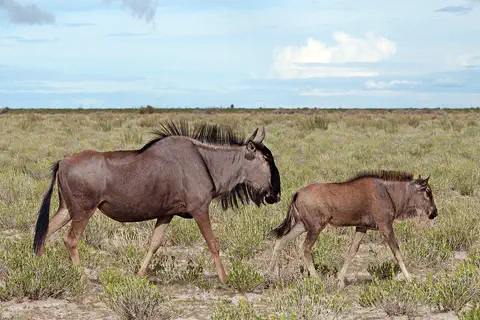
Blue wildebeest
The blue wildebeest, or gnu, is a big antelope with a box-like head, curved horns, a mane and a beard. It grazes the savannas of eastern and southern Africa, and in the Serengeti huge herds travel in a giant circle every year following the rains.
-
 Watch
3D
Animal
Blue-and-yellow macaw
The blue-and-yellow macaw is a large parrot of South America and Panama. It is bright blue on top and golden yellow underneath, with a green forehead and a white face lined with black. It lives near swamps and rivers, cracks nuts with its strong black beak and stays with one mate for life.
-
 Watch
Animal
Blue-footed booby
The blue-footed booby is a seabird of the tropical eastern Pacific, from Mexico to Peru and the Galápagos Islands. Its bright blue feet star in its courtship dance: birds with bluer feet are more likely to find a mate. It catches fish by diving into the sea from high in the air.
-
 Watch
Animal
Boa constrictor
The boa constrictor is a large, heavy snake of South America. Of all the boas, it lives in the greatest variety of places, from rainforests to dry scrub and farms. It catches food by squeezing, it has no venom, and mothers give birth to live babies.
-
 Watch
Animal
Bobcat
The bobcat is North America's most common wild cat, found from southern Canada across the United States to Mexico. It is bigger than a house cat, with a short tail, ear tufts and a spotted coat. It lives in forests, swamps, deserts and even some cities, and hunts mostly rabbits.
-
 Watch
Animal
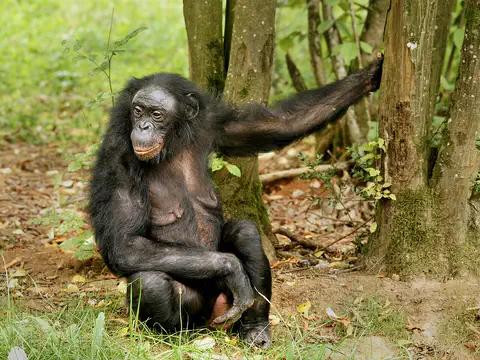
Bonobo
The bonobo is a great ape that looks a lot like a chimpanzee but is more slender, with a rounder head. It lives only in the rainforests south of the Congo River, in groups where females take the lead and squabbles rarely turn into fights.
-
 Watch
3D
Animal
Bornean orangutan
The Bornean orangutan is a shaggy red great ape that spends almost all its life in the treetops of Borneo's rainforests. It eats mostly ripe fruit, builds a new leafy bed every night, and lives a quieter, more solitary life than other great apes.
-
 Watch
3D
Animal
Bowhead whale
The bowhead whale is a giant baleen whale that spends its whole life in cold Arctic waters. Its enormous bow-shaped head can push through sea ice, its blubber is thicker than any other whale's, and some bowheads may live for more than 200 years.
-
 Watch
3D
Animal
Brown bear
The brown bear lives in more places than any other bear, from European forests to the mountains of Asia and the rivers of Alaska. It eats almost anything, from berries to salmon, and spends the long winter asleep in a cozy den. Grizzly bears and Kodiak bears are brown bears too.
-
 Watch
Animal
Brown pelican
The brown pelican is a large coastal bird of the Americas with an enormous bill and a stretchy throat pouch. It catches fish by diving head-first into the sea from high in the air. Brown pelicans almost disappeared from North America because of pesticides such as DDT, but after DDT was banned they made a full comeback.
-
 Watch
3D
Animal
Brown rat
Brown rats are large rodents that came from East Asia and spread around the world with people, mainly on ships. They are smart, strong swimmers with a superb sense of smell. Wild rats can carry germs that make people sick, so they are best left alone.
-
 Watch
Animal
Brown-throated sloth
The brown-throated sloth is a three-toed sloth of the rainforests of Central and South America. It eats leaves, saves energy by moving very slowly, and its shaggy fur can turn green with tiny algae that grow in it.
-
 Watch
Animal
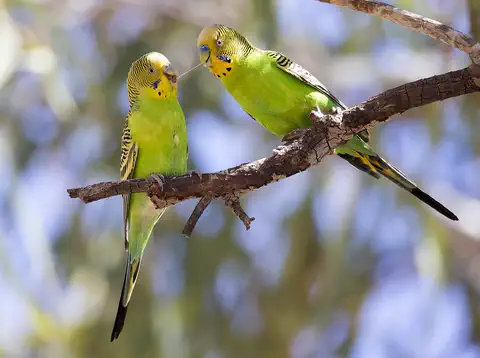
Budgerigar
The budgerigar, or budgie, is a little parrot from the dry heart of Australia. Wild budgies are green and yellow with wavy black stripes. They are nomads that travel in flocks, they must find water every day, and they breed after good rain. Budgies are also popular pets all over the world.
-
 Watch
Animal
Buff-tailed bumblebee
The buff-tailed bumblebee is one of the most common bumblebees in Europe. It is large and furry, with golden-yellow bands, and the queen has a buff, or light brown, tail. It lives in nests of up to a few hundred bees, and people raise it to pollinate crops such as greenhouse tomatoes.
-
 Watch
3D
Animal
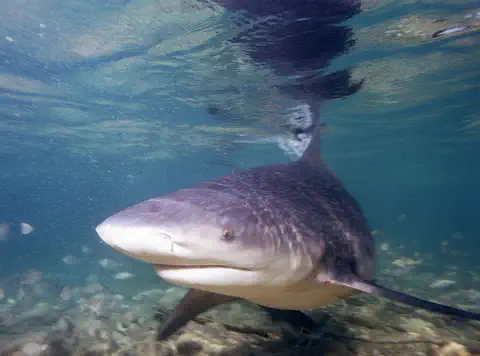
Bull shark
The bull shark is a large, stout shark of warm coasts around the world. It is one of very few sharks that can swim from the salty sea into fresh water, and it has been found thousands of kilometers up big rivers like the Amazon and the Mississippi.
-
 Watch
3D
Animal
Bull-headed dung beetle
The bull-headed dung beetle is a shiny black beetle about 1 centimeter long. Large males have two long, curved horns on their heads, like a bull. These beetles dig tunnels under cow dung and pack dung into balls for their young, which cleans up pastures and helps the soil. They came from Europe and now also live in North America and Australia.
-
 Watch
Animal
Burmese python
The Burmese python is one of the largest snakes in the world. In its home in South and Southeast Asia it has become rare because so many are caught, but in southern Florida, where people let pet pythons go, it has spread through the Everglades and eats many of the animals that live there.
-
 Watch
Animal
Burrowing owl
The burrowing owl is a small, sandy-brown owl with long legs and bright yellow eyes. Unlike most owls, it lives underground, in burrows dug by prairie dogs, ground squirrels or tortoises, or sometimes by the owls themselves. It lives in open grasslands and deserts from Canada to the tip of South America.
-
 Watch
Animal
California condor
The California condor is the largest wild bird in North America, a giant vulture with wings about 2.8 meters wide. In the 1980s only 22 were left. Thanks to a huge rescue effort, the US Fish and Wildlife Service counted 607 condors at the end of 2025, 392 of them flying free.
-
 Watch
Animal
California sea lion
The California sea lion is an 'eared seal' of the west coast of North America. It is clever, playful and very noisy, with a bark like a dog's. Unlike true seals, it has ear flaps and can turn its back flippers forward to walk on land. Its numbers have grown a lot since it was protected.
-
 Watch
3D
Animal
Canada goose
The Canada goose is a big, black-necked goose with a white chinstrap, found near lakes, rivers, fields and parks across North America. Many migrate in noisy V-shaped flocks, but more and more stay all year on city lawns. People also brought Canada geese to Britain and other parts of Europe.
-
 Watch
Animal
Canada lynx
The Canada lynx is a wild cat of the snowy northern forests of Canada and Alaska. Its huge, furry paws work like snowshoes, and it depends on one animal above all, the snowshoe hare. When hares are plentiful, lynx do well; when hares become scarce, lynx have a hard time too.
-
 Watch
Animal
Cane toad
The cane toad is a large, warty toad that comes from the Amazon and Guianas of South America. People carried it to many warm places, including Australia in 1935, hoping it would eat beetles in sugarcane fields. It did not solve that problem, but it spread fast, and its poison harms native animals that try to eat it.
-
 Watch
3D
Animal
Capybara
The capybara is the largest rodent alive, a giant cousin of the guinea pig. It lives in groups beside rivers, lakes and marshes in South America, grazes on grass and water plants, and dives into the water to stay cool and safe.
-
 Watch
Animal
Caracal
The caracal is a sleek, reddish-gold wild cat of Africa, the Middle East and Central Asia to India. Its name comes from a Turkish word meaning "black ears", for its black-backed ears with long tufts. It hunts on the ground, but it can leap two meters or more into the air to catch birds.
-
 Watch
Animal
Caribbean hermit crab
The Caribbean hermit crab is a land hermit crab with a big purple claw and red legs. It lives near the coasts of Bermuda, Florida and the Caribbean, carries an empty snail shell for protection, and goes back to the sea only to release its eggs.
-
 Watch
3D
Animal
Cattle
Cattle are large farm animals that people tamed from wild oxen long ago. They eat grass and digest it with a stomach that has four parts. Farmers around the world keep cattle for milk, meat and leather, and in some places oxen still pull plows and carts.
-
 Watch
Animal
Central bearded dragon
The central bearded dragon is a lizard of the dry woodlands, scrub and deserts of eastern inland Australia. It eats plants and small animals, basks on fence posts and logs, waves its arm and bobs its head to talk to other dragons, and puffs out a spiky beard to look big. It is also a very popular pet lizard.
-
 Watch
3D
Animal
Chambered nautilus
The chambered nautilus is a relative of octopuses and squids that lives inside a coiled shell full of sealed rooms. It moves up and down along deep reef slopes by changing how much gas and water are in its shell, and it finds food mostly by smell.