All animals
Tap an animal to meet it: where it lives, what it eats, how it grows, and a narrated adventure with Olly.
598 to explore · page 11 of 13
-
 Watch
3D
Animal
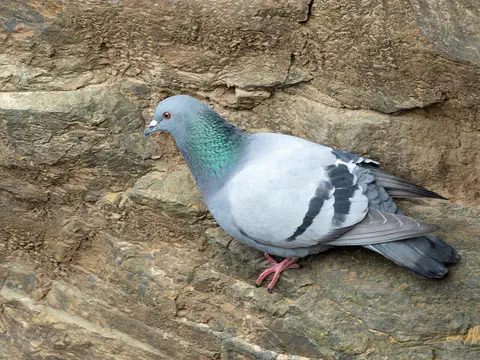
Rock pigeon
The rock pigeon, also called the rock dove, is the pigeon you see in city squares. Its wild ancestors nest on sea cliffs and mountain ledges, and city pigeons use buildings as if they were cliffs. Pigeons are famous for finding their way home from far away.
-
 Watch
Animal
Rock ptarmigan
The rock ptarmigan is a hardy grouse of the high Arctic and of rocky mountain tops in North America, Europe and Asia. It turns white in winter and mottled brown or gray in summer, so it blends in all year. It grows thick feathers on its feet for winter, and it eats buds, twigs, leaves and berries of small tundra plants.
-
 Watch
Animal
Rose-ringed parakeet
The rose-ringed parakeet is a slim green parrot with a red beak and a long, pointed tail. Adult males have a black and pink ring around the neck. It is native to a belt of Africa south of the Sahara and to southern Asia, but cage birds that escaped or were let go have started wild flocks in more than 35 other countries, including big cities in Europe.
-
 Watch
3D
Animal
Roseate spoonbill
The roseate spoonbill is a bright pink wading bird with a long, flat bill shaped like a spoon. It sweeps its bill from side to side through shallow water and grabs the shrimp or small fish it feels. Its pink color comes from the food it eats.
-
 Watch
3D
Animal
Ruby-throated hummingbird
The ruby-throated hummingbird is the only hummingbird that nests in eastern North America. It weighs only 2 to 6 grams, beats its wings about 53 times a second and can fly forward, backward and hover in one spot. Each fall it flies south to Mexico and Central America for the winter.
-
 Watch
Animal
Rüppell's vulture
Rüppell's vulture is a huge African vulture with wings up to 2.6 meters wide. It soars for hours over the savanna, searching by sight for dead animals to eat, and nests in colonies on cliffs. One Rüppell's vulture holds the record for the highest-flying bird. Its numbers have fallen so fast that it is now Critically Endangered.
-
 Watch
3D
Animal
Saiga antelope
The saiga antelope is a goat-sized antelope with an amazing floppy nose. Huge herds roam the dry steppes of Central Asia. Saigas were once nearly wiped out by hunting, but thanks to protection there are now more than a million.
-
 Watch
Animal
Saltwater crocodile
The saltwater crocodile is the largest reptile alive today. It lives in rivers, swamps and estuaries from India to northern Australia, can cope with fresh water and seawater, and sometimes swims far out across the open ocean to reach distant islands.
-
 Watch
Animal
Sand cat
The sand cat is a small wild cat of the deserts of North Africa, Arabia and Central Asia. Its sandy coat hides it on the dunes, its big ears hear prey moving under the sand, and thick fur on the soles of its feet protects it from scorching days and freezing nights.
-
 Watch
Animal
Sand lizard
The sand lizard is a stocky lizard that lives across much of Europe and east into Central Asia, Mongolia and China. It likes sunny, open places such as meadows, heaths and sand dunes. Both males and females have brown patterns on their backs, but the males have green sides, brightest in spring. In Britain, females leave their eggs buried in warm, sunny sand.
-
 Watch
Animal
Sandhill crane
The sandhill crane is a tall gray bird of North America with long legs, a long neck and a red patch on its forehead. Pairs dance by leaping and spreading their wings, and many sandhill cranes travel long distances between their nesting marshes and their winter homes. In early spring, huge crowds gather on the Platte River in Nebraska.
-
 Watch
Animal
Santa Cruz giant tortoise
The Santa Cruz giant tortoise lives only on the western side of Santa Cruz Island in the Galápagos. It has a big, dome-shaped shell, eats grass, leaves and cactus, walks between the dry lowlands and the misty highlands, and can live for well over a century.
-
 Watch
Animal
Sarus crane
The sarus crane is a tall gray crane with a bare red head and long red legs. It lives in wetlands, grasslands and farm fields in India, Nepal, Pakistan, parts of Southeast Asia and northern Australia. Pairs dance and call loudly, and they nest on the ground in wetlands.
-
 Watch
3D
Animal
Scalloped hammerhead
The scalloped hammerhead is a large shark with a wide, flat head shaped like a hammer, with wavy notches along the front edge. It lives in warm coastal seas around the world, gathers in big schools, and hunts fish and squid. It is now critically endangered because so many are caught.
-
 Watch
Animal
Scarlet ibis
The scarlet ibis is a bright red wading bird of South America, red all over except for black wingtips. It probes mud and shallow water with its long, curved bill for crabs, crayfish and insects, and its color comes from pigments in its food.
-
 Watch
3D
Animal
Scarlet macaw
The scarlet macaw is a large parrot of the rainforests of Mexico, Central America and South America. It is famous for its bright red, yellow and blue feathers. It cracks hard nuts with its powerful beak, flies in noisy flocks and stays with one mate for life.
-
 Watch
Animal
Sea otter
The sea otter is a marine mammal of the North Pacific coast that spends almost its whole life in the water. It has the thickest fur of any animal, floats on its back to eat, and even uses rocks as tools. By eating sea urchins, sea otters help kelp forests stay healthy.
-
 Watch
Animal
Secretarybird
The secretarybird is a bird of prey that hunts on foot. It strides across the African savanna on the longest legs of any raptor, walking 20 to 30 kilometers a day, and stamps on grasshoppers, mice, lizards and even snakes with lightning-fast kicks.
-
 Watch
3D
Animal
Serval
The serval is a slender wild cat of African grasslands and wetlands. Its huge ears can hear mice moving in tall grass, and its long legs let it leap high into the air to pounce on them or snatch a bird.
-
 Watch
3D
Animal
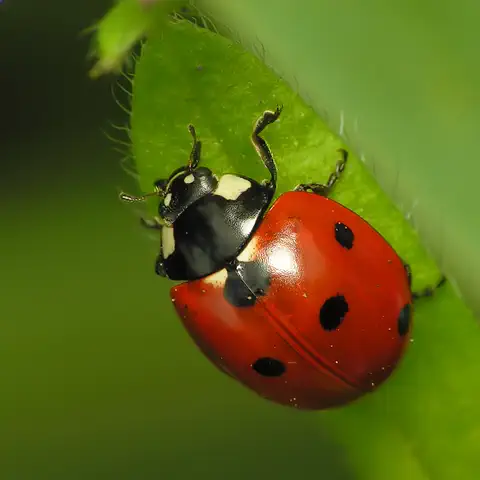
Seven-spot ladybird
The seven-spot ladybird, or ladybug, is a domed red beetle with seven black spots. Both the young and the adults hunt aphids, small insects that suck plant juices, so gardeners and farmers are glad to see them. Its bright colors warn predators that it tastes horrible.
-
 Watch
Animal
Shingleback skink
The shingleback is a big, slow, chunky skink from the dry parts of southern and inland Australia. It has a large head, a short, blunt tail and big rough scales like the shingles on a roof. It sticks out a bright blue tongue to scare enemies, gives birth to big live babies, and the same male and female often pair up year after year.
-
 Watch
Animal
Shoebill
The shoebill is a tall gray bird of African swamps, named for its enormous bill shaped like a wooden shoe. It stands as still as a statue among the papyrus, then lunges forward to grab big, slippery fish such as lungfish.
-
 Watch
3D
Animal
Short-beaked common dolphin
The short-beaked common dolphin is one of the most numerous dolphins in the world. It lives in warm and cool seas around the globe, travels in groups of hundreds or even thousands, and is famous for leaping and riding the waves in front of boats.
-
 Watch
Animal
Short-beaked echidna
The short-beaked echidna is a spiny mammal that lays eggs. It lives all over Australia and in parts of New Guinea, digs into ant and termite nests with strong claws, and licks up the insects with a long, sticky tongue. It has no teeth at all.
-
 Watch
3D
Animal
Shortfin mako shark
The shortfin mako is a sleek, metallic-blue shark that roams warm and mild oceans all over the world. Scientists call it the fastest shark: it can sprint at up to about 70 kilometers an hour and even leap out of the water. It hunts fast fish such as tuna and swordfish, and it is now endangered.
-
 Watch
3D
Animal
Siamese fighting fish
The Siamese fighting fish, often called the betta, is a small freshwater fish from shallow, warm waters in Thailand. It can breathe air with a special organ, and males build nests of bubbles for their eggs. People have bred bettas for many centuries, giving pet bettas their bright colors and long fins.
-
 Watch
Animal
Sidewinder
The sidewinder is a small rattlesnake of the sandy deserts of the southwestern United States and northwestern Mexico. It is named for the way it moves: it throws its body sideways across the sand, leaving J-shaped tracks. It has a pointed scale like a little horn above each eye. Like all rattlesnakes it is venomous, so people should keep a safe distance.
-
 Watch
Animal
Sloth bear
The sloth bear is a shaggy, black bear of the forests and grasslands of India, Nepal and Sri Lanka. It is a bear that specializes in eating termites and ants: it digs open their nests with long claws and sucks them up through a gap in its front teeth. Mother sloth bears carry their cubs on their backs.
-
 Watch
Animal
Slow worm
The slow worm is a legless lizard from Europe. It is not a worm or a snake: unlike snakes, it can blink its eyelids and drop its tail. Slow worms live in meadows, woodland edges, heaths and gardens, spend a lot of time hidden under logs or underground, and hunt slow-moving prey such as small slugs. Mothers give birth to live young.
-
 Watch
Animal
Smalltooth sawfish
The smalltooth sawfish is a giant ray with a shark-like body and a long, flat snout edged with teeth, called a rostrum or saw. It swings the saw to stun fish and uses it to sense their tiny electric signals. Young sawfish grow up among mangroves. Once found on both sides of the Atlantic, it is now Critically Endangered.
- Watch Animal Smooth-head blobfish The smooth-head blobfish lives on the deep sea floor off southern Australia, 600 to 1,200 meters down, where the water pushes in hard from every side. Its body is soft, with loose skin and no scales. In the deep, the water pressure helps hold it in shape, so it looks like a fish. Pulled up to the surface, that pressure is gone and its body sags, which is why photos look so 'blobby'.
-
 Watch
Animal
Snow goose
The snow goose nests on Arctic tundra in Canada, Alaska, Greenland and Wrangel Island in Russia, and spends the winter in the United States and Mexico. Most are white with black wingtips, but some, called blue geese, have gray bodies. Snow geese travel in huge flocks, and in 2008 the US Fish and Wildlife Service said there were so many that they had damaged parts of their tundra nesting grounds.
-
 Watch
Animal
Snow leopard
The snow leopard lives high in the mountains of Central Asia, where it is freezing cold and the ground is steep and rocky. Thick fur, huge furry paws and a tail almost as long as its body help it survive. It is so hard to spot that people call it the ghost cat of the mountains.
-
 Watch
Animal
Snow petrel
The snow petrel is a pure white seabird that lives only around Antarctica. It nests in rocky cracks on the frozen continent and nearby icy islands, sometimes hundreds of kilometers inland and as high as 2,400 meters. At sea it stays close to the pack ice, where it catches krill, fish and squid.
-
 Watch
Animal
Snowy owl
The snowy owl is a large white owl that nests on the Arctic tundra. Unlike most owls it hunts in daylight, and in the endless light of an Arctic summer it may hunt at any hour. Lemmings are its favorite food.
-
 Watch
Animal
Sociable weaver
The sociable weaver is a sparrow-sized bird of the dry savannas of southern Africa. Whole colonies, sometimes hundreds of birds, build and share one enormous thatched nest with many separate rooms. It is among the largest nests built by any bird.
-
 Watch
3D
Animal
Sockeye salmon
The sockeye salmon is a Pacific salmon that usually grows up in a lake, spends a few years in the North Pacific Ocean, and then returns to the place it hatched to lay its eggs. On the way home it turns bright red with a green head.
-
 Watch
Animal
South American coati
The South American coati is a relative of the raccoon with a long, bendy snout and a ringed tail it often holds straight up. Females and their young travel in noisy bands, sniffing out insects, spiders and fruit in forests from Colombia to northern Argentina.
-
 Watch
Animal
Southern carmine bee-eater
The southern carmine bee-eater is a slim, bright pinkish-red bird with a greenish-blue crown, a dark mask and two long tail streamers. It lives in the savannas of southern and eastern Africa, catching flying insects in the air. In spring, huge colonies of up to a thousand pairs dig nest tunnels side by side in sandy riverbanks.
-
 Watch
3D
Animal
Southern cassowary
The southern cassowary is a large flightless bird of the rainforests of northern Australia and New Guinea. It has a vivid blue neck, red wattles and a tall helmet called a casque. By eating fallen fruit and spreading the seeds in its droppings, it helps the rainforest grow. Cassowaries are wild and strong, so people watch them from a safe distance.
-
 Watch
3D
Animal
Southern crested caracara
The southern crested caracara is a large bird of prey from South America and a surprising member of the falcon family. It has a black crest, a bare orange-red face and long yellow legs, and it eats almost anything: dead animals, small creatures and insects.
-
 Watch
Animal
Southern elephant seal
The southern elephant seal is the world's largest seal. Adult males can weigh up to 3,000 kilograms and have a huge, trunk-like nose they use to roar. These amazing divers swim across the whole Southern Ocean and can hold their breath for up to two hours.
-
 Watch
Animal
Southern ground hornbill
The southern ground hornbill is a huge black bird with bright red bare skin on its face and throat and a long, curved black beak. It lives in woodland and savanna in eastern and southern Africa, where family groups walk the ground hunting insects, frogs, snakes and other small animals. It is listed as vulnerable because of poisoning, loss of nest trees and other dangers from people.
-
 Watch
Animal
Southern rockhopper penguin
The southern rockhopper penguin is the smallest of the crested penguins. It has spiky yellow head feathers, bright red eyes and an orange-red bill, and it is named for the way it hops over rocks and up steep slopes. It nests on islands all around the southern oceans. Its numbers have fallen a lot, so it is listed as Vulnerable.
-
 Watch
Animal
Southern stingray
The southern stingray is a flat, diamond-shaped ray of warm western Atlantic waters, from the eastern United States through the Gulf of Mexico and the Caribbean to South America. It spends much of its time on sandy bottoms, finding buried crabs, shrimp and fish by smell, touch and tiny electric signals.
-
 Watch
Animal
Spectacled bear
The spectacled bear, or Andean bear, is the only bear that lives in South America. It is named for the pale markings that ring the eyes of many bears, like a pair of glasses. It lives in the forests of the Andes Mountains, climbs trees, builds platforms in branches and eats mostly fruit and bromeliads.
-
 Watch
Animal
Spectacled caiman
The spectacled caiman is a medium-sized crocodilian that lives in rivers, lakes, swamps and marshes from southern Mexico to Peru and Brazil. A bony ridge in front of and between its eyes sets it apart from American alligators and crocodiles. It is very common: scientists think there are millions of them.
-
 Watch
Animal
Sperm whale
The sperm whale is the biggest whale with teeth. Its huge, boxy head is about a third of its body, it dives deep into the dark ocean to hunt squid, and it makes the loudest sounds of any animal.