All animals
Tap an animal to meet it: where it lives, what it eats, how it grows, and a narrated adventure with Olly.
598 to explore · page 10 of 13
-
 Watch
Animal
Pallas's cat
Pallas's cat, or the manul, is a small wild cat of the cold, dry grasslands and mountains of Central Asia. Its long, thick fur makes it look bigger than it really is, and its flat face and low, round ears help it peek over rocks without being seen. It hunts pikas and other small animals.
-
 Watch
Animal
Panamanian golden frog
The Panamanian golden frog is a small, bright yellow toad with black patches from the forest streams of Panama. Males wave their arms to talk to each other. A disease caused by the chytrid fungus wiped out the wild frogs, and none has been seen in the wild since 2009, so zoos and scientists are caring for golden frogs and working to return them to nature one day.
-
 Watch
Animal
Panther chameleon
The panther chameleon is a lizard famous for its brilliant colors. It lives on the island of Madagascar, grips branches with tong-shaped feet and a curling tail, looks two ways at once, and catches insects with a lightning-fast tongue. Males change their colors to send messages.
-
 Watch
Animal
Peacock mantis shrimp
The peacock mantis shrimp is one of the most colorful animals on coral reefs in the Indian and Pacific Oceans. It is famous for its club-shaped arms, which strike so fast that they can smash snail shells, and for its amazing eyes on movable stalks.
-
 Watch
Animal
Peacock spider
The peacock spider is a jumping spider from Australia, smaller than a grain of rice. The male has a rainbow-colored abdomen with flaps that unfold into a fan, like a peacock's tail. He waves the fan and his long third legs in a dance to win over a female, and he sends little vibrations through the ground at the same time.
-
 Watch
3D
Animal
Peregrine falcon
The peregrine falcon is a crow-sized bird of prey famous for its hunting dive, called a stoop. Diving from high above, it can reach about 320 kilometers per hour, making it the fastest animal on Earth. It lives on every continent except Antarctica, even in big cities.
-
 Watch
Animal
Perentie
The perentie is Australia's largest lizard, a kind of monitor, also known as a goanna. It lives in the dry, rocky deserts of central and western Australia, hiding in deep cracks and burrows among the rocks and hunting across the open desert around them.
-
 Watch
3D
Animal
Periodical cicada
The periodical cicada spends 17 years underground as a nymph, sipping juice from tree roots. Then, in late spring, millions of them dig out on the same few nights, turn into winged adults and fill the trees with their loud songs, all within a few weeks.
-
 Watch
Animal
Philippine eagle
The Philippine eagle is one of the largest and rarest eagles in the world. It lives only in the mountain rainforests of four Philippine islands, where it hunts monkeys, civets, flying squirrels and other forest animals. It is the national bird of the Philippines, and it is critically endangered.
-
 Watch
Animal
Philippine tarsier
The Philippine tarsier is a tiny primate that lives only on islands in the southeastern Philippines. For its size, it has the biggest eyes of any mammal: each eye is heavier than its brain. At night it clings to thin stems, then leaps out to grab insects and other small animals.
-
 Watch
Animal
Pied avocet
The pied avocet is a black-and-white wading bird with long blue-gray legs and a long, thin beak that curves upward. It lives on salty and brackish wetlands, lagoons, saltpans and mudflats in Europe, Africa and Asia. It sweeps its beak from side to side in shallow water to sift tiny animals from the mud.
-
 Watch
Animal
Pig-nosed turtle
The pig-nosed turtle is a large freshwater turtle with a snout like a pig's, a soft, leathery shell and big flippers like a sea turtle's. It lives in rivers, lagoons and swamps of southern New Guinea and northern Australia and eats mostly fruits and plants. Heavy collection of its eggs and adults has made it endangered.
-
 Watch
Animal
Pileated woodpecker
The pileated woodpecker is the largest woodpecker in North America that is still alive today, nearly as big as a crow, with a flaming red crest. It chisels big rectangular holes in dead trees to reach carpenter ants, and the nest holes it carves later shelter owls, ducks, bats and other animals.
-
 Watch
Animal
Plains zebra
Plains zebras are striped members of the horse family that graze on the grasslands of eastern and southern Africa. They live in close family groups, travel long distances to find fresh grass and water, and every zebra's stripes are different.
-
 Watch
Animal
Platypus
The platypus is one of the strangest mammals on Earth. It has a soft bill, webbed feet and a flat tail, lives in the rivers and streams of eastern Australia, finds food underwater with its eyes shut, and is one of the only mammals that lays eggs.
-
 Watch
Animal
Polar bear
The polar bear is a huge bear that lives on the frozen sea of the Arctic. Thick fur and a layer of fat keep it warm, its amazing nose finds seals under the snow, and it can swim for many hours. It needs sea ice to hunt, so a warming Arctic is a big problem for it.
-
 Watch
Animal
Portuguese man o' war
The Portuguese man o' war is not a true jellyfish. It is a siphonophore: a colony of many tiny, identical animals, each with its own job. A gas-filled float with a crest catches the wind like a sail, while long stinging tentacles below catch fish.
-
 Watch
Animal
Proboscis monkey
The proboscis monkey is named for the grown-up male's huge, drooping nose. It lives only on Borneo, in forests along rivers, swamps and coasts. It eats mostly leaves and fruit, sleeps by the river every night and is a strong swimmer.
-
 Watch
3D
Animal
Puma
The puma, also called the cougar or mountain lion, is a big, slender cat with plain tan fur and a long tail. It lives in more of the Americas than any other wild cat, from Canada all the way to the southern tip of South America, in mountains, forests, deserts and swamps.
-
 Watch
Animal
Purple sea urchin
The purple sea urchin is a spiny, ball-shaped animal of North America's Pacific coast, up to about 10 centimeters across. It scrapes algae with a mouth of five teeth, walks on tiny tube feet, and can even carve a hollow in solid rock. Since 2014 its numbers have exploded in parts of California, and hungry urchins have eaten away large areas of kelp forest.
-
 Watch
Animal
Pygmy hippopotamus
The pygmy hippopotamus is a small, shy relative of the common hippo. It lives alone in the swampy rainforests of West Africa, mostly in Liberia, rests in water by day and feeds on land at night. It is endangered, with fewer than 2,500 adults left.
-
 Watch
Animal
Pygmy marmoset
The pygmy marmoset is one of the smallest monkeys in the world: an adult weighs about as much as a small apple. It lives in the riverside rainforests of the western Amazon, where it bites little holes in tree bark and licks up the sticky gum that oozes out. Families share the work of carrying the babies, which are usually twins.
-
 Watch
Animal
Queen Alexandra's birdwing
Queen Alexandra's birdwing is described by scientists as the largest butterfly in the world: a female's wings can stretch almost 25 centimeters across. It lives only in a small area of rainforest in Papua New Guinea, where its caterpillars eat pipevine plants. It is endangered and protected by law.
-
 Watch
Animal
Quokka
The quokka is one of the smallest wallabies, a cat-sized marsupial of south-western Australia. Most quokkas now live on two small islands, Rottnest and Bald Island, because foxes and land clearing made them rare on the mainland.
-
 Watch
Animal
Radiated tortoise
The radiated tortoise lives only in the dry spiny forests of southern and southwestern Madagascar. Yellow lines spread out from the middle of each plate of its high, domed shell. It grazes mostly on grasses. Collection for food and the pet trade, and the loss of its forest, have made it critically endangered.
-
 Watch
Animal
Rainbow lorikeet
The rainbow lorikeet is a colorful parrot of northern and eastern Australia. It feeds mostly on nectar and pollen, which it collects with a brush-tipped tongue. Noisy, fast-flying flocks are a common sight in forests, parks and gardens.
-
 Watch
Animal
Rainbow trout
The rainbow trout gets its name from the pink-red band along each side. It comes from the cool rivers and lakes of western North America and far eastern Russia. Some rainbows stay in fresh water all their lives, while others, called steelhead, swim out to the ocean and come back to spawn.
-
 Watch
Animal
Red deer
The red deer is one of the largest deer in the world. It lives in forests, hills and moors across Europe and into western Asia and North Africa. Males, called stags, grow huge branching antlers every year and roar to win mates in autumn.
-
 Watch
Animal
Red fox
The red fox is a small, clever member of the dog family with an orange coat, black legs and a bushy, white-tipped tail. It lives across North America, Europe, Asia and North Africa, more of the world than any other wild land carnivore, and has even moved into big cities.
-
 Watch
Animal
Red kangaroo
The red kangaroo is the largest marsupial in the world, an animal whose babies grow up in a pouch. It lives on the dry plains of inland Australia, hops on powerful back legs that work like springs, and can get most of the water it needs from the plants it eats.
-
 Watch
Animal
Red kite
The red kite is a graceful bird of prey with a reddish-brown body, a pale gray head, long angled wings and a deeply forked tail. It lives only in Europe and nearby parts of Africa and Asia, where it soars over woods and farmland looking for dead animals, small mammals, birds and worms. People wiped it out in some places, such as England, Scotland and Ireland, but its numbers have grown again.
-
 Watch
Animal
Red knot
The red knot is a stocky shorebird that nests on Arctic tundra and spends the rest of the year on coasts around the world, as far south as southern South America and Australia. In spring its face and chest turn rusty red. Some red knots fly more than 9,300 miles (about 15,000 kilometers) north each spring, stopping on the way to eat and build up fat.
-
 Watch
Animal
Red lionfish
The red lionfish is a striped reef fish with long, spiny fins that spread out like a lion's mane. It comes from the Pacific and eastern Indian Oceans, where it hunts small fish and shrimp at night. People released lionfish into the Atlantic Ocean, and there they have spread fast, eating many native reef fish.
-
 Watch
3D
Animal
Red panda
The red panda is a cat-sized tree climber with rusty-red fur and a bushy ringed tail. It lives in cool mountain forests of the Himalayas and southern China and eats mostly bamboo leaves. Despite its name, it is not a close relative of the giant panda. It is endangered.
-
 Watch
Animal
Red squirrel
Red squirrels are small tree squirrels from the forests of Europe and northern Asia. Their fur can be ginger, brown or even black, and in winter they grow long ear tufts. In Britain they have become rare since people brought gray squirrels from North America.
-
 Watch
3D
Animal
Red swamp crayfish
The red swamp crayfish is a dark red freshwater crustacean with long claws covered in bright red bumps. It comes from the swamps and streams of the southern United States and northern Mexico, where it digs burrows in the mud. People have carried it around the world for food, and in many new places it harms the plants and animals that already live there.
-
 Watch
Animal
Red-bellied piranha
The red-bellied piranha is a silver fish with a red belly that lives in rivers, creeks and floodplain ponds of South America. It has a famous reputation, but experts say the danger to people is greatly exaggerated: piranhas mostly eat fish, insects, snails and plants.
-
 Watch
Animal
Red-billed tropicbird
The red-billed tropicbird is a white seabird with a red bill, black bars on its back and long tail streamers. It spends most of its life over warm tropical seas, where it dives for flying fish and squid. It comes to land to nest in rock crevices on small islands and cliffs.
-
 Watch
Animal
Red-crowned crane
The red-crowned crane is one of the world's largest cranes, white with a black neck and a bright red crown. Pairs bow, bob and leap in a courtship dance. It nests in wetlands of eastern Russia, China and Japan, and it is Vulnerable because those wetlands are disappearing.
-
 Watch
3D
Animal
Red-eared slider
The red-eared slider is a freshwater turtle from the central United States and northeastern Mexico, named for the red stripe behind each eye. It basks on logs, swims with webbed feet and eats both plants and small animals. Because so many were sold as pets and later let go, sliders now live wild in many other countries too, where they can harm native turtles.
-
 Watch
Animal
Red-eyed tree frog
The red-eyed tree frog lives in the rainforests of Central America. By day it sleeps folded up on a leaf, looking plain green. When something disturbs it, it flashes huge red eyes, orange feet and blue-and-yellow sides.
-
 Watch
3D
Animal
Red-tailed hawk
The red-tailed hawk is probably the most common hawk in North America. It soars in wide circles over fields or waits on a pole or fence post, watching for voles, mice and rabbits, then drops down to catch them with its sharp talons.
-
 Watch
3D
Animal
Reef stonefish
The reef stonefish is a master of disguise. Its lumpy, warty skin and rocky colors make it look like a stone or a piece of coral on the sea floor. It waits without moving until a small fish or shrimp comes near, then gulps it in a flash. Sharp spines on its back protect it from enemies.
-
 Watch
3D
Animal
Reindeer
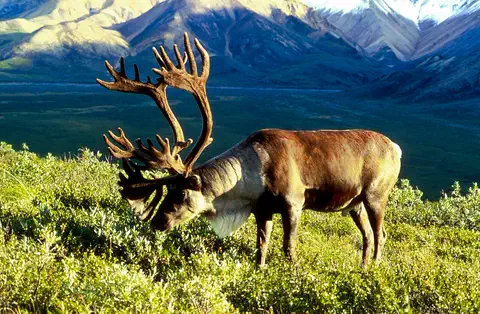
Reindeer, called caribou in North America, are deer of the Arctic tundra and northern forests. They are the only deer in which females grow antlers too. Some herds walk thousands of kilometers a year, and people in northern Europe and Asia have herded reindeer for a very long time.
-
 Watch
Animal
Resplendent quetzal
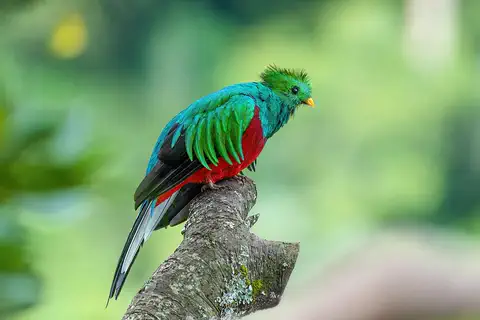
The resplendent quetzal is a glittering green and red bird of the cloud forests of southern Mexico and Central America. Males grow long, flowing plumes, up to about 90 centimeters. Quetzals eat mostly small fruits related to avocados, and the bird is the national emblem of Guatemala.
-
 Watch
Animal
Reticulated python
The reticulated python lives in the forests, riversides and even towns of Southeast Asia. It can grow longer than any other kind of snake, it is covered in a net-like pattern, and it is such a good swimmer that it has reached many small islands across the sea.
-
 Watch
Animal
Rhinoceros hornbill
The rhinoceros hornbill is a huge rainforest bird with black feathers, a black-banded white tail and an enormous yellow and orange-red beak topped by an upturned horn called a casque. It lives in tall forests of the Malay Peninsula, Sumatra, Java and Borneo and eats mostly fruit, especially figs. It is vulnerable because its forests are being cut down and it is hunted.
-
 Watch
3D
Animal
Ring-tailed lemur
The ring-tailed lemur is a primate that lives only on Madagascar, a big island off the coast of Africa. It has a striped tail with 13 black and white rings, sunbathes with its arms spread wide, and lives in groups where the females are in charge.