All animals
Tap an animal to meet it: where it lives, what it eats, how it grows, and a narrated adventure with Olly.
598 to explore · page 7 of 13
-
 Watch
Animal
Greenland shark
The Greenland shark is a huge, slow-moving shark of the cold North Atlantic and Arctic Ocean. It grows very slowly in the cold, and in 2016 scientists used the lenses of its eyes to estimate that it can live for at least 272 years, longer than any other animal with a backbone that we know of.
-
 Watch
Animal
Grévy's zebra
Grévy's zebra is the largest zebra, with narrow stripes, a white belly and big, round ears. It lives only in the dry grasslands and scrub of northern Kenya and Ethiopia, and it is endangered: only a few thousand are left in the wild.
-
 Watch
Animal
Grey crowned crane
The grey crowned crane is a gray African crane with a spiky crown of golden feathers, white and red cheeks and a red throat pouch. It is one of only two cranes that can perch in trees. It is the national bird of Uganda, and it is Endangered because its wetlands are disappearing.
-
 Watch
Animal
Grooved brain coral
The grooved brain coral is a reef-building coral of the Caribbean, the Bahamas, southern Florida and Bermuda. Its tiny polyps live in long, winding valleys, which give the dome-shaped colony the look of a brain. A coral disease that spread from Florida since 2014 has hit it hard, and it is now critically endangered.
-
 Watch
Animal
Ground pangolin
The ground pangolin is a shy African mammal covered in overlapping scales. It sniffs out ants and termites at night and licks them up with a long, sticky tongue. Pangolins are in trouble because people take them illegally, and many people are working to protect them.
-
 Watch
Animal
Guinea pig
The guinea pig is not a pig and does not come from Guinea. It is a rodent, first tamed thousands of years ago by people in the Andes mountains of South America. Today it is a popular pet around the world, and in parts of Peru, Ecuador and Bolivia it is still raised for food.
-
 Watch
3D
Animal
Guppy
The guppy is a small freshwater fish from northeastern South America and nearby Caribbean islands such as Trinidad. Males are smaller and brightly colored; females are larger and plainer. Guppies give birth to live young, and they are one of the most popular aquarium fish in the world.
-
 Watch
Animal
Gyrfalcon
The gyrfalcon is the largest falcon in the world, a powerful hunter of the Arctic tundra. Its feathers can be nearly pure white, gray or almost black. It mostly hunts ptarmigans, often flying fast and low to surprise them or chasing them over long distances. Gyrfalcons nest on cliffs all around the top of the world and are listed as Least Concern.
-
 Watch
Animal
Hamerkop
The hamerkop is a brown wading bird of Africa, Madagascar, Saudi Arabia and Yemen. A long, flat crest on the back of its head gives it the look of a hammer. It catches frogs and small fish in shallow water, and pairs build huge, domed nests of sticks with one small entrance hole.
-
 Watch
3D
Animal
Harbor porpoise
The harbor porpoise is a small relative of whales and dolphins. It lives in cool coastal waters of the Northern Hemisphere, in bays, harbors and fjords. It is shy, usually swims alone or in tiny groups, and rolls quietly to the surface to breathe.
-
 Watch
3D
Animal
Harbor seal
The harbor seal lives along the northern coasts of North America, Europe and Asia, and it is one of the most common marine mammals on the east and west coasts of the United States. It has spotted fur, a dog-like face and no ear flaps, and it wriggles like a caterpillar on land. Its pups can swim within minutes of being born.
-
 Watch
3D
Animal
Harpy eagle
Harpy eagles are among the largest and most powerful eagles in the world. They live in the lowland rainforests of Central and South America, where they hunt sloths and monkeys in the treetops. Forest loss and shooting have made them rare.
-
 Watch
Animal
Harris's hawk
The Harris's hawk is a dark brown hawk with reddish shoulders and thighs, long yellow legs and white at both ends of its tail. It lives from the southwestern United States to Chile and Argentina. It is more sociable than most birds of prey: two males and one female often nest together, and two or three hawks may hunt as a team.
-
 Watch
Animal
Hawaiian monk seal
The Hawaiian monk seal lives only in the Hawaiian Islands and nowhere else in the world. It sleeps on beaches, hunts fish and octopuses on the seafloor, and mostly lives alone. Only about 1,600 are left, but thanks to careful help, their numbers are slowly growing.
-
 Watch
3D
Animal
Hawksbill sea turtle
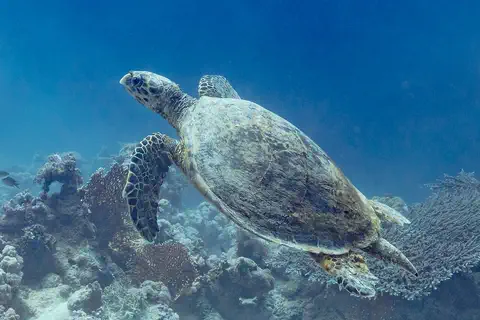
The hawksbill sea turtle lives in warm seas around the world, mostly near coral reefs. Its pointed, hawk-like beak reaches into cracks in the reef to find sponges, its favorite food. Its beautiful patterned shell once made it a target for hunters, and today it is critically endangered.
-
 Watch
Animal
Helmeted guineafowl
The helmeted guineafowl is a chicken-sized bird of open country across much of Africa. Its gray feathers are covered in neat white spots, and its bare blue and red head carries a bony helmet called a casque. Guineafowl walk long distances in flocks, eating seeds, bulbs and insects, and fly up into trees to sleep at night.
-
 Watch
Animal
Hercules beetle
The Hercules beetle is one of the largest beetles in the world: the biggest males can reach 18 centimeters, horns included. It lives in rainforests from southern Mexico to Bolivia and on a few Caribbean islands. Its huge grubs spend more than a year eating rotting wood before they turn into beetles.
-
 Watch
Animal
Hermann's tortoise
Hermann's tortoise lives in sunny, stony hills and open woods around the Mediterranean in southern Europe. Its high shell is yellow and black and usually about 13 to 18 centimeters long. It eats leaves, flowers and fruits, and it spends the winter hibernating. It is listed as vulnerable.
-
 Watch
Animal
Hoatzin
The hoatzin is a strange and wonderful bird of the Amazon and Orinoco rivers. It eats mostly leaves and digests them slowly with the help of bacteria, a bit like a cow. Its chicks have claws on their wings that help them climb back up through the branches.
-
 Watch
Animal
Honey badger
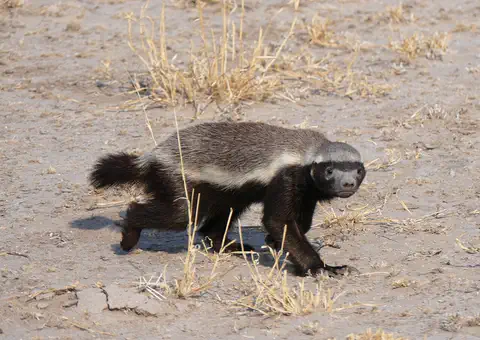
The honey badger, or ratel, is a stocky member of the weasel family that lives across Africa, the Middle East and India. Its gray or white back and black underside make it easy to spot. It digs with huge front claws, travels far to find food, and breaks into bees' nests for honey and bee grubs.
-
 Watch
3D
Animal
Horse
Horses are grazing animals built for running, with long legs that end in a single hard hoof. People tamed wild horses about 6,000 years ago on the grasslands of Europe and Asia, and horses changed history: they pulled plows, carried riders and connected faraway places.
-
 Watch
3D
Animal
House mouse
House mice are small rodents that first lived in Europe, Asia and North Africa. By living alongside people, they have spread to every continent except Antarctica. They are quick runners and can have babies when only a few weeks old.
-
 Watch
Animal
House sparrow
The house sparrow is one of the most widespread songbirds in the world. It is native to Europe, Asia and North Africa, but people released it in many other places, and now it lives in towns and farms almost everywhere people do. Its numbers have fallen sharply in some places, including Britain and North America.
-
 Watch
3D
Animal
Housefly
The housefly is a small gray fly with two big red eyes and one pair of see-through wings. It cannot chew, so it soaks up liquid food with a mouth like a sponge. Houseflies started out in central Asia and now live almost everywhere that people live. Their eggs hatch in less than a day, and the young grow up fast.
-
 Watch
Animal
Humboldt penguin
The Humboldt penguin is a medium-sized penguin of the Pacific coast of Peru and Chile, where the cold Humboldt Current brings plenty of fish. It has a white stripe curving around its head and a black band across its chest. It often digs its nest burrow in thick layers of dried seabird droppings called guano. It is listed as Vulnerable.
-
 Watch
Animal
Humpback anglerfish
The humpback anglerfish is a small, round, black fish of the deep, dark ocean. A long spine on the female's head ends in a glowing lure, lit by tiny bacteria, which draws prey close enough to catch in her big, toothy mouth. The males are tiny, only about 3 centimeters long, and their job is to find a female.
-
 Watch
3D
Animal
Humpback whale
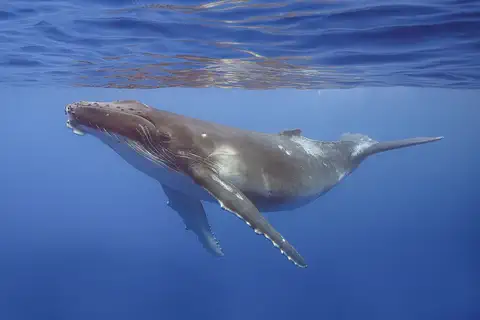
The humpback whale is a baleen whale famous for leaping out of the water, slapping its giant flippers and singing long, complex songs. It lives in every ocean and makes one of the longest journeys of any mammal, between cold feeding waters and warm waters where calves are born. Once hunted almost to extinction, it is now recovering.
-
 Watch
Animal
Humphead wrasse
The humphead wrasse is the biggest fish in the wrasse family, up to about 2.3 meters long. Adults have thick lips, a forehead hump and wavy lines on the face. They eat shellfish, sea urchins and even toxic crown-of-thorns starfish, and many change from female to male. Too many have been caught, so it is endangered.
-
 Watch
Animal
Hyacinth macaw
The hyacinth macaw is the largest parrot in the world, about a meter long and deep blue from head to tail. It lives in the open woodlands, palm groves and wetlands of central South America, especially Brazil's Pantanal, and cracks very hard palm nuts with its enormous beak.
-
 Watch
Animal
Immortal jellyfish
The immortal jellyfish is a tiny sea jelly only about 3 millimeters across. Most jellyfish die after they grow up and make babies, but this one can do something amazing: a starving adult can turn back into a polyp, the young stage, and grow up all over again. It can still be eaten or get sick, so it does not really live forever.
-
 Watch
Animal
Impala
The impala is a slender, reddish-brown antelope of the savannas of eastern and southern Africa. It can both graze on grass and browse on leaves, lives in herds, and when startled the whole herd bursts into spectacular leaps. Only males have the long, curving horns.
-
 Watch
Animal
Indian cobra
The Indian cobra, or spectacled cobra, lives across South Asia, from Pakistan to Sri Lanka. It raises its head and spreads a hood marked with a pattern like a pair of glasses, it eats lots of rats and mice, and it is venomous, so it is an animal to admire from far away.
-
 Watch
3D
Animal
Indian peafowl
The Indian peafowl is a large bird of the pheasant family from South Asia. Males, called peacocks, have a bright blue neck and a long train of shimmering feathers decorated with eyespots, which they spread into a giant fan to impress females, called peahens. It is the national bird of India.
-
 Watch
3D
Animal
Indian rhinoceros
The Indian rhinoceros, also called the greater one-horned rhino, has a single horn and deep folds in its skin that make it look armor-plated. It grazes on tall grass by rivers in India and Nepal, swims well, and has made a remarkable comeback from about 200 animals to more than 4,000.
-
 Watch
Animal
Indian star tortoise
The Indian star tortoise is named for the yellow star shapes on its dark shell. It lives in dry scrub, grasslands and farmland in India, Sri Lanka and a small part of Pakistan, and it eats grasses, leaves, flowers and fruits. Collection for the pet trade has made it vulnerable.
-
 Watch
3D
Animal
Indo-Pacific sailfish
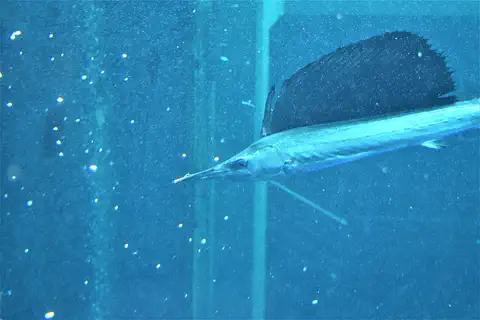
The sailfish is a long, sleek ocean fish with a tall, sail-like fin on its back and a long, spear-shaped upper jaw called a bill. It hunts schools of small fish in warm seas, folding its sail away to speed up and raising it to make sharp turns.
-
 Watch
Animal
Jackson's chameleon
Jackson's chameleon is a green chameleon from the highlands of Kenya and Tanzania, where it lives in trees and bushes above 1,500 meters. Males have three long horns, and females have none or only small ones. Instead of laying eggs, the mother gives birth to live babies, one at a time.
-
 Watch
3D
Animal
Jaguar
The jaguar is the largest cat in North and South America. It lives near rivers and swamps, swims well, and has such a powerful bite that it can crack a turtle's shell. Most jaguars live in the Amazon rainforest.
-
 Watch
Animal
Japanese giant salamander
The Japanese giant salamander is one of the biggest salamanders in the world, growing up to 1.5 meters long. It lives its whole life in cool, clear rivers in Japan, breathes mostly through its wrinkly skin, and the fathers guard the eggs and babies for months.
-
 Watch
Animal
Japanese macaque
The Japanese macaque, or snow monkey, lives farther north than any other monkey or ape except people. Thick fur keeps it warm through snowy winters, and some troops have learned to sit in warm hot springs.
-
 Watch
3D
Animal
Japanese spider crab
The Japanese spider crab is a gentle giant of the sea floor off Japan. Its body is only about the size of a large pizza, but its legs can stretch almost 4 meters from claw tip to claw tip, more than any other crab. It crawls slowly along the bottom, eating dead animals and plants.
-
 Watch
Animal
Kākāpō
The kākāpō is a large, moss-green parrot from New Zealand with an owl-like face. It cannot fly, it is active at night, and it eats only plants. It nearly died out, but careful work by New Zealand's Department of Conservation has grown the population to 325 birds (September 2026).
-
 Watch
Animal
Kea
The kea is a big, olive-green parrot found only on the South Island of New Zealand. It lives in mountain forests and alpine meadows, digs for food with its long, curved beak, nests on the ground and is famous for being curious, playful and clever.
-
 Watch
3D
Animal
Keel-billed toucan
The keel-billed toucan lives in the forests of southern Mexico, Central America and northern South America. Its huge, colorful bill can be a third of its whole length, yet it is light, and the bird uses it to pick fruit from thin branches.
-
 Watch
Animal
Kemp's ridley sea turtle
NOAA Fisheries calls Kemp's ridley the smallest sea turtle. It lives in the gulf between Mexico and the United States and along the US Atlantic coast, hunting crabs on sandy and muddy seafloors. Females often come ashore together in big groups, called arribadas, and nest in daylight. It is critically endangered, and Mexico and the United States work together to save it.
-
 Watch
Animal
Killdeer
The killdeer is a plover that lives in fields, lawns, shores and mudflats from Alaska and Canada to Peru and Chile. It has two black bands across its white chest and a loud call that sounds like its name. To protect its eggs, a parent may pretend to have a broken wing and lead an intruder away from the nest.
-
 Watch
Animal
King cobra
The king cobra is the largest venomous snake in the world, growing to more than 5 meters long. It lives in forests and near streams in South and Southeast Asia, eats mainly other snakes, and the mother builds a nest of leaves and guards her eggs.
-
 Watch
3D
Animal
King penguin
The king penguin is the second-largest penguin in the world. It lives in huge, noisy colonies on windy islands in the Southern Ocean and dives deep to catch lantern fish. Its babies grow a thick coat of brown fluff and take more than a year to raise.