All animals
Tap an animal to meet it: where it lives, what it eats, how it grows, and a narrated adventure with Olly.
598 to explore · page 8 of 13
-
 Watch
Animal
Koala
The koala is a tree-living marsupial from eastern Australia. It eats almost nothing but eucalyptus leaves, sleeps up to 20 hours a day to save energy, and carries its jellybean-sized baby in a pouch that opens toward its back legs.
-
 Watch
3D
Animal
Komodo dragon
The Komodo dragon is the largest lizard alive today. It lives only on a handful of Indonesian islands, where it tracks food with its flicking yellow tongue, rests in burrows in the heat and spends its first years safely up in the trees.
-
 Watch
Animal
Kori bustard
The kori bustard is a huge, long-legged bird of open grassland and savanna in eastern and southern Africa. It is one of the world's heaviest flying birds, but it spends its life on the ground and flies only when it really has to. In the breeding season, males blow up their necks like balloons and fan their white feathers to attract females.
-
 Watch
Animal
Lar gibbon
The lar gibbon, or white-handed gibbon, is a small ape of Southeast Asia's rainforests. With very long arms it swings through the treetops, and every morning gibbon couples sing loud duets that can be heard a kilometer away. It is endangered.
-
 Watch
Animal
Large flying fox
The large flying fox is a giant fruit bat of Southeast Asia, with wings about 1.5 meters across. It flies out at night to eat fruit, flowers and nectar, spreading seeds and pollinating trees. Because of hunting and forest loss, it is now Endangered.
-
 Watch
Animal
Laughing kookaburra
The laughing kookaburra is one of the larger members of the kingfisher family. It lives in the woodlands of eastern Australia, pounces on insects, worms and small animals, and lives in family groups. Its famous 'laugh' is really a territorial call that warns other birds to stay away.
-
 Watch
Animal
Laysan albatross
The Laysan albatross is a large seabird with wings about 2 meters across. It lives over the open North Pacific Ocean and comes to land to nest, mostly on the low islands of the Northwestern Hawaiian Islands. Young birds perform a famous courtship dance. The oldest known wild bird in the world, a Laysan albatross called Wisdom, was at least 72 years old in 2023.
-
 Watch
Animal
Leafcutter ant
Leafcutter ants are farmers. Workers cut pieces of leaves, carry them home along busy trails and use them to grow a fungus garden underground, and the fungus is their food. This page is about one well-known kind, Atta cephalotes, which lives in Central and South America in giant nests of hundreds of thousands to millions of ants.
-
 Watch
3D
Animal
Leafy seadragon
The leafy seadragon is a relative of the seahorse covered in leaf-shaped flaps of skin. It drifts among seaweed so well that it almost disappears. It sucks up tiny shrimp through its long snout, and the father carries the eggs on his tail.
-
 Watch
Animal
Leatherback sea turtle
The leatherback sea turtle is the largest turtle on Earth. Instead of a hard shell it has tough, rubbery skin over a layer of tiny bones. It eats jellyfish, dives deeper than any other turtle and swims thousands of kilometers between feeding waters and the beaches where it lays its eggs.
-
 Watch
3D
Animal
Leopard
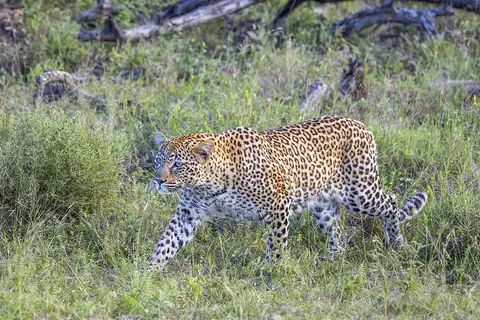
The leopard is a strong, spotted big cat and the best climber of them all. It can carry its food high up into a tree, away from lions and hyenas. Leopards live in more kinds of places than any other big cat, from deserts to rainforests, across Africa and Asia.
-
 Watch
Animal
Leopard gecko
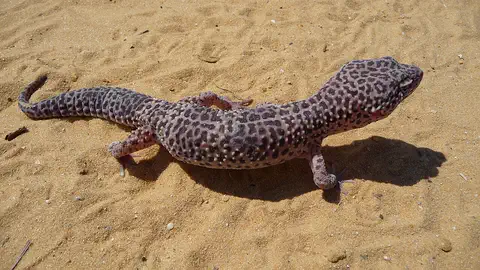
The leopard gecko is a spotted lizard from the rocky deserts and dry grasslands of Pakistan, Afghanistan, northwestern India and Nepal. It hunts insects and scorpions at night, stores fat in its thick tail, and has real eyelids. It is also one of the most popular pet lizards in the world.
-
 Watch
Animal
Leopard seal
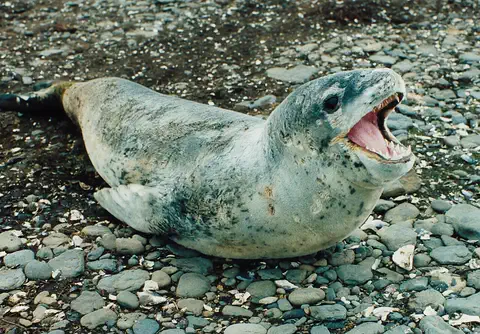
The leopard seal is a large, slender seal of the icy seas around Antarctica, named for the dark spots on its gray coat. It is a fast, powerful hunter with a big head and long teeth, and it eats everything from tiny krill to fish, penguins and young seals.
-
 Watch
Animal
Leopard tortoise
The leopard tortoise is a big land tortoise of eastern and southern Africa, named for the dark spots and blotches on its tall, domed shell. It eats grasses, succulents and fruits, spreads their seeds, and can live for decades. It is still common in most places.
-
 Watch
3D
Animal
Lesser flamingo
The lesser flamingo is the smallest flamingo. Millions live on salty, soda-rich lakes in Africa and India, where they sweep their upside-down bills through the water to filter out tiny algae, which help give them their pink color.
-
 Watch
Animal
Lilac-breasted roller
The lilac-breasted roller is a dazzling bird of the open woodlands and savannas of eastern and southern Africa. It sits on high perches watching for insects, swoops down to catch them, and gets its name from the rolling, tumbling flights it makes in the breeding season.
-
 Watch
3D
Animal
Lined seahorse
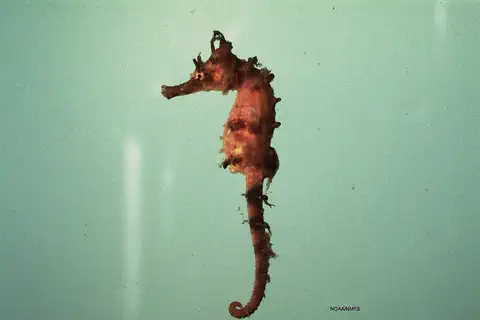
The lined seahorse is a small fish of the western Atlantic Ocean, from Canada and the United States down to Brazil. It has a horse-shaped head, a long snout with no teeth and a tail that grips seagrass. The male carries the eggs in a pouch until tiny seahorses are born.
-
 Watch
3D
Animal
Lion
The lion is the only big cat that lives in a family group, called a pride. Lionesses hunt together, males guard the pride's land, and their roar can be heard about 8 kilometers away. Wild lions live in Africa, plus one small group in western India.
-
 Watch
Animal
Lion's mane jellyfish
The lion's mane jellyfish is one of the biggest jellyfish in the world. Its bell is usually 30 to 50 centimeters across, but in very cold seas it can grow to about 2 meters, and hundreds of long, hair-like tentacles trail beneath it to catch food.
-
 Watch
Animal
Little owl
The little owl is a small, dark brown owl covered in cream spots, with yellow eyes and a yellow beak. It lives across Europe, North Africa and much of Asia, in open country with places to perch and holes to nest in. It hunts mostly at dusk and dawn, but it is often seen sitting out in the daytime.
-
 Watch
3D
Animal
Little penguin
The little penguin is the smallest penguin in the world, only about 33 centimeters long and about 1 kilogram. It lives along the coasts of southern Australia and New Zealand, where it is also called the fairy penguin, the blue penguin or kororā. It fishes at sea by day and comes ashore after dark to its burrow.
-
 Watch
3D
Animal
Llama
Llamas are South American cousins of camels, without the hump. People in the Andes Mountains bred them from wild guanacos thousands of years ago, and they still carry loads, give wool and even guard sheep. Llamas do not live in the wild: every llama lives with people.
-
 Watch
Animal
Loggerhead sea turtle
The loggerhead sea turtle is named for its huge head and powerful jaws, which crush crabs, conchs and other hard-shelled animals. Babies hatch on sandy beaches, ride the open ocean for years and may cross an entire ocean before coming home to nest.
-
 Watch
Animal
Long-nosed horned frog
The long-nosed horned frog lives on the floor of rainforests in Southeast Asia. With its brown colors, a pointed snout and a sharp point above each eye, it looks so much like the dead leaves around it that you are unlikely to see it unless it moves. It sits still and waits for small animals to come close, then snatches them.
-
 Watch
Animal
Lowland tapir
The lowland tapir is a large, dark brown plant-eater of South America's forests and wetlands, with a short, bendy snout and a short mane on its neck. It hides in the forest by day and feeds at night, often near rivers, and it swims well. By eating fruit and dropping the seeds unharmed in its dung, it helps plant the forest. It is Vulnerable because of hunting, roads and forest loss.
-
 Watch
3D
Animal
Luna moth
The luna moth is a large green moth of the forests of eastern North America. Its long, twisting wing tails may help it escape hungry bats. Grown-up luna moths have no working mouth, so they live only about a week, just long enough to find a mate and lay eggs.
-
 Watch
Animal
Macaroni penguin
The macaroni penguin is a crested penguin with long yellow-orange plumes on its head and a big reddish bill. It nests in huge, crowded colonies on rocky islands around Antarctica and eats mostly krill. There are millions of macaroni penguins, but their numbers have fallen fast, so they are listed as Vulnerable.
-
 Watch
3D
Animal
Madagascar hissing cockroach
The Madagascar hissing cockroach is one of the largest cockroaches in the world, up to 10 centimeters long, and it has no wings. It lives on the floor of rainforests on the island of Madagascar, where it eats fallen leaves and fruit. It makes a hissing sound by pushing air out of the breathing holes on its body.
-
 Watch
Animal
Magnificent frigatebird
The magnificent frigatebird lives along the warm coasts of the Americas, on both the Atlantic and Pacific sides. Its wings spread up to 2.4 meters, and it spends almost all its time in the air. It never swims: it snatches food from the surface of the sea, or chases other seabirds until they drop their catch.
-
 Watch
Animal
Magnificent sea anemone
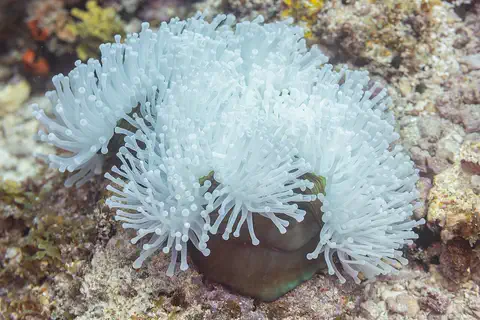
The magnificent sea anemone is a large sea anemone of warm Indian and Pacific Ocean reefs. Its body is a soft column topped with hundreds of finger-shaped tentacles, and it often perches on top of rocks in plain view. Many kinds of clownfish live safely among its stinging tentacles.
-
 Watch
Animal
Malayan tapir
The Malayan tapir is the largest tapir and the only one with a black-and-white coat: black at the front and back, with a white 'saddle' in the middle. It uses its short, bendy snout to pull leaves into its mouth, and it is a strong swimmer. It lives in the rainforests of Myanmar, Thailand, Malaysia and Sumatra, and it is Endangered.
-
 Watch
3D
Animal
Mallard
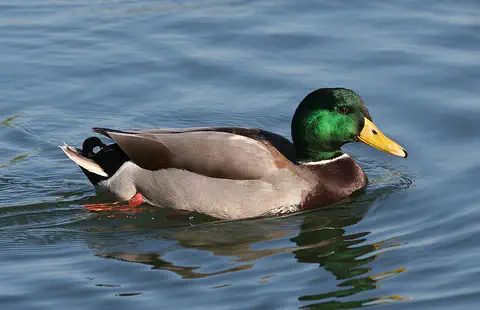
The mallard is perhaps the most familiar duck in the world, found on ponds, lakes, rivers and city parks across North America, Europe and Asia. Males have glossy green heads; females are mottled brown. Almost all farm ducks are descended from mallards.
-
 Watch
Animal
Malleefowl
The malleefowl is a large, ground-living bird of the dry scrublands of southern Australia. Instead of sitting on its eggs, it buries them in a huge mound of sand and rotting leaves, and the male spends months adding and removing sand to keep the eggs at about 33°C. When the chicks hatch, they dig their way out and live on their own from the start.
-
 Watch
Animal
Mandarin duck
The mandarin duck is a small, very colorful duck from East Asia. The male has orange 'sail' feathers on his back and orange whiskers on his face, while the female is soft gray and brown. Mandarins nest in holes in trees, and the ducklings jump down to the ground soon after hatching.
-
 Watch
Animal
Mandarinfish
The mandarinfish is a small, shy fish from the coral reefs of the western Pacific Ocean. It has no scales; instead its skin is covered with slimy mucus and painted with swirling blue, orange and green lines. It hops along the reef bottom on fan-shaped fins, picking up tiny animals, and at dusk males and females rise together to release their eggs.
-
 Watch
Animal
Mandrill
The mandrill is the largest and most colorful of the Old World monkeys. Grown-up males have red noses, blue-ridged cheeks and a golden beard. Mandrills roam the rainforests of west-central Africa in huge, noisy groups called hordes.
-
 Watch
Animal
Maned wolf
The maned wolf lives in the grasslands and open woodlands of central South America. It looks like a big red fox on long black legs, but it is neither a fox nor a true wolf. It eats small animals and lots of fruit, and its long legs help it see over tall grass.
-
 Watch
Animal
Mantled howler
The mantled howler is a big black monkey with a golden fringe of long hair on its sides, like a cape. Troops call to each other with deep, roaring howls at dawn and dusk. It lives in the rainforests of Central America and northwestern South America and eats mostly leaves and fruit.
-
 Watch
Animal
Marabou stork
The marabou stork is a huge African stork with a bald head, a very large bill and a pink pouch hanging from its throat. It stands up to 1.5 meters tall, and its wings can spread up to 2.9 meters. Marabous eat dead animals, fish scraps and live prey, and some have moved into cities, where they feed at rubbish dumps.
-
 Watch
Animal
Marine iguana
The marine iguana is the only lizard in the world that finds its food in the sea. It lives only on the rocky shores of the Galápagos Islands, where it grazes on seaweed, warms up on black lava rocks and sneezes out extra salt.
-
 Watch
Animal
Matamata
The matamata is a big freshwater turtle of the Amazon basin in South America. With its flat, triangular head, skin flaps and rough shell it looks like a pile of debris on the muddy bottom. It hunts fish by sucking them in with a sudden gulp. In 2020 scientists split matamatas into two species; this page is about the Amazon matamata.
-
 Watch
Animal
Meerkat
Meerkats are small members of the mongoose family that live in dry, open country in southern Africa. They live in groups called mobs, dig for insects all day, and take turns as lookouts, standing tall and calling out if an eagle or jackal comes near. Everyone helps raise the babies.
-
 Watch
3D
Animal
Megamouth shark
The megamouth shark is a huge, slow shark with a big, rounded head and an enormous mouth. It swims with its mouth open to gulp tiny shrimp called krill and other small animals. It lives far out in the open ocean and is so rarely seen that scientists did not know it existed until 1976.
-
 Watch
Animal
Mekong giant catfish
The Mekong giant catfish is one of the largest freshwater fish in the world. It lives only in the Mekong River and its lakes in Southeast Asia, grows up to about 3 meters long, and eats algae and plant matter. It is now critically endangered.
-
 Watch
Animal
Mexican red-knee tarantula
The Mexican red-knee tarantula is a large, calm spider with black legs and bright orange-red patches at its leg joints. It lives only in a small part of western Mexico, where it hides in burrows by day and waits at the entrance for food at night. Because so many were taken for the pet trade and its forest is shrinking, it is listed as Vulnerable.
-
 Watch
Animal
Mimic octopus
The mimic octopus is a long-armed, brown-and-white octopus that lives on sandy sea floors in Southeast Asia. Scientists first filmed it in 1998 and were amazed: it changes its shape, colors and movements to look like other animals, including a flatfish, a lionfish and a sea snake.
-
 Watch
3D
Animal
Monarch butterfly
The monarch butterfly is famous for its bright orange wings and its amazing journey. Each fall, monarchs from eastern North America fly up to 3,000 miles to mountain forests in Mexico, where they spend the winter clustered together on fir trees. Their caterpillars eat only milkweed, which makes them taste bad to predators.
-
 Watch
Animal
Monk parakeet
The monk parakeet is a noisy green parrot with a pale gray face, throat and chest. It comes from the open woodlands and savannas of southern South America, but birds that escaped or were let go now live wild in cities in North America and Europe. It is the only parrot that builds nests out of sticks, and many pairs can share one huge nest.