Europe
Countries, cities, landmarks and natural wonders of Europe. Pick one to explore it, or open the globe.
133 to explore · page 1 of 3
-
 Watch
 Country
Belarus
Belarus is a landlocked country in eastern Europe. Ice sheets of the last ice age shaped its low hills and wide plains, it has more than 10,000 lakes and one of Europe's largest wetlands, and about 9.1 million people lived there in 2025.
-
 Watch
 Country
Bosnia and Herzegovina
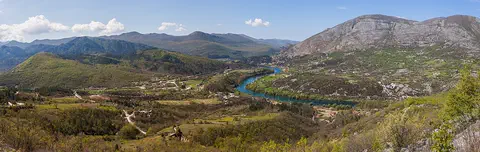
Bosnia and Herzegovina is a mountainous country in southeastern Europe. It has forests, limestone hills and many rivers, and famous old stone bridges cross some of them. Its capital is Sarajevo. It touches the Adriatic Sea along only about 20 kilometers of coast.
-
 Watch
 Country
Bulgaria
Bulgaria is a country on the eastern side of the Balkan Peninsula, with the Danube River to the north and the Black Sea to the east. Mountains cross it from west to east, and about 6.4 million people lived there at the end of 2025.
-
 Watch
 Country
Croatia
Croatia is a crescent-shaped country in southeastern Europe. Its long coast on the Adriatic Sea is fringed by more than 1,100 islands, limestone mountains rise behind it, fertile plains lie in the north, and about 3.87 million people lived there in mid-2025.
-
 Watch
 Country
Czechia
Czechia, also called the Czech Republic, is a landlocked country in central Europe. Mountains ring the old land of Bohemia, the Vltava River flows through the capital, Prague, and about 10.9 million people lived there in 2026.
-
 Watch
Life around the world
Getting around Amsterdam by bicycle
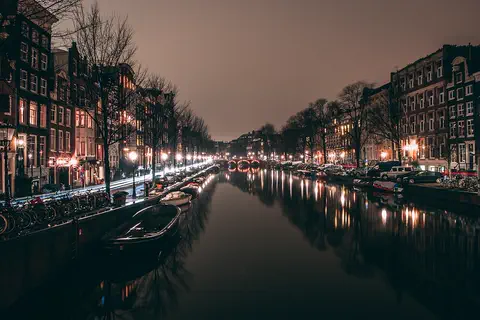
Amsterdam, the capital of the Netherlands, is flat and crossed by canals. In 2017, about 35 out of every 100 weekday trips made by people who live there were by bicycle, more than by car, bus, tram or metro. The city has added thousands of bike parking places, including a garage under the water by Central Station.
-
 Watch
 Country
Hungary
Hungary is a landlocked country in central Europe, in a wide lowland called the Carpathian Basin. Wide plains cover much of it, the Danube River flows through its capital, Budapest, and about 9.5 million people lived there in 2026.
-
 Watch
 Country
Iceland
Iceland is an island country in the North Atlantic, close to the Arctic Circle. It sits on the border between two giant plates of Earth's crust and has about 200 volcanoes, many hot springs and huge glaciers, and about 396,500 people lived there in mid-2026.
-
 Watch
 Country
Ireland
Ireland is a country on an island in the Atlantic Ocean, west of Great Britain. It covers most of the island, while Northern Ireland, in the northeast, is part of the United Kingdom. Rain keeps its fields green, its capital is Dublin, and more than 5.5 million people live there.
-
 Watch
 Country
Latvia
Latvia is the middle one of the three Baltic states, on the shores of the Baltic Sea and the Gulf of Riga. It is mostly low and green, with forests over more than half its land, and about 1.845 million people lived there at the start of 2026.
-
 Watch
 Country
Slovakia
Slovakia is a landlocked country in central Europe. The Carpathian Mountains cover much of it, with the High Tatras in the north, and about 5.4 million people lived there at the end of 2025. Its capital, Bratislava, sits on the Danube River.
-
 Watch
Life around the world
A school day in Helsinki, Finland
In Helsinki, Finland's capital, a lesson usually lasts 45 minutes, and pupils spend recess in the school yard. Every pupil gets a free warm lunch each school day. The 2026-2027 school year began on 12 August, and from 2026 every school is making a plan to help children move more.
-
 Watch
 Country
France
France is a country in northwestern Europe, between the Atlantic Ocean and the Mediterranean Sea. It has high mountains such as the Alps and the Pyrenees, long rivers such as the Loire and the Seine, and about 69.1 million people (2026). Its capital is Paris.
-
 Watch
Life around the world
The polar night in Tromsø, Norway
Tromsø lies far north of the Arctic Circle. From about 26 November to 17 January the sun stays below the horizon all day, a time called mørketid in Norwegian, the dark time. Around midday there are still a few hours of twilight. People wear reflectors on dark roads, and a study found that people farther north in Norway tended to feel more positive about winter.
-
 Watch
Life around the world
A day on the London Underground
The London Underground, or the Tube, began in 1863 as the world's first underground railway. In the year 2025/26, people made about 1.2 billion journeys on its 11 lines. Its famous map, first sketched by Harry Beck in 1931, shows how stations connect rather than how far apart they are.
-
 Watch
 Country
Russia
Russia is the largest country in the world. It stretches across eastern Europe and all of northern Asia, through 11 time zones, from the Baltic Sea to the Pacific Ocean. It has frozen tundra, huge forests, Lake Baikal and the big cities of Moscow and Saint Petersburg.
-
 Watch
Life around the world
Water buses of Venice, Italy
Venice is spread over 118 small islands in a lagoon in northern Italy. Cars cannot drive into the old city, so people walk over its 400 or so bridges or take a vaporetto, a public water bus. The canals also carry water taxis, gondolas, and boats for fruit, garbage, ambulances and police.
-
 Watch
 Country
Italy
Italy is a country in southern Europe on a long peninsula that reaches into the Mediterranean Sea, often described as shaped like a boot. The Alps rise in the north, the Apennine mountains run down its length, and about 58.9 million people (2026) live there. Its capital is Rome.
-
 Watch
 Country
Germany
Germany is a country in north-central Europe. The land rises from flat plains by the North Sea and the Baltic Sea to forested hills and, in the far south, the Alps. About 83.5 million people (2025) live there, and its capital is Berlin.
-
 Watch
 Country
Finland
Finland is a northern European country covered mostly by forest and dotted with tens of thousands of lakes. About a third of it lies north of the Arctic Circle, where the summer sun shines all night. About 5.7 million people live there, most of them in the south.
-
 Watch
 Country
Spain
Spain covers most of the Iberian Peninsula in southwestern Europe. Its middle is a high, flat plateau, the Pyrenees mountains stand between it and France, and almost 50 million people live there, with Madrid as the capital.
-
 Watch
Natural wonder
Matterhorn
The Matterhorn is a 4,478-meter mountain in the Alps, on the border between Switzerland and Italy. Its rock was pushed up when Africa moved toward Europe, and glaciers later carved its steep sides into a pyramid shape. Climbers first reached its top on 14 July 1865.
-
 Watch
 Country
United Kingdom
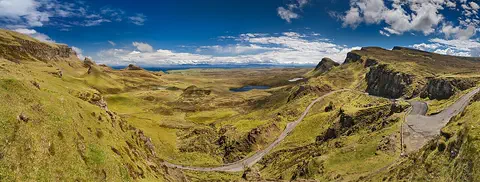
The United Kingdom, or UK, lies on islands off the northwest coast of Europe. It is made up of four parts, England, Scotland, Wales and Northern Ireland, and about 69.5 million people live there. Its capital is London.
-
 Watch
 Country
Norway
Norway stretches along the western side of the Scandinavian Peninsula, far into the Arctic. Deep, narrow inlets of the sea called fjords cut into its mountains, and about 5.6 million people live there, many of them near Oslo, the capital.
-
 Watch
 Country
Poland
Poland lies near the center of Europe, between the Baltic Sea and the Carpathian Mountains. Most of it is low, flat land shaped by Ice Age glaciers, and about 37 million people live there. Its capital, Warsaw, stands on the Vistula River.
-
 Watch
 Country
Ukraine
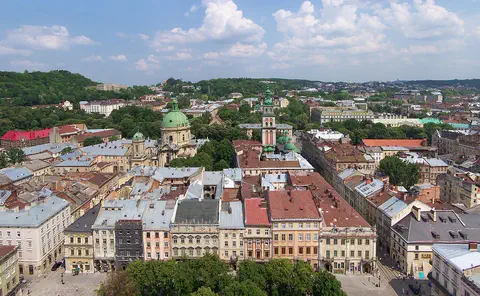
Ukraine is a large country in eastern Europe on the northern shore of the Black Sea. Most of it is level plain with some of the most fertile soil in the world, crossed by the Dnieper River. Its capital is Kyiv, and its official language is Ukrainian.
-
 Watch
 Country
Albania
Albania is a small, mountainous country on the Balkan Peninsula, facing Italy across the Adriatic Sea. About three-fourths of it is mountains and hills, the coastal plains are its most crowded part, and its language has no close relatives.
-
 Watch
 Country
Switzerland
Switzerland is a small, landlocked country in central Europe. The Alps cover its south and east, great rivers such as the Rhine and Rhône begin there, and its 9.1 million people share four national languages: German, French, Italian and Romansh.
-
 Watch
 Country
Belgium
Belgium is a small, busy country in northwestern Europe, low and flat near the North Sea and hilly in the forested Ardennes. About 11.9 million people live there, speaking mainly Dutch in the north and French in the south, and its capital, Brussels, hosts the European Union.
-
 Watch
Natural wonder
Giant's Causeway
The Giant's Causeway, on the north coast of Northern Ireland, is made of some 40,000 columns of dark basalt rock, many of them six-sided, packed together like a honeycomb. They formed about 60 million years ago, when a deep pool of lava cooled slowly, shrank and cracked into columns.
-
 Watch
Natural wonder
Alps
The Alps are Europe's great mountain range, an arc about 1,200 kilometers long that runs from the Mediterranean coast near Nice, in France, to Vienna, in Austria. Their highest peak is Mont Blanc, which Britannica gives as 4,807 meters. The Alps rose when the plate carrying Africa pushed north into Europe, and Ice Age glaciers carved their sharp peaks and deep valleys.
-
 Watch
 Country
Greece
Greece is a country in southern Europe, at the bottom of the Balkan Peninsula, with sea on three sides and more than 2,000 islands. Most of it is mountains. About 10.4 million people lived there at the start of 2025, and its capital is Athens, a city with ruins more than 2,400 years old.
-
 Watch
Natural wonder
Danube
The Danube is Europe's second-longest river, after the Volga. It begins as two small streams in Germany's Black Forest and flows about 2,850 kilometers east to the Black Sea, passing through 10 countries and four capital cities. For more than 2,000 years it has been a border, a highway for boats and a home for wildlife, and it ends in a giant delta of reeds, lakes and birds.
-
 Watch
 Country
Netherlands
The Netherlands is a small, flat country in northwestern Europe on the North Sea. Its name means low-lying country: more than a quarter of it lies below sea level, protected by dunes and dikes. About 18.2 million people lived there in 2026, and its capital is Amsterdam, a city of canals.
-
 Watch
Natural wonder
Rhine
The Rhine begins as two small streams high in the Swiss Alps and flows about 1,230 kilometers north and west to the North Sea, through Switzerland, Germany, France and the Netherlands. It tumbles over the Rhine Falls and winds through a gorge lined with castles. After a chemical spill in 1986, the countries along it worked together to clean it, and salmon came back.
-
 Watch
Natural wonder
Volga
The Volga is Europe's longest river. It rises in the Valdai Hills northwest of Moscow and flows about 3,530 kilometers to the Caspian Sea, all within Russia. Almost half of Russia's people live in its basin. Big dams now turn much of it into a chain of long lakes, and its huge delta shelters up to 750,000 waterbirds in mild winters.
-
 Watch
 Country
Austria
Austria is a landlocked country in central Europe. The Alps cover much of it, the Danube River flows across the north, and about 9.2 million people live there. Its capital, Vienna, is famous for its music and palaces.
-
 Watch
 Country
Portugal
Portugal is a country on the Atlantic coast of the Iberian Peninsula in southwestern Europe, with Spain as its only land neighbor. It also includes the Azores and Madeira islands far out in the ocean. About 11.4 million people lived there at the start of 2026, and its capital is Lisbon, on the Tagus River.
-
 Watch
 Country
Sweden
Sweden is a country in northern Europe on the Scandinavian Peninsula. It stretches about 1,600 kilometers from north to south, with forests, many lakes and a rocky coast full of islands. About 10.6 million people live there, and its capital is Stockholm.
-
 Watch
 Country
Denmark
Denmark is a country in northern Europe made of the Jutland peninsula and more than 400 islands, with the sea almost all around. It is low and mostly flat, about 6 million people live there, and its capital, Copenhagen, is full of bicycles.
-
 Watch
Natural wonder
Svalbard
Svalbard is a group of Arctic islands, part of Norway, far north of the Arctic Circle. Glaciers and snowfields cover nearly 60 percent of the land. Polar bears hunt seals on the sea ice, walruses rest on the beaches, and inside a mountain on Spitsbergen the world keeps a frozen store of seeds.
-
 Watch
Natural wonder
Ural Mountains
The Ural Mountains run about 2,500 kilometers from north to south through Russia, and they form most of the traditional boundary between Europe and Asia. They are very old mountains that have been worn down over a very long time; their highest peak, Mount Narodnaya, is 1,895 meters tall. The Urals stretch from icy Arctic tundra to dry steppe and are rich in metals and gems.
-
 Watch
Natural wonder
Mount Vesuvius
Mount Vesuvius is an active volcano that rises above the Bay of Naples in southern Italy. In AD 79 it erupted and buried the Roman towns of Pompeii and Herculaneum, which people can visit today. Its last eruption was in 1944. Because more than two million people live around it, scientists watch it closely, and Italy has a plan to keep everyone safe.
-
 Watch
Natural wonder
Mont Blanc
Mont Blanc is the highest peak in the Alps, on the border of France and Italy. Its snowy top changes height a little from year to year: in September 2026, French surveyors measured it at 4,807.47 meters. People first climbed it in 1786, and today a long tunnel runs right underneath it.
-
 Watch
Natural wonder
Mount Etna
Mount Etna is a huge, active volcano on the east coast of Sicily, in Italy. UNESCO calls it the most active stratovolcano in the world, and people have written about its eruptions for at least 2,700 years. Its height changes as eruptions build it up and crater rims collapse. Vineyards and orchards grow on its rich lower slopes, and scientists watch it every day.
-
 Watch
Natural wonder
Mount Elbrus
Mount Elbrus is the highest peak of the Caucasus Mountains, in southwestern Russia. It is an old volcano with two snow-covered tops, the higher one 5,642 meters tall. Twenty-two glaciers cover its slopes and feed rivers below. Whether it counts as Europe's highest mountain depends on where you draw the line between Europe and Asia.
-
 Watch
Natural wonder
Mount Olympus
Mount Olympus is the highest mountain in Greece, about 2,918 meters tall, rising almost straight up from the shore of the Aegean Sea. It is made of limestone that formed in a warm, shallow sea long ago. Greece's first national park was created here in 1938, and nearly 2,000 kinds of plants grow on its slopes.
- Watch Natural wonder Cave of Altamira The Cave of Altamira, in northern Spain, holds some of the most famous prehistoric paintings in the world. People who hunted and gathered their food used the cave between about 36,000 and 13,000 years ago, and painted and engraved bison, horses, deer, hands and signs on its walls and ceiling. It was the first cave where prehistoric cave art was ever recognized.