All animals
Tap an animal to meet it: where it lives, what it eats, how it grows, and a narrated adventure with Olly.
598 to explore · page 9 of 13
-
 Watch
Animal
Moon jellyfish
The moon jellyfish is a clear, saucer-shaped jelly found in coastal seas around the world. It has no eyes, brain or heart, and it is about 95 percent water. Four horseshoe-shaped rings show through its bell, and short stinging tentacles fringe its edge to catch tiny plankton.
-
 Watch
Animal
Moorish idol
The Moorish idol is a tall, flat reef fish with bold black, white and yellow bars, an orange patch on its snout and a long white fin that trails behind it like a ribbon. It lives on reefs across the Indian and Pacific Oceans, from East Africa to the coasts of the Americas, and uses its tube-like snout to pick sponges and small animals from cracks.
-
 Watch
Animal
Moose
The moose is the largest member of the deer family. It lives in northern forests, wades and even dives into lakes to eat water plants, and bull moose grow enormous new antlers every year. In Europe it is called an elk.
-
 Watch
Animal
Mossy leaf-tailed gecko
The mossy leaf-tailed gecko is a flat lizard from the rainforests of Madagascar. Its skin looks like tree bark covered in moss and lichens, and flaps of skin along its sides, chin and legs are part of its disguise. It has a flat tail and a long, flat snout, and it lays eggs.
-
 Watch
Animal
Mountain goat
Mountain goats are white, woolly climbers that live on steep cliffs in the mountains of western North America. Grippy hooves let them cross icy rock where few predators dare to follow. Despite the name, they are not true goats.
-
 Watch
Animal
Mourning dove
The mourning dove is a slender, gray-brown dove with black spots on its wings and a long, pointed tail edged in white. It lives in open country, farms, towns and backyards from Canada to Central America and the Caribbean. It eats almost nothing but seeds, and its low, mournful coo gives it its name.
-
 Watch
Animal
Mugger crocodile
The mugger crocodile is a big, broad-snouted crocodile of South Asia. It lives in rivers, lakes, marshes, village ponds and reservoirs in India, Sri Lanka, Pakistan, Nepal and Iran. Muggers dig burrows to escape heat and cold, and they sometimes walk long distances over land.
-
 Watch
Animal
Muskox
Muskoxen are shaggy Arctic grazers with long coats that nearly reach the ground and a super-warm underwool called qiviut. Herds protect their calves by standing in a ring with their horns facing out. Despite the name, they are more closely related to goats and sheep than to oxen.
-
 Watch
Animal
Mute swan
The mute swan is among the largest waterfowl, all white with an orange bill topped by a black knob. It is native to Europe and Asia, where it lives on lakes, rivers and park ponds. People took mute swans to North America and other places, where they now live in the wild and can cause problems for native wildlife.
-
 Watch
Animal
Naked mole-rat
Naked mole-rats are almost hairless rodents that spend their whole lives in tunnels under the dry lands of eastern Africa. They live in big colonies where only one female, the queen, has babies, and they can live for around 30 years.
-
 Watch
3D
Animal
Narwhal
The narwhal is a toothed whale of the icy Arctic Ocean. Most males have a long, spiral tusk that is really a tooth growing forward out of the front of the jaw, and it can be up to about 3 meters long. Narwhals dive deep under the sea ice to catch fish, squid and shrimp.
-
 Watch
Animal
Natterjack toad
The natterjack toad is a European toad with a thin yellow stripe down the middle of its back. It lives in open, sandy places such as sand dunes, heaths and gravel pits, and lays its eggs in warm, shallow pools that often dry up in summer. It has short legs and runs instead of hopping, and the males' rasping call can be heard a kilometer or more away.
-
 Watch
Animal
Nēnē
The nēnē, or Hawaiian goose, lives only on the Hawaiian Islands and is the state bird of Hawaiʻi. In the 1950s only about 30 were left in the wild. Thanks to captive breeding, releases and protection from predators, there are now a few thousand, but they still need people's help to survive.
-
 Watch
Animal
Neon tetra
The neon tetra is a tiny fish, about as long as a quarter is wide, with a glowing blue stripe and a bright red patch. In the wild it lives in clear and dark-water forest streams of the western Amazon. It is also one of the most popular aquarium fish in the world.
-
 Watch
Animal
New Caledonian crow
The New Caledonian crow lives only on the islands of New Caledonia in the Pacific. It looks like an ordinary black crow, but it makes and uses tools: hooked sticks and cut strips of leaf that it pokes into holes in dead wood to pull out insects and grubs.
-
 Watch
Animal
Nicobar pigeon
The Nicobar pigeon is a large, heavy pigeon with shimmering green feathers, a cape of long neck feathers called hackles and a short white tail. It nests on small, quiet islands from India's Nicobar Islands to the Solomon Islands, and flies to bigger islands nearby to find fallen fruit and seeds. DNA tests showed it is the closest living relative of the dodo.
-
 Watch
Animal
Nile crocodile
The Nile crocodile is Africa's largest crocodile. It lives in rivers, lakes and swamps across much of eastern, central and southern Africa and Madagascar. It eats mostly fish, basks on sunny banks and is a surprisingly caring parent.
-
 Watch
Animal
Nile monitor
The Nile monitor is one of the biggest lizards in Africa, growing up to 2.4 meters long. It lives near rivers, lakes and swamps across most of Africa south of the Sahara, and along the Nile River in Egypt. It is a strong swimmer and a good climber, and it eats almost any animal it can catch.
-
 Watch
Animal
Nine-banded armadillo
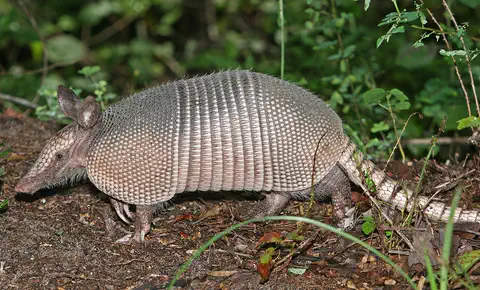
The nine-banded armadillo is a small, armored digger that lives from Argentina all the way to the United States. It sniffs out beetles and other bugs in the soil, can hold its breath for six minutes, and almost always has four identical babies at once.
-
 Watch
Animal
North American beaver
The North American beaver is the largest rodent in North America and a champion builder. It gnaws down trees with its strong orange teeth, builds dams that turn streams into ponds, and lives with its family in a lodge made of branches and mud.
-
 Watch
Animal
North Atlantic right whale
The North Atlantic right whale is a large black baleen whale that lives along the east coast of North America. It filters tiny animals called copepods from the water and has rough white patches on its head that are different on every whale. It is one of the most endangered large whales, with about 384 left (2024), and many people are working to protect it.
-
 Watch
Animal
North Island brown kiwi
The North Island brown kiwi is a flightless bird that lives only in New Zealand's North Island. It has shaggy brown feathers, no tail, and a long bill with nostrils near the tip, so it can sniff out worms and grubs in the dark. The father keeps the huge egg warm for 75 to 90 days.
-
 Watch
Animal
Northern bobwhite
The northern bobwhite is a small, plump quail of fields, farms and brushy open country in eastern North America, from southern Canada to Guatemala, and in Cuba. Its whistled bob-white call is a familiar sound in spring. Bobwhites spend fall and winter in groups called coveys, and at night they sleep on the ground in a circle with their heads pointing out.
-
 Watch
Animal
Northern cardinal
The northern cardinal is a crested songbird of eastern North America and Mexico. Males are brilliant red with a black face; females are warm brown with red touches. Cardinals crack seeds with their thick bills, stay in the same area all year, and both males and females sing.
-
 Watch
Animal
Northern fulmar
The northern fulmar is a stocky gray and white seabird of the cold North Atlantic, North Pacific and Arctic oceans. It is related to albatrosses and has raised tube-shaped nostrils on top of its thick bill. Fulmars nest on sea cliffs, lay one egg and defend their nests by spitting foul-smelling oil.
-
 Watch
Animal
Northern gannet
The northern gannet is a large seabird of the North Atlantic Ocean, with wings that spread 1.7 to 2 meters. It catches fish by plunging headfirst into the sea, sometimes from more than 30 meters up. Gannets nest packed together in big colonies on sea cliffs and islands, and each pair raises just one chick a year.
-
 Watch
3D
Animal
Northern giant hornet
The northern giant hornet, once called the Asian giant hornet, is the world's largest hornet. It lives in forests of eastern Asia, where each colony is started by one queen in an underground nest. Its workers hunt other insects, including honey bees, to feed the young hornets.
-
 Watch
Animal
Northern lapwing
The northern lapwing is a wading bird of fields and wet meadows with dark green back feathers that often look black, a white belly and a long, wispy crest. It breeds across Europe and Asia and spends the winter as far south as North Africa, India and Japan. Its numbers are falling, mostly because too few chicks survive.
-
 Watch
Animal
Northern leopard frog
The northern leopard frog is a spotted green or brown frog of Canada and the northern United States. It lives in and near marshes, ponds and slow streams, and in summer it often moves out into wet meadows and fields, which is why people also call it the meadow frog or grass frog. In spring, males call with a deep, rattling snore, and each female lays hundreds or thousands of eggs.
-
 Watch
Animal
Northern mockingbird
The northern mockingbird is a slim gray songbird famous for copying sounds. It sings long strings of phrases, many borrowed from other birds, and sometimes sings all night. It lives in towns, farms and brushy places across the United States, Mexico and the Caribbean.
-
 Watch
3D
Animal
Northern pike
The northern pike is a long, torpedo-shaped freshwater fish with a duck-bill snout full of sharp teeth. It lives in cool lakes and rivers across the northern parts of North America, Europe and Asia, where it hides among water plants and ambushes passing fish.
-
 Watch
Animal
Numbat
The numbat is a striped marsupial from Australia that eats almost nothing but termites, up to 20,000 a day. Unlike most Australian marsupials, it is busy in the daytime, when termites are near the surface. Foxes and cats brought to Australia wiped out most numbats, but protected sanctuaries are helping them come back.
-
 Watch
3D
Animal
Ocean sunfish
The ocean sunfish, or mola, is one of the heaviest bony fish in the world. Its body is tall, round and flat, with a long fin on top, another underneath, and a strange frilly edge instead of a tail. It dives deep to eat jellyfish and is often seen resting at the surface, perhaps to warm up.
-
 Watch
Animal
Ocellaris clownfish
The ocellaris clownfish is a small orange-and-white reef fish from the Indian and Pacific Oceans. It shelters among the stinging tentacles of a sea anemone, protected by a slimy coat, and every clownfish starts life as a male.
-
 Watch
Animal
Ocelot
The ocelot is a medium-sized wild cat of the Americas, from southern Texas to northern Argentina. Its golden coat has chains of dark-edged spots, and no two ocelots look alike. It hunts mostly at night, catching mice, rats, lizards and birds, and it needs thick plants to hide in.
-
 Watch
Animal
Ochre sea star
The ochre sea star lives on wave-washed rocky shores along the Pacific coast of North America. It can be purple, orange or brown, and it pries open mussels to eat them with a stomach it pushes out of its body. It is so important to its shore that scientists call it a keystone species.
-
 Watch
Animal
Okapi
The okapi has a velvety reddish-brown coat and zebra-like stripes on its legs, but its closest living relative is the giraffe. It lives only in the rainforests of the Democratic Republic of the Congo, where it browses leaves with a long, dark tongue. It is endangered.
-
 Watch
3D
Animal
Old World swallowtail
The Old World swallowtail is a large butterfly with yellow wings, black veins, blue spots and a red eyespot near the long tails on its hindwings. It lives across Europe and Asia and in northern North America. Its green and black caterpillar has a hidden orange fork that pops out when it is bothered.
-
 Watch
Animal
Olive baboon
The olive baboon is a large monkey of Africa named for its olive-gray fur. It lives in big troops on savannas, in grasslands and even in rainforests, eating almost anything from grass and roots to fruit and insects. It is the most widespread of all baboons.
-
 Watch
Animal
Olm
The olm is a long, pale salamander that spends its whole life in underground rivers and lakes in the caves of southeastern Europe. Its eyes are covered by skin, it keeps pink feathery gills all its life, and it finds food by smell and by feeling vibrations. Olms can live for many decades and survive years without eating.
-
 Watch
Animal
Orange clownfish
The orange clownfish is a small, bright orange reef fish with three white bands edged in black. It lives in the warm western Pacific, from northern Australia to New Guinea and the Solomon Islands, always beside a sea anemone. A coat of slimy mucus keeps the anemone's stings from hurting it, and the fish and anemone help each other.
-
 Watch
3D
Animal
Orca
The orca, also called the killer whale, is the largest member of the dolphin family and the ocean's top predator. Orcas live in every ocean, in close family groups called pods, made up of orcas related through their mothers. Each group has its own favorite foods, hunting tricks and even its own calls, which young orcas learn from their families.
-
 Watch
Animal
Orchid mantis
The orchid mantis is a praying mantis from the rainforests of Southeast Asia that looks like a flower. Its white and pink colors fool bees and other insects that visit flowers, and the mantis catches them. Its leg flaps look like petals, and scientists recently found that they also help young mantises glide through the air.
-
 Watch
Animal
Osprey
Ospreys are large, fish-eating hawks found near water on every continent except Antarctica. They plunge feet first to grab fish, build huge stick nests and, in many places, migrate thousands of kilometers. After pesticides made them rare, they have made a big comeback.
-
 Watch
Animal
Pacific banana slug
The Pacific banana slug is one of the biggest slugs in the world, often as long as a banana and sometimes yellow like one. It lives in the damp rainforests along the Pacific coast of North America, where it eats fallen leaves, mushrooms and other plant matter, helping to recycle the forest.
-
 Watch
Animal
Pacific tree frog
The Pacific tree frog is a small frog of the Pacific Northwest of North America. It has round, sticky toe pads and a dark mask through each eye, and its body can be green, brown, gray or even reddish. Despite its name, it lives mostly on the ground and in shrubs. In Washington it is the most common frog, and its 'rib-it' chorus is the frog call heard most often there.
-
 Watch
3D
Animal
Painted lady
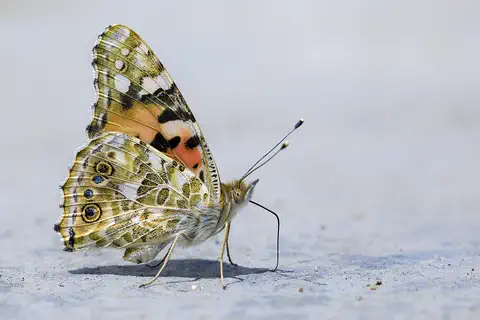
The painted lady is one of the most widespread butterflies in the world. Its orange and black wings carry it on huge journeys: each year, families of painted ladies fly between Africa and northern Europe, one generation after another.
-
 Watch
Animal
Painted turtle
The painted turtle is one of the most common turtles in North America. Its dark shell and skin are decorated with bright red and yellow markings, and on sunny days dozens may pile onto one log to bask. It lives in ponds, marshes and slow streams from Canada to northern Mexico.