Skip to content
Search the Discovery Encyclopedia
-
Geography
Weather and climate
Weather is what the air outside is like right now: hot or cold, wet or dry, windy or calm. It can change from hour to hour. Climate is the usual weather of a place over a long time. Scientists work it out by averaging about 30 years of weather. Weather tells you what to wear today; climate tells you what clothes to pack for a trip.
-
Geography
Weathering and erosion
Weathering is rocks breaking apart where they are: ice in cracks, rain, wind-blown sand and growing roots all do it. Erosion is the next step, when gravity, rain, rivers, waves, wind and glaciers carry the broken pieces away. Over thousands to millions of years, they carve valleys, cliffs and canyons.
-
 How Things Work
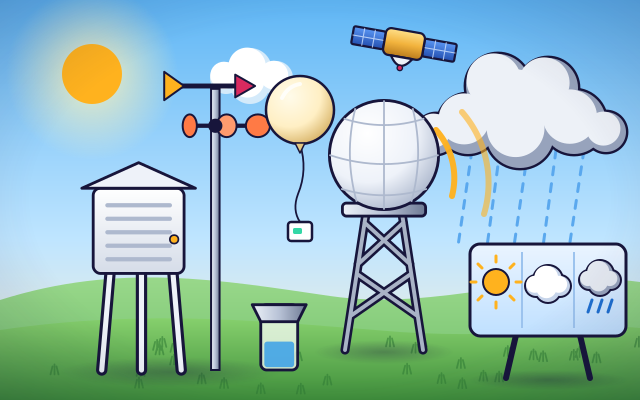
How do weather forecasts get made?
Combine station readings, radar, satellite images, and a simplified forecast model.
-
What If? Lab
What if every day had the same weather?
Weather changes because the Sun heats some places more than others, and big bodies of warm or cold, wet or dry air keep moving around. Imagine a world where every day had the same weather: no need to check a forecast, but plants and animals that follow the seasons might be confused. Some places near the equator come surprisingly close.
-
 How Things Work
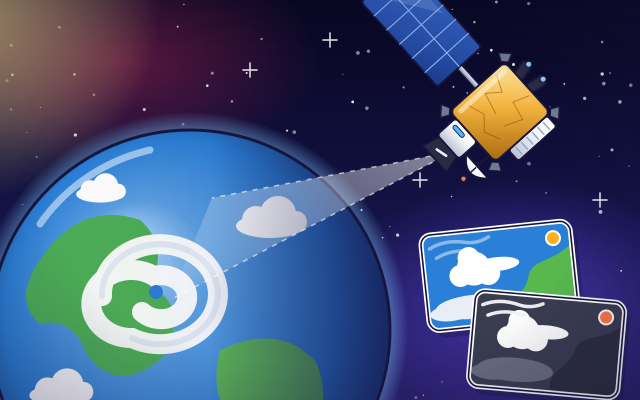
How do weather satellites observe Earth?
Compare visible and infrared views and track clouds across successive images.
-
 How Things Work
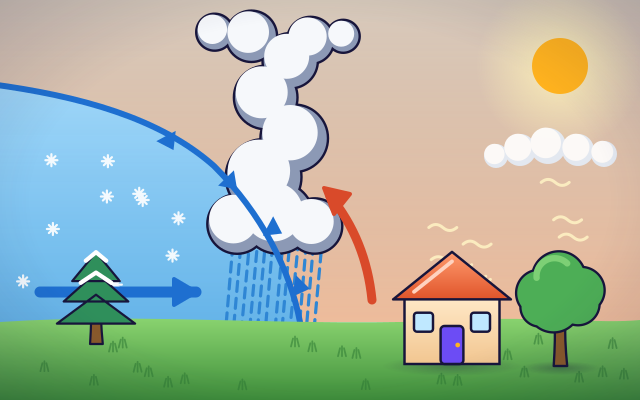
How do weather fronts change the weather?
Move warm and cold air masses together and observe clouds and precipitation.
-
What If? Lab
What if weather forecasts were always right?
NOAA said in 2025 that a five-day weather forecast is right about 90 percent of the time, but a ten-day forecast is right only about half the time. Why? Because tiny changes in the air can grow into big differences, an idea called the butterfly effect. Imagine forecasts that were never wrong, and discover the satellites, balloons and supercomputers that make today's forecasts so good.
-
 How Things Work
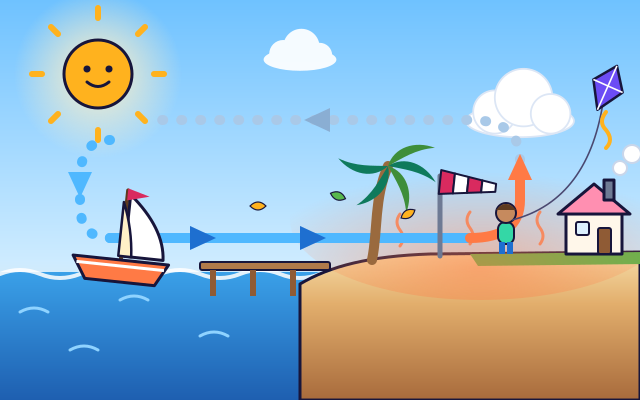
How does wind form?
Explore uneven heating, air pressure, and moving air. Change land and water temperatures in a simplified coastal model to investigate sea breezes.
-
 How Things Work
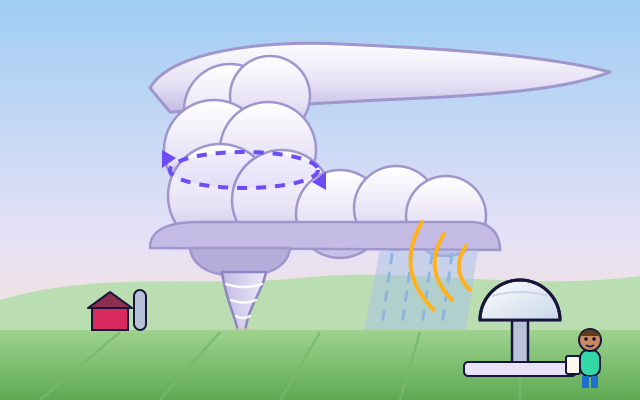
How do tornadoes form?
Explore airflow inside a simplified rotating thunderstorm. Watch a tornado develop and follow its movement across a model landscape.
-
What If? Lab
What if fog never lifted?
Fog is a cloud resting on the ground, made of tiny water droplets floating in the air. Most morning fog disappears as the Sun warms the ground. Imagine fog that never lifted: travel would be slower, but in some dry places people already use nets to catch drinking water from fog.
-
What If? Lab
What if the Moon had air?
The Moon has almost no air, so its sky is always black and it has no weather. Scientists have found that the Moon once had an atmosphere, billions of years ago, but it was lost to space or became part of the ground. Explore what air would change, and why small worlds lose theirs.
-
What If? Lab
What if air had no weight?
The air above you has weight, and that weight presses on everything at about 101,000 newtons on every square meter at sea level. That pressing pushes juice up a straw and holds a suction cup on a window. Imagine air with no weight and follow what would stop working.
-
Life around the world
Living with snow in Yakutsk
Yakutsk, a city of more than 300,000 people beside the Lena River in Siberia, is one of the coldest cities in the world: in January, the average daily high is about -35°C. People dress in layers, many buildings stand on stilts above frozen ground called permafrost, and young children stay home from school on the coldest days.
-
What If? Lab
What if it rained every day?
Rain is wonderful: it waters plants and fills rivers. But what if it rained every day? Soil can only soak up so much, so more water would run into rivers. Some rainforests and mountain slopes get rain very often, and life there is built for it. Explore what daily rain would change.
-
What If? Lab
What if there were no clouds?
Clouds shade the ground by day, send heat back down at night and are where rain comes from. Imagine a sky with no clouds at all, and follow what might happen to hot days, cold nights, rain and even the colors of the sky.
-
What If? Lab
What if we could see the wind?
Wind is moving air, and air is invisible. So people watch what the wind moves: smoke, leaves, flags, clouds and kites. Scientists even make wind maps from satellite pictures. Imagine the wind suddenly becoming visible, and follow the swirls, maps and kites that might appear.
-
What If? Lab
What if snow fell in the desert?
A desert is a dry place, not always a hot one. Clear desert skies let heat escape at night, some deserts are icy cold, and snow has even dusted sand dunes in the Sahara. Explore what happens when snow falls in a desert, and how desert plants cope with the cold.
-
What If? Lab
What if the Sun had no sunspots?
Sunspots are darker, cooler patches on the Sun made by strong magnetic fields, and their numbers rise and fall about every 11 years. Imagine a Sun with none: what would happen to its light, to solar storms and to the auroras they bring? Once, for about 70 years, the real Sun came close.
-
 Life around the world
The polar night in Tromsø, Norway
Tromsø lies far north of the Arctic Circle. From about 26 November to 17 January the sun stays below the horizon all day, a time called mørketid in Norwegian, the dark time. Around midday there are still a few hours of twilight. People wear reflectors on dark roads, and a study found that people farther north in Norway tended to feel more positive about winter.
-
What If? Lab
What if a greenhouse got too hot?
Plants grow best when it is warm, but not too warm. Heat up a model leaf from a comfortable 25 °C to a scorching 45 °C and watch two things change at once: the leaf makes sugar more slowly, and it burns sugar faster. At some point it burns more than it makes.
-
What If? Lab
What if the wind stopped blowing?
Wind is air rushing from places of high pressure to places of low pressure. It carries heat, water and weather around the world, lifts seeds to new homes and has pushed sailing ships across oceans. Imagine all the air going still, and follow what might change.
-
What If? Lab
What if there were no satellites?
Thousands of satellites quietly circle Earth every day. They watch the weather, help phones find where you are with GPS and carry TV signals and phone calls. Imagine a world without them, and discover how people found their way and forecast the weather before the first satellite launched in 1957.
-
What If? Lab
What if a balloon floated very high?
As a balloon floats higher, the air around it gets thinner and pushes on it less, so the gas inside spreads out and the balloon swells. In our model, a perfectly stretchy balloon launched at sea level is about 14 times its starting size by the time it reaches 20 kilometers.
-
What If? Lab
What if hurricanes could be steered?
Hurricanes are huge spinning storms that grow over warm ocean water. Nobody can steer or stop one today: a hurricane holds far more energy than people could ever push around. What people can do is forecast where it may go and get ready early. Imagine steering one, then see why forecasts are the real answer.
-
 Life around the world
Six months of night at the South Pole
At the Amundsen-Scott South Pole Station, the Sun sets once a year, around 20 March, and does not rise again for about six months. Up to 42 people spend the dark, freezing winter there with no flights in or out, sharing chores, meals and science.
-
What If? Lab
What if there were no ocean currents?
Ocean currents are like rivers in the sea. They carry warm water away from the equator and cold water away from the poles, and some lift food-rich water up from the deep. Imagine them stopping: follow the Gulf Stream, warm and cold coasts, and the rich fishing waters fed by upwelling.
-
 How Things Work
How does radar locate distant objects?
Send radio pulses and use returning signals to estimate object positions.
-
 Life around the world
Northern lights over Fairbanks, Alaska
Fairbanks, in the middle of Alaska, sits under a ring-shaped zone where the aurora often appears. The University of Alaska Fairbanks says its viewing season runs from about 21 August to 21 April, when nights are dark enough. Around the winter solstice there are fewer than four hours of daylight, and winter cold shapes daily life.
-
What If? Lab
What if every snowflake were the same?
Each snowflake grows as it falls through air that keeps changing in temperature and dampness, so no two take exactly the same path or end up exactly alike. Imagine a world where every snowflake were identical, and discover what that would take and what scientists would lose.
-
What If? Lab
What if clouds were made of candyfloss?
Puffy clouds look like giant balls of candyfloss (cotton candy), but they are really made of tiny water droplets or ice crystals, and the water in a big one weighs about as much as 100 big African elephants. Imagine clouds spun from sugar instead, and find out what real clouds are made of.
-
What If? Lab
What if cold wind blew over a warm lake?
In late fall and winter, the Great Lakes are often much warmer than the freezing air that often blows in from Canada. As cold wind crosses the open water, it picks up warmth and moisture, rises and builds narrow bands of clouds that can drop 2 to 3 inches of snow an hour, while a town a mile or two away stays sunny. This thought experiment follows the air across the lake.
-
What If? Lab
What if auroras could be seen everywhere?
Auroras glow when tiny particles from the Sun crash into the air high above Earth. Earth's magnetic field steers them toward the poles, so that is where auroras shine most. Imagine lights over the whole planet, find out what makes the colors, and see how people keep satellites safe in big solar storms.
-
What If? Lab
What if solar panels received less sunlight?
A solar panel turns sunlight into electricity, so the more sunshine reaches it, the more power it makes. In our model, one rooftop panel on a clear summer day makes about 310 watts at noon. When clouds let through only a quarter of the direct sunshine, it makes only a quarter as much. Then find out why real panels can do better than our model on cloudy days.
-
What If? Lab
What if you played catch on a merry-go-round?
Roll a ball straight across a spinning merry-go-round and, to the riders, it seems to curve away. Someone standing on the ground sees it go straight. The same trick, on our spinning Earth, bends winds and makes big storms swirl.
-
 How Things Work
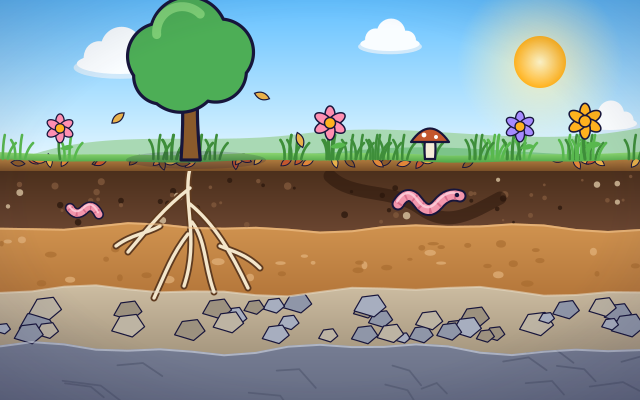
How does soil form?
Follow rock weathering, organic matter, organisms, and time into layered soil.
-
What If? Lab
What if a mountain wore away?
Even the tallest mountains are slowly broken apart by ice, rain, plant roots and wind, and the pieces are carried away by rivers and glaciers. Imagine following a mountain as it wears away: its rock might end up as sand on a beach, mud on a farm or new land at a river's mouth, while moving plates push other mountains up.
-
Geography
Where our food grows
Where a crop can grow depends on climate, soil and water. Rice needs warm weather, wheat can sprout in the cool, and cocoa for chocolate grows only in a hot, rainy belt near the Equator. An FAO atlas from 1995 found that just three crops, rice, maize and wheat, gave the world most of its food energy.
-
Geography
Seeing Earth from satellites
Earth-watching satellites carry cameras and other instruments that measure light and heat from far above. Their images cover huge areas at once, so scientists can track weather, map fires, and see how forests, farms, cities and ice change over the years. Landsat satellites have imaged Earth's land since 1972.
-
What If? Lab
What if birds forgot how to build nests?
Nests keep eggs and chicks safe from predators and the weather, and birds build them in amazing ways: from twigs, grass, mud, hair and even spider silk. Imagine every bird forgetting how to build one. Then meet the birds that already manage without, from cliff-ledge murres to emperor penguins.
-
What If? Lab
What if you counted the seconds after lightning?
You see lightning almost at once, but its thunder travels at the speed of sound, about 343 meters per second. The National Weather Service says thunder takes about 5 seconds to travel a mile, so counting the seconds tells you how far away the lightning was. In our model, thunder from 1,700 meters away arrives after about 5 seconds.
-
 How Things Work
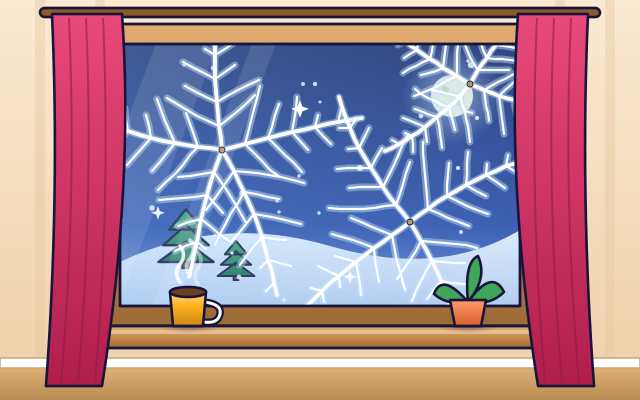
How does frost form?
Explore ice crystals growing on a cold surface from water vapor.
-
 How Things Work
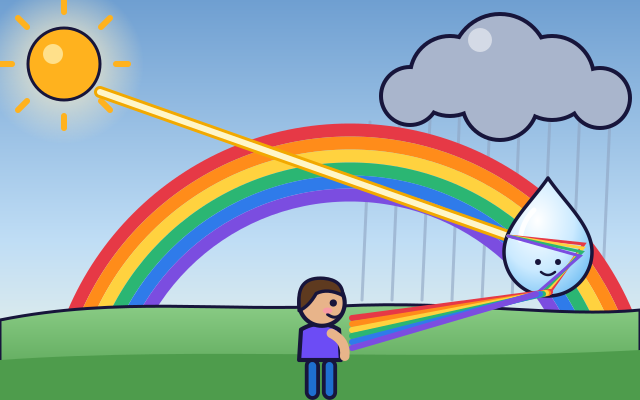
How do rainbows form?
Position sunlight, water droplets, and an observer. Follow light as it bends and reflects, and explore why different colors appear at different angles.
-
 How Things Work
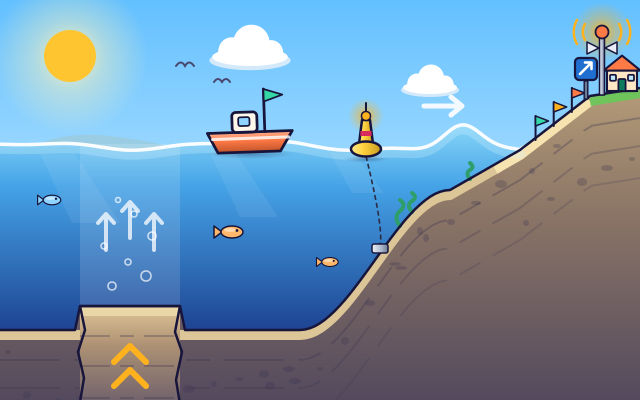
How do tsunamis form?
Displace a model seafloor and follow waves across deep and shallow water.
-
 How Things Work
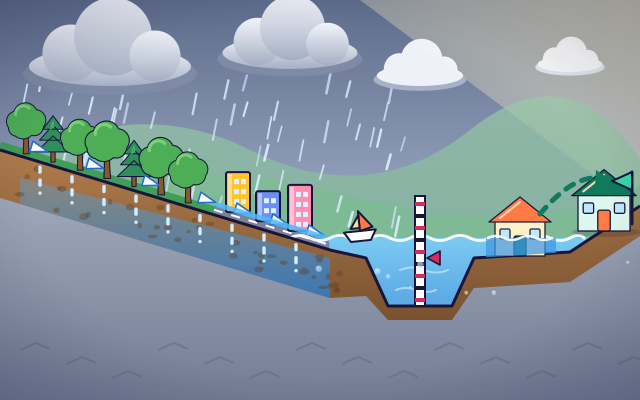
How do floods develop?
Add rainfall to a model watershed and compare absorption, runoff, and river levels.
-
 How Things Work
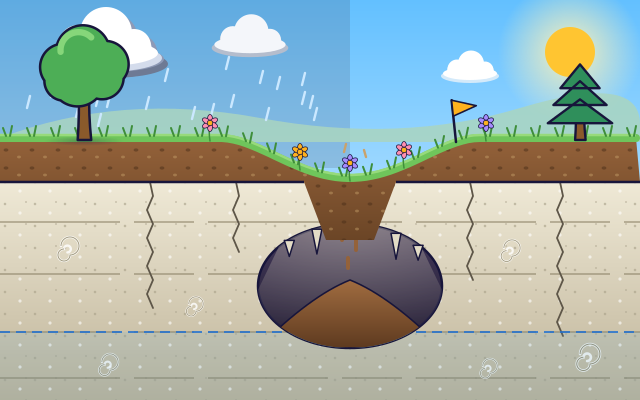
How do sinkholes form?
Explore dissolving rock and underground cavities beneath a model landscape.
-
 How Things Work
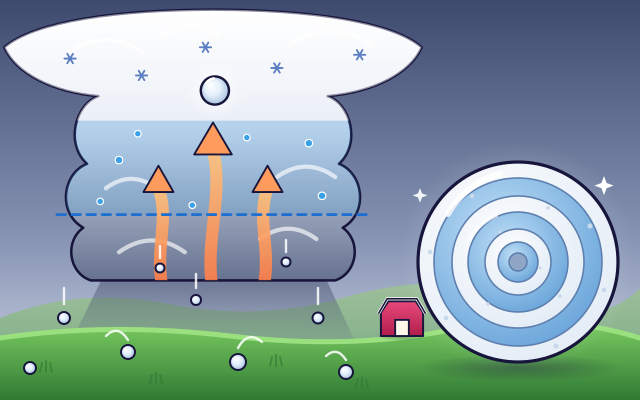
How do hailstones grow?
Follow an ice particle through a storm and watch additional layers accumulate.
-
 How Things Work
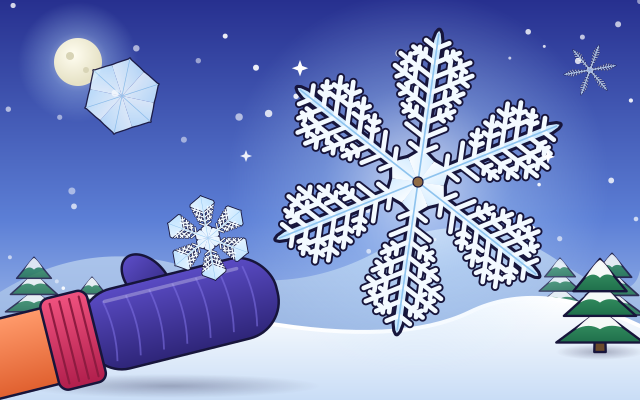
How do snowflakes form?
Grow virtual ice crystals under different conditions and compare their branching patterns.
-
 How Things Work
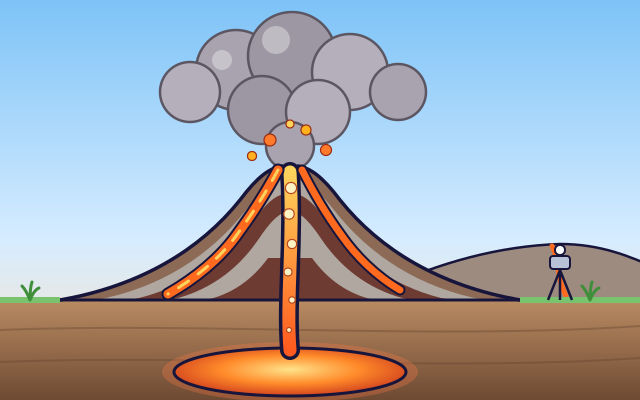
How do volcanoes erupt?
Look beneath a volcano and follow magma, gases, and pressure in a simplified model. Compare different volcano shapes and eruption styles.
-
 How Things Work
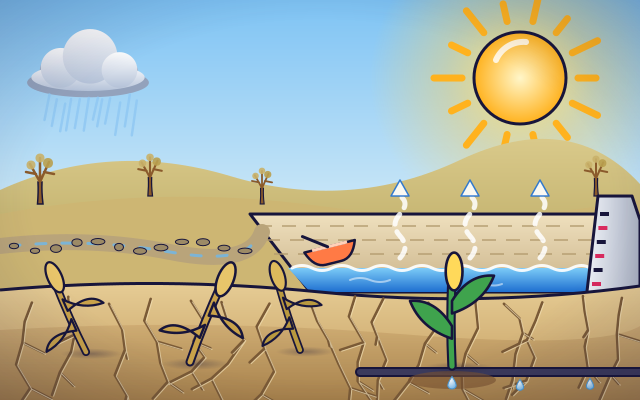
How do droughts develop?
Follow rainfall, evaporation, soil moisture, and stored water through a dry period.
-
 How Things Work
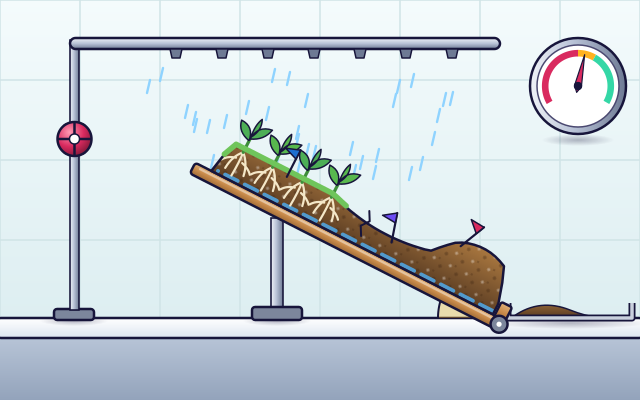
How do landslides happen?
Change slope, water content, and vegetation and compare ground stability.
-
 How Things Work
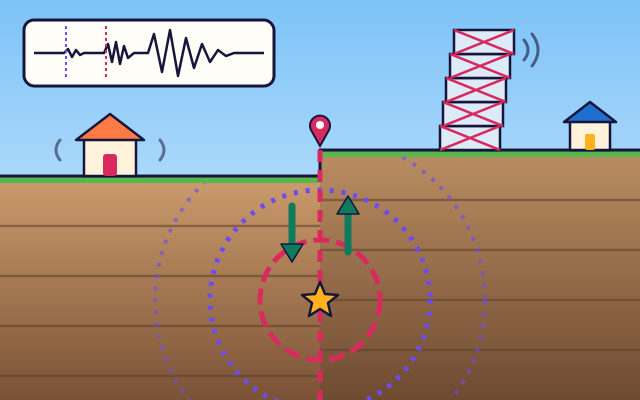
How do earthquakes happen?
Move sections of Earth's crust, watch a fault slip, and follow earthquake waves. Compare how different model buildings respond to shaking.
-
 How Things Work
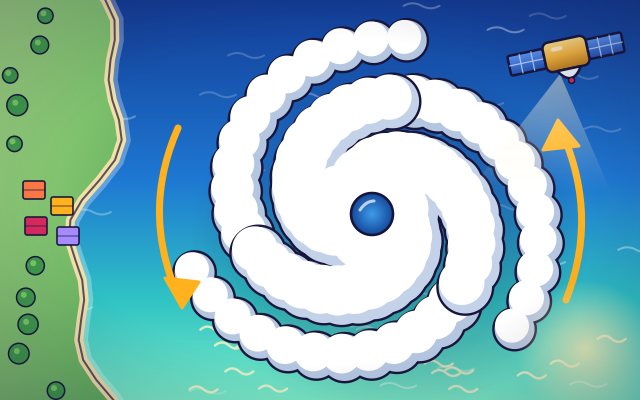
How do hurricanes develop?
Explore warm ocean water, moisture, rotation, and storm organization in a simplified model.
-
 How Things Work
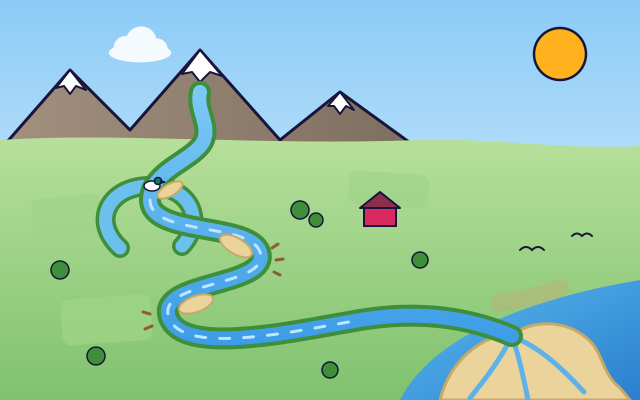
How do rivers shape the land?
Guide flowing water across a landscape and watch erosion, sediment transport, and deposition. Change slope and flow to create bends, channels, and deltas.
-
 How Things Work
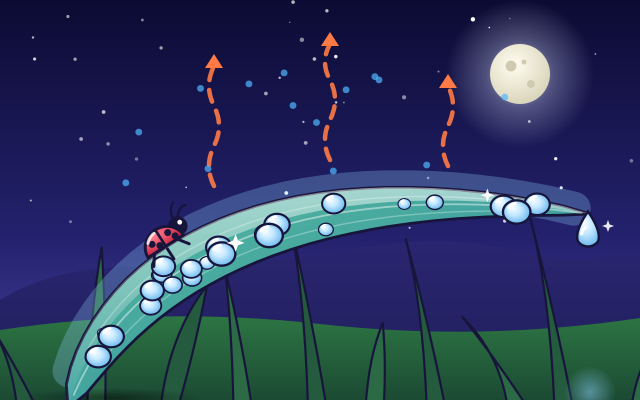
How does dew appear on grass?
Cool a model surface and follow water vapor condensing into droplets.
-
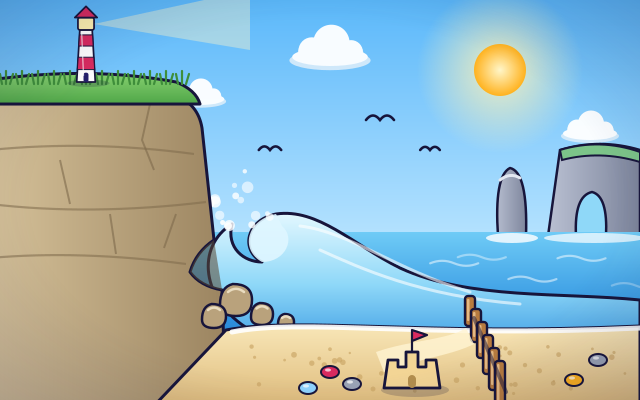 How Things Work
How do waves change coastlines?
Compare erosion and sediment movement around beaches, cliffs, and headlands.
-
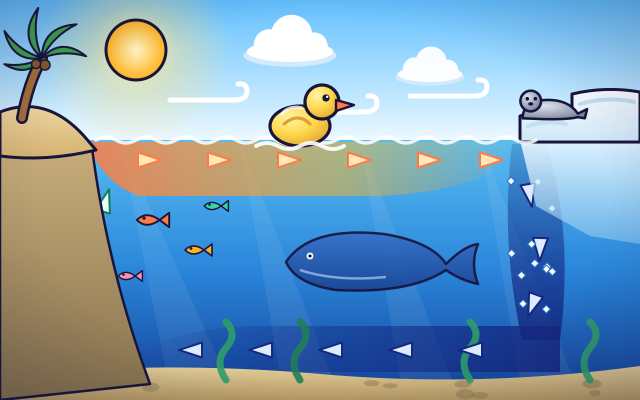 How Things Work
How do ocean currents move water?
Explore wind, temperature, salinity, and Earth's rotation in a simplified ocean model.
-
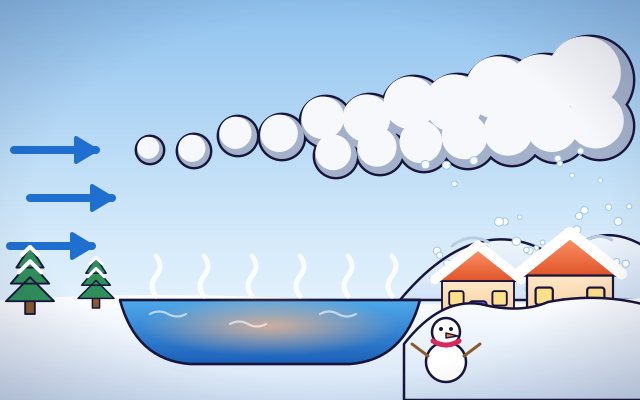 How Things Work
How does lake-effect snow happen?
Move cold air across warmer lake water and follow moisture into snowfall.
-
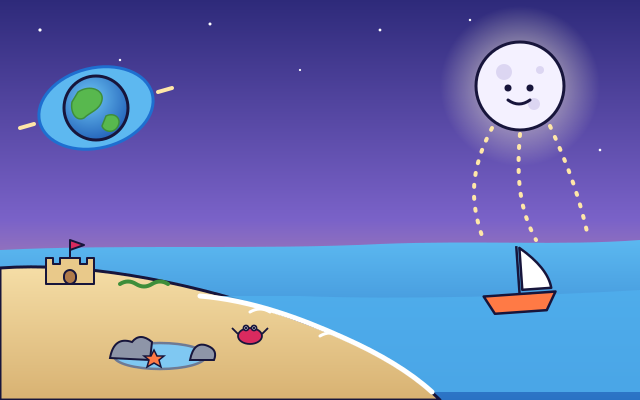 How Things Work
Why do ocean tides rise and fall?
Explore the Moon's and Sun's influence on a simplified ocean model. Move them into different positions and compare patterns of tidal change.
-
 How Things Work
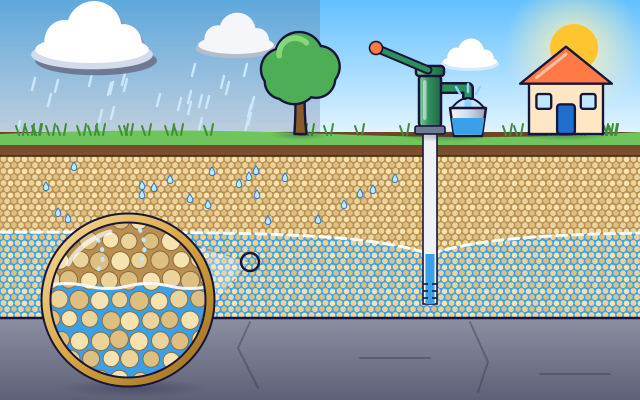
How do aquifers store groundwater?
Send water through soil and rock layers and explore storage and movement underground.
-
 How Things Work
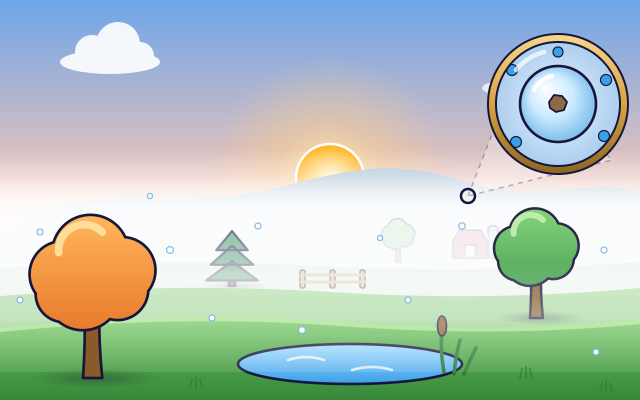
How does fog form near the ground?
Change air temperature and moisture and watch tiny droplets appear.