Search the Discovery Encyclopedia
-
 Animal
Okapi
The okapi has a velvety reddish-brown coat and zebra-like stripes on its legs, but its closest living relative is the giraffe. It lives only in the rainforests of the Democratic Republic of the Congo, where it browses leaves with a long, dark tongue. It is endangered.
-
 Animal
Bonobo
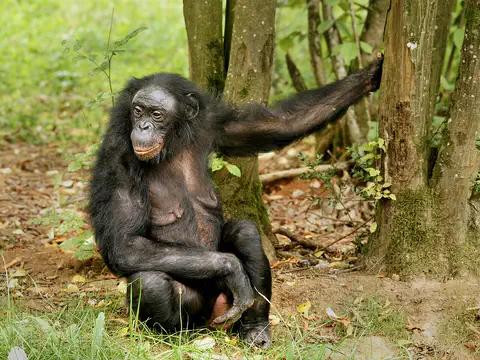
The bonobo is a great ape that looks a lot like a chimpanzee but is more slender, with a rounder head. It lives only in the rainforests south of the Congo River, in groups where females take the lead and squabbles rarely turn into fights.
-
 Animal
Jaguar
The jaguar is the largest cat in North and South America. It lives near rivers and swamps, swims well, and has such a powerful bite that it can crack a turtle's shell. Most jaguars live in the Amazon rainforest.
-
 Animal
Ocelot
The ocelot is a medium-sized wild cat of the Americas, from southern Texas to northern Argentina. Its golden coat has chains of dark-edged spots, and no two ocelots look alike. It hunts mostly at night, catching mice, rats, lizards and birds, and it needs thick plants to hide in.
-
 Animal
Army ant
Army ants hunt together in giant swarms and never build a permanent nest. This page is about the best-studied kind, Eciton burchellii, of Central and South American forests. Each night of its traveling phase the colony moves, and the workers link their legs to build a living camp around their queen and young.
-
 Animal
Mandrill
The mandrill is the largest and most colorful of the Old World monkeys. Grown-up males have red noses, blue-ridged cheeks and a golden beard. Mandrills roam the rainforests of west-central Africa in huge, noisy groups called hordes.
-
 Animal
Sun bear
The sun bear is the smallest of the world's eight kinds of bear, and it has the longest tongue. It lives in the forests of Southeast Asia, climbs trees with long curved claws, and rips open logs to find insects and honey. Every bear has its own chest patch, like a fingerprint.
-
 Animal
King cobra
The king cobra is the largest venomous snake in the world, growing to more than 5 meters long. It lives in forests and near streams in South and Southeast Asia, eats mainly other snakes, and the mother builds a nest of leaves and guards her eggs.
-
 Animal
Gray parrot
The gray parrot is a gray, red-tailed parrot from the rainforests of West and Central Africa. It lives in big, noisy flocks, eats fruit and seeds, and is famous for copying sounds. Trapping for the pet trade and forest loss have made it endangered.
-
 Animal
Harpy eagle
Harpy eagles are among the largest and most powerful eagles in the world. They live in the lowland rainforests of Central and South America, where they hunt sloths and monkeys in the treetops. Forest loss and shooting have made them rare.
-
 Animal
Electric eel
The electric eel is a long, snake-shaped fish from South America that makes its own electricity. It uses weak pulses to find its way and talk, and strong ones to catch food. Despite its name, it is not a true eel at all.
-
 Animal
Green iguana
The green iguana is a large lizard from the forests of Central and South America. It climbs high into trees to bask in the sun, eats leaves, flowers and fruit, and dives into rivers to get away from danger. It can grow to about 2 meters long, tail included.
-
 Animal
Orchid mantis
The orchid mantis is a praying mantis from the rainforests of Southeast Asia that looks like a flower. Its white and pink colors fool bees and other insects that visit flowers, and the mantis catches them. Its leg flaps look like petals, and scientists recently found that they also help young mantises glide through the air.
-
 Animal
Scarlet macaw
The scarlet macaw is a large parrot of the rainforests of Mexico, Central America and South America. It is famous for its bright red, yellow and blue feathers. It cracks hard nuts with its powerful beak, flies in noisy flocks and stays with one mate for life.
-
 Animal
Goliath beetle
The Goliath beetle is one of the largest beetles on Earth, from about 5 to 11 centimeters long. It lives in the rainforests of central and eastern Africa, where the adults drink tree sap. Its huge grubs need protein-rich food to grow, and they may even hunt other small animals.
-
 Animal
Great hornbill
The great hornbill is a very large bird of Asia's forests, with a long tail, broad black-and-white wings and an enormous curved yellow bill topped by a helmet called a casque. It eats mostly figs, and the female seals herself inside a tree hole to raise her chick.
-
 Animal
Green anaconda
The green anaconda is one of the largest snakes on Earth. This olive-green, spotted boa lives in the rivers, swamps and flooded grasslands of northern South America, where it lies hidden in shallow water with only its eyes and nose showing.
-
 Animal
Leafcutter ant
Leafcutter ants are farmers. Workers cut pieces of leaves, carry them home along busy trails and use them to grow a fungus garden underground, and the fungus is their food. This page is about one well-known kind, Atta cephalotes, which lives in Central and South America in giant nests of hundreds of thousands to millions of ants.
-
 Animal
Boa constrictor
The boa constrictor is a large, heavy snake of South America. Of all the boas, it lives in the greatest variety of places, from rainforests to dry scrub and farms. It catches food by squeezing, it has no venom, and mothers give birth to live babies.
-
 Animal
Clouded leopard
The clouded leopard is a forest cat of mainland Southeast Asia and the Himalayan foothills. It is named for the cloud-shaped patches on its coat, and it is an amazing climber that can creep headfirst down a tree trunk. It is Vulnerable, and fewer of them are left each year.
-
 Animal
Hercules beetle
The Hercules beetle is one of the largest beetles in the world: the biggest males can reach 18 centimeters, horns included. It lives in rainforests from southern Mexico to Bolivia and on a few Caribbean islands. Its huge grubs spend more than a year eating rotting wood before they turn into beetles.
-
 Animal
Western gorilla
The western gorilla is a great ape, one of our closest animal relatives. It lives in family groups led by a big silverback male, eats leaves and fruit in the rainforests of central Africa, and is quiet and peaceful unless it feels threatened.
-
 Animal
Amazon milk frog
The Amazon milk frog is a large tree frog that lives high in the treetops of the rainforest in northeastern South America. It is active at night, has big golden eyes, and lays its eggs in pools of rainwater trapped in holes in trees, where its tadpoles grow up.
-
 Animal
Emperor scorpion
The emperor scorpion is one of the biggest scorpions in the world, up to about 20 centimeters long. It lives in the warm, humid forests of West Africa, where it digs burrows and hunts insects such as termites at night. Mothers give birth to live young and carry them on their backs. Like other scorpions, it glows blue-green under ultraviolet light.
-
 Animal
Philippine eagle
The Philippine eagle is one of the largest and rarest eagles in the world. It lives only in the mountain rainforests of four Philippine islands, where it hunts monkeys, civets, flying squirrels and other forest animals. It is the national bird of the Philippines, and it is critically endangered.
-
 Animal
Bornean orangutan
The Bornean orangutan is a shaggy red great ape that spends almost all its life in the treetops of Borneo's rainforests. It eats mostly ripe fruit, builds a new leafy bed every night, and lives a quieter, more solitary life than other great apes.
-
 Animal
Goliath birdeater
The Goliath birdeater is a giant tarantula from the rainforests of northern South America. With legs spreading about 28 centimeters and a weight of up to about 170 grams, it is described as the heaviest spider in the world. Despite its name, it eats mostly worms and insects, not birds.
-
 Animal
Common blue morpho
The common blue morpho is a large butterfly of the forests of Mexico, Central America and South America. The tops of its wings flash bright blue, but the undersides are brown with big eyespots, which camouflage it when it lands with its wings closed. Adults sip juice from rotting fruit instead of nectar.
-
 Animal
Dyeing poison frog
The dyeing poison frog lives in the rainforests of Suriname, Guyana, French Guiana and nearby Brazil. It comes in many dazzling patterns of blue, yellow, black and white, which warn predators about poison in its skin. Fathers carry their tadpoles on their backs to little pools of water.
-
 Animal
Golden poison frog
The golden poison frog is a small frog from one small area of rainforest in western Colombia. It comes in bright yellow, orange or mint green, and its skin holds a very strong poison that comes from the insects it eats. Scientists call it the most toxic of all frogs. It is endangered because its forest is being cleared.
-
 Animal
Keel-billed toucan
The keel-billed toucan lives in the forests of southern Mexico, Central America and northern South America. Its huge, colorful bill can be a third of its whole length, yet it is light, and the bird uses it to pick fruit from thin branches.
-
 Animal
Pygmy hippopotamus
The pygmy hippopotamus is a small, shy relative of the common hippo. It lives alone in the swampy rainforests of West Africa, mostly in Liberia, rests in water by day and feeds on land at night. It is endangered, with fewer than 2,500 adults left.
-
 Animal
Red-eyed tree frog
The red-eyed tree frog lives in the rainforests of Central America. By day it sleeps folded up on a leaf, looking plain green. When something disturbs it, it flashes huge red eyes, orange feet and blue-and-yellow sides.
-
 Animal
Reticulated python
The reticulated python lives in the forests, riversides and even towns of Southeast Asia. It can grow longer than any other kind of snake, it is covered in a net-like pattern, and it is such a good swimmer that it has reached many small islands across the sea.
-
 Animal
Southern cassowary
The southern cassowary is a large flightless bird of the rainforests of northern Australia and New Guinea. It has a vivid blue neck, red wattles and a tall helmet called a casque. By eating fallen fruit and spreading the seeds in its droppings, it helps the rainforest grow. Cassowaries are wild and strong, so people watch them from a safe distance.
-
 Animal
Sumatran orangutan
The Sumatran orangutan is a shaggy red great ape that lives almost all its life in the treetops of northern Sumatra, in Indonesia. Its hair is longer and lighter than its Bornean cousin's, and a mother has a baby only every eight or nine years.
-
 Animal
Glasswing butterfly
The glasswing butterfly has wings you can see right through, framed with orange-brown edges. It lives from Mexico to Panama, and its caterpillars eat plants called Cestrum. Scientists study its clear wings because they hardly reflect any light, which could help people design better glass.
-
 Animal
Golden lion tamarin
The golden lion tamarin is a small, bright orange monkey with a lion-like mane. It lives only in the Atlantic coastal forest of Brazil. In the 1970s only about 200 were left in the wild; thanks to decades of work, a census in 2022 and 2023 counted about 4,800.
-
 Animal
Pacific banana slug
The Pacific banana slug is one of the biggest slugs in the world, often as long as a banana and sometimes yellow like one. It lives in the damp rainforests along the Pacific coast of North America, where it eats fallen leaves, mushrooms and other plant matter, helping to recycle the forest.
-
 Animal
Brown-throated sloth
The brown-throated sloth is a three-toed sloth of the rainforests of Central and South America. It eats leaves, saves energy by moving very slowly, and its shaggy fur can turn green with tiny algae that grow in it.
-
 Animal
Blue-and-yellow macaw
The blue-and-yellow macaw is a large parrot of South America and Panama. It is bright blue on top and golden yellow underneath, with a green forehead and a white face lined with black. It lives near swamps and rivers, cracks nuts with its strong black beak and stays with one mate for life.
-
 Animal
Strawberry poison frog
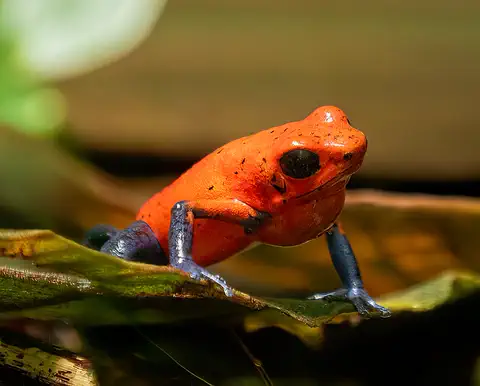
The strawberry poison frog is a tiny frog of the rainforest floor in Nicaragua, Costa Rica and Panama. Its bright colors warn hunters that its skin is poisonous, and its parents take amazing care of their young: the mother carries each tadpole to its own little pool and feeds it eggs.
-
 Animal
African forest elephant
The African forest elephant is a separate species from the bigger bush elephant. It lives in the rainforests of central and western Africa, eats lots of fruit and spreads the seeds of forest trees in its dung. It is Critically Endangered.
-
 Animal
Greater bird-of-paradise
The greater bird-of-paradise is a rainforest bird of southern New Guinea and the Aru Islands. Males have a yellow head, a green throat, long tail wires and huge golden flank plumes, which they show off in group dances high in tall trees to win a female.
-
 Animal
Queen Alexandra's birdwing
Queen Alexandra's birdwing is described by scientists as the largest butterfly in the world: a female's wings can stretch almost 25 centimeters across. It lives only in a small area of rainforest in Papua New Guinea, where its caterpillars eat pipevine plants. It is endangered and protected by law.
-
 Animal
Madagascar hissing cockroach
The Madagascar hissing cockroach is one of the largest cockroaches in the world, up to 10 centimeters long, and it has no wings. It lives on the floor of rainforests on the island of Madagascar, where it eats fallen leaves and fruit. It makes a hissing sound by pushing air out of the breathing holes on its body.
-
 Animal
Leopard
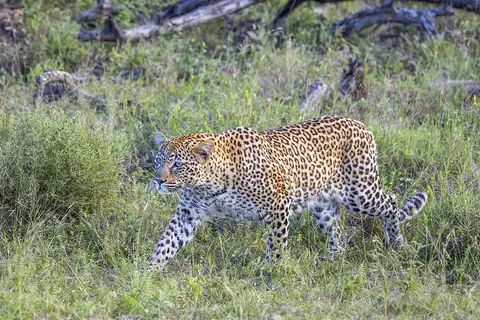
The leopard is a strong, spotted big cat and the best climber of them all. It can carry its food high up into a tree, away from lions and hyenas. Leopards live in more kinds of places than any other big cat, from deserts to rainforests, across Africa and Asia.
-
 Animal
African buffalo
The African buffalo is a huge, cow-like grazer with heavy, curving horns. It lives in herds that can number in the thousands, and a herd will rush to protect a calf in danger. It lives across much of Africa south of the Sahara, from open savannas to rainforests.
-
 Animal
Goliath frog
The Goliath frog of Cameroon and Equatorial Guinea is the largest frog in the world: its body can be over 30 centimeters long, and it can weigh more than 3 kilograms. It lives along fast, clean rainforest rivers, and scientists recently discovered that these giants build and guard little ponds for their eggs. Hunting has made it endangered.
-
 Animal
Christmas Island red crab
The Christmas Island red crab is a bright red land crab that lives almost only on Christmas Island in the Indian Ocean. It lives in burrows in the rainforest, and when the wet season begins, millions of crabs march down to the ocean together to breed, crossing roads, rocks and beaches.
-
 Animal
Tiger
The tiger is a huge cat with orange fur and dark stripes that help it hide in tall grass and forest shadows. It lives alone, hunts deer and wild pigs, and loves to swim. Wild tigers live only in Asia, and they are endangered.
-
 Animal
Hoatzin
The hoatzin is a strange and wonderful bird of the Amazon and Orinoco rivers. It eats mostly leaves and digests them slowly with the help of bacteria, a bit like a cow. Its chicks have claws on their wings that help them climb back up through the branches.
-
 Animal
Arapaima
The arapaima is one of the biggest freshwater fish in the world, longer than a grown-up is tall. It lives in the warm, slow rivers and flooded lakes of the Amazon, and it must swim up to the surface to gulp air every few minutes.
-
 Animal
Capybara
The capybara is the largest rodent alive, a giant cousin of the guinea pig. It lives in groups beside rivers, lakes and marshes in South America, grazes on grass and water plants, and dives into the water to stay cool and safe.
-
 Animal
Cane toad
The cane toad is a large, warty toad that comes from the Amazon and Guianas of South America. People carried it to many warm places, including Australia in 1935, hoping it would eat beetles in sugarcane fields. It did not solve that problem, but it spread fast, and its poison harms native animals that try to eat it.
-
 Animal
Atlas moth
The atlas moth is one of the largest moths in the world, with wings up to about 24 centimeters across. It lives in tropical and subtropical forests of southern and Southeast Asia. Its caterpillars eat a lot and spin silk cocoons, and the adults cannot eat at all: they live for only about a week.
-
 Animal
Neon tetra
The neon tetra is a tiny fish, about as long as a quarter is wide, with a glowing blue stripe and a bright red patch. In the wild it lives in clear and dark-water forest streams of the western Amazon. It is also one of the most popular aquarium fish in the world.
-
 Animal
Sloth bear
The sloth bear is a shaggy, black bear of the forests and grasslands of India, Nepal and Sri Lanka. It is a bear that specializes in eating termites and ants: it digs open their nests with long claws and sucks them up through a gap in its front teeth. Mother sloth bears carry their cubs on their backs.
-
 Animal
Giant otter
The giant otter is the longest otter in the world, up to about 1.8 meters from nose to tail. It lives in the rivers and lakes of South America in noisy family groups that hunt fish together by day. It is endangered, and people are working to protect it.
-
 Animal
Toco toucan
The toco toucan is the biggest toucan, and its huge orange bill is the largest of any bird compared with its body. The bill is light and hollow. It is a tool for picking fruit, and scientists have found it also works like a radiator that lets out body heat. Tocos live in open woodlands and savannas of South America.