Animals that need our help
Tap an animal to meet it: where it lives, what it eats, how it grows, and a narrated adventure with Olly.
124 to explore · page 1 of 3
-
 Watch
Animal
African forest elephant
The African forest elephant is a separate species from the bigger bush elephant. It lives in the rainforests of central and western Africa, eats lots of fruit and spreads the seeds of forest trees in its dung. It is Critically Endangered.
-
 Watch
Animal
African penguin
The African penguin is a penguin of warm, sunny coasts. It lives only in South Africa and Namibia, nests in burrows and under bushes, and hunts sardines and anchovies in the cold sea. Its numbers have fallen so far that it is now Critically Endangered, and people are working hard to protect it.
-
 Watch
3D
Animal
African wild dog
The African wild dog, or painted dog, has a patchy coat unlike any other dog's, big round ears and only four toes on its front feet. It lives in close packs that hunt together, share food and care for the pups. It is endangered: the IUCN estimated in 2025 that only about 1,676 adults are left in the wild.
-
 Watch
Animal
Aldabra giant tortoise
The Aldabra giant tortoise is one of the largest land tortoises on Earth. Wild ones live on Aldabra Atoll, a ring of coral islands in the Indian Ocean, where more than 100,000 of them graze, browse and shape the land like elephants do in Africa. They can live for more than 100 years.
-
 Watch
Animal
Alligator snapping turtle
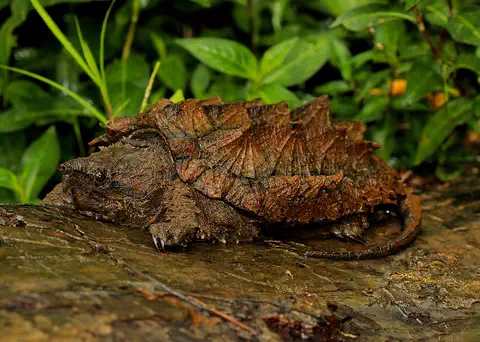
The alligator snapping turtle is the largest freshwater turtle in the United States. It lies still on the bottom of rivers and lakes with its mouth open, wiggling a worm-like lure on its tongue to trick fish into swimming close. Its numbers have fallen, and it is now endangered.
-
 Watch
Animal
Amazon river dolphin
The Amazon river dolphin, or boto, is the largest river dolphin. Many adults are pink. It lives only in fresh water, in the Amazon and Orinoco river basins of South America, and its bendy neck and big flippers let it twist between tree trunks in flooded forests as it hunts fish using sound.
-
 Watch
Animal
American crocodile
The American crocodile is a large reptile of warm coasts and mangrove swamps, from the southern tip of Florida through Mexico, Central America, the Caribbean and northern South America. It is shy, it basks in the sun to warm up, and mother crocodiles carry their babies to the water.
-
 Watch
Animal
Andean condor
The Andean condor is one of the largest flying birds in the world. With wings up to 3.2 meters across, it soars over the Andes Mountains of South America, barely flapping, as it searches for dead animals to eat. It is a vulture, nature's clean-up crew.
-
 Watch
Animal
Arabian oryx
The Arabian oryx is a white desert antelope with long, straight horns and a black-and-white face. Hunting wiped it out in the wild, but animals kept in zoos were bred and returned to the deserts of Arabia. Today it lives wild again in five countries.
-
 Watch
Animal
Asian black bear
The Asian black bear is a black bear with a cream crescent on its chest, shaped like a new moon. It lives in forests and mountains from Iran and Pakistan across the Himalayas and Southeast Asia to China, Korea, Japan and the Russian Far East. It eats mostly plants, especially fruit and nuts, and in cold places it sleeps through the winter.
-
 Watch
3D
Animal
Asian elephant
The Asian elephant is the largest land animal in Asia. It is a little smaller than its African cousins, with smaller ears, a head shaped like two domes and a trunk with one finger-like tip. It lives in forests and grassy clearings in 13 countries of South and Southeast Asia.
-
 Watch
3D
Animal
Atlantic cod
The Atlantic cod is a large, speckled fish of the cold North Atlantic. It has a whisker-like barbel on its chin and three fins along its back. For hundreds of years people have caught cod for food, so many that some cod populations crashed and are still being rebuilt today.
-
 Watch
3D
Animal
Atlantic horseshoe crab
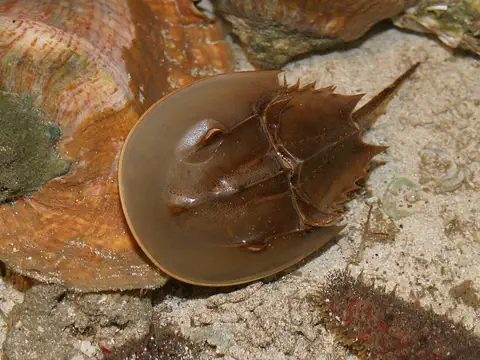
The Atlantic horseshoe crab is a living fossil: its relatives have looked much the same for hundreds of millions of years. Despite its name, it is more closely related to spiders and scorpions than to crabs. Each spring, thousands crawl onto beaches to lay eggs, feeding hungry shorebirds, and its blue blood helps keep medicines safe.
-
 Watch
3D
Animal
Atlantic puffin
The Atlantic puffin is a small seabird of the North Atlantic, often called the clown of the sea because of its huge, colorful bill. It spends most of its life far out on the ocean and comes ashore only in summer to nest in burrows on islands and cliff tops. Underwater, its small wings work like flippers.
-
 Watch
3D
Animal
Axolotl
The axolotl is a salamander from the canals and lakes of Mexico City. Unlike most amphibians, it keeps its baby features, such as feathery gills and a fin, its whole life. It can regrow lost legs and even parts of its heart, but in the wild it is critically endangered.
-
 Watch
Animal
Aye-aye
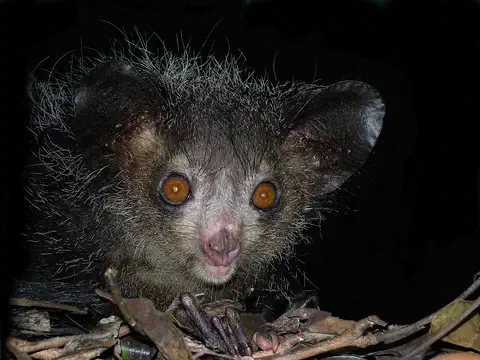
The aye-aye is a lemur from Madagascar, and the largest primate that is active at night. It taps on branches with its long, skinny middle finger, listens with its enormous ears for hidden grubs, then bites into the wood and hooks them out.
-
 Watch
3D
Animal
Basking shark
The basking shark is the second-biggest fish in the world, after the whale shark. It swims slowly near the surface with its enormous mouth open, sieving tiny floating animals called zooplankton out of the water. It is gentle and lives mainly in cool seas.
-
 Watch
Animal
Black rhinoceros
The black rhinoceros is the smaller of Africa's two rhinos. It has two horns and a pointed, hooked upper lip that it uses to pick leaves and twigs from bushes. It is Critically Endangered, but thanks to rangers and conservationists its numbers have been climbing again.
-
 Watch
Animal
Blacktip reef shark
The blacktip reef shark is a medium-sized shark of warm, shallow coral reefs in the Indian and Pacific Oceans. You can spot it by the black tips on all its fins. It hunts fish, squid and crabs, stays close to its home reef, and gives birth to just a few live pups at a time.
-
 Watch
Animal
Blue whale
The blue whale is the largest animal ever to live on Earth, bigger than any dinosaur. It is a baleen whale: instead of teeth it has bristly plates that strain huge mouthfuls of seawater to catch krill. Blue whales live in every ocean except the Arctic, and their deep calls are among the loudest sounds made by any animal.
-
 Watch
Animal
Bonobo
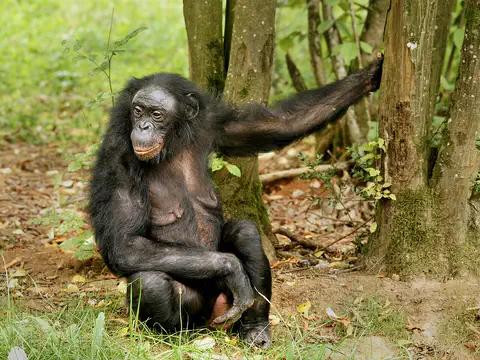
The bonobo is a great ape that looks a lot like a chimpanzee but is more slender, with a rounder head. It lives only in the rainforests south of the Congo River, in groups where females take the lead and squabbles rarely turn into fights.
-
 Watch
3D
Animal
Bornean orangutan
The Bornean orangutan is a shaggy red great ape that spends almost all its life in the treetops of Borneo's rainforests. It eats mostly ripe fruit, builds a new leafy bed every night, and lives a quieter, more solitary life than other great apes.
-
 Watch
3D
Animal
Bull shark
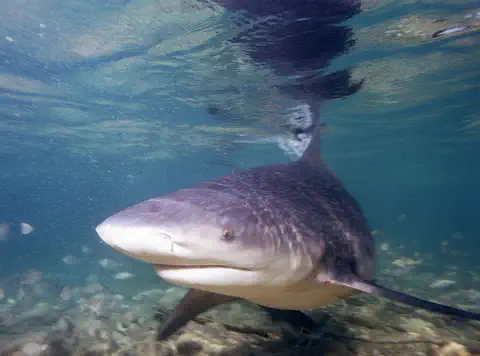
The bull shark is a large, stout shark of warm coasts around the world. It is one of very few sharks that can swim from the salty sea into fresh water, and it has been found thousands of kilometers up big rivers like the Amazon and the Mississippi.
-
 Watch
Animal
Burmese python
The Burmese python is one of the largest snakes in the world. In its home in South and Southeast Asia it has become rare because so many are caught, but in southern Florida, where people let pet pythons go, it has spread through the Everglades and eats many of the animals that live there.
-
 Watch
Animal
California condor
The California condor is the largest wild bird in North America, a giant vulture with wings about 2.8 meters wide. In the 1980s only 22 were left. Thanks to a huge rescue effort, the US Fish and Wildlife Service counted 607 condors at the end of 2025, 392 of them flying free.
-
 Watch
3D
Animal
Chambered nautilus
The chambered nautilus is a relative of octopuses and squids that lives inside a coiled shell full of sealed rooms. It moves up and down along deep reef slopes by changing how much gas and water are in its shell, and it finds food mostly by smell.
-
 Watch
3D
Animal
Cheetah
The cheetah is the fastest land animal. It can go from standing still to 72 kilometers per hour in about two and a half seconds, and its top speed is around 100 kilometers per hour, as fast as a car on a highway. Cheetahs live mostly in Africa, with a very small group in Iran.
-
 Watch
Animal
Clouded leopard
The clouded leopard is a forest cat of mainland Southeast Asia and the Himalayan foothills. It is named for the cloud-shaped patches on its coat, and it is an amazing climber that can creep headfirst down a tree trunk. It is Vulnerable, and fewer of them are left each year.
-
 Watch
Animal
Coconut crab
The coconut crab, also called the robber crab, is the biggest crustacean that lives on land. It is a close relative of hermit crabs, lives on tropical islands in the Indian and Pacific Oceans, climbs trees, and can open coconuts with its powerful claws.
-
 Watch
Animal
Common hippopotamus
The common hippopotamus is one of the biggest animals on land, yet it spends most of the day resting in rivers and lakes to keep cool. At night it walks out to graze, and its special skin makes its own sunscreen.
-
 Watch
Animal
Desert tortoise
The desert tortoise, also called the Mojave desert tortoise, lives in the deserts of the south-western United States. It spends most of its life in underground burrows, stores water in its body, and can live for 50 years or more. Sadly, it is now critically endangered.
-
 Watch
Animal
Dugong
The dugong is a large, slow marine mammal that grazes on seagrass meadows in warm, shallow coastal seas from East Africa to the western Pacific. It is a relative of the manatee and, surprisingly, more closely related to elephants than to cows. It has a whale-like tail, a big bristly snout and very good hearing.
-
 Watch
3D
Animal
Eastern box turtle
The eastern box turtle is a small land turtle of eastern North America with a high, domed shell splashed with yellow and orange. A hinge on the bottom shell lets it close up almost completely, like a box with a lid. It eats mushrooms, berries, worms and slugs and can live for decades.
-
 Watch
Animal
Eastern gorilla
The eastern gorilla is the gorilla of the misty mountains and forests of east-central Africa. It has two kinds: the shaggy mountain gorilla, whose numbers are slowly growing, and the big Grauer's gorilla, which has become much rarer.
-
 Watch
3D
Animal
Ethiopian wolf
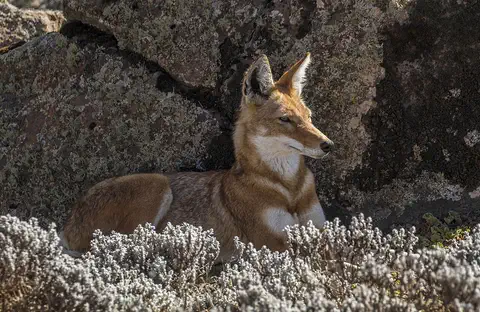
The Ethiopian wolf is a slender red wolf that lives only in the high mountains of Ethiopia. Wolf families share a territory, but each wolf hunts alone for rats and mole-rats. It is one of the rarest wild dogs on Earth.
-
 Watch
3D
Animal
European rabbit
The European rabbit is the wild rabbit that all pet and farm rabbits come from. It lives in groups in big underground tunnel homes called warrens. Its numbers have fallen in its first home in Spain, Portugal and France, but people have carried it to many other places, where it became a pest.
-
 Watch
Animal
Fire salamander
The fire salamander is a shiny black amphibian with bold yellow spots, found in cool, damp forests across much of Europe. Its colors warn predators that its skin makes bad-tasting toxins. Unlike most amphibians, the mother keeps her eggs inside her body and gives birth to live larvae in a stream.
-
 Watch
Animal
Fishing cat
The fishing cat is a stocky, spotted wild cat of the wetlands of South and Southeast Asia. It is an excellent swimmer and diver, and fish are its main food. It lives in marshes, swamps, mangroves and along rivers, and it is Vulnerable because so many of these wetlands are being lost.
-
 Watch
Animal
Gharial
The gharial is a crocodile relative with a long, skinny snout full of sharp teeth, perfect for snapping up fish. It lives in a few big rivers of northern India and Nepal, and it is one of the most threatened crocodilians on Earth.
-
 Watch
Animal
Giant anteater
The giant anteater is the biggest of the four kinds of anteater. It has no teeth at all, but its sticky tongue, about 60 centimeters long, flicks in and out up to 150 times a minute to slurp up ants and termites. Babies ride on their mothers' backs.
-
 Watch
Animal
Giant clam
The giant clam, Tridacna gigas, is the largest clam alive. Its shell can grow more than a meter long. It sits on sunny coral reefs in the Indian and Pacific Oceans and gets most of its food from tiny algae living in its body. It is Critically Endangered.
-
 Watch
Animal
Giant oceanic manta ray
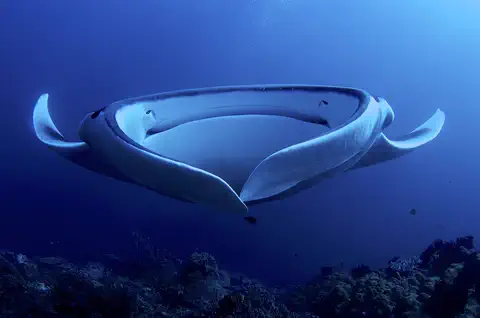
The giant oceanic manta ray is the largest ray in the world, with wing-like fins that can stretch more than 6 meters from tip to tip. This gentle filter feeder funnels plankton into its wide mouth, and it has a single pup only every two to three years.
-
 Watch
Animal
Giant otter
The giant otter is the longest otter in the world, up to about 1.8 meters from nose to tail. It lives in the rivers and lakes of South America in noisy family groups that hunt fish together by day. It is endangered, and people are working to protect it.
-
 Watch
Animal
Giant panda
The giant panda is a black-and-white bear that lives in misty mountain forests in China. About 99 percent of its food is bamboo, and it spends up to 16 hours a day eating. Pandas were once endangered, but protecting their forests has helped them, and they are now listed as Vulnerable.
-
 Watch
3D
Animal
Giraffe
Giraffes are the tallest animals on Earth. A long neck and a long dark tongue let them eat leaves from treetops that other animals cannot reach, and their patchy coats help them blend into the shade of the trees.
-
 Watch
3D
Animal
Golden hamster
Golden hamsters, also called Syrian hamsters, are popular pets all over the world. But in the wild they live only in a small area of farmland on the border of Syria and Türkiye, and the IUCN lists them as Endangered.
-
 Watch
Animal
Golden lion tamarin
The golden lion tamarin is a small, bright orange monkey with a lion-like mane. It lives only in the Atlantic coastal forest of Brazil. In the 1970s only about 200 were left in the wild; thanks to decades of work, a census in 2022 and 2023 counted about 4,800.
-
 Watch
3D
Animal
Golden poison frog
The golden poison frog is a small frog from one small area of rainforest in western Colombia. It comes in bright yellow, orange or mint green, and its skin holds a very strong poison that comes from the insects it eats. Scientists call it the most toxic of all frogs. It is endangered because its forest is being cleared.