
Grasslands
Animals that live in the grasslands. Tap one to meet it.
101 to explore · page 1 of 3
-
 Watch
Animal
Aardvark
The aardvark is a shy night digger of African savannas. It sniffs out ant and termite nests, rips them open with its spade-like claws and laps up the insects with a sticky tongue about 30 centimeters long. Its name means 'earth pig' in Afrikaans.
-
 Watch
Animal
African buffalo
The African buffalo is a huge, cow-like grazer with heavy, curving horns. It lives in herds that can number in the thousands, and a herd will rush to protect a calf in danger. It lives across much of Africa south of the Sahara, from open savannas to rainforests.
-
 Watch
Animal
Aldabra giant tortoise
The Aldabra giant tortoise is one of the largest land tortoises on Earth. Wild ones live on Aldabra Atoll, a ring of coral islands in the Indian Ocean, where more than 100,000 of them graze, browse and shape the land like elephants do in Africa. They can live for more than 100 years.
-
 Watch
3D
Animal
American bison
The American bison is the largest land animal in North America. Once tens of millions roamed the Great Plains, but by the 1890s fewer than a thousand were left. Careful protection, starting with a tiny herd in Yellowstone, brought bison back.
-
 Watch
Animal
American goldfinch
The American goldfinch is a small finch that eats almost nothing but seeds. In summer the male is bright lemon yellow with a black cap and black wings, and in winter both males and females turn a soft olive brown. Goldfinches wait until late summer to build their nests.
-
 Watch
Animal
American toad
The American toad is a common, warty toad of eastern North America, found in forests, prairies, farms and backyards. It has big poison glands behind its eyes, hunts insects and worms at night, and in spring the males sing a long, musical trill from shallow ponds, where females lay thousands of eggs in long strings.
-
 Watch
Animal
Andean condor
The Andean condor is one of the largest flying birds in the world. With wings up to 3.2 meters across, it soars over the Andes Mountains of South America, barely flapping, as it searches for dead animals to eat. It is a vulture, nature's clean-up crew.
-
 Watch
3D
Animal
Asian elephant
The Asian elephant is the largest land animal in Asia. It is a little smaller than its African cousins, with smaller ears, a head shaped like two domes and a trunk with one finger-like tip. It lives in forests and grassy clearings in 13 countries of South and Southeast Asia.
-
 Watch
Animal
Bactrian camel
The Bactrian camel is the two-humped camel of Central Asia's cold deserts and steppes. People tamed it thousands of years ago, and it carried goods along the Silk Road. Its wild cousin, the wild camel, is a separate species that is endangered.
-
 Watch
Animal
Barn owl
The barn owl is a pale, ghostly owl with a heart-shaped face that works like a dish to collect sound. It hunts mice and voles at night over fields and grassland, finding them by hearing alone if it has to. Barn owls live on every continent except Antarctica.
-
 Watch
3D
Animal
Barn swallow
The barn swallow is a small, speedy bird with a glossy blue back, a reddish throat and a long, deeply forked tail. It catches insects in the air, builds cup-shaped mud nests on barns and bridges, and makes long migrations between the Northern Hemisphere, where it nests, and the Southern Hemisphere, where it spends the winter.
-
 Watch
Animal
Black-tailed prairie dog
Black-tailed prairie dogs are sociable ground squirrels of North America's Great Plains. They dig huge underground towns, keep the grass short to watch for danger, and bark warnings to each other. Many other animals depend on their towns.
-
 Watch
Animal
Blue wildebeest
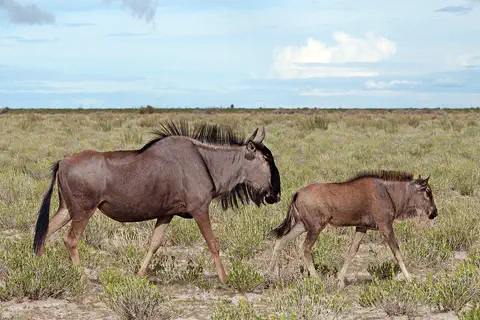
The blue wildebeest, or gnu, is a big antelope with a box-like head, curved horns, a mane and a beard. It grazes the savannas of eastern and southern Africa, and in the Serengeti huge herds travel in a giant circle every year following the rains.
-
 Watch
Animal
Boa constrictor
The boa constrictor is a large, heavy snake of South America. Of all the boas, it lives in the greatest variety of places, from rainforests to dry scrub and farms. It catches food by squeezing, it has no venom, and mothers give birth to live babies.
-
 Watch
Animal
Budgerigar
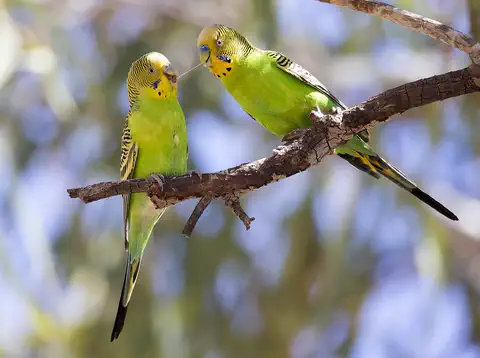
The budgerigar, or budgie, is a little parrot from the dry heart of Australia. Wild budgies are green and yellow with wavy black stripes. They are nomads that travel in flocks, they must find water every day, and they breed after good rain. Budgies are also popular pets all over the world.
-
 Watch
Animal
Buff-tailed bumblebee
The buff-tailed bumblebee is one of the most common bumblebees in Europe. It is large and furry, with golden-yellow bands, and the queen has a buff, or light brown, tail. It lives in nests of up to a few hundred bees, and people raise it to pollinate crops such as greenhouse tomatoes.
-
 Watch
3D
Animal
Bull-headed dung beetle
The bull-headed dung beetle is a shiny black beetle about 1 centimeter long. Large males have two long, curved horns on their heads, like a bull. These beetles dig tunnels under cow dung and pack dung into balls for their young, which cleans up pastures and helps the soil. They came from Europe and now also live in North America and Australia.
-
 Watch
Animal
Burrowing owl
The burrowing owl is a small, sandy-brown owl with long legs and bright yellow eyes. Unlike most owls, it lives underground, in burrows dug by prairie dogs, ground squirrels or tortoises, or sometimes by the owls themselves. It lives in open grasslands and deserts from Canada to the tip of South America.
-
 Watch
Animal
California condor
The California condor is the largest wild bird in North America, a giant vulture with wings about 2.8 meters wide. In the 1980s only 22 were left. Thanks to a huge rescue effort, the US Fish and Wildlife Service counted 607 condors at the end of 2025, 392 of them flying free.
-
 Watch
3D
Animal
Canada goose
The Canada goose is a big, black-necked goose with a white chinstrap, found near lakes, rivers, fields and parks across North America. Many migrate in noisy V-shaped flocks, but more and more stay all year on city lawns. People also brought Canada geese to Britain and other parts of Europe.
-
 Watch
Animal
Cane toad
The cane toad is a large, warty toad that comes from the Amazon and Guianas of South America. People carried it to many warm places, including Australia in 1935, hoping it would eat beetles in sugarcane fields. It did not solve that problem, but it spread fast, and its poison harms native animals that try to eat it.
-
 Watch
3D
Animal
Cattle
Cattle are large farm animals that people tamed from wild oxen long ago. They eat grass and digest it with a stomach that has four parts. Farmers around the world keep cattle for milk, meat and leather, and in some places oxen still pull plows and carts.
-
 Watch
Animal
Central bearded dragon
The central bearded dragon is a lizard of the dry woodlands, scrub and deserts of eastern inland Australia. It eats plants and small animals, basks on fence posts and logs, waves its arm and bobs its head to talk to other dragons, and puffs out a spiky beard to look big. It is also a very popular pet lizard.
-
 Watch
3D
Animal
Cheetah
The cheetah is the fastest land animal. It can go from standing still to 72 kilometers per hour in about two and a half seconds, and its top speed is around 100 kilometers per hour, as fast as a car on a highway. Cheetahs live mostly in Africa, with a very small group in Iran.
-
 Watch
3D
Animal
Cockatiel
The cockatiel is a small, slim parrot with a tall crest that lives wild in the dry inland of Australia. Flocks fly fast across open country, looking for grass seeds and water, and pairs nest in hollow trees after the rain.
-
 Watch
Animal
Common earthworm
The common earthworm digs deep tunnels in the soil and comes up at night to drag fallen leaves down to eat. It breathes through its damp skin, has red blood and five pairs of heart-like pumps. Its tunnels and droppings help keep soil healthy.
-
 Watch
Animal
Common eastern firefly
The common eastern firefly, or big dipper firefly, is a beetle that makes its own light. On summer evenings, males fly over lawns and fields, drawing a J-shaped flash in the air, and females on the ground flash back. Most of its life is spent as a glowing larva in damp soil, hunting snails and worms.
-
 Watch
Animal
Common garter snake
The common garter snake is one of the most familiar snakes in North America. It has light stripes along a dark body, it lives almost everywhere from Canada to Florida, and it copes with cold better than most snakes. In spring, huge numbers come out of their winter dens together.
-
 Watch
3D
Animal
Common ostrich
The common ostrich is the tallest and heaviest bird alive. It cannot fly, but it is the fastest runner on two legs, sprinting at about 70 kilometers an hour across the savannas and deserts of Africa. It also lays the biggest egg of any living animal.
-
 Watch
Animal
Common pheasant
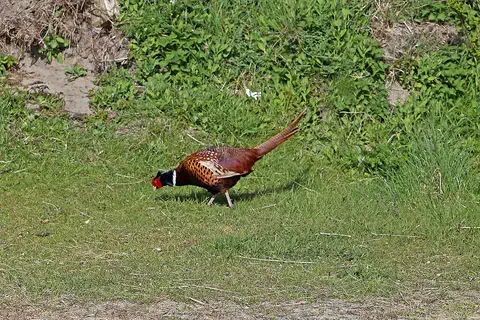
The common pheasant is a long-tailed ground bird. Its wild home is Asia, from the Caspian Sea to China and Korea, but people have taken it to Europe, North America, New Zealand and other places. Males are bright and coppery with a red face; females are mottled brown.
-
 Watch
3D
Animal
Common starling
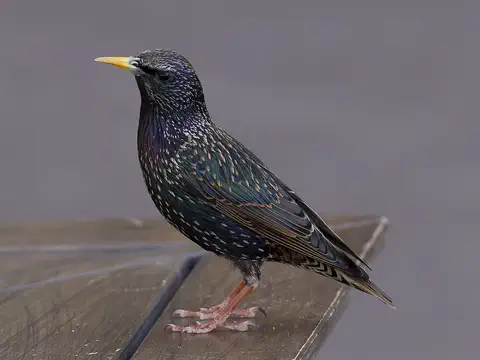
The common starling, also called the European starling, is a glossy, spotted songbird from Europe, Asia and North Africa. It is a brilliant copycat that can imitate other birds and even car alarms, and in winter huge flocks swirl through the evening sky in shows called murmurations. People also carried starlings to North America, Australia and other places, where they now live in the wild.
-
 Watch
Animal
Common toad
The common toad is a warty brown amphibian that lives across Europe and into Asia. It spends most of the year on land, hunting slugs, worms and insects at night, then travels back to the pond where it hatched to lay long strings of eggs each spring.
-
 Watch
Animal
Common warthog
Common warthogs are tough wild pigs of the African savanna. They kneel down to eat short grass, sleep in old aardvark burrows and run with their tails held straight up like little flags. The bumps on their faces are thick pads of skin.
-
 Watch
3D
Animal
Common wasp
The common wasp is a black and yellow striped insect that lives in a big family called a colony. Thousands of wasps share a round nest made of paper that they make by chewing wood. They catch insects such as caterpillars and flies to feed their young, which makes them useful garden helpers.
-
 Watch
Animal
Corn snake
The corn snake is a slender, colorful snake of the pine woods, fields and old barns of the southeastern United States. It has red blotches outlined in black and a black-and-white checkered belly. It has no venom: it catches mice and rats by squeezing them, and it spends much of its time hidden in burrows.
-
 Watch
3D
Animal
Coyote
The coyote is a clever, adaptable wild dog that lives from Alaska and Canada to Panama. It is smaller than a wolf and bigger than a fox. Coyotes eat mostly mice, voles and rabbits, howl and yip to keep in touch, and live everywhere from deserts and forests to city parks.
-
 Watch
Animal
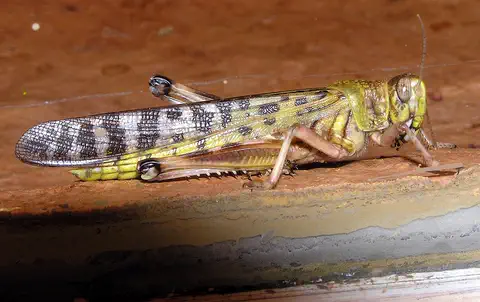
Desert locust
The desert locust is a large grasshopper of the deserts of Africa, the Middle East and Southwest Asia. Most of the time it lives alone. But after good rains, when locusts become crowded, they change their color and behavior and can gather into enormous swarms that fly long distances and eat farmers' crops.
-
 Watch
Animal
Dingo
The dingo is Australia's wild dog and the country's largest meat-eating mammal. People brought its ancestors to Australia about 4,000 years ago. It hunts rabbits, kangaroos and wallabies, howls rather than barks, and scientists still argue about whether it is its own species or a very old kind of dog.
-
 Watch
3D
Animal
Domestic goat
Domestic goats are lively farm animals that came from a wild goat of Asia. They reach up to nibble leaves, twigs and weeds that other farm animals leave behind, and people keep them for milk, cheese, meat, wool and leather.
-
 Watch
3D
Animal
Domestic sheep
Domestic sheep are farm animals that people tamed in western Asia thousands of years ago. They graze on grass, digest it with a four-part stomach and stick together in flocks. People keep sheep for wool, meat, milk and leather.
-
 Watch
3D
Animal
Eastern bluebird
The eastern bluebird is a small thrush of open fields and parks in eastern North America, south to Central America. Males are bright blue with a rusty orange chest. Bluebirds watch from wires and fence posts, flutter down to catch insects, and nest in tree holes and in nest boxes that people put up for them.
-
 Watch
3D
Animal
Eastern box turtle
The eastern box turtle is a small land turtle of eastern North America with a high, domed shell splashed with yellow and orange. A hinge on the bottom shell lets it close up almost completely, like a box with a lid. It eats mushrooms, berries, worms and slugs and can live for decades.
-
 Watch
Animal
Eastern grey kangaroo
The eastern grey kangaroo is a big, woolly gray kangaroo of eastern Australia and Tasmania. It hops on powerful back legs, balances with its long tail and grazes on grass in groups called mobs. Its joey is born weighing less than a gram and grows up in its mother's pouch.
-
 Watch
Animal
Eastern tiger salamander
The eastern tiger salamander is one of North America's biggest land salamanders: dark and shiny, with yellow or olive blotches. It spends most of its life in burrows, then walks to fishless ponds on rainy nights to lay its eggs. Its babies live in water and breathe with feathery gills.
-
 Watch
Animal
Emu
The emu is Australia's tallest native bird and the second-largest bird in the world, after the ostrich. It cannot fly, but it can sprint at about 48 kilometers an hour. Emus are famous fathers: the male sits on the eggs for about eight weeks without eating, then looks after the striped chicks.
-
 Watch
3D
Animal
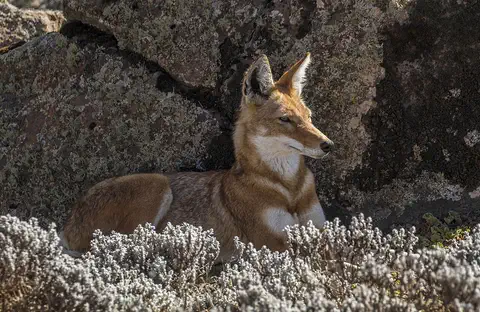
Ethiopian wolf
The Ethiopian wolf is a slender red wolf that lives only in the high mountains of Ethiopia. Wolf families share a territory, but each wolf hunts alone for rats and mole-rats. It is one of the rarest wild dogs on Earth.
-
 Watch
3D
Animal
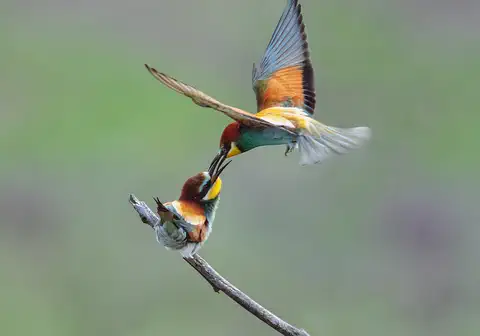
European bee-eater
The European bee-eater is one of the most colorful birds in Europe. It catches bees, dragonflies and other flying insects in midair, knocks out the stings on a branch, and digs a long tunnel in a sandy bank for its nest. Every autumn it flies to Africa for the winter.
-
 Watch
Animal
European garden spider
The European garden spider is one of the best-known web-spinning spiders. It builds a round orb web, sits in the middle and waits to feel an insect land. Look for the white cross of spots on its back. It lives across Europe and Asia and was brought to North America, and it is harmless to people.