Animals you can turn around in 3D
Tap an animal to meet it: where it lives, what it eats, how it grows, and a narrated adventure with Olly.
152 to explore · page 1 of 4
-
 Watch
3D
Animal
African wild dog
The African wild dog, or painted dog, has a patchy coat unlike any other dog's, big round ears and only four toes on its front feet. It lives in close packs that hunt together, share food and care for the pups. It is endangered: the IUCN estimated in 2025 that only about 1,676 adults are left in the wild.
-
 Watch
3D
Animal
Amazon milk frog
The Amazon milk frog is a large tree frog that lives high in the treetops of the rainforest in northeastern South America. It is active at night, has big golden eyes, and lays its eggs in pools of rainwater trapped in holes in trees, where its tadpoles grow up.
-
 Watch
3D
Animal
American alligator
The American alligator is a large, armored reptile of the swamps, marshes and lakes of the southeastern United States. Alligator mothers guard their nests and carry their babies to the water, and the holes alligators dig help many other animals survive dry seasons.
-
 Watch
3D
Animal
American bison
The American bison is the largest land animal in North America. Once tens of millions roamed the Great Plains, but by the 1890s fewer than a thousand were left. Careful protection, starting with a tiny herd in Yellowstone, brought bison back.
-
 Watch
3D
Animal
American bullfrog
The American bullfrog is the largest true frog in North America. It lives in warm, still ponds and lakes, sits and waits for food to come close, and the males' deep 'jug-o-rum' call carries more than a kilometer. Its tadpoles can take years to turn into frogs.
-
 Watch
3D
Animal
American robin
The American robin is a very familiar bird over most of North America, with a gray-brown back, a warm orange breast and a cheery song. It runs across lawns pulling up earthworms, eats lots of berries in winter, and builds a mud-lined nest for its sky-blue eggs.
-
 Watch
3D
Animal
Antarctic krill
Antarctic krill are small, shrimp-like crustaceans about 6 centimeters long that live in the icy Southern Ocean around Antarctica. They gather in enormous swarms, and almost all the bigger animals of the Antarctic, from penguins to blue whales, depend on them for food.
-
 Watch
3D
Animal
Asian elephant
The Asian elephant is the largest land animal in Asia. It is a little smaller than its African cousins, with smaller ears, a head shaped like two domes and a trunk with one finger-like tip. It lives in forests and grassy clearings in 13 countries of South and Southeast Asia.
-
 Watch
3D
Animal
Atlantic blue crab
The Atlantic blue crab is a swimming crab with bright blue claws and back legs shaped like paddles. It lives along the Atlantic coast of the Americas, especially in bays where rivers meet the sea, like the Chesapeake Bay. A mother crab carries up to two million eggs in a spongy orange mass under her body.
-
 Watch
3D
Animal
Atlantic cod
The Atlantic cod is a large, speckled fish of the cold North Atlantic. It has a whisker-like barbel on its chin and three fins along its back. For hundreds of years people have caught cod for food, so many that some cod populations crashed and are still being rebuilt today.
-
 Watch
3D
Animal
Atlantic ghost crab
The Atlantic ghost crab is a sand-colored crab of beaches along the Atlantic coast of the Americas. It is so pale that it almost disappears on the sand, like a ghost. It digs deep burrows, comes out mostly at night, and runs very fast on its long legs.
-
 Watch
3D
Animal
Atlantic herring
The Atlantic herring is a small, silvery fish of the cold North Atlantic. Herring swim in enormous schools, eat tiny floating plankton, and lay their sticky eggs on the sea floor. Whales, seabirds and many fish depend on them for food, and people have fished for them for hundreds of years.
-
 Watch
3D
Animal
Atlantic horseshoe crab
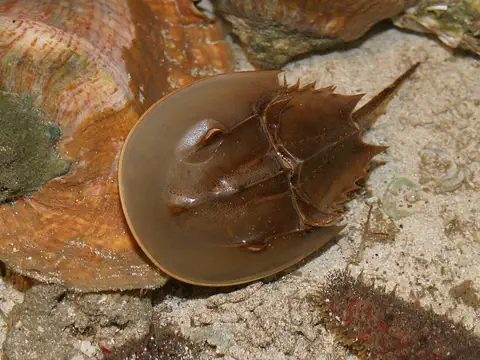
The Atlantic horseshoe crab is a living fossil: its relatives have looked much the same for hundreds of millions of years. Despite its name, it is more closely related to spiders and scorpions than to crabs. Each spring, thousands crawl onto beaches to lay eggs, feeding hungry shorebirds, and its blue blood helps keep medicines safe.
-
 Watch
3D
Animal
Atlantic mackerel
The Atlantic mackerel is a sleek, shiny fish of the North Atlantic Ocean, with a blue-green back covered in wavy black bars and a silvery white belly. Mackerel swim in large schools near the surface, eat tiny crustaceans and lay floating eggs. Many fish and sea mammals eat them, and so do people.
-
 Watch
3D
Animal
Atlantic puffin
The Atlantic puffin is a small seabird of the North Atlantic, often called the clown of the sea because of its huge, colorful bill. It spends most of its life far out on the ocean and comes ashore only in summer to nest in burrows on islands and cliff tops. Underwater, its small wings work like flippers.
-
 Watch
3D
Animal
Axolotl
The axolotl is a salamander from the canals and lakes of Mexico City. Unlike most amphibians, it keeps its baby features, such as feathery gills and a fin, its whole life. It can regrow lost legs and even parts of its heart, but in the wild it is critically endangered.
-
 Watch
3D
Animal
Bald eagle
The bald eagle is one of North America's biggest birds, with a white head and tail, a dark brown body and a huge yellow bill. It lives near lakes, rivers and coasts and eats mostly fish. Once rare because of hunting and pesticides, it has made an amazing comeback.
-
 Watch
3D
Animal
Barn swallow
The barn swallow is a small, speedy bird with a glossy blue back, a reddish throat and a long, deeply forked tail. It catches insects in the air, builds cup-shaped mud nests on barns and bridges, and makes long migrations between the Northern Hemisphere, where it nests, and the Southern Hemisphere, where it spends the winter.
-
 Watch
3D
Animal
Basking shark
The basking shark is the second-biggest fish in the world, after the whale shark. It swims slowly near the surface with its enormous mouth open, sieving tiny floating animals called zooplankton out of the water. It is gentle and lives mainly in cool seas.
-
 Watch
3D
Animal
Blue tang
The blue tang is a royal-blue reef fish with black markings and a bright yellow tail. It lives on coral reefs across the Indian and Pacific Oceans, starts life yellow, and carries sharp blades at the base of its tail.
-
 Watch
3D
Animal
Blue-and-yellow macaw
The blue-and-yellow macaw is a large parrot of South America and Panama. It is bright blue on top and golden yellow underneath, with a green forehead and a white face lined with black. It lives near swamps and rivers, cracks nuts with its strong black beak and stays with one mate for life.
-
 Watch
3D
Animal
Bornean orangutan
The Bornean orangutan is a shaggy red great ape that spends almost all its life in the treetops of Borneo's rainforests. It eats mostly ripe fruit, builds a new leafy bed every night, and lives a quieter, more solitary life than other great apes.
-
 Watch
3D
Animal
Bowhead whale
The bowhead whale is a giant baleen whale that spends its whole life in cold Arctic waters. Its enormous bow-shaped head can push through sea ice, its blubber is thicker than any other whale's, and some bowheads may live for more than 200 years.
-
 Watch
3D
Animal
Brown bear
The brown bear lives in more places than any other bear, from European forests to the mountains of Asia and the rivers of Alaska. It eats almost anything, from berries to salmon, and spends the long winter asleep in a cozy den. Grizzly bears and Kodiak bears are brown bears too.
-
 Watch
3D
Animal
Brown rat
Brown rats are large rodents that came from East Asia and spread around the world with people, mainly on ships. They are smart, strong swimmers with a superb sense of smell. Wild rats can carry germs that make people sick, so they are best left alone.
-
 Watch
3D
Animal
Bull shark
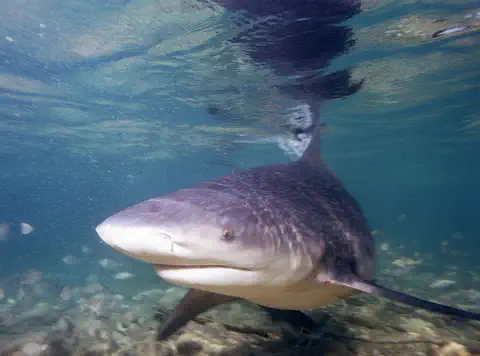
The bull shark is a large, stout shark of warm coasts around the world. It is one of very few sharks that can swim from the salty sea into fresh water, and it has been found thousands of kilometers up big rivers like the Amazon and the Mississippi.
-
 Watch
3D
Animal
Bull-headed dung beetle
The bull-headed dung beetle is a shiny black beetle about 1 centimeter long. Large males have two long, curved horns on their heads, like a bull. These beetles dig tunnels under cow dung and pack dung into balls for their young, which cleans up pastures and helps the soil. They came from Europe and now also live in North America and Australia.
-
 Watch
3D
Animal
Canada goose
The Canada goose is a big, black-necked goose with a white chinstrap, found near lakes, rivers, fields and parks across North America. Many migrate in noisy V-shaped flocks, but more and more stay all year on city lawns. People also brought Canada geese to Britain and other parts of Europe.
-
 Watch
3D
Animal
Capybara
The capybara is the largest rodent alive, a giant cousin of the guinea pig. It lives in groups beside rivers, lakes and marshes in South America, grazes on grass and water plants, and dives into the water to stay cool and safe.
-
 Watch
3D
Animal
Cattle
Cattle are large farm animals that people tamed from wild oxen long ago. They eat grass and digest it with a stomach that has four parts. Farmers around the world keep cattle for milk, meat and leather, and in some places oxen still pull plows and carts.
-
 Watch
3D
Animal
Chambered nautilus
The chambered nautilus is a relative of octopuses and squids that lives inside a coiled shell full of sealed rooms. It moves up and down along deep reef slopes by changing how much gas and water are in its shell, and it finds food mostly by smell.
-
 Watch
3D
Animal
Cheetah
The cheetah is the fastest land animal. It can go from standing still to 72 kilometers per hour in about two and a half seconds, and its top speed is around 100 kilometers per hour, as fast as a car on a highway. Cheetahs live mostly in Africa, with a very small group in Iran.
-
 Watch
3D
Animal
Chicken
The chicken is a domesticated bird: people raise it on farms and in backyards all over the world for eggs and meat. Its wild ancestor is the red junglefowl of the forests of southern and Southeast Asia, and scientists think chickens were first domesticated about 3,500 years ago near rice fields in Southeast Asia.
-
 Watch
3D
Animal
Cockatiel
The cockatiel is a small, slim parrot with a tall crest that lives wild in the dry inland of Australia. Flocks fly fast across open country, looking for grass seeds and water, and pairs nest in hollow trees after the rain.
-
 Watch
3D
Animal
Common bottlenose dolphin
The common bottlenose dolphin is a fast, clever ocean mammal named for its short, thick snout. It finds fish with echoes, talks with whistles and clicks, and lives in warm and mild seas all around the world.
-
 Watch
3D
Animal
Common carp
The common carp is a large, sturdy fish with big scales and little whisker-like barbels by its mouth. It comes from rivers and lakes of Europe and Central Asia, but people have carried it to every continent except Antarctica, where it can muddy the water and harm water plants. Koi are a colorful kind of carp.
-
 Watch
3D
Animal
Common kingfisher
The common kingfisher is a small, dazzling blue and orange bird of rivers, canals and lakes across Europe, Asia and North Africa. It watches from a perch, then dives headfirst into the water to catch small fish with its dagger-shaped bill.
-
 Watch
3D
Animal
Common murre
The common murre is a seabird of cold northern oceans that looks a little like a flying penguin. It dives deep to chase fish, nests in huge crowds on cliff ledges, and its chicks flutter down from the cliff to the sea before they can even fly.
-
 Watch
3D
Animal
Common octopus
The common octopus is a soft-bodied mollusc with eight sucker-lined arms. It lives in coastal waters, hides in a den by day, hunts snails and clams at night, and can change its color, skin texture and shape to vanish against rocks or sand. It lives only one to two years.
-
 Watch
3D
Animal
Common ostrich
The common ostrich is the tallest and heaviest bird alive. It cannot fly, but it is the fastest runner on two legs, sprinting at about 70 kilometers an hour across the savannas and deserts of Africa. It also lays the biggest egg of any living animal.
-
 Watch
3D
Animal
Common snapping turtle
The common snapping turtle is a big freshwater turtle of eastern North America. It hides in the mud of ponds and rivers with just its nose poking up, eats almost anything it finds, and can live for many decades. Each summer, mother turtles walk over land to dig nests in sand and gravel.
-
 Watch
3D
Animal
Common starling
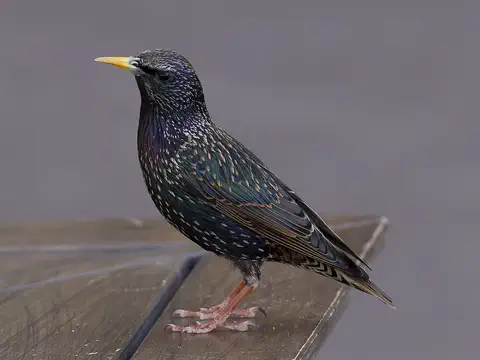
The common starling, also called the European starling, is a glossy, spotted songbird from Europe, Asia and North Africa. It is a brilliant copycat that can imitate other birds and even car alarms, and in winter huge flocks swirl through the evening sky in shows called murmurations. People also carried starlings to North America, Australia and other places, where they now live in the wild.
-
 Watch
3D
Animal
Common wasp
The common wasp is a black and yellow striped insect that lives in a big family called a colony. Thousands of wasps share a round nest made of paper that they make by chewing wood. They catch insects such as caterpillars and flies to feed their young, which makes them useful garden helpers.
-
 Watch
3D
Animal
Coyote
The coyote is a clever, adaptable wild dog that lives from Alaska and Canada to Panama. It is smaller than a wolf and bigger than a fox. Coyotes eat mostly mice, voles and rabbits, howl and yip to keep in touch, and live everywhere from deserts and forests to city parks.
-
 Watch
3D
Animal
Domestic cat
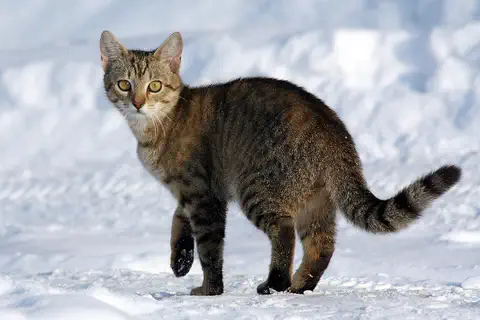
The domestic cat is one of the world's favorite pets. Cats live with people in homes, farms and towns in almost every country on Earth. Long ago they came from a small wildcat of the Middle East and Africa, and they still have the sharp senses and soft paws of a wild hunter.
-
 Watch
3D
Animal
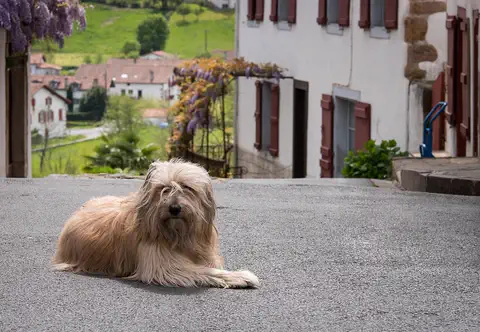
Domestic dog
The domestic dog has lived with people for more than 12,000 years. Dogs came from gray wolves, and today there are more than 400 breeds, from tiny Chihuahuas to giant Irish wolfhounds. They live with people all over the world as pets, helpers and friends.
-
 Watch
3D
Animal
Domestic goat
Domestic goats are lively farm animals that came from a wild goat of Asia. They reach up to nibble leaves, twigs and weeds that other farm animals leave behind, and people keep them for milk, cheese, meat, wool and leather.
-
 Watch
3D
Animal
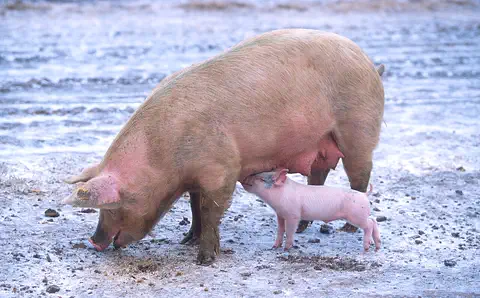
Domestic pig
Domestic pigs live with people on every continent except Antarctica. Their ancestor is the wild boar, which people began taming about 9,000 years ago. Pigs are among the smartest farm animals, with a super-sensitive snout for digging up food.