Search the Discovery Encyclopedia
-
 Animal
Ocean sunfish
The ocean sunfish, or mola, is one of the heaviest bony fish in the world. Its body is tall, round and flat, with a long fin on top, another underneath, and a strange frilly edge instead of a tail. It dives deep to eat jellyfish and is often seen resting at the surface, perhaps to warm up.
-
 Animal
West Indian Ocean coelacanth
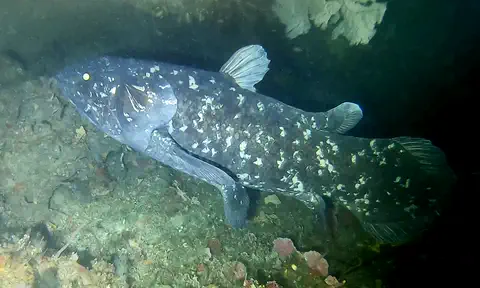
The West Indian Ocean coelacanth is a large, blue, spotted fish that lives in deep, rocky waters off eastern Africa. Its group was known only from fossils and thought to have died out about 66 million years ago, until a living one was found in South Africa in 1938.
-
 Animal
Sea otter
The sea otter is a marine mammal of the North Pacific coast that spends almost its whole life in the water. It has the thickest fur of any animal, floats on its back to eat, and even uses rocks as tools. By eating sea urchins, sea otters help kelp forests stay healthy.
-
 Animal
Blue sea star
The blue sea star is easy to spot on Indian and Pacific Ocean reefs: bright blue, with five smooth, tube-shaped arms. It cleans up the reef by eating dead animals, tiny creatures and the thin film that grows on rocks, and it can grow back an arm it loses.
-
 Animal
Marine iguana
The marine iguana is the only lizard in the world that finds its food in the sea. It lives only on the rocky shores of the Galápagos Islands, where it grazes on seaweed, warms up on black lava rocks and sneezes out extra salt.
-
 Animal
Ochre sea star
The ochre sea star lives on wave-washed rocky shores along the Pacific coast of North America. It can be purple, orange or brown, and it pries open mussels to eat them with a stomach it pushes out of its body. It is so important to its shore that scientists call it a keystone species.
-
 Animal
Green sea turtle
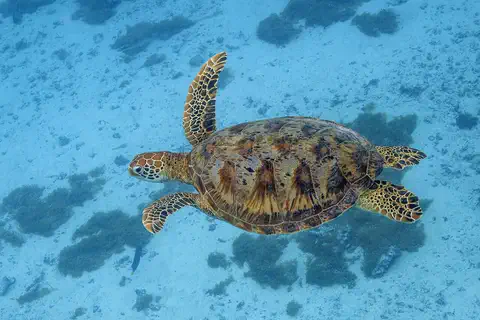
The green sea turtle is the largest sea turtle with a hard shell. It lives in warm seas around the world and, unlike other sea turtles, grown-ups eat mostly seagrass and algae. Females swim hundreds or even thousands of kilometers to lay their eggs on the beaches where they hatched long ago.
-
 Animal
Purple sea urchin
The purple sea urchin is a spiny, ball-shaped animal of North America's Pacific coast, up to about 10 centimeters across. It scrapes algae with a mouth of five teeth, walks on tiny tube feet, and can even carve a hollow in solid rock. Since 2014 its numbers have exploded in parts of California, and hungry urchins have eaten away large areas of kelp forest.
-
 Animal
California sea lion
The California sea lion is an 'eared seal' of the west coast of North America. It is clever, playful and very noisy, with a bark like a dog's. Unlike true seals, it has ear flaps and can turn its back flippers forward to walk on land. Its numbers have grown a lot since it was protected.
-
 Animal
Flatback sea turtle
The flatback sea turtle is named for its flat, smooth shell. It stays in shallow coastal seas around northern Australia, eats soft sea animals such as sea cucumbers and jellyfish, and nests only on Australian beaches, where its big hatchlings dash for the waves at night.
-
 Animal
Steller's sea eagle
Steller's sea eagle is one of the largest sea and fish eagles. Dark brown with bright white shoulders, tail and legs and an enormous orange-yellow beak, it nests in far eastern Russia and feeds mainly on salmon. In winter many fly south to Japan.
-
 Animal
Hawksbill sea turtle
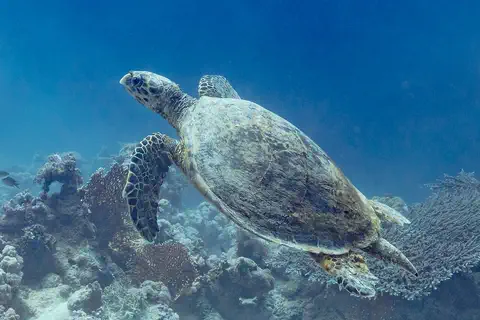
The hawksbill sea turtle lives in warm seas around the world, mostly near coral reefs. Its pointed, hawk-like beak reaches into cracks in the reef to find sponges, its favorite food. Its beautiful patterned shell once made it a target for hunters, and today it is critically endangered.
-
 Animal
Loggerhead sea turtle
The loggerhead sea turtle is named for its huge head and powerful jaws, which crush crabs, conchs and other hard-shelled animals. Babies hatch on sandy beaches, ride the open ocean for years and may cross an entire ocean before coming home to nest.
-
 Animal
Leatherback sea turtle
The leatherback sea turtle is the largest turtle on Earth. Instead of a hard shell it has tough, rubbery skin over a layer of tiny bones. It eats jellyfish, dives deeper than any other turtle and swims thousands of kilometers between feeding waters and the beaches where it lays its eggs.
-
 Animal
Magnificent sea anemone
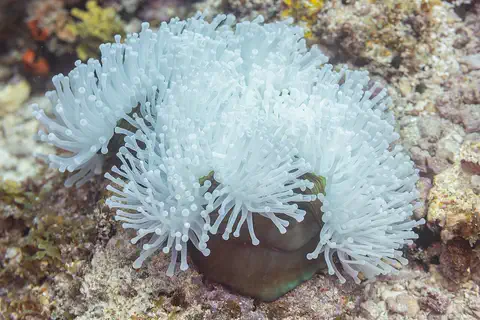
The magnificent sea anemone is a large sea anemone of warm Indian and Pacific Ocean reefs. Its body is a soft column topped with hundreds of finger-shaped tentacles, and it often perches on top of rocks in plain view. Many kinds of clownfish live safely among its stinging tentacles.
-
 Animal
Harbor seal
The harbor seal lives along the northern coasts of North America, Europe and Asia, and it is one of the most common marine mammals on the east and west coasts of the United States. It has spotted fur, a dog-like face and no ear flaps, and it wriggles like a caterpillar on land. Its pups can swim within minutes of being born.
-
 Animal
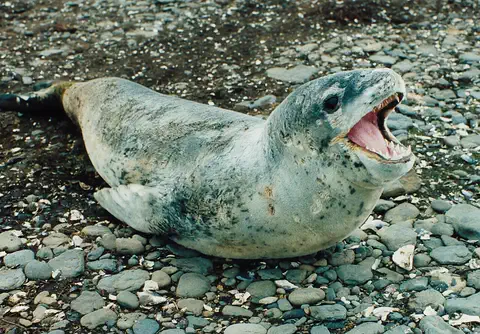
Leopard seal
The leopard seal is a large, slender seal of the icy seas around Antarctica, named for the dark spots on its gray coat. It is a fast, powerful hunter with a big head and long teeth, and it eats everything from tiny krill to fish, penguins and young seals.
-
 Animal
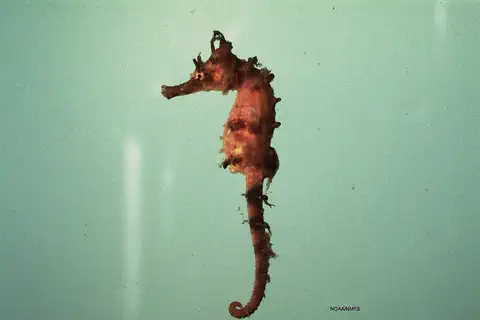
Lined seahorse
The lined seahorse is a small fish of the western Atlantic Ocean, from Canada and the United States down to Brazil. It has a horse-shaped head, a long snout with no teeth and a tail that grips seagrass. The male carries the eggs in a pouch until tiny seahorses are born.
-
 Animal
Leafy seadragon
The leafy seadragon is a relative of the seahorse covered in leaf-shaped flaps of skin. It drifts among seaweed so well that it almost disappears. It sucks up tiny shrimp through its long snout, and the father carries the eggs on his tail.
-
 Animal
Big-belly seahorse
The big-belly seahorse lives in the cool coastal waters of southeastern Australia and New Zealand. It is one of the largest seahorses, usually 18 to 28 centimeters long. It grips seaweed and jetties with its curly tail and sucks up tiny shrimp through its snout. As in all seahorses, the male carries the eggs in a pouch on his belly and gives birth to hundreds of babies.
-
 Animal
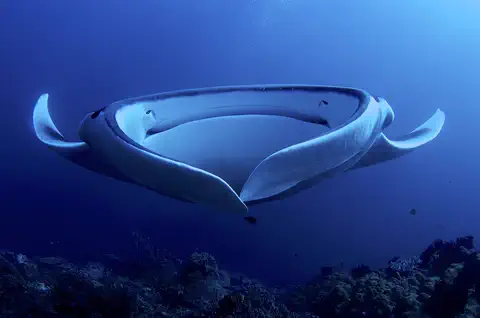
Giant oceanic manta ray
The giant oceanic manta ray is the largest ray in the world, with wing-like fins that can stretch more than 6 meters from tip to tip. This gentle filter feeder funnels plankton into its wide mouth, and it has a single pup only every two to three years.
-
 Animal
Orca
The orca, also called the killer whale, is the largest member of the dolphin family and the ocean's top predator. Orcas live in every ocean, in close family groups called pods, made up of orcas related through their mothers. Each group has its own favorite foods, hunting tricks and even its own calls, which young orcas learn from their families.
-
 Animal
Narwhal
The narwhal is a toothed whale of the icy Arctic Ocean. Most males have a long, spiral tusk that is really a tooth growing forward out of the front of the jaw, and it can be up to about 3 meters long. Narwhals dive deep under the sea ice to catch fish, squid and shrimp.
-
 Animal
Blue tang
The blue tang is a royal-blue reef fish with black markings and a bright yellow tail. It lives on coral reefs across the Indian and Pacific Oceans, starts life yellow, and carries sharp blades at the base of its tail.
-
 Animal
Swordfish
The swordfish is a huge ocean hunter with a long, flat bill like a sword. It swings its bill to slash at fish and squid, then eats them. It dives deep into cold, dark water by day, and a special 'brain heater' near its eyes keeps its brain warm. Grown-up swordfish have no scales and no teeth.
-
 Animal
Blue whale
The blue whale is the largest animal ever to live on Earth, bigger than any dinosaur. It is a baleen whale: instead of teeth it has bristly plates that strain huge mouthfuls of seawater to catch krill. Blue whales live in every ocean except the Arctic, and their deep calls are among the loudest sounds made by any animal.
-
 Animal
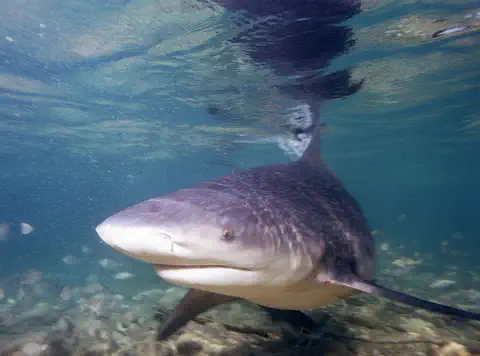
Bull shark
The bull shark is a large, stout shark of warm coasts around the world. It is one of very few sharks that can swim from the salty sea into fresh water, and it has been found thousands of kilometers up big rivers like the Amazon and the Mississippi.
-
 Animal
Gray whale
The gray whale is a baleen whale of the North Pacific Ocean. It sucks up mud from the seafloor to catch tiny animals, and it makes one of the longest yearly journeys of any mammal: about 16,000 kilometers there and back between Arctic feeding seas and shallow lagoons in Mexico.
-
 Animal
Blue dragon
The blue dragon is a sea slug only about 3 centimeters long that floats upside down on the ocean's surface, held up by a bubble of gas in its stomach. It eats stinging animals such as the Portuguese man o' war and keeps their stinging cells in its own finger-like tips.
-
 Animal
Sperm whale
The sperm whale is the biggest whale with teeth. Its huge, boxy head is about a third of its body, it dives deep into the dark ocean to hunt squid, and it makes the loudest sounds of any animal.
-
 Animal
Tiger shark
The tiger shark is one of the biggest sharks in the sea. Young tiger sharks have dark spots and stripes like a tiger, which fade as they grow. It eats an amazing range of food, and it travels long distances between warm and cooler seas.
-
 Animal
Whale shark
The whale shark is the largest fish in the world. This gentle giant swims through warm seas with its huge mouth open, filtering tiny plankton and small fish from the water, and every whale shark has its own pattern of pale spots.
-
 Animal
Atlantic cod
The Atlantic cod is a large, speckled fish of the cold North Atlantic. It has a whisker-like barbel on its chin and three fins along its back. For hundreds of years people have caught cod for food, so many that some cod populations crashed and are still being rebuilt today.
-
 Animal
Beluga whale
The beluga whale is a small white whale of the Arctic. It has no fin on its back, a soft, round forehead it can change shape, and a neck that bends, and it makes so many whistles, chirps and clicks that sailors called it the canary of the sea.
-
 Animal
Common murre
The common murre is a seabird of cold northern oceans that looks a little like a flying penguin. It dives deep to chase fish, nests in huge crowds on cliff ledges, and its chicks flutter down from the cliff to the sea before they can even fly.
-
 Animal
Moorish idol
The Moorish idol is a tall, flat reef fish with bold black, white and yellow bars, an orange patch on its snout and a long white fin that trails behind it like a ribbon. It lives on reefs across the Indian and Pacific Oceans, from East Africa to the coasts of the Americas, and uses its tube-like snout to pick sponges and small animals from cracks.
-
 Animal
Basking shark
The basking shark is the second-biggest fish in the world, after the whale shark. It swims slowly near the surface with its enormous mouth open, sieving tiny floating animals called zooplankton out of the water. It is gentle and lives mainly in cool seas.
-
 Animal
Bowhead whale
The bowhead whale is a giant baleen whale that spends its whole life in cold Arctic waters. Its enormous bow-shaped head can push through sea ice, its blubber is thicker than any other whale's, and some bowheads may live for more than 200 years.
-
 Animal
Chinook salmon
The Chinook salmon, also called the king salmon, is the largest Pacific salmon. It hatches in a cold river, travels to the ocean to feed and grow for a few years, then swims back up its home river to lay eggs.
-
 Animal
Common octopus
The common octopus is a soft-bodied mollusc with eight sucker-lined arms. It lives in coastal waters, hides in a den by day, hunts snails and clams at night, and can change its color, skin texture and shape to vanish against rocks or sand. It lives only one to two years.
-
 Animal
Humpback whale
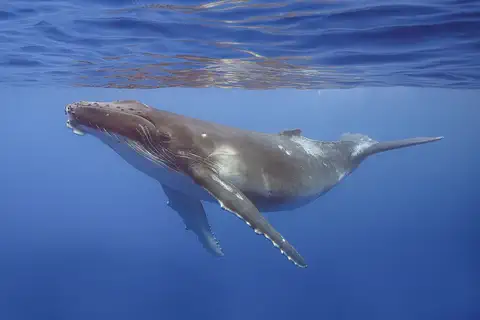
The humpback whale is a baleen whale famous for leaping out of the water, slapping its giant flippers and singing long, complex songs. It lives in every ocean and makes one of the longest journeys of any mammal, between cold feeding waters and warm waters where calves are born. Once hunted almost to extinction, it is now recovering.
-
 Animal
Moon jellyfish
The moon jellyfish is a clear, saucer-shaped jelly found in coastal seas around the world. It has no eyes, brain or heart, and it is about 95 percent water. Four horseshoe-shaped rings show through its bell, and short stinging tentacles fringe its edge to catch tiny plankton.
-
 Animal
Sockeye salmon
The sockeye salmon is a Pacific salmon that usually grows up in a lake, spends a few years in the North Pacific Ocean, and then returns to the place it hatched to lay its eggs. On the way home it turns bright red with a green head.
-
 Animal
Yellowfin tuna
The yellowfin tuna is a large, torpedo-shaped fish of warm oceans around the world. It has a dark blue back, a silver belly and long, bright yellow fins. Yellowfin travel huge distances, dive deep to hunt fish and squid, and are important to fisheries all around the world.
-
 Animal
Antarctic krill
Antarctic krill are small, shrimp-like crustaceans about 6 centimeters long that live in the icy Southern Ocean around Antarctica. They gather in enormous swarms, and almost all the bigger animals of the Antarctic, from penguins to blue whales, depend on them for food.
-
 Animal
Atlantic salmon
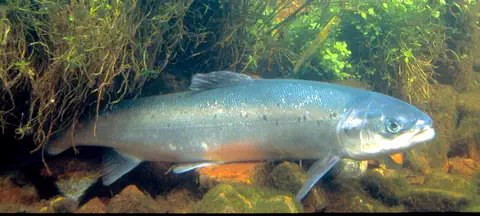
The Atlantic salmon hatches in a river, swims out to the North Atlantic Ocean to feed and grow, then returns to the very river where it was born to lay its eggs. Along the way it changes color and shape several times.
-
 Animal
Common starfish
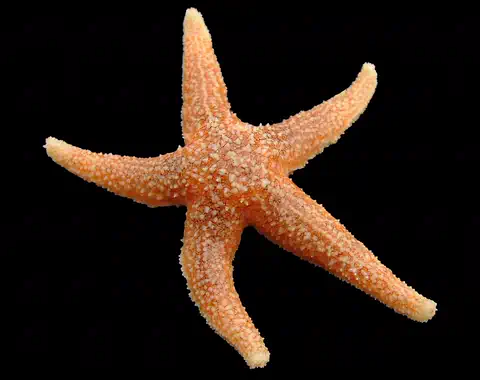
The common starfish is the most familiar starfish of the north-east Atlantic coasts. It has five arms, an eye spot at the tip of each one, and many tube feet. It can pull open a mussel shell and push its own stomach inside to eat.
-
 Animal
Harbor porpoise
The harbor porpoise is a small relative of whales and dolphins. It lives in cool coastal waters of the Northern Hemisphere, in bays, harbors and fjords. It is shy, usually swims alone or in tiny groups, and rolls quietly to the surface to breathe.
-
 Animal
Atlantic herring
The Atlantic herring is a small, silvery fish of the cold North Atlantic. Herring swim in enormous schools, eat tiny floating plankton, and lay their sticky eggs on the sea floor. Whales, seabirds and many fish depend on them for food, and people have fished for them for hundreds of years.
-
 Animal
Great hammerhead
The great hammerhead is the biggest of the hammerhead sharks. Its wide, flat head, called a cephalofoil, holds its eyes far apart and is packed with senses that help it find stingrays hiding in the sand of warm, shallow seas.
-
 Animal
Orange clownfish
The orange clownfish is a small, bright orange reef fish with three white bands edged in black. It lives in the warm western Pacific, from northern Australia to New Guinea and the Solomon Islands, always beside a sea anemone. A coat of slimy mucus keeps the anemone's stings from hurting it, and the fish and anemone help each other.
-
 Animal
Atlantic mackerel
The Atlantic mackerel is a sleek, shiny fish of the North Atlantic Ocean, with a blue-green back covered in wavy black bars and a silvery white belly. Mackerel swim in large schools near the surface, eat tiny crustaceans and lay floating eggs. Many fish and sea mammals eat them, and so do people.
-
 Animal
Great white shark
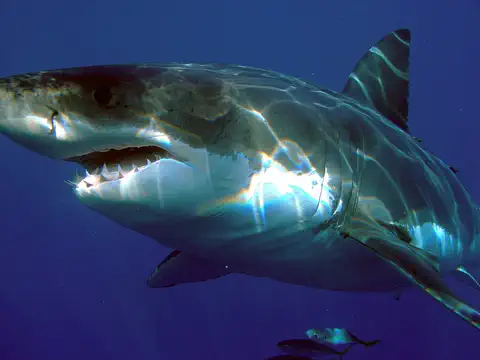
The great white shark is the largest of the mackerel sharks: a strong, torpedo-shaped fish with a gray back and a white belly. It hunts fish, seals and sea lions, and it is partly warm-blooded, which helps it stay active in cool water.
-
 Animal
Southern stingray
The southern stingray is a flat, diamond-shaped ray of warm western Atlantic waters, from the eastern United States through the Gulf of Mexico and the Caribbean to South America. It spends much of its time on sandy bottoms, finding buried crabs, shrimp and fish by smell, touch and tiny electric signals.
-
 Animal
Chambered nautilus
The chambered nautilus is a relative of octopuses and squids that lives inside a coiled shell full of sealed rooms. It moves up and down along deep reef slopes by changing how much gas and water are in its shell, and it finds food mostly by smell.
-
 Animal
Immortal jellyfish
The immortal jellyfish is a tiny sea jelly only about 3 millimeters across. Most jellyfish die after they grow up and make babies, but this one can do something amazing: a starving adult can turn back into a polyp, the young stage, and grow up all over again. It can still be eaten or get sick, so it does not really live forever.
-
 Animal
Blacktip reef shark
The blacktip reef shark is a medium-sized shark of warm, shallow coral reefs in the Indian and Pacific Oceans. You can spot it by the black tips on all its fins. It hunts fish, squid and crabs, stays close to its home reef, and gives birth to just a few live pups at a time.
-
 Animal
Ocellaris clownfish
The ocellaris clownfish is a small orange-and-white reef fish from the Indian and Pacific Oceans. It shelters among the stinging tentacles of a sea anemone, protected by a slimy coat, and every clownfish starts life as a male.
-
 Animal
Saltwater crocodile
The saltwater crocodile is the largest reptile alive today. It lives in rivers, swamps and estuaries from India to northern Australia, can cope with fresh water and seawater, and sometimes swims far out across the open ocean to reach distant islands.
-
 Animal
Shortfin mako shark
The shortfin mako is a sleek, metallic-blue shark that roams warm and mild oceans all over the world. Scientists call it the fastest shark: it can sprint at up to about 70 kilometers an hour and even leap out of the water. It hunts fast fish such as tuna and swordfish, and it is now endangered.